- Home
- Educational Travel
- China Cultural Tours
- Chinese Opera Tour: CET-29
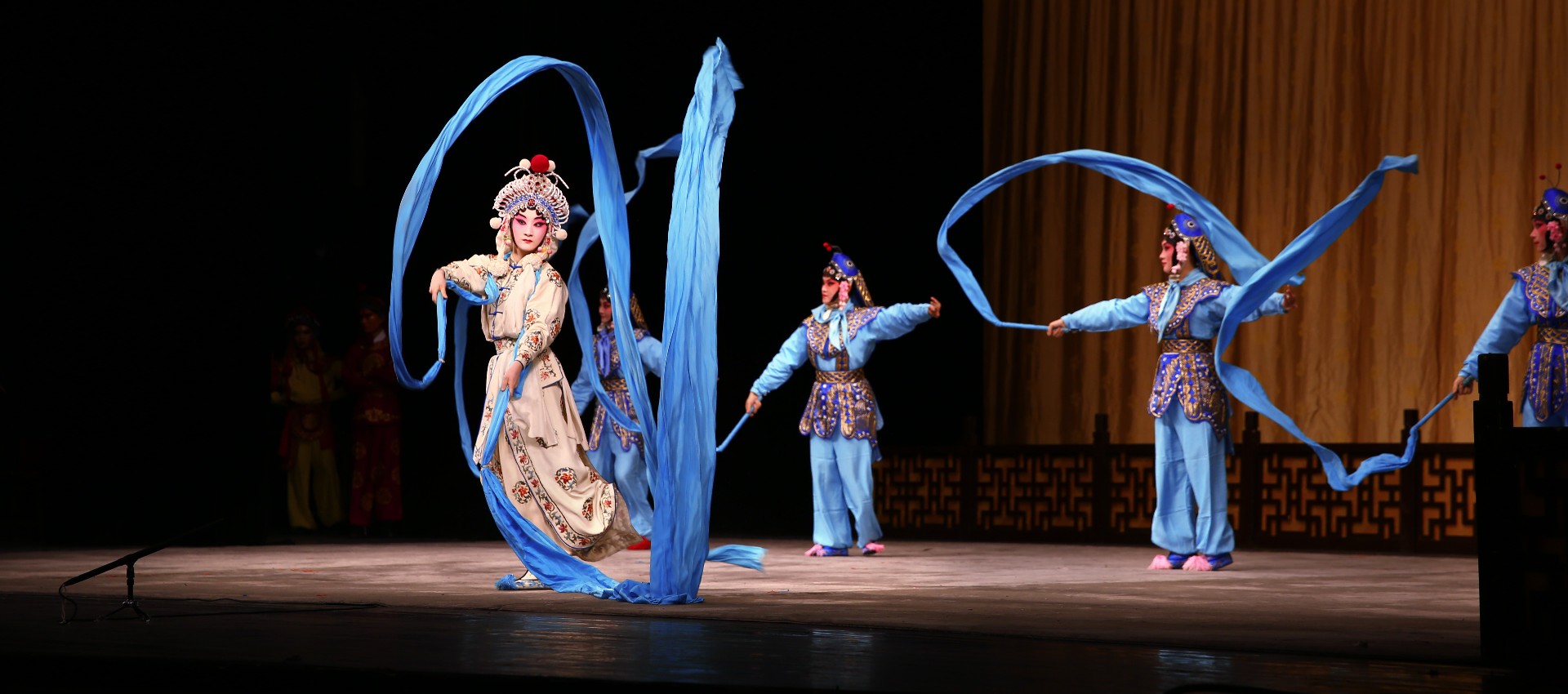
12-Day Chinese Opera Tour
This 12-day tour covers Beijing, Chengdu, Suzhou and Shanghai, focusing on China’s four classic traditional operas. In Beijing, you’ll explore Peking Opera culture through museums, mask-painting and live shows, plus visit imperial landmarks and the Great Wall; in Chengdu, discover Sichuan Opera’s “face-changing” and enjoy role-play, along with pandas and local alleys; in Suzhou, experience Kunqu in classical gardens and museums; in Shanghai, listen to Pingtan and watch opera at a historic theater, while exploring the city’s iconic spots.
Whether you want to focus on cultural exploration, check in at historical landmarks, or slow down to immerse yourself in local life, this tour can be adjusted accordingly. With the expertise of a leader boasting 10+ years of experience in China’s educational tourism industry, your traditional opera journey will become a perfectly planned trip. Inquire below to start crafting your exclusive customized itinerary.
Itinerary at a Glance
| Day | Location | Highlights |
|---|---|---|
| D1 | Beijing | Arrive in Beijing; driver pickup and hotel check-in |
| D2 | Beijing | Visit Tiananmen and Forbidden City; explore Jinyun Garden; learn about Peking Opera history at the museum |
| D3 | Beijing | Tour Mei Lanfang Memorial Hall; stroll Baishun Hutong; experience Peking Opera facial makeup painting; watch Peking Opera at Zhengyici Theatre |
| D4 | Beijing → Chengdu | Hike Mutianyu Great Wall, admire mountain views; depart for Chengdu |
| D5 | Chengdu | Visit Sichuan Opera Art Museum and Wuhou Memorial Temple; experience Sichuan Opera role-play (with makeup and photography) and shadow puppetry; watch Sichuan Opera at night |
| D6 | Chengdu | Observe giant pandas’ daily life; tour Wenshu Yuan Monastery; wander Kuanzhai Alley and taste local snacks |
| D7 | Chengdu → Suzhou | Depart Chengdu; arrive in Suzhou; driver pickup and hotel check-in |
| D8 | Suzhou | Visit Humble Administrator's Garden and Lion Grove Garden; learn about Kunqu Opera at the museum; watch Kunqu Opera and folk performances at Master of the Nets Garden |
| D9 | Suzhou → Shanghai | Stroll Tongli Water Town, take a boat tour to admire water town scenery; depart for Shanghai; driver pickup and hotel check-in |
| D10 | Shanghai | Shop and taste Shanghai snacks on Nanjing Road; admire European-style buildings on The Bund; enjoy Pingtan performance at Xiangyin Book Garden |
| D11 | Shanghai | Visit People's Square and take photos of landmarks; tour Yuyuan Garden; shop and taste snacks at Yuyuan Market; watch traditional opera at Tianchan Yifu Stage |
| D12 | Shanghai | Have breakfast at the hotel; check luggage; transfer to airport/railway station; end the trip |
Trip Highlights
- Watch immersive Peking Opera at Beijing’s century-old Zhengyici Theatre
- Watch Sichuan Opera's stunts at Shufeng Yayun, and join Sichuan Opera role-playing and shadow puppetry experiences
- Enjoy garden-set Kunqu Opera at Master of the Nets Garden
- Listen to soft Pingtan at Shanghai’s Xiangyin Book Garden
- Experiencing a Boat Tour in Tongli Water Town
- Get up close to giant pandas at Chengdu Giant Panda Breeding Research Base
Tour Essentials

Quality
No Shopping Traps

Group Type
Private

Tour Focus
Chinese Opera

Accommodation
Nights:11

Best Season
Spring, Summer, Autumn, Winter
Full Itinerary
After arriving in Beijing, proceed to the pre-booked hotel to check in, unpack your luggage, and take a rest. In the evening, you can explore the local Beijing cuisine near the hotel on your own.
In the morning, depart for Beijing’s landmark—Tiananmen Square. First, visit the Tiananmen Rostrum at the square, then tour the Monument to the People's Heroes adorned with historical reliefs, and the solemn Mausoleum of Mao Zedong. After that, head to the Palace Museum (Forbidden City) and tour core halls along the central axis, such as the Hall of Supreme Harmony, the Hall of Central Harmony, and the Hall of Preserving Harmony. Observe the imperial architecture of the Ming and Qing dynasties up close and listen to the guide explain the royal life of that era.
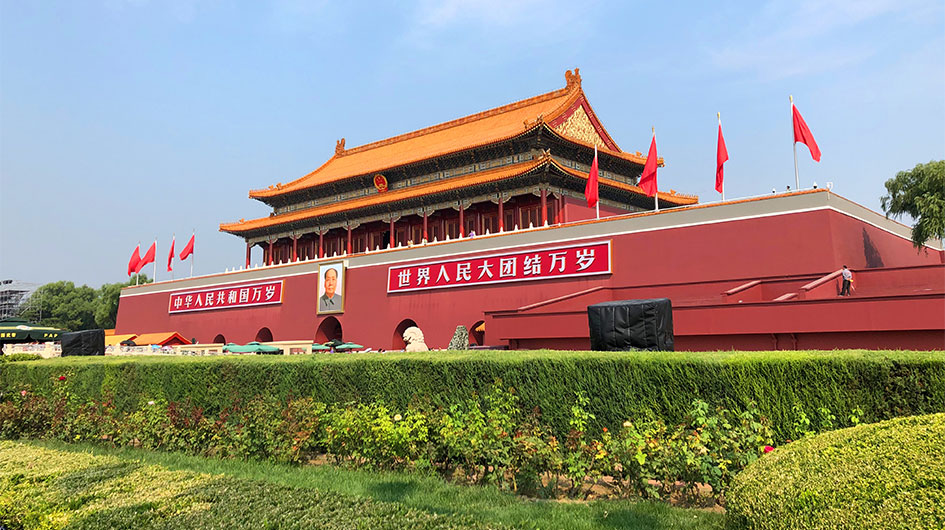 Tiananmen Square
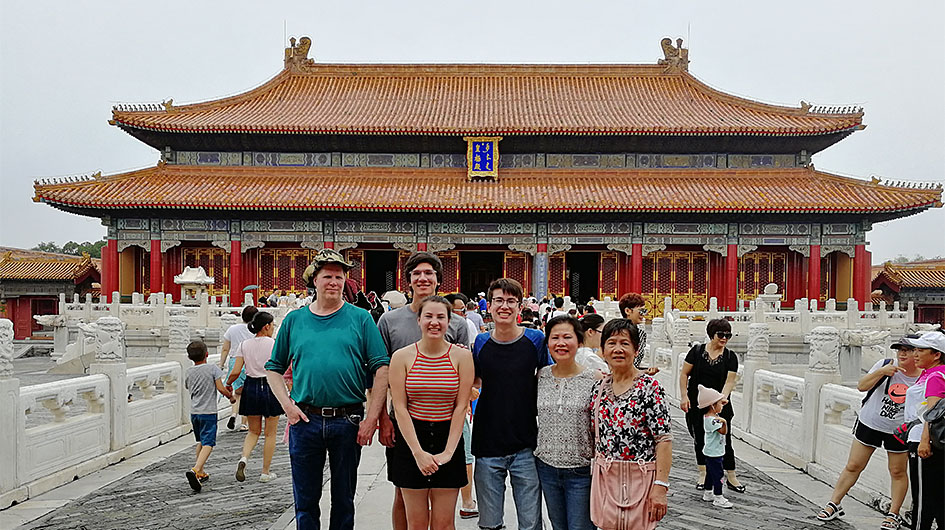 the Forbidden City
Subsequently, proceed to Jinyun Garden, a Peking Opera-themed park and one of the birthplaces of Peking Opera. The stone carvings and courtyard walls in the park showcase elements like the history of Peking Opera, its role categories, opera genres, and legendary performers. Your cultural guide will patiently interpret these contents and lead you to explore the origin of Peking Opera.
From Jinyun Garden, travel to the Beijing Peking Opera Museum, which comprehensively exhibits the development history and artistic achievements of Peking Opera. Follow your guide to view physical relics including Peking Opera photos, Mei Lanfang’s vinyl records, and silk tapestry costumes of the Qing Dynasty. You can also watch clips of classic Peking Opera works like The Drunken Concubine (Gui Fei Zui Jiu) to gain an in-depth understanding of the four basic performing skills of Peking Opera: "singing, reciting, acting, and acrobatics" (the four fundamental performing skills of traditional Chinese opera).
Your Journey’s Rewards:
Explore landmark buildings such as Tiananmen Square and the Palace Museum; Discover the origin of Peking Opera at Jinyun Garden; Finally, view physical historical materials of opera culture at the Beijing Peking Opera Museum and learn about the development course of Peking Opera.
Educational Focus:
What are the core elements of Peking Opera exhibited in the Beijing Peking Opera Museum? How do they reflect the artistic characteristics of Peking Opera?
Takeaway:
The core elements of Peking Opera displayed in the Beijing Peking Opera Museum include "singing, reciting, acting, and acrobatics" (chang, nian, zuo, da), as well as costumes and facial masks. These core elements together constitute the highly stylized and impressionistic artistic characteristics of Peking Opera.
Thought Challenge:
How should Peking Opera innovate to attract young audiences?
After breakfast, head to the Mei Lanfang Memorial Hall. This was the residence where Mei Lanfang, the great master of Peking Opera, lived during the last ten years of his life. The memorial hall provides a detailed account of Master Mei Lanfang’s life: he began learning opera at a young age, later founded the "Mei School" (a renowned performance style of Peking Opera), promoted the reform of Peking Opera, and performed abroad on multiple occasions—enhancing the international influence of Chinese opera in global cultural exchanges.
In the study of the main courtyard, exhibits such as the scripts and painting tools he used during his lifetime are on display, reflecting his pursuit of excellence in art. The west wing houses Mei Lanfang’s handwritten script drafts, musical instruments he played, as well as opera costumes and props. Among these, the "phoenix costume" stands out with its exquisite embroidery, exuding unparalleled elegance and grandeur. Follow the guide to explore and learn stories about Mei Lanfang and Peking Opera.
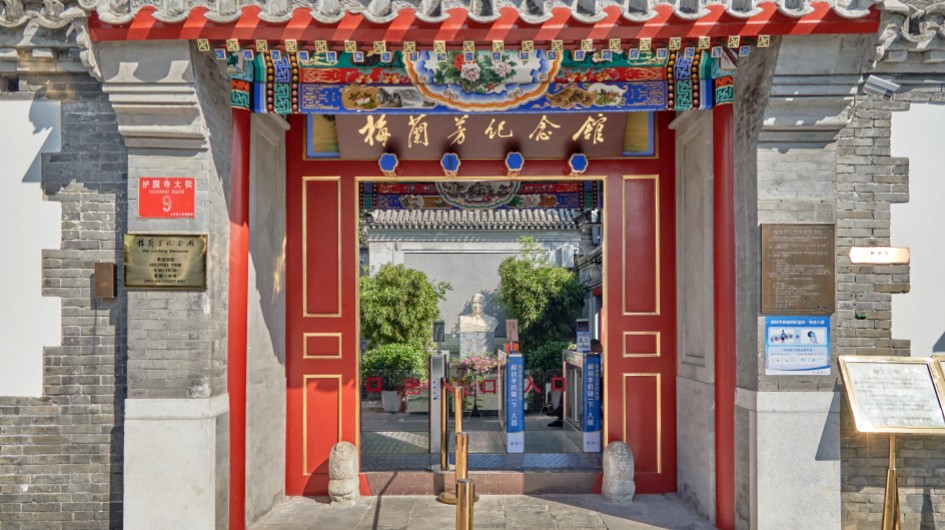 Mei Lanfang Memorial Hall
Next, take a stroll along Baishun Hutong, one of the birthplaces of Peking Opera. During the Qianlong reign of the Qing Dynasty, many famous opera troupes and performers gathered here, laying the foundation for the subsequent formation of Peking Opera. As you wander through the hutong, visit ancient buildings and listen to the guide explain the stories behind the origin of Peking Opera.
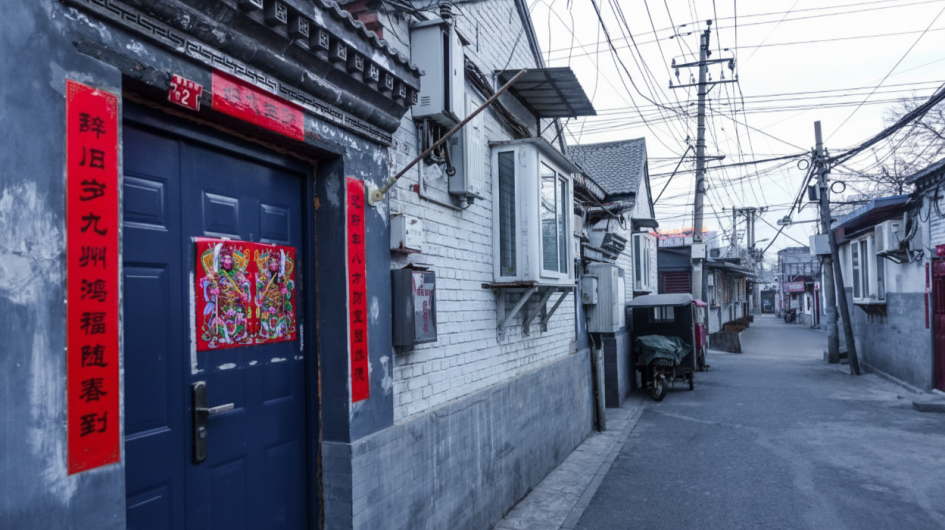 Baishun Hutong
Afterwards, you will participate in a Peking Opera facial makeup painting experience: first, learn about the character traits corresponding to different colors of facial makeup, then paint a Peking Opera facial makeup under the guidance of professional teachers, and create a one-of-a-kind facial makeup work of your own.
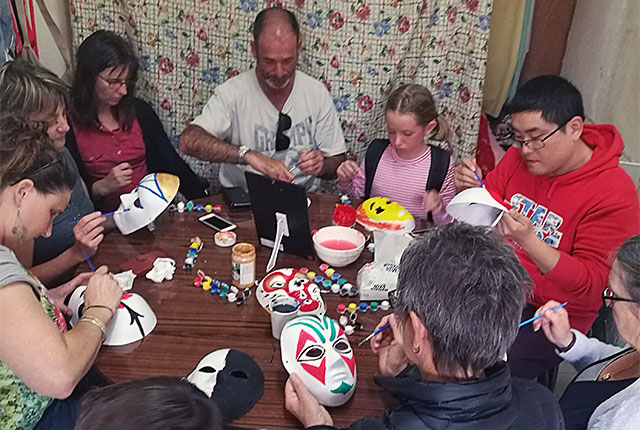
Operatic Face Painting
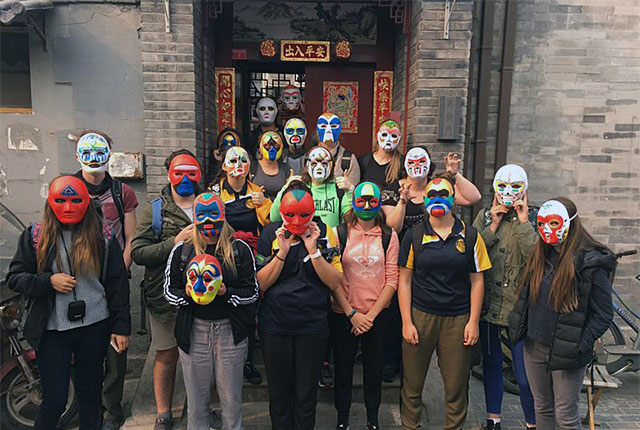
Operatic Facial Makeup Completed
Later, go to the Zhengyici Theatre to appreciate Peking Opera art. The theatre is a pure wooden structure, decorated with red lanterns and carved windows, and equipped with a traditional stage. In this antique-style setting, you can sip tea while watching traditional Peking Opera and Kunqu Opera performances, immersing yourself in the four core performing skills of Peking Opera—"singing, reciting, acting, and acrobatics".
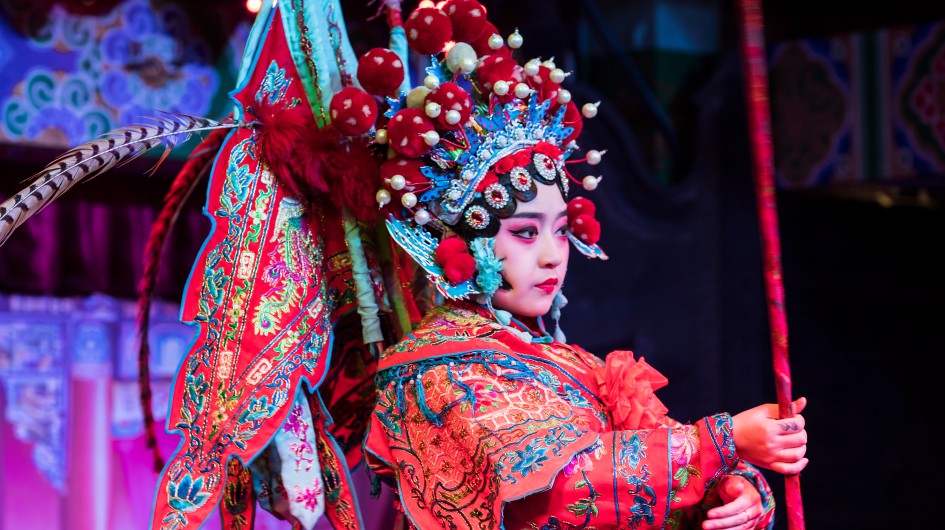 Watching a Peking Opera Performance
Your Journey’s Rewards:
Explore the Mei Lanfang Memorial Hall to learn about the Peking Opera master’s artistic career and achievements; experience Peking Opera facial makeup painting with your own hands and understand the character traits represented by different makeup designs; finally, enjoy the delicate performances by Peking Opera actors at the Zhengyici Theatre.
Educational Focus:
What character traits do the different colors of Peking Opera facial makeup correspond to?
Takeaway:
Facial makeup is an important artistic technique in Peking Opera that "expresses spirit through form": red faces symbolize loyalty and integrity, white faces represent treachery and suspicion, black faces stand for uprightness and impartiality, and blue faces denote courage and boldness.
Thought Challenge:
Besides facial makeup painting, what other experiential activities can be designed to encourage teenagers to actively learn about and inherit Peking Opera culture?
Today, you will go hiking at the Mutianyu Great Wall. Along the way, you will visit the double-sided crenel structures on the Great Wall and listen to the tour guide explain the Great Wall's defense system. Hike west along the Great Wall to Hero Platform, where you can overlook the magnificent scenery of the Great Wall winding along the top of the mountains. For the return trip, you can choose to hike down or take the slide.
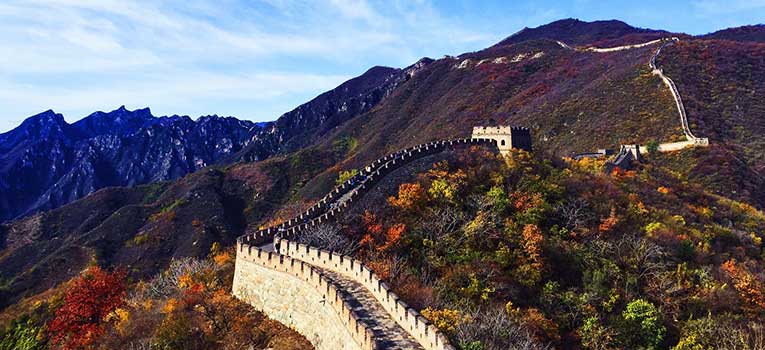
Mutianyu Great Wall in Autumn
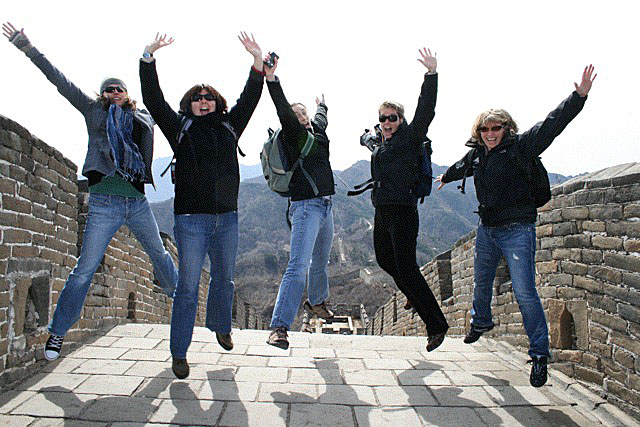
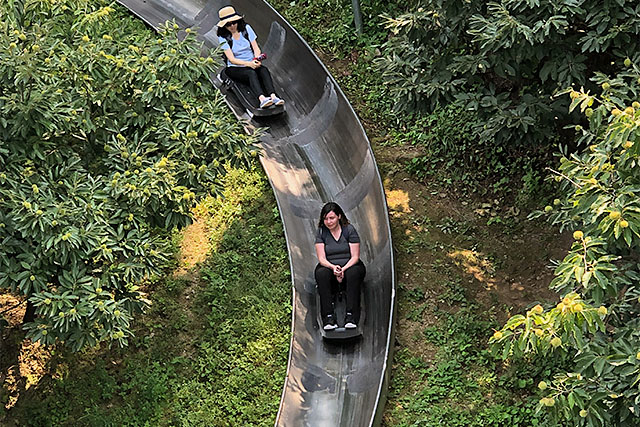
After leaving the Great Wall scenic area, you will take a short break. The driver will take you to the airport according to the schedule. Upon arriving at the airport, bid farewell to your Beijing tour guide and driver, and start your journey from Beijing to Chengdu.
Your Journey’s Rewards:
In addition to admiring the magnificent scenery of the Great Wall, you can also gain an intuitive understanding of the wisdom behind ancient military defense projects.
Educational Focus:
Which designs of the Great Wall reflect the logic of defensive functions?
Takeaway:
The Great Wall's city walls are approximately 7-8 meters high, which can prevent enemy troops from climbing; the outer crenels are equipped with shooting holes, allowing soldiers to fight in concealment; the inner horse path is about 4-5 meters wide, facilitating the transportation of soldiers, grain and fodder.
Thought Challenge:
How can the Mutianyu Great Wall avoid the wear and tear of its bricks while receiving a large number of tourists?
You will embark on an exploration journey of Sichuan Opera. The first stop is the Chengdu Sichuan Opera Art Museum, which houses more than 2,500 fine cultural relics related to Sichuan Opera, including golden-embroidered python robes, pheasant-feather headpieces, wood-carved masks, hand-copied scripts, and miniature models of opera stages. Through these exhibits and the guide's explanation, you can intuitively feel the artistic charm of Sichuan Opera in terms of costumes, props, scripts, etc., and understand the history and cultural connotation of Sichuan Opera.
There are many classic Sichuan Opera plays adapted from Romance of the Three Kingdoms. As an important carrier of the Three Kingdoms culture, the Wuhou Memorial Temple is an ideal place to learn about the history and stories of the Three Kingdoms period. You will visit the Wuhou Memorial Temple, and under the guidance of the guide, you will tour the Tang Dynasty Stele, the Han Zhaolie Temple, the Wuhou Memorial Temple itself, and the Huiling Mausoleum, learning about the stories of Zhuge Liang and Liu Bei in Romance of the Three Kingdoms.
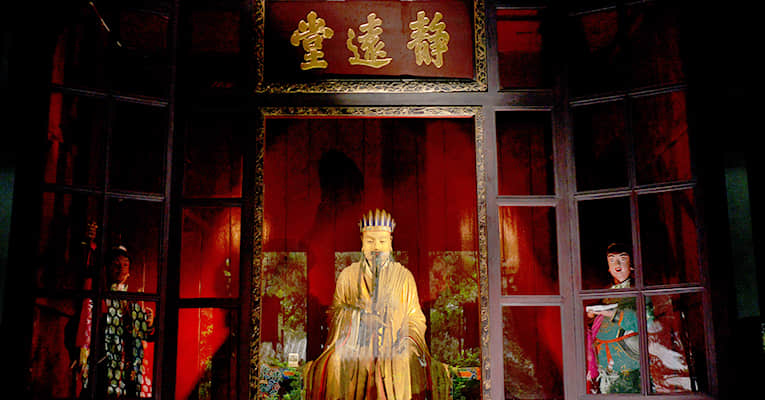 Wuhou Memorial Temple
In the afternoon, you will experience Sichuan Opera role-playing at Shufeng Yayun (a renowned Sichuan Opera venue). Professional makeup artists will do your face makeup, help you put on exquisite opera costumes and headdresses, and explain knowledge related to the costumes. After the makeup and costume preparation, professional actors will instruct you on opera movements on-site and teach you some basics of "singing, reciting, acting, and fighting", allowing you to experience the stage life of an actor. A photographer will take commemorative photos of you based on your role's appearance.
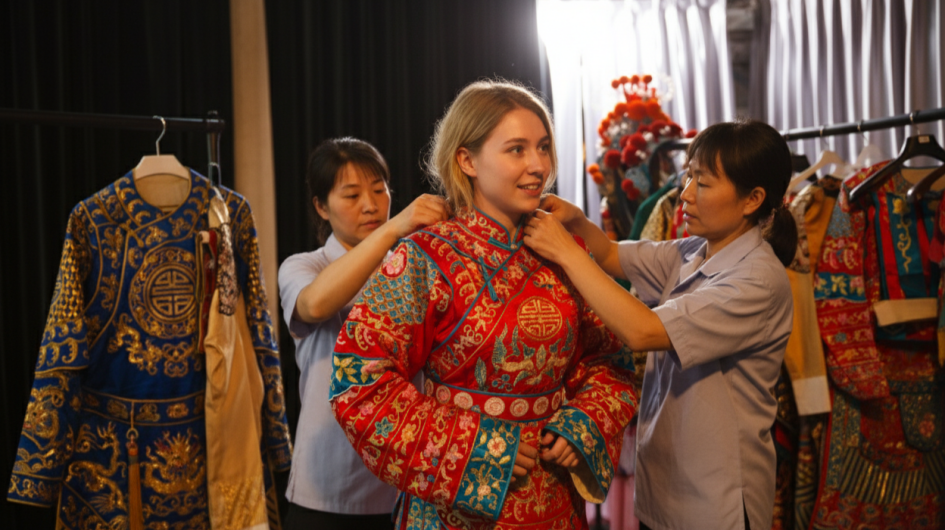 Sichuan Opera Role-Playing
Next, you will participate in a shadow puppetry art experience. First, a professional teacher will explain the origin and development of shadow puppetry art. Then, the teacher will guide you to learn the basic movements that constitute shadow puppetry. From practicing basic hand postures, to learning how to use light and shadow to project vivid images such as rabbits, pigeons, and puppies, and then to learning to arrange simple shadow puppetry stories, every step is full of fun and challenges.
As night falls, the Sichuan Opera performance at Shufeng Yayun begins. You can enjoy tea while watching Sichuan Opera actors showcase stunts such as "face-changing", "fire-spitting", "lantern-rolling", and shadow puppetry on the stage.
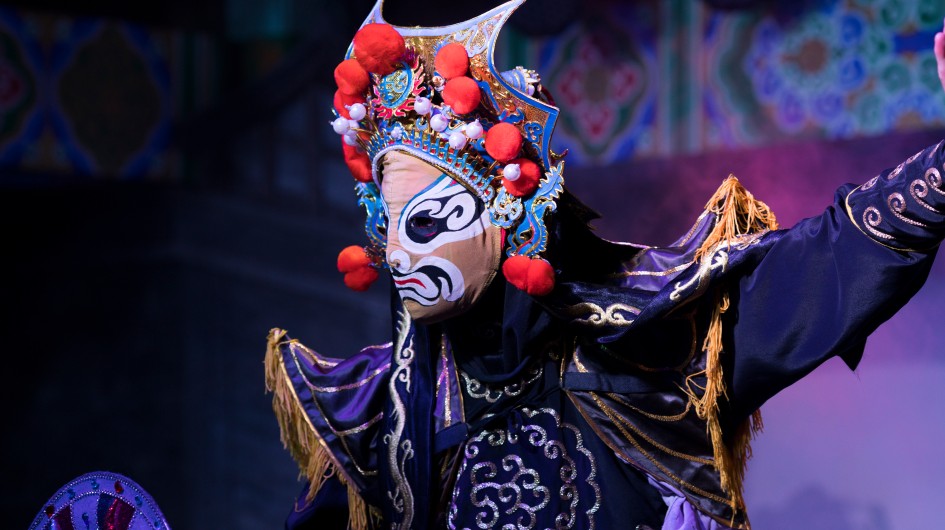 Watch Sichuan Opera's Unique Skill – Face-Changing
Your Journey’s Rewards:
At the Chengdu Sichuan Opera Art Museum, learn about the historical development and artistic characteristics of Sichuan Opera; explore the stories of the Three Kingdoms at the Wuhou Memorial Temple; and finally, have an immersive Sichuan Opera experience at Shufeng Yayun, including participating in role-playing and trying shadow puppetry creation.
Educational Focus:
What technical principles lie behind the props related to the "face-changing" technique in Sichuan Opera?
Takeaway:
Actors or technicians use specially made paper or silk to paint multiple facial masks, which are easy for actors to change and not easily damaged. Then, mechanisms are installed on the edges of the masks, with small parts such as springs and magnets built inside. In this way, actors can trigger the mechanisms to achieve rapid changes of facial masks.
Thought Challenge:
How can museums protect cultural relics like opera costumes that are sensitive to temperature, humidity, and light while still meeting visitors' viewing needs?
After getting up in the morning, you will head to the Chengdu Research Base of Giant Panda Breeding, which houses the world's largest captive population of giant pandas for artificial breeding. In the giant panda nursery, you may have a close-up view of warm scenes such as baby pandas drinking milk and being cared for by breeders; in the juvenile giant panda villas, you can see lively young pandas; and in the adult giant panda villas, you can watch giant pandas climbing trees and gnawing on bamboo, thus learning about the daily life of giant pandas.
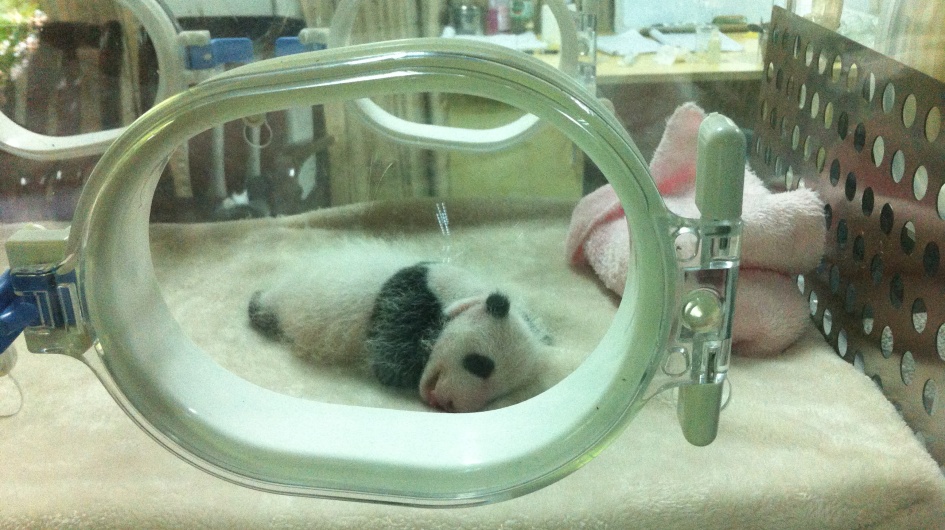 Observe Panda Cubs
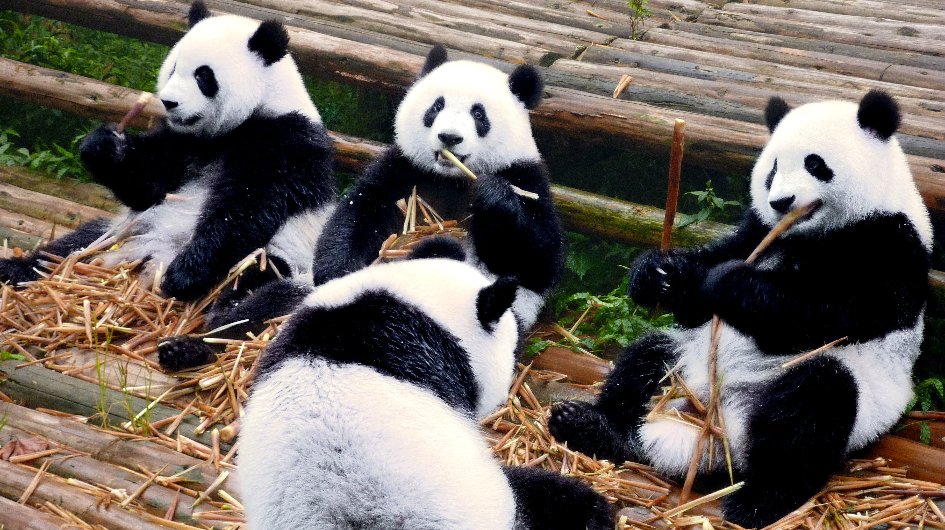 Giant Panda
After lunch, you will leave for Wenshu Yuan Monastery, the best-preserved Buddhist monastery in Chengdu. Founded in the Sui Dynasty, it has a history of more than 1,400 years. You will visit major buildings including the Heavenly King Hall, the Dharma Preaching Hall, and the Scripture Repository, and also view Buddha statues and Buddhist scriptures. There will also be opportunities to participate in experiences such as tasting vegetarian monastery meals and copying Buddhist scriptures.
Departing from Wenshu Yuan Monastery, you will go to Kuanzhai Alley, which consists of three parallel alleys: Kuan Alley, Zhai Alley, and Jing Alley. You can stroll among the courtyard complexes with gray bricks and tiles, choose a teahouse to leisurely taste tea, or go to the street to savor some Chengdu-style specialty foods.
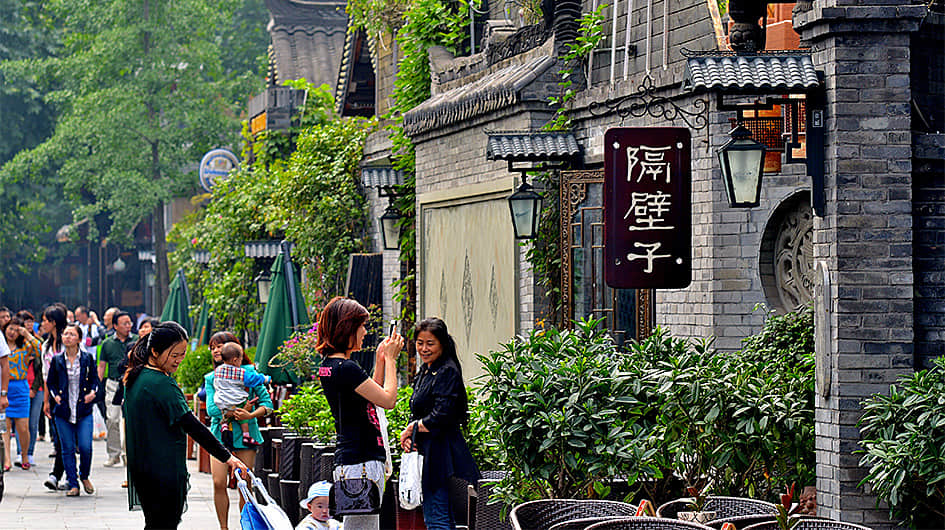
Kuanzhai Alley
Your Journey’s Rewards:
Observe the daily behaviors of giant pandas and learn about their breeding status at the Chengdu Research Base of Giant Panda Breeding; experience the Zen atmosphere at Wenshu Yuan Monastery; and wander through the Qing Dynasty residential alleys in Kuanzhai Alley to experience the local culture of old Chengdu.
Educational Focus:
How does the "giant panda enclosure design" at the Chengdu Research Base of Giant Panda Breeding meet the survival and breeding needs of giant pandas?
Takeaway:
The indoor areas of the giant panda enclosures maintain a constant temperature to adapt to the pandas' habits, while the outdoor areas are equipped with climbing wooden frames and pools to simulate the wild environment, meeting the pandas' activity needs.
Thought Challenge:
As a historical block, how can Kuanzhai Alley avoid excessive commercialization during its tourism development?
Have breakfast at the hotel in the morning, then take your luggage and head to the airport or railway station. Bid farewell to your Chengdu tour guide and driver, and start your journey to Suzhou.
After arriving in Suzhou, a driver and a guide will greet you and take you to the hotel to check in. In the evening, you can go to nearby restaurants on your own to try Suzhou-style cuisine, such as stir-fried shrimps and crab roe tofu.
The stage setup of Kunqu Opera often incorporates elements of traditional Chinese architecture and gardens. In some Kunqu Opera plays, props such as folding screens, curtains, rockeries, and latticed windows are used to create the corresponding scene atmosphere. You will admire authentic Jiangnan-style gardens in Suzhou's Humble Administrator's Garden and Lion Grove Garden.
After breakfast, you will head to the Humble Administrator's Garden—a outstanding representative of classical Jiangnan gardens. In the East Garden, you can closely appreciate the details of the ice-cracked latticed windows and the iconic rockery. In the Central Garden, you will see buildings and covered bridges reflected in the lotus pond, presenting a picturesque view. Then, proceed to Lion Grove Garden. Famous as the "Kingdom of Rockeries," Lion Grove Garden is home to rock formations of various shapes, most of which resemble lions. The pond landscape of Lion Grove Garden is also quite distinctive: there is a winding corridor beside the pond, adorned with a mid-lake pavilion and a zigzag bridge.
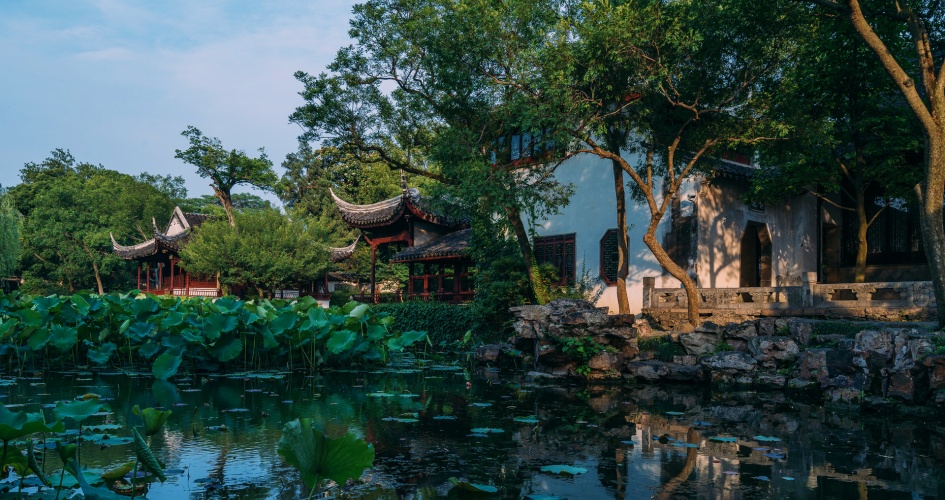 Humble Administrator’s Garden
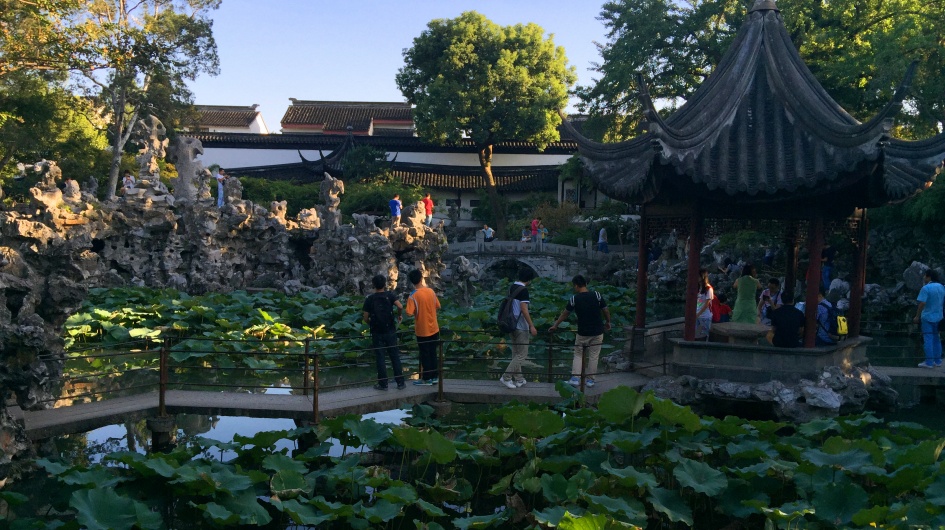 Lion Grove Garden
After lunch, arrive at the China Kunqu Opera Museum, a gathering place for Kunqu Opera enthusiasts. You can browse exhibits including cultural relics, historical materials, costumes, and music scores to learn about the development history of Kunqu Opera. You can also admire the exquisite ancient opera stage—its dome-shaped structure features an ingenious acoustic design that produces natural reverberation.
After dinner, go to the Master of the Nets Garden. Besides appreciating the exquisite garden layout, you can watch different performances while wandering between various buildings, including Suzhou Pingtan (storytelling and ballad singing), guzheng (Chinese zither) performances, and excerpts from the Kunqu Opera The Peony Pavilion: A Dream in the Garden.
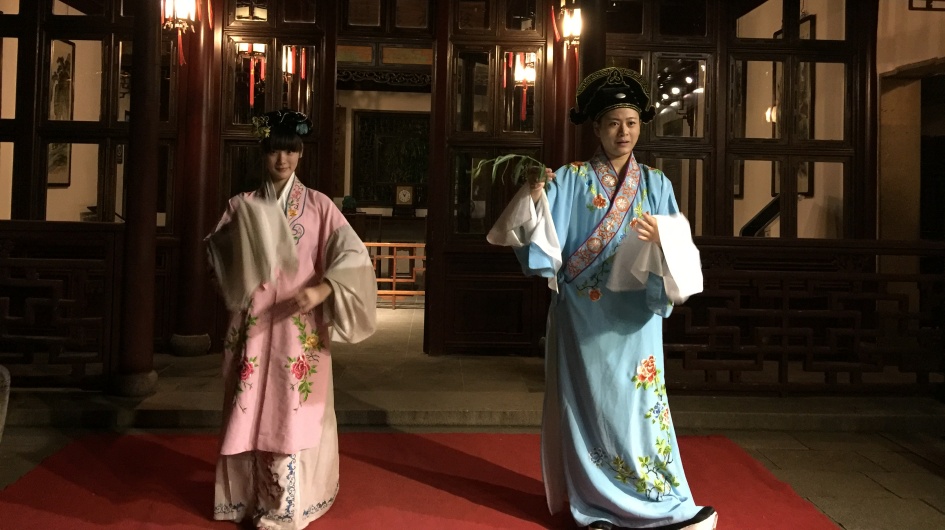 Listening to Kunqu Opera at Master-of-Nets Garden
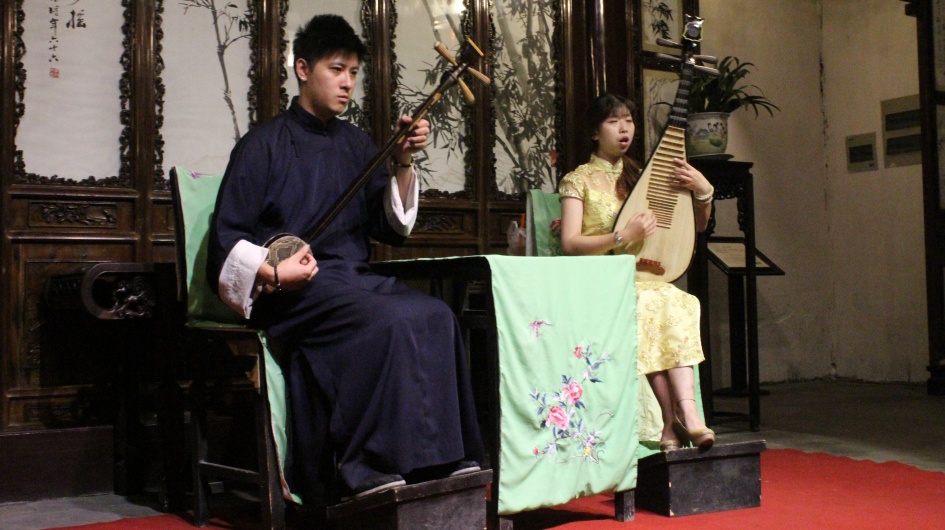 Pingtan Appreciation
Your Journey’s Rewards:
Wander through the Humble Administrator's Garden to admire the scenery of Jiangnan gardens, explore the interesting layout of the rockery maze in Lion Grove Garden; step into the China Kunqu Opera Museum to learn about the history and artistic characteristics of Kunqu Opera; finally, enjoy Kunqu Opera performances set against the real garden scenery at the Master of the Nets Garden.
Educational Focus:
How does the on-site performance venue at the Master of the Nets Garden influence the audience's viewing experience when presenting Kunqu Opera?
Takeaway:
The Master of the Nets Garden itself is a garden building. Its stage layout takes the garden space as the background, with actors performing while moving among natural landscapes such as water pavilions, ponds, and rockeries. The integration of Kunqu Opera and garden scenery enhances the audience's immersive experience.
Thought Challenge:
Most Kunqu Opera librettos are written in classical Chinese, which is difficult for some audiences to understand. In museum or garden experiences, how should auxiliary content be designed to help audiences comprehend the librettos?
In the morning, you depart for Tongli Water Town, a thousand-year-old ancient town renowned for its typical Jiangnan water town scenery of "small bridges, flowing water, and residences". Here, you can stroll along the bluestone slab roads, admiring the white walls and black tiles on both sides that have stood through the Song, Yuan, Ming, and Qing dynasties. You can also take a boat to cruise through the waterways, enjoying the views of small bridges and the reflections of buildings and trees on both banks in the water.
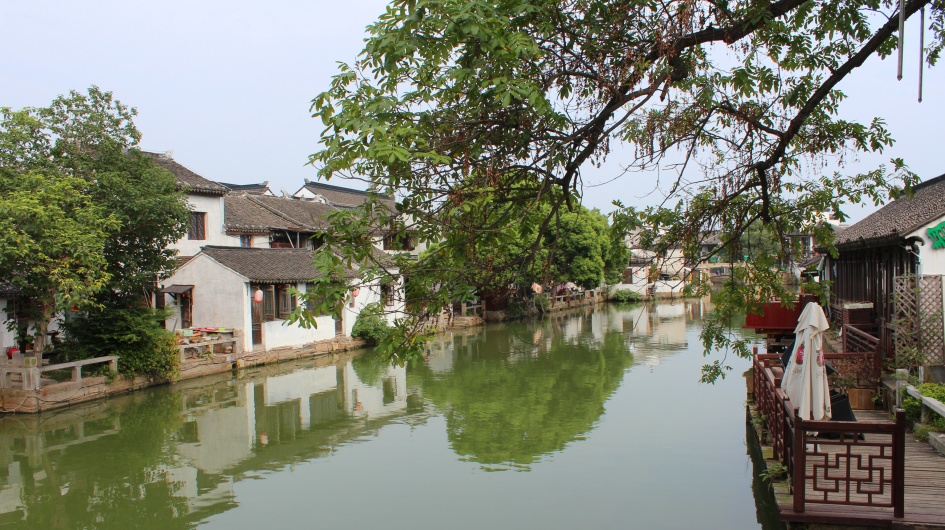 Tongli Water Town
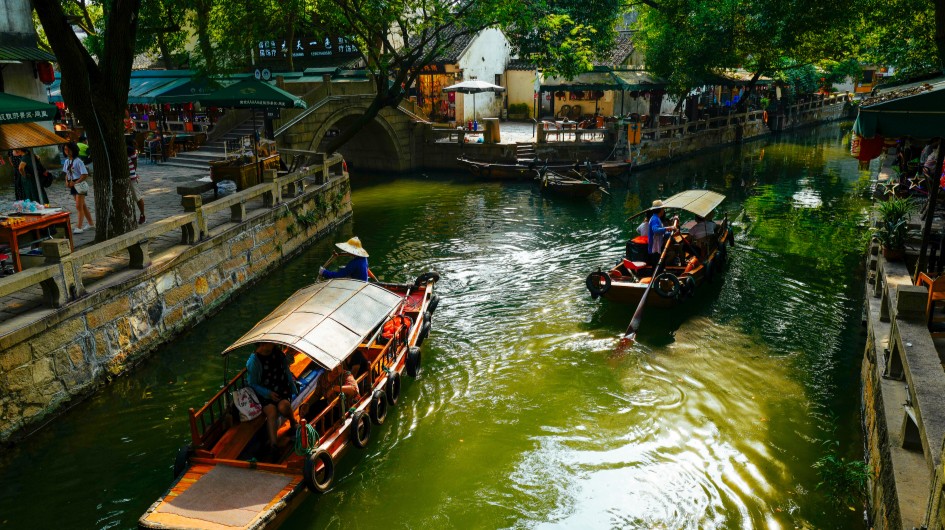 Scenery Viewing by Cruise Ship
After the tour, you head to the railway station and travel to Shanghai, a gathering place for diverse types of Chinese opera.
Your Journey’s Rewards:
Take a boat tour of Tongli Water Town and experience the residential pattern of "small bridges, flowing water, and residences" unique to Jiangnan.
Educational Focus:
What architectural features do the "waterfront residences" of Tongli Water Town have, and how do they adapt to the natural environment of Jiangnan, which is characterized by frequent rainfall and abundant water?
Takeaway:
Some parts of the waterfront residences extend over the river surface and are supported by wooden piles, which not only expands the living space but also allows residents to draw water and do laundry directly from the river. For some residences, the upper floor is used for living while the lower floor serves as a passageway, providing shelter from wind and rain. Additionally, the sloped design of the roofs enables rapid drainage of rainwater, preventing water accumulation from eroding the buildings.
Thought Challenge:
The increase in tourists may lead to water pollution in Tongli. How to protect the water town’s ecology while not affecting the core experience of "boat tours"?
In the morning, head to Nanjing Road, where a multitude of trendy brand stores gather—it is one of Shanghai’s iconic fashion landmarks. Here, you can savor Shanghai’s characteristic delicacies such as fresh meat mooncakes and Hudie pastries. Afterward, stroll to the Bund, where you can admire over 50 European-style buildings with a century of history, while also catching a glimpse of landmark structures like the Oriental Pearl Tower and Shanghai Tower.
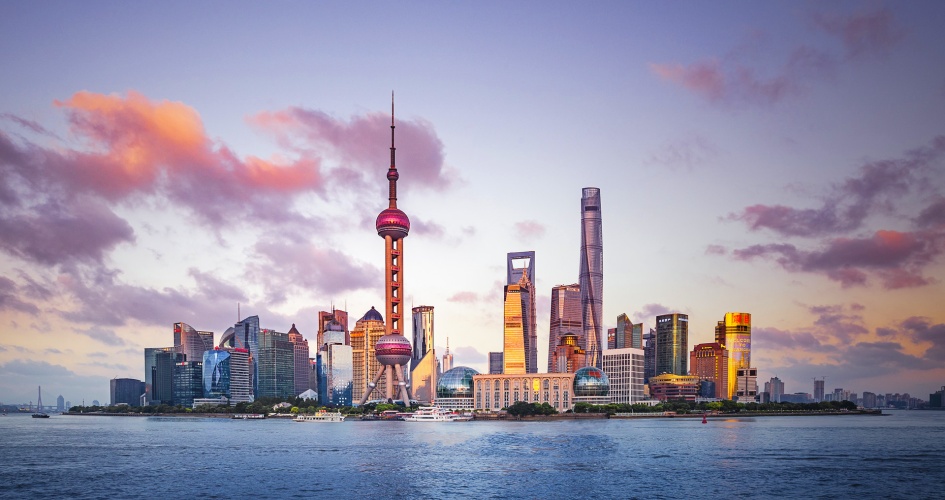 The Bund Scenery
In the afternoon, depart for Xiangyin Book Garden to enjoy Pingtan. Pingtan is a traditional storytelling and singing art form that mainly uses the Suzhou dialect for its vocals, accompanied by the pipa (a four-stringed Chinese lute) and sanxian (a three-stringed plucked instrument), and it narrates folk legends and historical stories. The stage setup at Xiangyin Book Garden is simple, with no excessive lighting or special effects, allowing you to focus on the performers’ shows.
Your Journey’s Rewards:
Wander along Nanjing Road and the Bund to appreciate the cluster of international-style buildings and Shanghai’s modern architectures; listen to Suzhou Pingtan at Xiangyin Book Garden, and enjoy the pipa accompaniment as well as the singing in the Suzhou dialect.
Educational Focus:
How did Pingtan come into being?
Takeaway:
Pingtan originated in the late Ming and early Qing dynasties. Initially, it was performed by blind or partially blind artists who made a living by storytelling and singing, traveling from street to street to provide entertainment for the common people. During the Qing Dynasty, it developed a complete system and became widely popular in places like Suzhou and Shanghai.
Thought Challenge:
The librettos of Suzhou Pingtan are mostly in the local dialect, which makes it difficult for some non-local tourists to understand. How can we optimize the presentation form to help the audience comprehend better?
In the morning, you arrive at People’s Square—a popular gathering spot for Shanghai locals to enjoy leisure activities. Here, you can take a stroll to experience the relaxed lifestyle of Shanghai residents and admire the large-scale musical fountain. This square is also an ideal place to take photos of landmark buildings like the Shanghai Museum, Shanghai Grand Theatre, and Shanghai Municipal Government Building.
Then, take a vehicle to Shanghai Yuyuan Garden, a representative of Jiangnan classical gardens from the Ming Dynasty. You can wander among iconic structures such as rockeries, the Mid-Lake Pavilion, and the Nine-Zigzag Bridge, while appreciating the architectural details of ancient buildings—including the upturned eaves, carved beams, and painted rafters. Additionally, the surrounding Yuyuan Tourist Mart gathers specialty foods and time-honored brands, allowing you to browse while savoring Shanghai snacks.
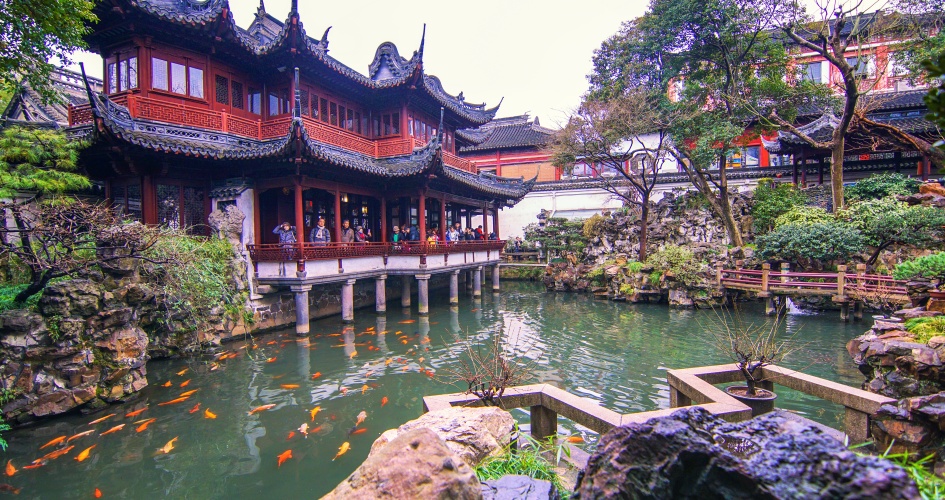 Yu Garden
In the afternoon, head to the Tianchan Yifu Stage, one of the oldest existing theaters in Shanghai dedicated to traditional Chinese opera performances. Inside the theater, you can choose from a variety of opera genres to watch, such as Peking Opera, Yue Opera, and Kunqu Opera. Here, you can immerse yourself in the performances by professional opera artists.
Your Journey’s Rewards:
Step into Yuyuan Garden to explore the exquisite layout of Jiangnan classical gardens; wander through Yuyuan Tourist Mart to taste specialty foods; and enjoy professional opera performances at the Tianchan Yifu Stage, immersing yourself in the "singing, recitation, acting, and acrobatics" of traditional art forms like Peking Opera and Kunqu Opera.
Educational Focus:
Why is the Tianchan Yifu Stage so popular in Shanghai?
Takeaway:
As the top-choice theater for Peking Opera performances in Shanghai, it has attracted numerous renowned Peking Opera artists to give performances here, drawing a large audience. The theater has also witnessed the formation and development of many opera schools, such as the Qi School and Xun School, and serves as a crucial platform for the inheritance and innovation of Peking Opera art.
Thought Challenge:
As a theater, how should the Tianchan Yifu Stage carry out the innovation and inheritance of traditional opera culture?
After breakfast, check your luggage to ensure nothing is left behind. Then, under the escort of the driver and tour guide, head to the airport or railway station. Bid farewell to the tour guide and driver, and your trip will come to an end.
This tour is suitable for: Chinese opera lovers and cultural lovers
What’s Included
- Experienced tour guides
- Entrance fee to all spots listed in the itinerary
- Well selected hotel accommodation
- Expert drivers and comfortable vehicles with air-conditioning
Hotel Options:
- Beijing Recommended Hotels: Sunworld Hotel Beijing
- Chengdu Recommended Hotels: Tibet Hotel Chengdu
- Suzhou Recommended Hotels: Artyzen Habitat Suzhou
- Shanghai Recommended Hotels: Central Hotel Shanghai
Wechat & WhatsApp: +86-13471279378