
10-Day Guilin - Zhangjiajie - Wuyi Mountain Hiking Tour
Do you want to immerse yourself in Guilin's karst scenery, Zhangjiajie's magical peak forests and Wuyi Mountain's Danxia landform with tea charm? This 10-day Guilin-Zhangjiajie-Wuyi Mountain tour deeply combines hiking with culture. You can visit Guilin's Elephant Trunk Hill, take a cruise to enjoy the night view of the Two Rivers and Four Lakes; hike Longji Terraces to experience the customs of the Red Yao and Zhuang ethnic groups; take a bamboo raft on the Li River, climb the glass plank road of Zhangjiajie's Tianmen Mountain, and also step into Wuyi Mountain's tea gardens to pick and make tea with your own hands. Along the way, there are not only natural wonders, but also opportunities to unlock geological mysteries and folk stories, making every step a cultural exploration that combines challenges and gains.
Itinerary at a Glance
| Day | Location | Highlights |
|---|---|---|
| D1 | Guilin-Elephant Trunk Hill-Two Rivers and Four Lakes Scenic Spot | Check into hotel, visit scenic spot, admire pagoda and river confluence view, take cruise to enjoy night scenery |
| D2 | Longji Terraced Fields | Hike along bluestone road, view terraced scenery, see stilted buildings, taste farm specialty foods |
| D3 | Li River-Xianggong Hill | Take bamboo raft to enjoy river scenery, guess "steeds" and take photos, climb mountain to watch river bend |
| D4 | Guilin-Zhangjiajie (High-Speed Rail)-Zhangjiajie Night Market | Take high-speed rail, check into hotel, explore night market and taste Tujia food |
| D5 | Bailong Elevator-Yuanjiajie-Tianzi Mountain | Take outdoor elevator, overlook peak forest and movie prototype pillar, visit stone bridge, take cableway down |
| D6 | Forest Park Ticket Station-Jinbian Stream-Tianmen Mountain | Hike along valley, enjoy natural oxygen bar, take cableway up, walk glass plank road and view cave |
| D7 | Zhangjiajie-Changsha South Railway Station-Wuyi Mountain | Take high-speed rail, transfer and try snacks, arrive and rest, taste local food |
| D8 | Tianyou Peak-Jiuqu Stream | Climb mountain via stone steps, overlook stream view, take bamboo raft, listen to hanging coffin legend |
| D9 | Jiulongkeng-Wuyi Xiangjiang Tea Garden | Take sightseeing bus to visit tea mother plants, learn rock tea history, experience tea picking and making, savor tea |
| D10 | Wuyi Mountain-Departure | Pack luggage, be sent to airport/railway station, review journey and complete hiking route |
Trip Highlights
- Hike along Longji Terraces’ bluestone road to experience ethnic customs
- Take Li River bamboo raft to enjoy karst scenery and take RMB-themed photos
- Ride Guinness-recorded Bailong Elevator to view Avatar prototype peak
- Walk Tianmen Mountain glass plank road and overlook 99-curve avenue
- Raft Jiuqu Stream to listen to hanging coffin legends and admire Danxia scenery
- Experience Wuyi rock tea picking, making and tasting with old tea plants
Tour Essentials

Quality
No Shopping Traps

Group Type
Private

Tour Focus
Hiking Tour

Accommodation
Nights:9

Best Season
Spring, Summer, Autumn
Full Itinerary
After arriving in Guilin, check in at the hotel and take a short rest before heading to the Elephant Trunk Hill in the city center. As the symbol of Guilin, this hill is located at the confluence of the Li River and the Peach Blossom River, and gets its name from its shape resembling a giant elephant drinking water by the river. Here, you will then visit the Puxian Pagoda, which looks like a sword hilt, overlook the scenery where the two rivers meet, and immerse yourself in the essence of Guilin's landscape.
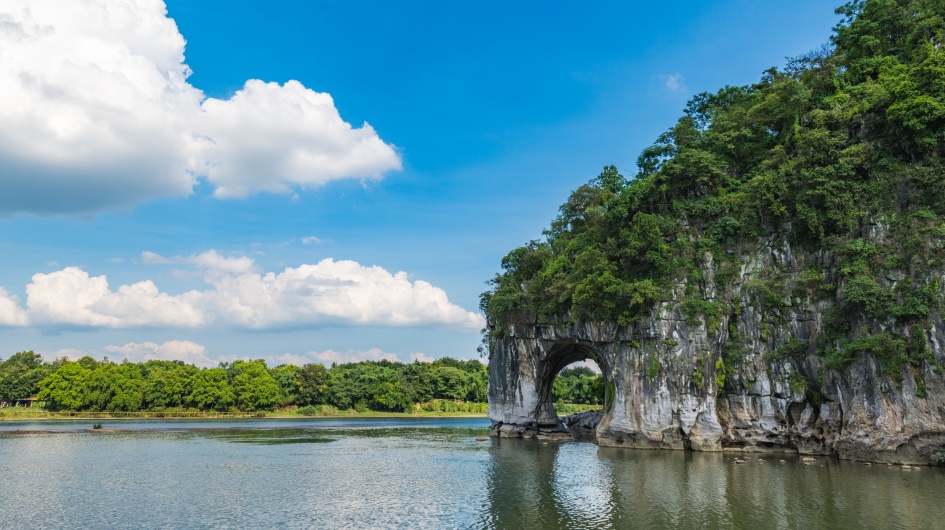 Elephant Trunk Hill
Later, go to the nearby Fisherman's Wharf and take a luxury cruise to start an 80-minute tour of the Two Rivers and Four Lakes Scenic Spot. Sail through the waters of the Four Lakes including Ronghu Lake and Shanhu Lake, and enjoy scenic spots such as the Relic Pagoda and the Sun and Moon Twin Towers with the guide's explanation along the way, immersing yourself in the magnificent night view described by the line "A thousand peaks stand around the wilderness, and a river embraces the city as it flows".
 Two Rivers and Four Lakes Scenic Spot
Your Journey's Rewards:
Check in at Guilin's landmark Elephant Trunk Hill, and admire the unique shape of Puxian Pagoda; take a cruise to tour the Two Rivers and Four Lakes, and savor the stunning night scenery of mountains and waters.
Educational Focus:
How was Elephant Trunk Hill formed?
Takeaway:
Elephant Trunk Hill is formed by limestone dating back 360 million years, through crustal uplift, fluvial erosion and weathering over hundreds of millions of years. First, the crustal uplift exposes the rocks. Then, rainwater dissolves the calcium carbonate in the rocks through the cracks, forming caves and holes. Finally, part of the rock mass falls off due to weathering, creating unique karst landscape features such as the "elephant's trunk" and "elephant's eyes".
Thought Challenge:
How can we better understand the coexistence of nature and the city while enjoying the beautiful landscape of mountains and waters?
Start from Jinkeng Dazhai Village and embark on a hiking journey along the thousand-year-old bluestone slab road, a classic route connecting the customs of the Red Yao and Zhuang ethnic groups. Walk through the Longji Terraced Fields along the way: in spring, you can see the water glistening like mirrors; in autumn, you can admire the golden rice waves resembling golden steps. From time to time, the folk songs of Yao villages and the chirping of insects on the field ridges reach your ears.
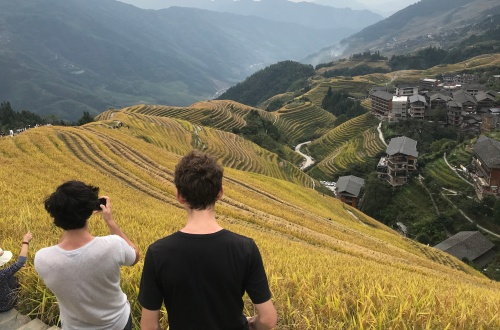 Hiking on the terraced fields
 Zhuang People
Passing through villages such as Zhongliu Village, you can catch a glimpse of stilted buildings with ganlan-style structures built against the mountains. You may also encounter villagers working in the fields and feel the atmosphere of farming. When you reach the destination, Pingan Village, first climb to the viewing platform to enjoy the spectacular terraced landscapes of "Nine Dragons and Five Tigers"(nine mountain ridges like dragons and five hills like tigers) and "Seven Stars Accompanying the Moon" (seven terraced fields surrounding one moon-shaped terraced field). Then find a farm restaurant to taste the delicious bamboo-tube rice and smoked bacon, letting the scenery of mountains and waters as well as the warmth of daily life fill your travel memories.
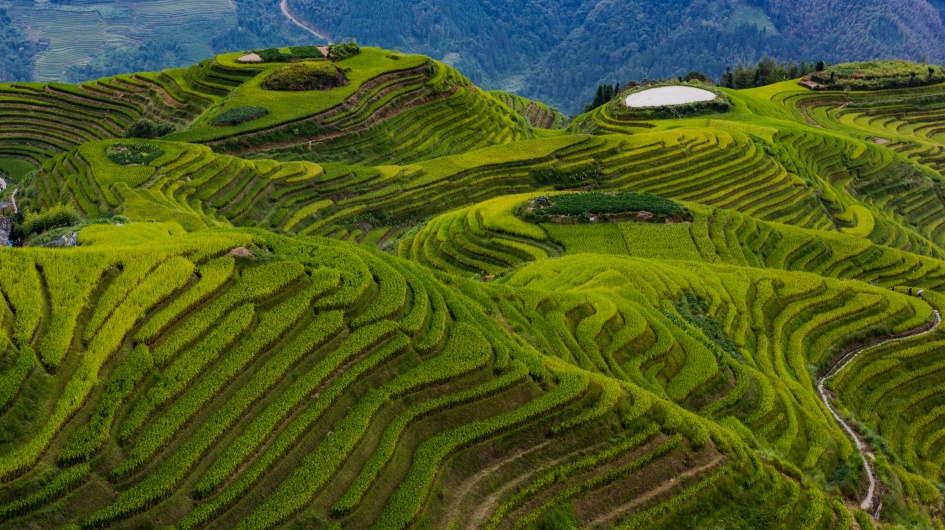 Seven Stars Accompanying the Moon
Your Journey's Rewards:
Admire the terraced fields' scenery across four seasons and experience the customs of the Red Yao and Zhuang ethnic groups; view the stilted buildings, taste farm-style specialty foods, and keep the memories of mountains, waters and daily life.
Educational Focus:
How were the stacked terraced fields experienced in Longji formed?
Takeaway:
The originally undulating mountain terrain of Longji Mountain is the natural foundation. The ancestors of the Zhuang and Red Yao ethnic groups, based on the terrain and following the mountain contours, reclaimed the land in layers and maintained it through generations, transforming the rugged mountains into stacked terraced fields.
Thought Challenge:
How can we keep the terraced landscape safe while we go on with the traditional farming culture?
In the early morning, take a bamboo raft from Yangti Village to start the drift along the essence section of the Li River. Pass by scenic spots such as Carp Hanging on the Cliff and Langshi Scenery along the way; guess the number of "steeds" on the rock at Nine Horses Fresco Hill, and take a photo with the background of the 20-yuan RMB note at Huangbu Reflection. Bamboo sways on both banks, fishing boats dot the water, and mountains, rivers and farmlands blend together, allowing you to fully enjoy the essence of the saying "Guilin's mountains and waters are the best under heaven".
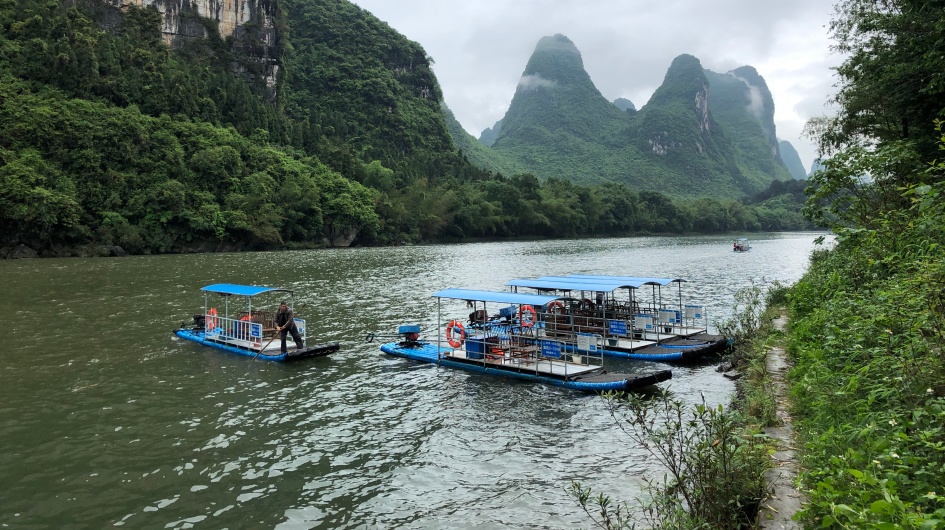 Bamboo rafting
After lunch, climb Xianggong Hill and hike for a few minutes to the viewing platform. Look far into the distance, and the First Bend of the Li River winds through the mountains like a silk ribbon. Karst peaks are stacked in order, and when light falls on them, they are like a flowing landscape painting, making it an excellent spot for photography.
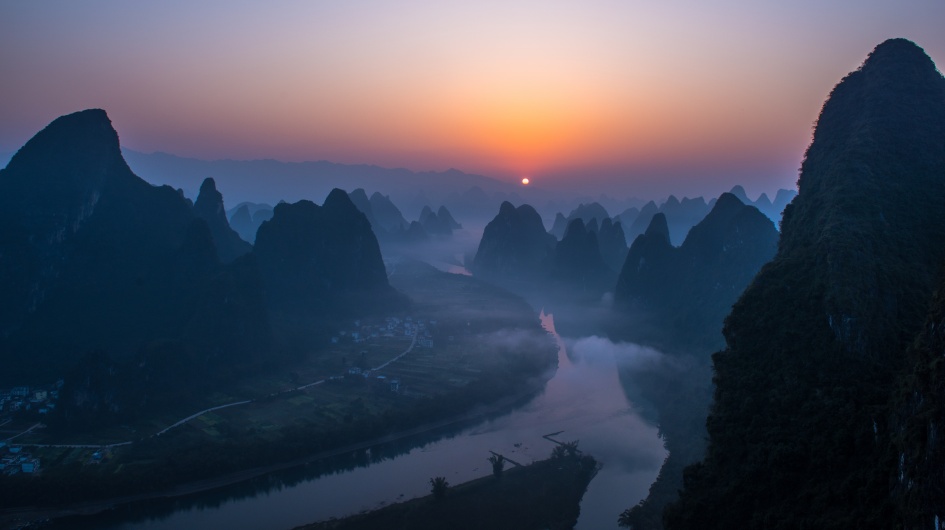 Xianggong Hill
Your Journey's Rewards:
Take a bamboo raft to enjoy the scenery of the Li River, guess the "steeds" on the Fresco Hill, and take photos at Huangbu Reflection; climb Xianggong Mountain to watch the river bend and capture the landscape like a painting.
Educational Focus:
Are the "steed" patterns on the rock wall of Nine Horses Fresco Hill really naturally formed?
Takeaway:
The "steed" patterns are products of natural geological processes. The mountain of Nine Horses Fresco Hill is composed of carbonate rocks. Surface water flows down the cliff to form flow marks and dissolution marks. Combined with rock bedding, fractures, weathering, as well as plants and residual traces on the cliff, these elements naturally and coincidentally form patterns resembling steeds. They are not man-made carvings or works of immortals in legends.
Thought Challenge:
How can we protect nature's great work for a long time as times change?
Take the high-speed train from Guilin to Zhangjiajie in the early morning. During the 3.5-4 hour journey, the scenery outside the window gradually changes from the landscapes of the Li River to the hills and valleys of western Hunan. After arriving in Zhangjiajie, go to the hotel to check in and relax.
If you still have energy, you might as well explore the food at the night market around the hotel by yourself: order a spicy and savory Tujia Sanxiaguo (a Tujia specialty dish with meat and vegetables), pair it with soft and glutinous glutinous rice cakes, and try a bowl of heat-clearing kudzu root starch. Experience the warmth and customs of western Hunan in advance through these authentic flavors.
After entering Wulingyuan Scenic Area from the East Gate, take the bus to the Lower Station of Bailong Elevator. Board this "tallest outdoor elevator" listed in the Guinness World Records, which climbs 326 meters vertically in just 1 minute and 28 seconds. You'll instantly pass through the stone pillar cluster and face the spectacular view of "Divine Soldiers Gathering" directly.
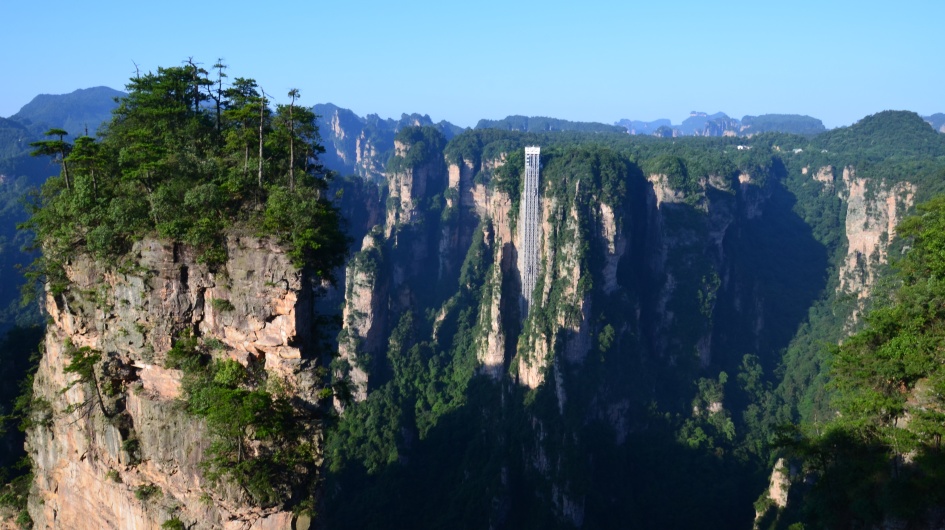 Bailong Elevator
Upon reaching the top, you'll arrive at Yuanjiajie. Overlook the peak forest at Mihuntai (Soul-Charming Platform); Qiankun Pillar, the prototype of Hallelujah Mountain in the movie Avatar, stands majestically. Its peak is as if cut by a knife and axe, with lush vegetation on the top. Then visit the natural stone bridge "World's First Bridge" to experience the marvelous craftsmanship of nature.
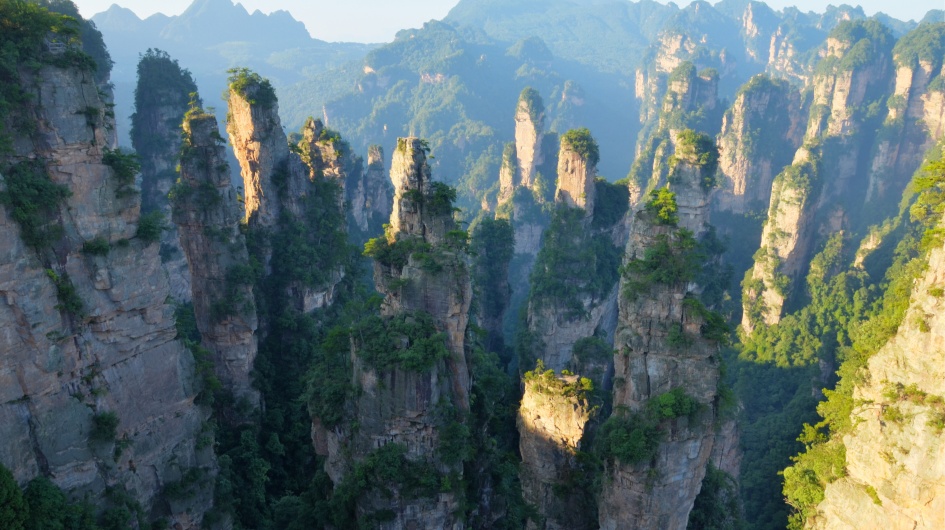 Hallelujah Mountain
Afterwards, take the bus to Tianzi Mountain and take the cableway (equipped with imported equipment) down the mountain. During the 2,084-meter journey, you can enjoy a panoramic view of Xihai Peak Forest and the vast green forests, bringing this journey to a stunning end.
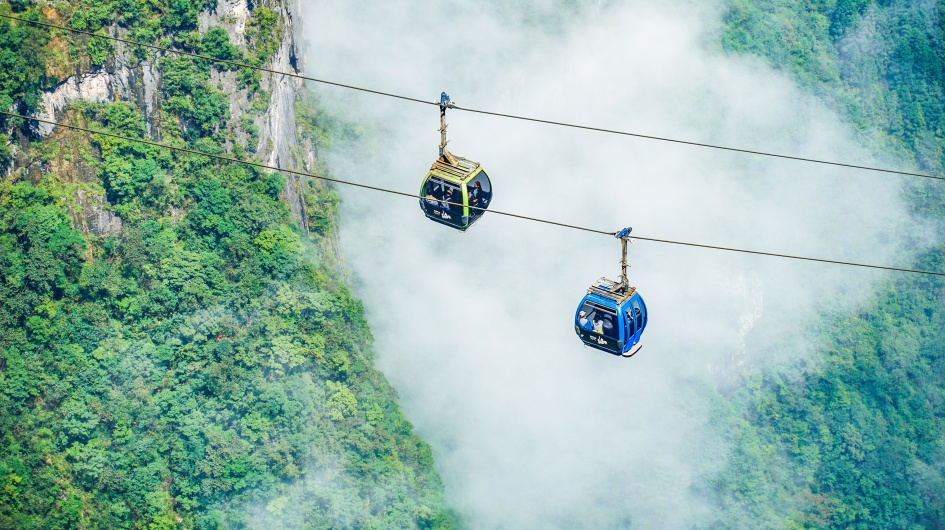 Tianzi Mountain cableway
Your Journey's Rewards:
Overlook the grandeur of the quartz peak forest, witness the miracle of elevator engineering, enjoy the spectacular scenery of the movie prototype, and appreciate the beauty of the integration of nature and humanity.
Educational Focus:
Why has Qiankun Pillar in Yuanjiajie been able to maintain its unique columnar shape in a complex geological environment for millions of years?
Takeaway:
The unique shape of Qiankun Pillar comes from long-term geological processes. The quartz sandstone itself is hard and can resist weathering and erosion. At the same time, the crust in the area rises slowly; plus, running water continuously cuts along the rock cracks, gradually separating the originally connected rock masses. Finally, it forms the steep and straight pillar covered with greenery on top today, becoming a unique landscape carved by nature.
Thought Challenge:
Will Qiankun Pillar keep its present shape in the future if the geological environment changes?
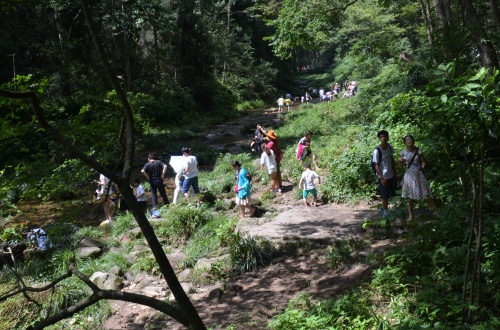
Enter the scenic area from the Forest Park Ticket Station and start a 3-4 hour hiking trip along Jinbian Stream. This "Wizard of Oz"-like valley connects many wonderful sceneries: the 380-meter-high Jinbian Rock, with the Shenying Hubian Peak standing beside it as a counterpart. Walk on the bluestone slab road along the way, watch the clear water of Zicao Pond reflecting the peaks, encounter the "Thousand-Mile Meeting" rock peaks that seem to convey affection, and immerse yourself in the freshness of this natural oxygen bar. At the end point, Shuirao Simen, four streams converge, surrounded by peak forests, presenting beautiful scenery.
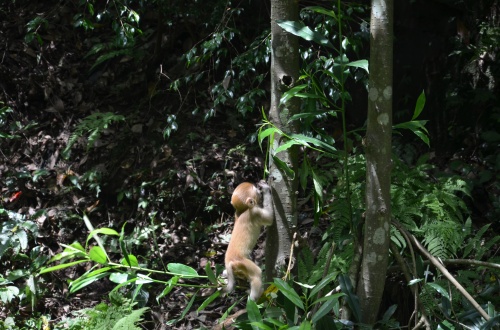
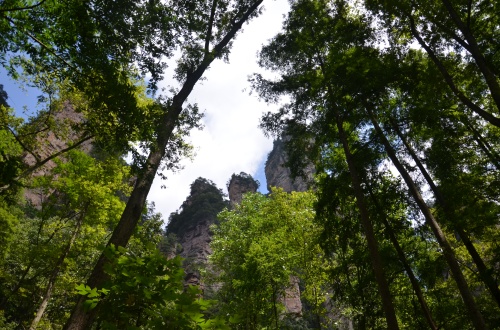
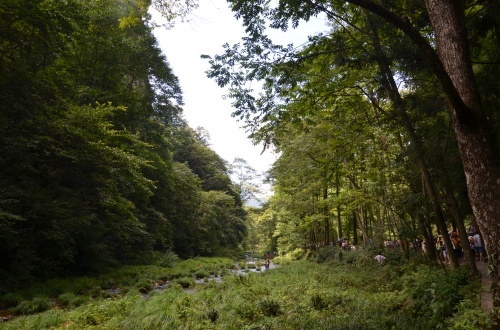 Beautiful Scenery of Jinbian Stream
After finishing the hike and taking a short rest, take a bus to Tianmen Mountain. Choose to take the cableway up the mountain; the 7,454-meter-long cableway takes 28 minutes, allowing you to overlook the 99-curve Tongtian Avenue from a high altitude. After reaching the top, head straight to the West Line Glass Plank Road, walk along the cliff edges, and look into the distance at the spectacular view of the open Tianmen Cave.
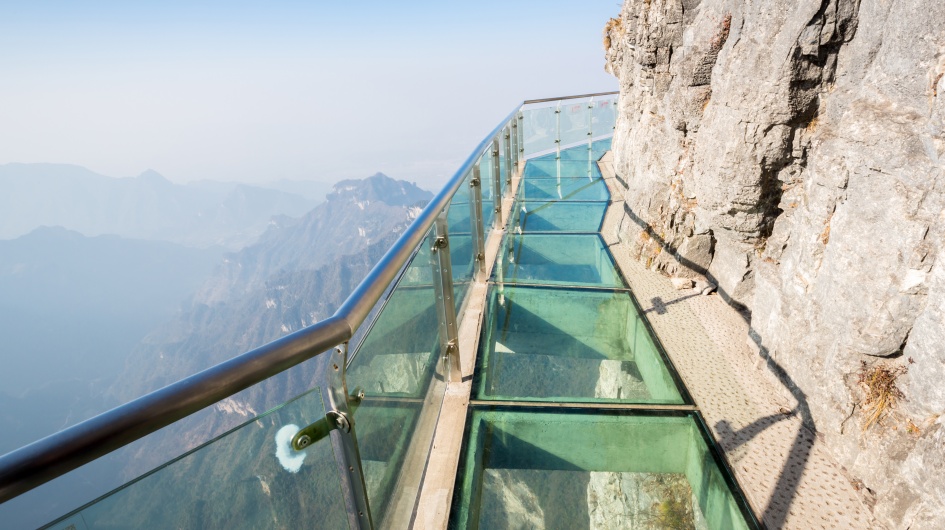 West Line Glass Plank Road
Your Journey's Rewards:
Admire the fantastic scenery of Jinbian Stream, enjoy the freshness of the natural oxygen bar, watch the grand view of Tianmen Mountain Cableway, and gaze at the wonders of the Glass Plank Road and Tianmen Cave.
Educational Focus:
Why can the Jinbian Rock beside Jinbian Stream maintain an upright shape for a long time and not be easily eroded and collapsed by the stream?
Takeaway:
Jinbian Rock is mainly composed of quartz sandstone. This type of rock is hard and dense, with strong resistance to weathering and erosion. At the same time, the bottom of Jinbian Rock is firmly connected to the surrounding rock mass, and the direction of the stream flow forms a certain angle with the rock's strike. The direct scouring force of the water on the rock is weak, which reduces the risk of the bottom being hollowed out. Therefore, it can maintain an upright shape for a long time and is not easy to collapse.
Thought Challenge:
If the water volume of Jinbian Stream increases for a long time, will it accelerate the erosion rate of Jinbian Rock?
Depart from Zhangjiajie and arrive at Changsha South Railway Station after 1.5 hours for a transfer. During the waiting time, you can try freshly fried stinky tofu, milk tea and Hunan rice noodles; it's also good to buy a portion of spicy preserved duck as a souvenir. Then take a 3.5-hour high-speed train to Wuyi Mountain and take a rest in the afternoon. You can look for an old shop to eat crispy-on-the-outside and tender-on-the-inside Xiaoguang cakes, taste the chewy Li's Lean Meat Thick Soup, or try the spicy and flavorful Langgu smoked goose, enjoying the authentic flavors while relaxing.
In the early morning, we climb Tianyou Peak. The 848 stone steps are chiseled along the Danxia cliff, with some sections having a slope of nearly 70 degrees, so we need to move forward steadily while climbing. After reaching the top, the view suddenly opens up. Jiuqu Stream winds around the peaks like a green ribbon, and the mist-shrouded scenery fully shows the charm of the "Five Wonders of Tianyou".
After finishing the climb, we take a short rest and then start rafting on Jiuqu Stream by bamboo raft. We see the graceful Yunu Peak standing tall and listen to the boatman telling the legend of the hanging coffins(coffins hanging on the cliff). The stream is sometimes gentle and sometimes slightly turbulent; we can reach out and touch the clear, cool water. The strange rocks on both banks, such as the "Two Lions Playing with a Ball", fully present the artistic conception of "traveling in a painting" and well deserve the reputation of "the soul of Wuyi Mountain".
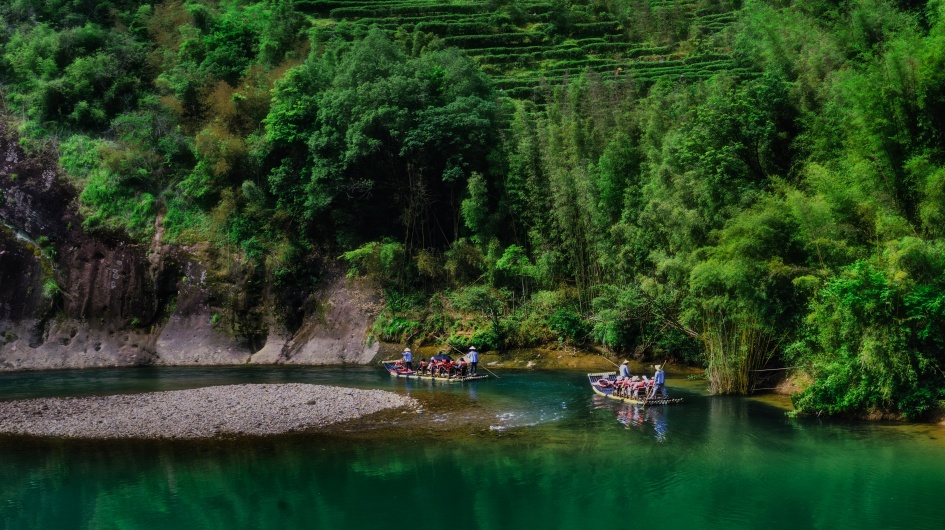 Jiuqu Stream rafting
Your Journey's Rewards:
Admire the steep beauty of Danxia cliffs, enjoy the clear water of Jiuqu Stream winding around peaks; listen to the ancient legend of hanging coffins, and feel the tranquility of "traveling in a painting".
Educational Focus:
Why are there hanging coffins along Jiuqu Stream? What kind of funeral ideology do they represent?
Takeaway:
The hanging coffins in the Jiuqu Stream are a unique burial custom of the ancient Yue people in the Wuyi Mountain region of Fujian. They were placed high up in cliff caves. This reflected the funeral concept of "higher burial means greater respect" — the Yue people believed that the closer one was to the sky, the easier it was to be near the gods. At the same time, this way stopped wild animals from bothering the remains and kept the ancestors peaceful. Also, the hanging coffins stood for the dead's souls going up to heaven. This showed the ancients' respect for mountains and their wish to live forever. Besides, they were a sign of power and status too.
Thought Challenge:
The ways and ideas of funeral practices are closely related to the environment where the people live. Do you know any other special funeral customs?
Take a sightseeing bus to Jiulongkeng to visit the mother plants of Dahongpao (Big Red Robe tea) between the rock walls. These 6 "kings of tea" with a history of over 300 years grow on steep cliffs, nourished by rock spring water. Picking from them has been stopped since 2006, and their premium tea leaves were once collected by the National Museum of China. The "Dahongpao" stone carving on the rock wall witnesses their legendary status.
Later, go to Wuyi Xiangjiang Tea Garden. Learn about the history of rock tea, then step into the tea garden to pick tea leaves with your own hands and follow the masters to experience manual tea-making steps like withering and fixing. Finally, savor a cup of fresh tea surrounded by tea aroma and feel the "rock texture and floral fragrance" of Wuyi rock tea.
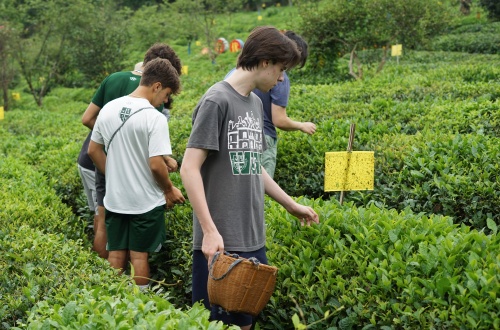 Picking tea leaves
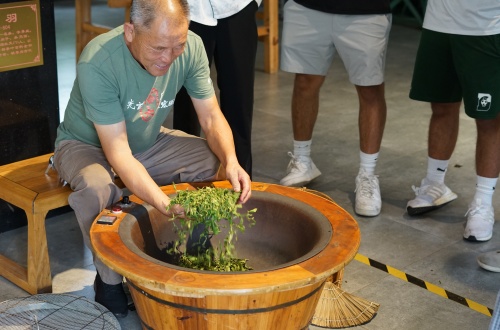 Fixing (drying tea leaves with high-temperature roasting/steaming)
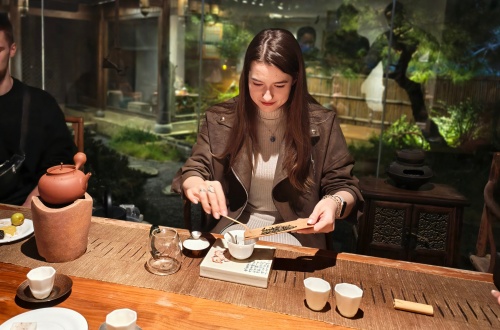 Learn how to drink tea
Your Journey's Rewards:
Visit the century-old mother tea plants and witness their legendary status; learn the history of rock tea and experience tea picking and making; savor the flavor of fresh tea and feel the "rock texture and floral fragrance".
Educational Focus:
Why can the only 6 mother plants of Dahongpao (Big Red Robe tea) become the "king of tea" and be preserved by the state?
Takeaway:
Its preciousness comes from unique conditions and profound value. It grows on Danxia cliffs, nourished by rock spring water, with a tree age of over 300 years and a small quantity. Picking has been stopped since 2006, making its premium tea leaves a rarity. As a tribute in past dynasties, it once carried diplomatic stories and also witnesses the historical accumulation of Wuyi rock tea and gifts from nature.
Thought Challenge:
What kind of natural environment and human heritage have created rock tea as such a cultural treasure?
On the last day of the journey, pack your luggage and our staff will take you to the airport or high-speed rail station as per your plan. Looking back on the past nine days, congratulations on completing the hiking route of Guilin - Zhangjiajie - Wuyi Mountain. While challenging yourself, you have also learned about the differences in geological landforms of various places and deeply experienced the local folk culture, turning the hike into an immersive cultural experience. This is what we at China Educational Tours have always been committed to - making travel not just about viewing scenery, but a cultural experience journey to feel the exchange and collision of different cultures! We hope these beautiful memories will become one of the treasures in your life!
This tour is suitable for: Hiking Enthusiasts, Nature Scenery Lovers, Tea Culture Lovers
What's Included
- Experienced English-speaking hiking guides
- Comfortable transportation and professional drivers
- Carefully selected comfortable accommodations
- Included fees for all scenic spot tickets and experience items mentioned in the itinerary (excluding optional experience items)
- Included commercial accident insurance
Wechat & WhatsApp: +86-13471279378