- Home
- Culture
- Chinese Operas
- Peking Opera
- 10 Famous Opera Artists
10 Famous Peking Opera Artists
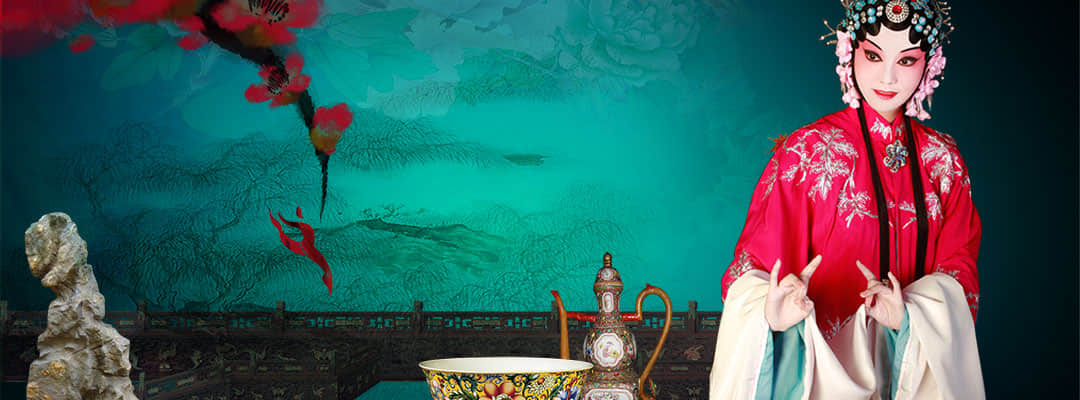
If you were on a game show would you be able to answer a trivia question about famous Peking Opera performers?
10 Famous Opera Masters
Mei Lanfang | 梅兰芳 méi lán fāng | 梅蘭芳 Mui Lan Fong
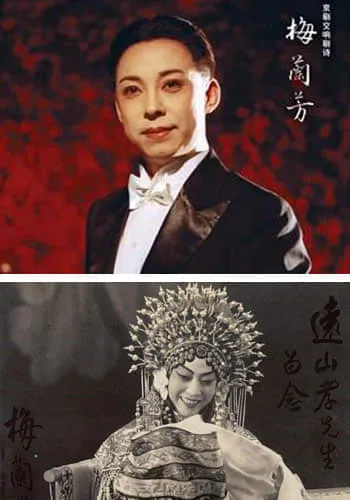 Source from Internet, only for display and study.
The best known name associated with Peking Opera is Mei Lanfang (1894 – 1961), not just in China, but around the world. He was, after all, the first to perform with his company away from China, and achieved extraordinary success in countries like Japan (1919 and 1924), the US (1930), and the Soviet Union (1932).
He was a legendary player of the ‘Dan’ roles (female roles), and developed a whole new performing school in his own style. Mei Lanfang (1894 – 1961) was so much more than just an actor, he was an opera master. He started studying when he was 8, and played his first role at 12. When he was 14 he joined the XI Lian Cheng theatre company, and performed in Shanghai and elsewhere.
Mei rediscovered and revived many old and forgotten theatrical masterpieces, adding his own style to them, and so revived the traditional Chinese arts of dance and pantomime, enriching it with Kungfu swordplay.
There were actually four very famous masters who played ‘Dan’ roles. Along with Mei Lanfang there were Cheng Yanqiu (1904 – 1958), Shang Xiaoyun (1899 – 1976), and Xun Huisheng (1899 – 1968).
Explore the Legacy of Mei Lanfang: Cultural Sites to Visit
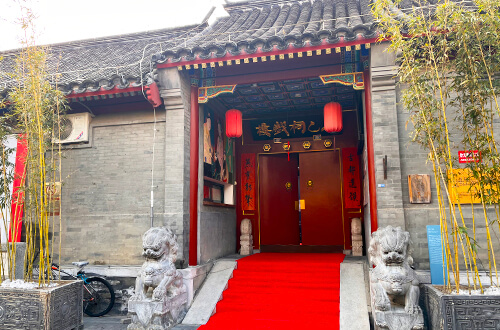 Zhengyici Theatre
Today, visitors can gain in-depth insights into Mei Lanfang’s artistic achievements, life story and the evolution of Peking Opera culture by visiting heritage sites associated with him.
Beijing Mei Lanfang Memorial Museum Located in Xicheng District, Beijing, this site was Mei Lanfang’s residence in his later years. Maintaining the architectural features of a traditional Beijing siheyuan (courtyard house), the museum houses a wealth of precious relics related to Mei Lanfang, including opera costumes, performance photographs, manuscripts, stage props and personal belongings.
Zhengyici Theatre, Beijing Mei Lanfang performed here in the 1930s. Originally built in the Qing Dynasty, Zhengyici Theatre is one of China’s oldest surviving wooden opera buildings and a vital venue for traditional opera culture in Beijing.
Former Residence of Mei Lanfang in Shanghai Mei Lanfang moved here in 1932. He also received international celebrities such as Charlie Chaplin at this residence. The site preserves memories of his daily life and artistic endeavours in Shanghai.
Meiyuan (Mei Garden), Taizhou, Jiangsu Taizhou is Mei Lanfang’s hometown and a key destination to learn about his early life. Constructed in memory of Mei Lanfang, the garden adopts the style of classical Jiangnan gardens. It features an exhibition hall of Mei Lanfang documents, the Mei Pavilion and a white marble statue. Meiyuan stands as a landmark of urban culture in Taizhou.
Cheng Yanqiu | 程砚秋 chéng yàn qiū | 程硯秋 Ching Yin Chow
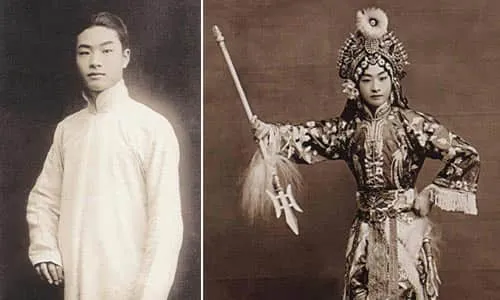 Source from Internet, only for display and study.
Cheng Yanqiu began to learn at the age of six, first training in martial roles (‘Wusheng’) and later training in the role of a vivacious maiden with questionable character (‘Huadan’) and also the role of a noble middle-aged woman (‘Qingyi’). He also took Mei Lanfang as his tutor. His singing was unique,being firm yet gentle, soft and pleasing. It expressed the character’s feelings in a way that touched the audience’s emotions, and which became known as the ‘Cheng’ style.
Shang Xiaoyun | 尚小云 shàng xiǎo yún | 尚小雲 Sheung Siu Wan
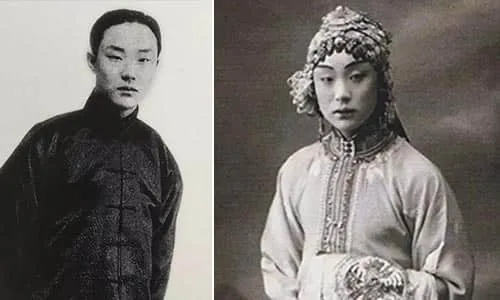 Source from Internet, only for display and study.
Shang Xiaoyun was the founder of the ‘Rong Chun’ Opera School. He became a student of Li Chunfu when his family fell on hard times after his father’s death, learning the old male character role and then the martial male. Later, with his good looks and great voice he started playing female Qingyi characters studying under Sun Yiyun. By 1914 he had become extremely popular in this role, and was well known for his dance and acrobatic skills over and above his singing. He studied specific techniques under Wang Yaoqing, including posture, action of waving his sleeves, and his singing methods, becoming a mature player. In 1927 he started his own Troupe, Xieqing, and he wrote, and rewrote, about 30 plays.
Xun Huisheng | 荀慧生 xún huì shēng | 荀慧生 Shun Wai Sang
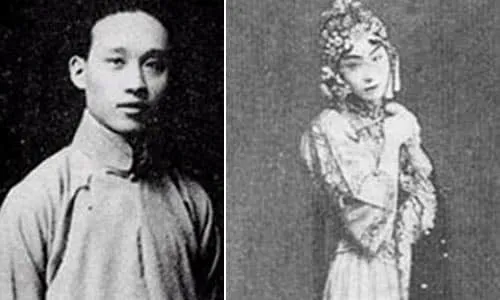 Source from Internet, only for display and study.
Xun Huisheng came from a family so poor that, in order to make a living, he and his brother were sold to an opera troupe. He stuck with it when his brother left and became such a notable ‘Qingyi’ and ‘Huadan’ player that his special performing style was known as ‘Xun’ style. This came from his exceptional ability to play the part of an innocent, cheerful girl, with a soft and feminine manner that was ideal for depicting the ‘Dan’ roles. He brought the best methods of Bangzi of Herbei into Peking Opera. He practiced hard, toughening himself by wearing heavy clothes in summer, and only a thin shirt with ice underfoot in winter. His singing style had great artistic appeal as he expressed the suffering of the character with a perfect mixture of a sweet voice and the lingering on the high notes. While remaining faithful to tradition, he made innovations and explored new possibilities in his transcripts and in singing, acting, monologue and dress.
6 Other Famous Players
There were other notable famous players who had a lasting effect on the art of Peking Opera.
Tan Xinpei (1847 – 1917) who played ‘Lao Sheng’ (senior male) roles, and founded the ‘Tan’ style. Many other players started to imitate his style. His descendants have followed in his footsteps including his son, Tan Xiaopei, grandson, Tan Fuying (the most successful), great grandson Tan Yuanshou, and even his great great grandson.
Ma Lianliang (1901 – 1966) was another ‘Laosheng’ (senior male) player who founded the ‘Ma’ style.
Qiu Shengrong (1915 – 1971) was a great ‘Jing’ (male with painted face) player, and founder of the ‘Qiu’ style.
Zhang Junqiu (1920 – 1997) was a player of the female ‘Qingyi’ (middle-aged woman) role.
Yan Jupeng (1890 – 1942) followed Tan Xinpei, and developed his own ‘Yan’ singing style which emphasizes his arias.
Zhou Xinfang (1895 – 1975) specialized in ‘Laosheng’ (old male) roles. He is considered one of the greatest masters of Peking Opera, and the best known in the Shanghai School of Peking Opera. He was persecuted and died during the Cultural Revolution. He has performed over 650 repertoire titles in Peking Opera, more than any other actor.
Of course all of these four famous masters of the Peking Opera have now passed on, but as is the way with Chinese masters, youngsters have been trained to imitate them to perfection and take their place.
In 2014, on the 120th anniversary of Mei Lanfang’s birthday, his contemporary artistic descendants did a tour of the United States, performing in New York and Washington. The Jingju Theater Company of Beijing and the Mei Lanfang Jingju Troupe performed excerpts from five operas based on the classic plays of the Mei School, and Lady Mu Guiying Takes Command. The Mei Lanfang Troupe is run by Mei Baojiu, son of the late Mei Lanfang and who is now 80 and with 50 years of experience. Although Mei Baojiu has no children, he has passed on his father’s techniques to his disciples, both male and female, as half of the actors and musicians nowadays are women.
Mei Baojiu’s disciples are required to learn Mei Lanfang’s style precisely and to perfection, and so it is perpetuated. But now, high-tech lighting and sound are employed, as well as English supertitles, and the music has a richer, fuller sound, not as high-pitched as in traditional Peking Opera.
Peking Opera Culture Tour
This In-depth Peking Opera Culture Tour will take you to the Mei Lanfang Memorial Museum, explore historical sites related to Peking Opera, enjoy classic Peking Opera performances, and participate in professional Peking Opera cultural workshops.
During the journey, you will follow the artistic footsteps of Mei Lanfang, one of the greatest masters of Peking Opera, and discover the development and inheritance of the “Mei School” style. Step into traditional theaters to experience the unique charm of singing, reciting, acting, and acrobatics, and take part in hands-on activities such as opera movement training, facial mask painting, and professional Peking Opera makeup to gain a deeper understanding of this traditional art form.
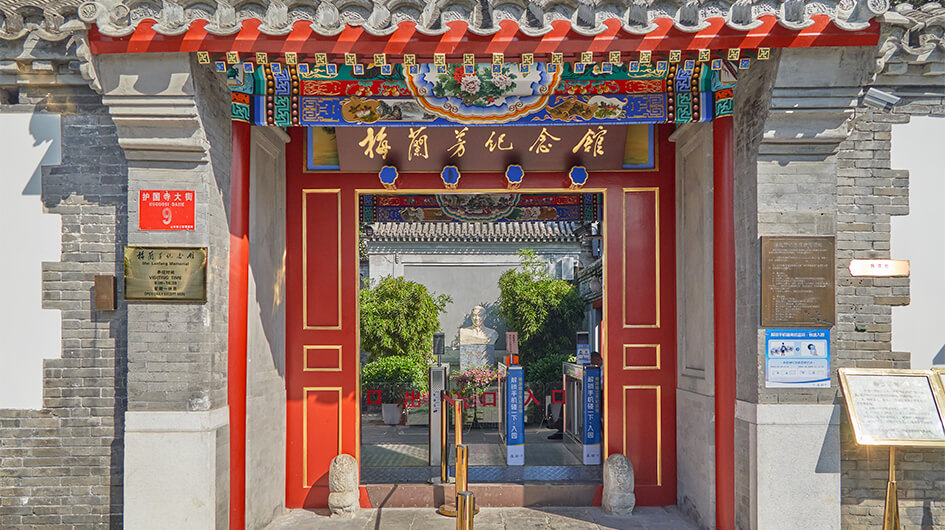 Mei Lanfang Memorial Museum
China Educational Tours can create customized Chinese cultural study tours for school groups, families, and culture enthusiasts. By combining cultural visits, hands-on experiences, and interactive learning activities, we help participants explore Peking Opera, traditional arts, and historical heritage sites while gaining a deeper understanding of the history, aesthetics, and cultural values behind Chinese performing arts.
OR
Are you eager to begin your Chinese cultural journey?
Drop us a line and we will promptly connect you with our leading China expert!
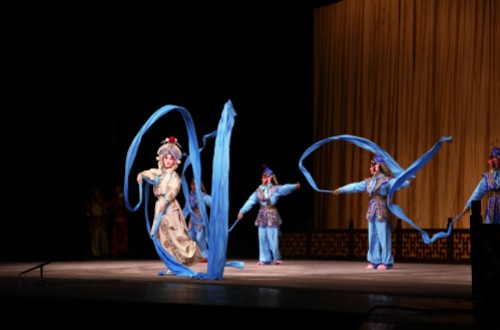 12-Day Chinese Opera Tour
 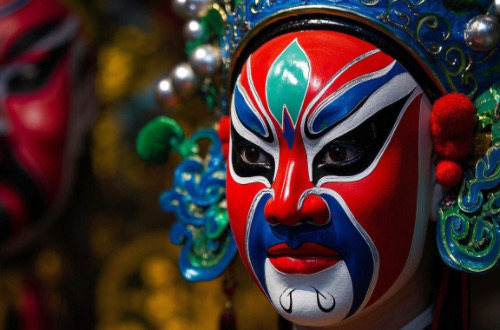 Sichuan Opera
 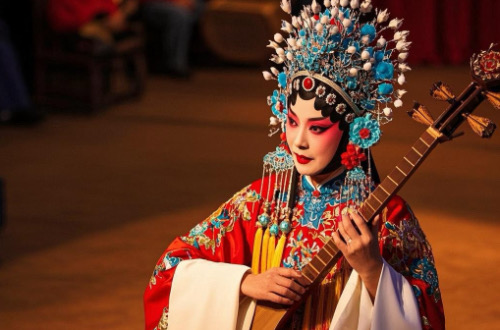 Cantonese Opera
 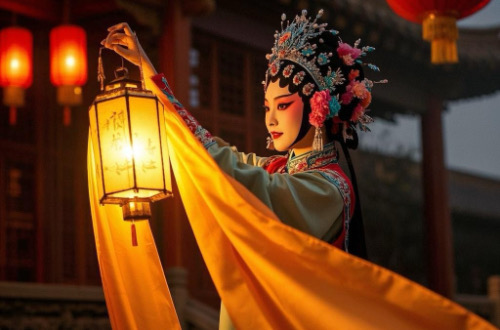 Yu Opera