- Home
- Culture
- Chinese Tea
- Chinese Tea in Western Countries
Chinese Tea in Western Countries
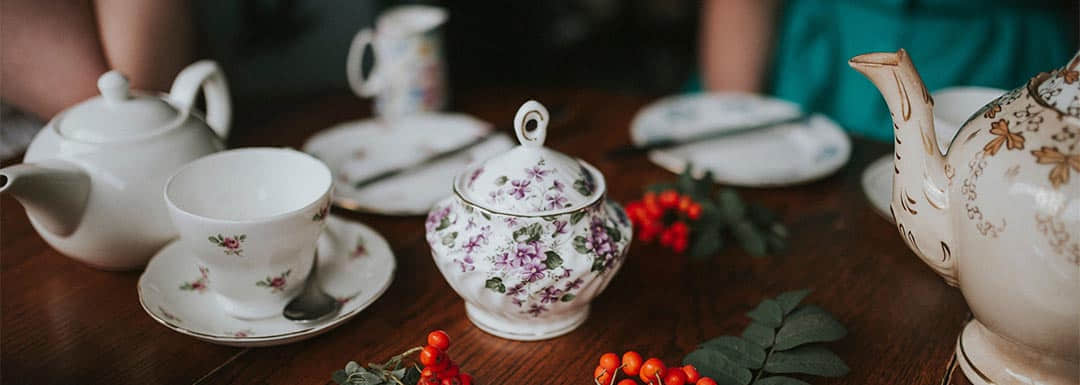
Tea originated in China, and people all over the world have taken to drinking it, each in their own way. Here are a couple of notable examples.
Great Britain
It would seem that ever since the 17th century the British just cannot do without their tea. In fact it has crept into the language in common expressions such as "Keep calm, and drink tea" which often appears printed on mugs. An emphatic 'no' sometimes translates to "Not for all the tea in China!" Questioning the validity of something can be stated as, "what does that have to do with the price of tea in China?" And when someone wants to politely say that they don't like something: "It's just not my cup of tea." If someone is making a lot of fuss about something unimportant it is referred to as "a storm in a teacup", and something really useless is "about as useful as a chocolate teapot".
In Britain, drinking tea became very fashionable early on, and was soon embellished with every kind of equipment and trinkets to add to the atmosphere of elegance that was associated with the high class act of tea drinking.
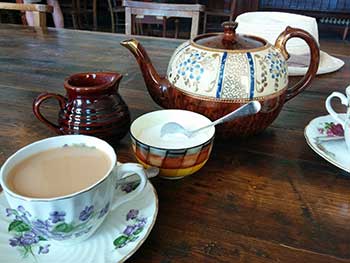 A cup of black tea and milk
Nowadays it is not just for the "posh" people, and tea is frequently enjoyed simply with a tea-bag tossed into a cup of hot water. Yet many people still find comfort in socially acceptable ceremonies and customs and until quite recently the correct way to make and serve a proper pot of tea was still taught in home economics classes in high schools.
Generally speaking, ordinary British people like their (black) tea in a mug, made strong and hot with boiling water poured over a tea bag (squeezed and removed), and cold milk optionally added, along with one or more teaspoonfuls of added sugar. For a more formal occasion, loose leaf black tea is brewed in a pre-warmed teapot (which may be covered with a tea cozy), and then carefully poured through a tea strainer into tiny cups resting on saucers with a small biscuit on the side. Milk is poured from a delicate jug, and sugar is added in the form of sugar lumps dispensed with a pair of tongs.
That being said, the UK has become increasingly cosmopolitan, and all colors and kinds of teas are share among friends and families, and as people become more health conscious they choose the tea that they believe will be most beneficial. Nevertheless, everyone drinks tea, and a large proportion of it is essentially Chinese tea.
You might expect the situation to be very similar in the United States of America, as one was largely settled by the other. Dutch settlers brought tea to "New Amsterdam" (later renamed New York by the English) in 1650. Nowadays Americans tend to prefer iced tea - either black or green - already prepared and presented in a refrigerated bottle, complete with high levels of sugar.
Tea was introduced into Australia, also at one time a British colony, at the arrival of the first fleet in the late 18th Century brought tea from Great Britain. As well as the usual British style of tea drinking, Australians created their own style with "Billy Tea". This is a special drink for someone out in the bush, either working or camping, using a "billy can" - like a largish tin can with a wire handle on top - to boil water over a fire, throw in tea leaves by the handful, and then swing the billy in a full circle a few times to settle the leaves before pouring it into a mug.
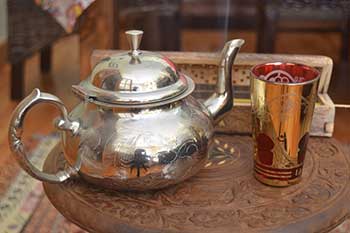 Turkey tea
Turkey
The people in Turkey individually drink more tea than anyone else in the world, and they have definitely developed their own style. You really cannot go anywhere without being offered tea. For example, if you enter a shop in Istanbul, and strike up a conversation with the proprietor, pretty soon he will draw a little circle on his palm, indicating to an assistant who will run down the street and return with a hanging tray loaded with tiny tulip-shaped glasses on little glass saucers holding the clear red-colored tea with a tiny teaspoon and sugar lumps on the side.
Tea drinking spread from China via the Silk Route, and doubtless reached the Ottoman Empire (Turkey) before it reached Europe in the 17th century. Nowadays of course Turkey also grows and exports its own tea, known as rize tea, to 110 countries, but still imports a great deal of black tea from China.
In Turkey the tea is drunk strong and black, often sweetened, and almost compulsorily on any social occasion. Tourists especially are plied with "chai" tea endlessly.
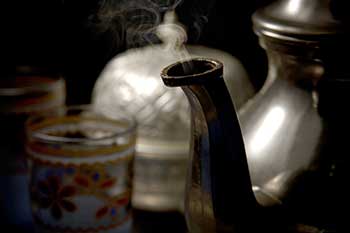 Moroccan tea culture
Morocco
Taking time to prepare and enjoy tea together is an important part of Moroccan culture and a symbol of hospitality and friendship. Tea is believed to have reached Morocco through several trade routes over the centuries, while the modern tradition of Moroccan mint tea developed during the 18th and 19th centuries. It is made with Chinese gunpowder green tea—a tightly rolled green tea named for its pellet-like appearance—combined with fresh mint leaves and plenty of sugar. Today, Morocco is one of the world's largest importers of Chinese green tea, reflecting the lasting connection between Chinese tea and Moroccan tea culture.
Nevertheless, brewing and drinking tea is a much-loved tradition that signifies hospitality and friendship, and is carried out with great care. Chinese green tea is the base for the drink, with added mint leaves and sugar, and it is served at mealtimes and throughout the day. Traditionally the task of tea preparation, often completed in front of guests, lies with the male head of the family, while the women deal with the food.
The tea is poured from a teapot with a long curved spout from a height of at least 30cm (12 ") into small glasses, causing foam on the surface of the tea. If there is no foam, the tea is not ready so is poured back to steep longer.
The tea ingredients generally include Chinese green tea, typically "gunpowder tea" from Zhejiang province, mint leaves, and sugar. In winter the mint may be replaced with wormwood leaves or lemon verbena, and sometimes pine nuts are added.
From tea cultivation and processing techniques to tea-drinking etiquette, tea cultures across different nations reflect local natural environments, historical contexts and social customs. For students, families and cultural enthusiasts, exploring global tea culture offers a vivid way to understand cross-cultural exchange and the spread of culture worldwide.
Join our 12-Day Hangzhou–Mount Wuyi–Pu'er Tea Culture Tour to venture into China’s renowned tea-growing regions and experience the complete journey of tea from cultivation and plucking to processing and tasting. Whether you harvest Longjing tea in Hangzhou, learn the craft of making rock tea in Mount Wuyi, or travel to Yunnan to visit ancient tea mountains and converse with local tea masters, you will gain deeper insight into the history, craftsmanship and timeless charm of Chinese tea culture. All our tea culture tours can be customised to match your interests.
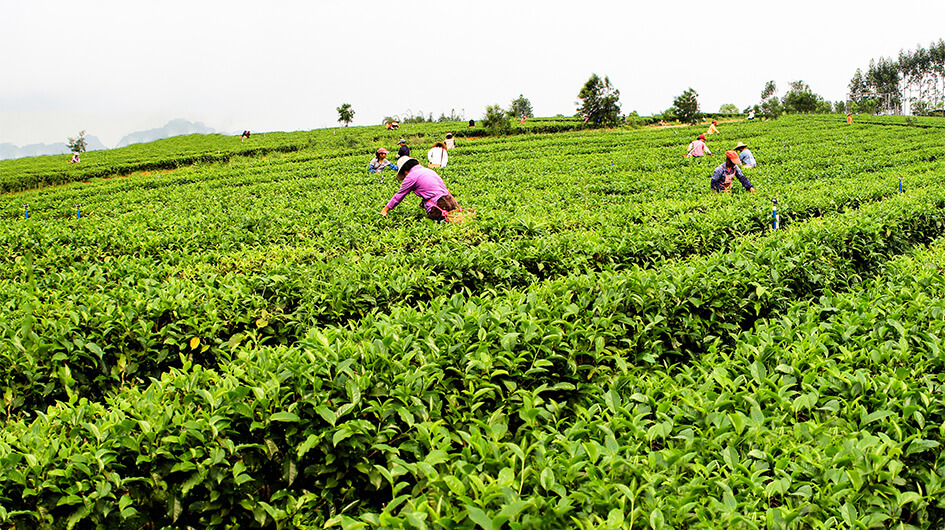 Wuyi Rock Tea Growing Area
OR
Are you eager to begin your Chinese cultural journey?
Drop us a line and we will promptly connect you with our leading China expert!
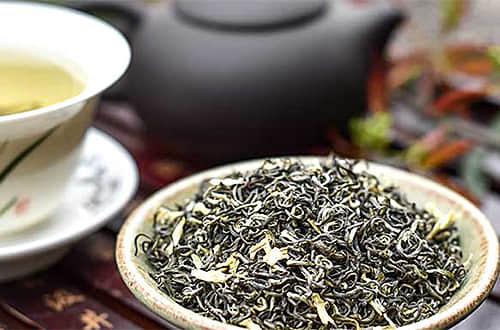 Types of Chinese Tea
  The History of Chinese Tea
  How Does the Chinese Interact with Tea?
  Chinese Tea in Trade and the Economy