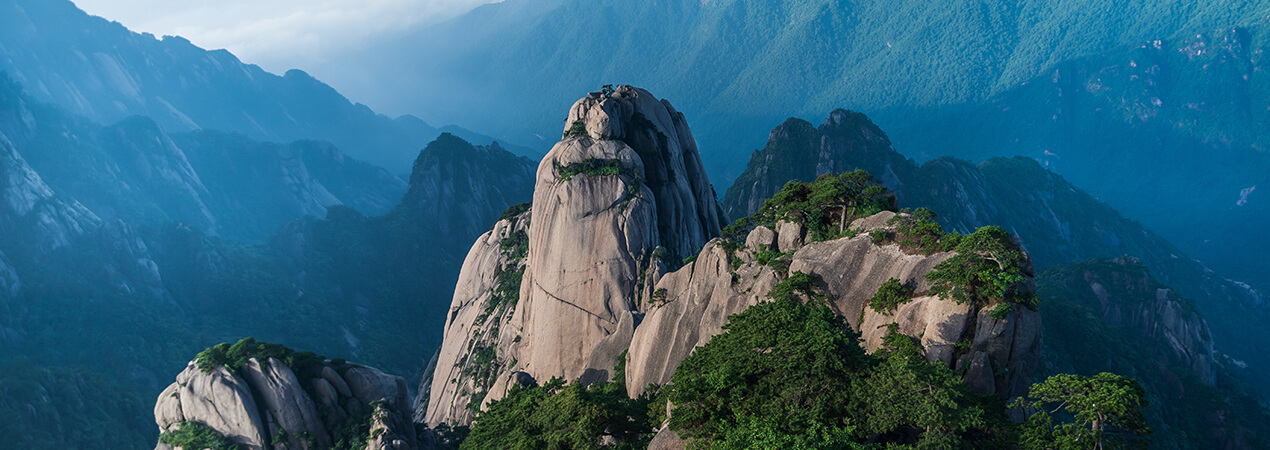
10-day Huangshan-Wudang-Emei-Hua-Mountain Hiking Tour
This 10-day itinerary connects five major cultural and natural attractions: Huangshan Mountain, Wudang Mountain, Emei Mountain, Hua Mountain, and Xi'an, making it a in-depth journey that blends humanity and nature. You will wander in Huangshan to admire exotic pines and strange rocks as well as the magical scenery of Xihai Grand Canyon; climb Wudang Mountain to appreciate Taoist architecture and enjoy a martial arts feast; explore Emei Mountain to pay respects to the golden statue of Samantabhadra and meet cute giant pandas; brave Hua Mountain to walk along the Changkong Plank Road and feel the grandeur of the precipitous peaks; and finally, marvel at the terracotta army formation in Xi'an and cycle along the ancient city wall. The whole journey balances natural wonders and thousand-year-old cultural heritage. From the beautiful landscapes to the profound history, each stop hides unique stories and in-depth experiences, leading you to explore the diverse charm of China in an immersive way.
Itinerary at a Glance
| Day | Location | Highlights |
|---|---|---|
| D1 | Huangshan-Old Tunxi Street | Arrive, check into hotel, rest; visit old street, see buildings, attractions; watch night view |
| D2 | Haungshan: Yungu Temple-White Goose Peak-Black Tiger Pine-Xihai Grand Canyon | Take cable car, see pine and its legend; hike canyon, admire rocks, pines; stay on mountain |
| D3 | Huangshan: Shuguang Pavilion-Shixin Peak | Walk past hotel, climb pavilion to watch rocks; visit peak, appreciate pines; return to hotel |
| D4 | Huangshan-Wudang Mountain | Take high-speed train, transfer; store luggage, arrive, be picked up, check into hotel |
| D5 | Wudang: Wuya Ridge-Nanyan Palace-Chaotian Palace-Golden Hall-Taihe Palace | Take bus, hike to palaces, see incense, hall; take cable car, bus; watch martial arts performance |
| D6 | Wudang Mountain-Chengdu-Emei Mountain | Take flight, rest; visit panda base; drive to mountain, check into hotel |
| D7 | Emei Mountain: Leidongping-Jiyin Hall-Taiziping-Huazang Temple | Take bus, hike past temple, pavilion; reach summit, admire statue, view; return to hotel |
| D8 | Leshan Giant Buddha Scenic Area-Chengdu-Xi'an | Visit giant Buddha via land route; take flight; arrive, check into hotel |
| D9 | Xi'an-Hua Mountain : West Peak-South Peak-East Peak | Drive to mountain, take shuttle bus, cable car; climb peaks, walk plank road, watch sea of clouds; return to hotel |
| D10 | Xi'an : Museum of the Terracotta Warriors and Horses-Yongning Gate | Visit museum, appreciate terracotta warriors; ride bicycle on city wall; eat, rest, start return journey |
Trip Highlights
- Hike in Huangshan to admire exotic pines and unique rocks
- Visit Tunxi Old Street to see Huizhou-style buildings and night views
- Watch "A Dream of Wudang" martial arts performance
- See giant pandas at Chengdu Panda Breeding Research Base
- Visit Leshan Giant Buddha via land route for close viewing
- Ride bicycle along Xi'an City Wall to enjoy ancient city views
Tour Essentials

Quality
No Shopping Traps

Group Type
Private

Tour Focus
Hiking Adventure

Accommodation
Nights:9

Best Season
Spring, Summer, Autumn, Winter
Full Itinerary
Upon your arrival in Huangshan in the morning, our staff will drive you to the hotel for check-in and rest. In the afternoon, we will head to Old Tunxi Street, one of the best-preserved commercial streets from the Song Dynasty in China. Here, you can see Huizhou-style buildings with white walls and black tiles everywhere, and visit attractions like Tunxi Museum and Wancui Building. At night, the old street is adorned with hanging lanterns, which form a delightful contrast with the night view of the Xin'an River.
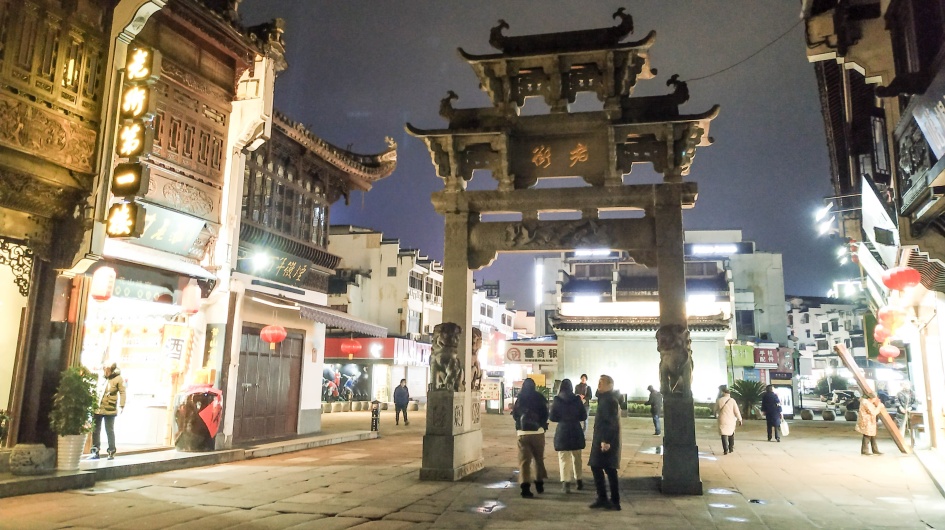 Old Tunxi Street
Your Journey's Rewards:
Check into the hotel to relieve travel fatigue, admire Huizhou-style buildings to savor the old street's charm, and watch the old street's night view to enjoy a visual feast.
Educational Focus:
Why do most Huizhou-style buildings on Tunxi Old Street adopt the style of white walls and black tiles, and what is the connection between this style and the local historical environment?
Takeaway:
White walls and black tiles are typical features of Huizhou-style architecture. White walls can reflect sunlight, adapting to the hot summer climate in southern Anhui; black tiles have high density, which is conducive to drainage and copes with the local rainy weather. Meanwhile, this simple color scheme contrasts with the landscape of Huangshan Mountain, embodying the ancient concept of "harmony between man and nature" in residence and also carrying the low-key and pragmatic cultural characteristics of Huizhou merchants.
Thought Challenge:
If the style of Huizhou-style architecture changes, can it still reflect Huizhou's unique cultural memories?
Upon arriving at Huangshan Scenic Area in the early morning, you can take the cable car from Yungu Temple at the back mountain; you will reach White Goose Peak in a few minutes. Soon after getting off the cable car, you will see the Black Tiger Pine, one of the ten famous pines in Huangshan. Its crown is dark green, its branches and trunks look like a black tiger lying on the slope, and it has a history of over 700 years, with a legend related to a senior monk's encounter with a tiger.
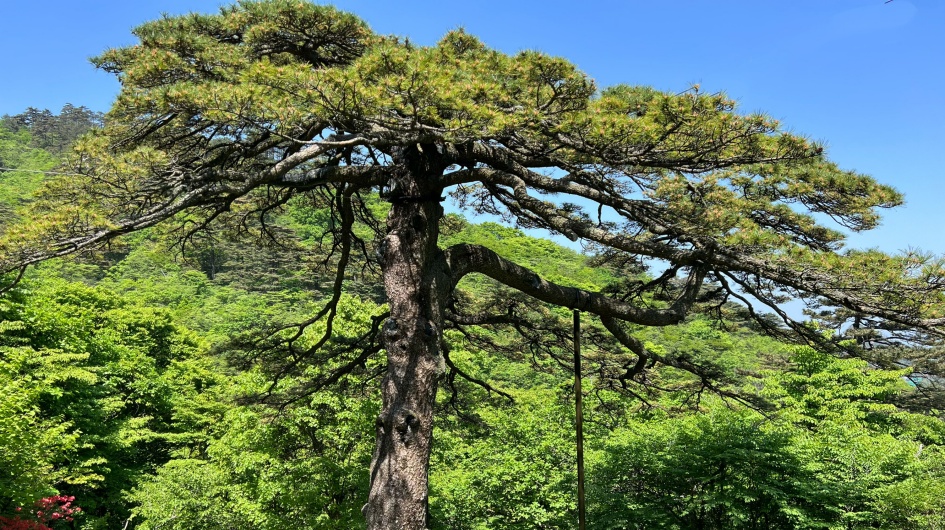 Black Tiger Pine
Lunch is arranged at Xihai Hotel, which is only 500 meters away from the north entrance of Xihai Grand Canyon and located in the prime area on the mountain top. In the afternoon, hike in the "Dream Scenic Area" - Xihai Grand Canyon. Walking along the plank road, you can see unique rocks like Buddha's Hand Rock and Huizhou Camel Rock, as well as appreciate the exotic pines on the cliffs and feel the charm of "Xihai Magic". You will stay on the mountain that night, which is convenient for continuing your tour the next day.
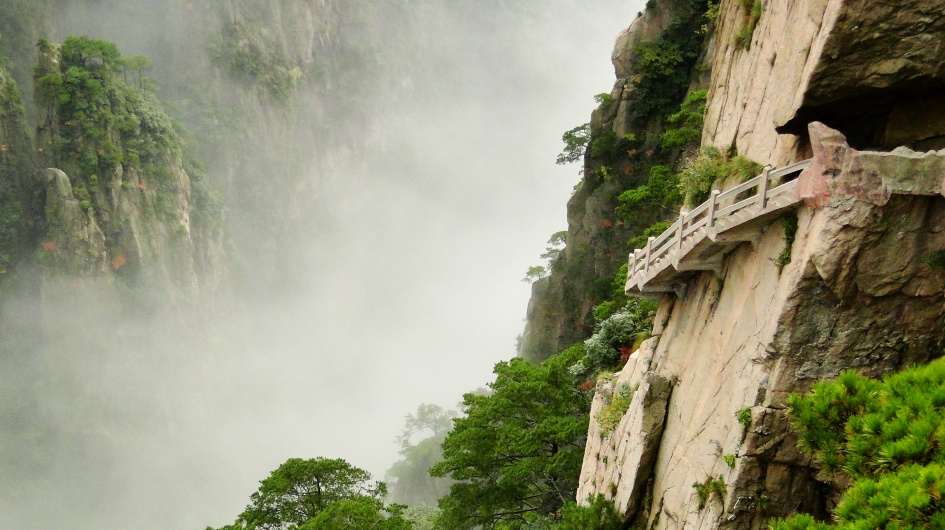 Xihai Grand Canyon
Your Journey's Rewards:
Take the cable car to enjoy mountain views, see the Black Tiger Pine and savor its legend, explore the Xihai Grand Canyon to admire unique rocks, and stay on the mountain top for the next day's tour.
Educational Focus:
What makes the growth pattern of the Black Tiger Pine special that it can survive for over 700 years in the steep environment of Huangshan?
Takeaway:
The roots of the Black Tiger Pine penetrate deep into rock crevices, firmly clinging to the mountain to resist strong winds and rain erosion; its branches extend toward the leeward side to reduce wind damage; the surface of its needles has a waxy layer that locks in moisture to cope with dry conditions in the mountainous area. These characteristics are the key to its adaptation to Huangshan's complex terrain and climate, and also the reason for its longevity.
Thought Challenge:
Will the Black Tiger Pine's natural ability to adapt still help it survive if the environment keeps changing?
After breakfast, start from Xihai Hotel and pass Beihai Hotel shortly on foot. Continue walking to Shuguang Pavilion on the back of Lion Peak; this place has a wide view, allowing you to look far at unique rock landscapes like "Eighteen Arhats Facing the South China Sea" and is an excellent spot for sightseeing.
Then head to Shixin Peak, which gets its name from the saying "Only here do you know Huangshan's wonder". It is surrounded by empty space on three sides and covered with exotic pines and strange rocks. Along the way, you can see famous pines such as Dragon Claw Pine and Sea-Gazing Pine, and the Jiyin Pine beside Du Xian Bridge at the peak has a unique posture. After the tour, return to the hotel via the original route to rest and recharge for the subsequent trip.
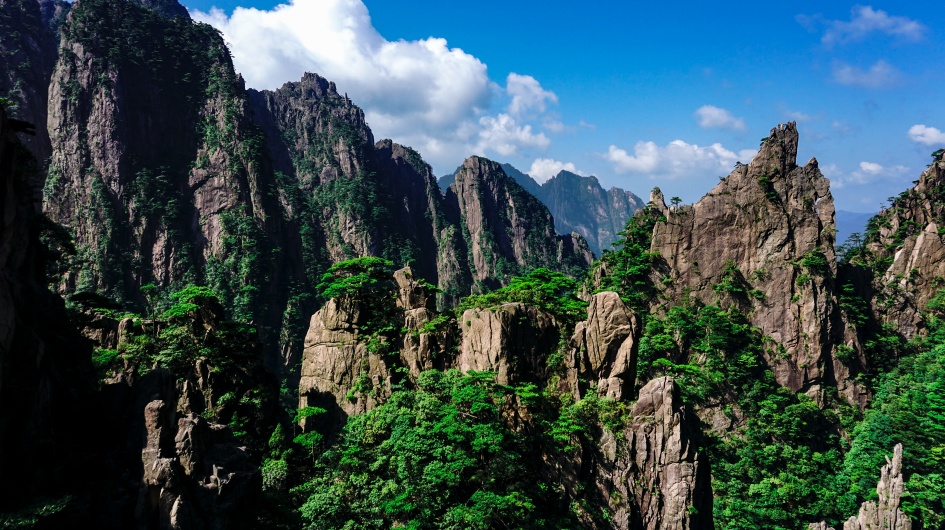 Shixin Peak
Your Journey's Rewards:
Pass by Beihai Hotel and enjoy the scenery along the way, climb Shuguang Pavilion to watch unique rocks, visit Shixin Peak to appreciate exotic pines, go down the mountain and return to the hotel to rest and recharge.
Educational Focus:
Why can the pines on Shixin Peak, most of which grow in rock crevices, maintain their unique postures and grow vigorously?
Takeaway:
The roots of the pines on Shixin Peak secrete acidic substances to decompose rocks and obtain nutrients; their branches are affected by wind direction when growing, extending toward the direction with less force to form a unique posture; their needles are small and thick, reducing water evaporation to adapt to the arid environment in the mountainous area. These characteristics allow them to grow vigorously in rock crevices and maintain a unique shape.
Thought Challenge:
Will the pine trees on Shixin Peak still keep their current unique postures if the rock environment changes?
Take a high-speed train from Huangshan to Wudang Mountain; the whole journey takes about 7 hours, with a transfer stop in Wuhan. After arriving at Wudang Mountain West Railway Station, our staff will be waiting there to pick you up and take you to the hotel for rest, recharging your energy for the next day's tour.
After arriving at Wudang Mountain, take the sightseeing bus to Wuya Ridge, then start hiking from there. The first stop is Nanyan Palace, known as "the Forbidden City hanging on the cliff". Be sure to see the dragon-head incense that juts out horizontally and feel the exquisite craftsmanship of the building on the steep cliff. Continue uphill to Chaotian Palace, which is the fork of the ancient divine path and is said to be "the boundary between the human world and the fairyland" – you can take a short break here.
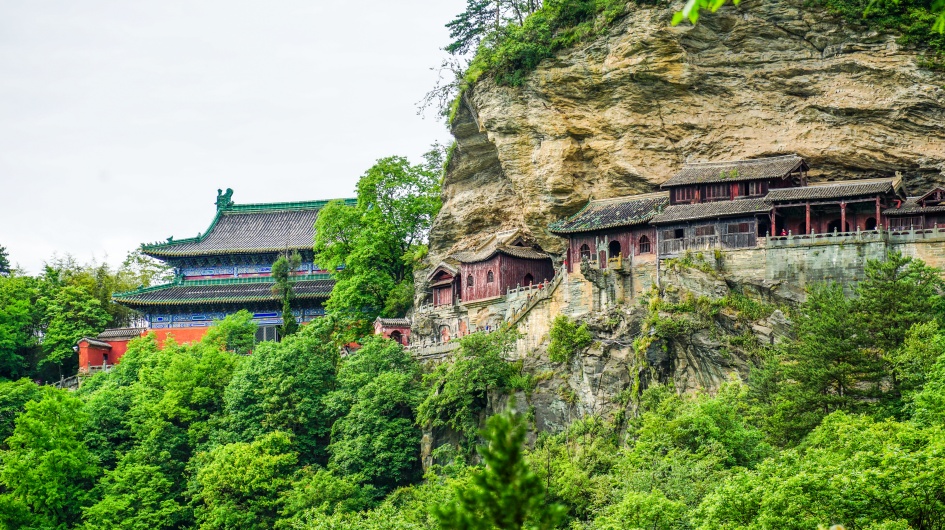 Nanyan Palace
The subsequent section has many steep slopes, so you need to climb with the help of handrails. Finally, reach the Golden Hall, which is 1612 meters above sea level, and admire the grandeur of the Golden Hall. The whole journey takes about 3-4 hours. After the hike, we will take the cable car down from Taihe Palace near the Golden Summit to Qiongtai Zhongguan, then transfer to the sightseeing bus to exit the scenic area and return to the hotel for rest. In the evening, watch the performance "A Dream of Wudang" – this 70-minute immersive feast combines martial arts, dance and lighting technology, allowing you to deeply experience the charm of Wudang culture.
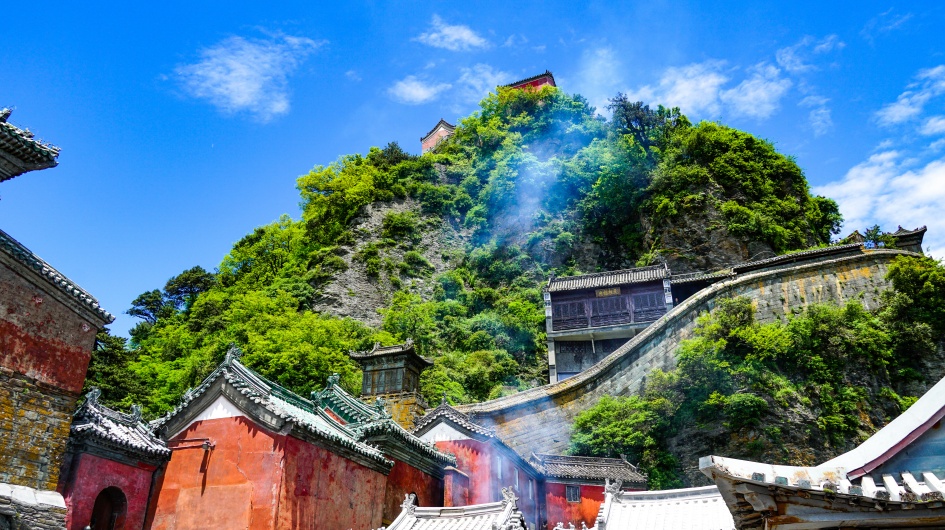 Golden Hall
Your Journey's Rewards:
Take the sightseeing bus to Wuya Ridge, hike to enjoy Nanyan Palace and the Golden Summit, take the cable car out of the scenic area, and watch "A Dream of Wudang" to experience the culture.
Educational Focus:
Why was the "Dragon-Head Incense" of Nanyan Palace built on such a dangerous cliff?
Takeaway:
The "Dragon-Head Incense" of Nanyan Palace is built on a cliff, and its core is related to Wudang Taoism culture. Taoism holds that steep cliffs are places "closest to heaven and most effective in connecting with immortal energy". Shaping the incense platform into a dragon head protruding over the cliff not only conforms to the belief that "dragons are divine creatures that connect humans with heaven" but also highlights piety to the gods through the dangerous terrain. Though its design is risky, it carries the ancient people's religious pursuit of "proving sincerity with danger and connecting with gods with devotion", becoming a unique symbol of the integration of religion and architecture in Wudang Mountain.
Thought Challenge:
Facing the "Dragon-Head Incense", what is the difference between our spirit of challenge today and the ancient people's pursuit of faith?
Take a flight from Wudang Mountain Airport; it takes about 1.3 hours to reach Chengdu. After a short rest, we will go to visit the Chengdu Research Base of Giant Panda Breeding. This base is famous for its environment that simulates the wild, and it houses the world's largest captive giant panda population. After the visit, we will drive to Emei Mountain, which takes about 2 hours by car. We will check into the hotel and rest to recharge our energy for the next day's tour.
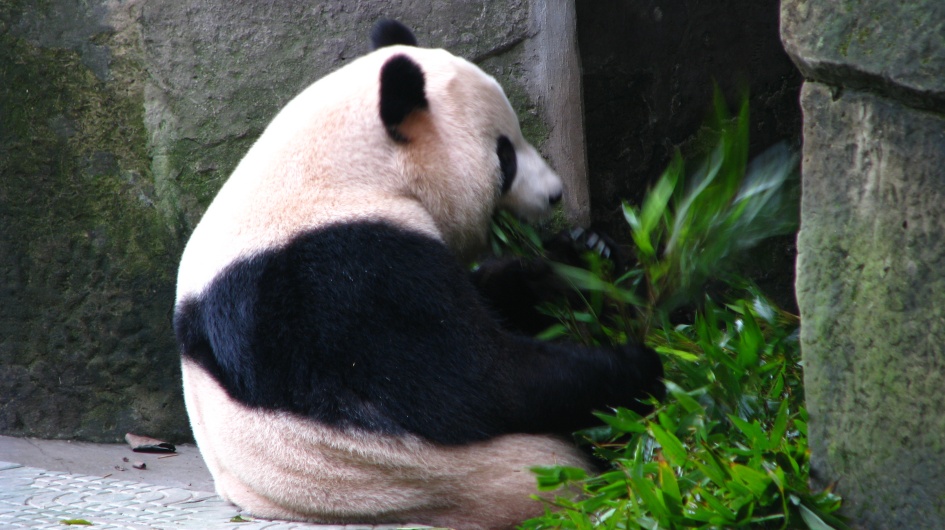 Cutie Giant Panda
Your Journey's Rewards:
Take a flight to Chengdu, visit the Panda Base to see giant pandas, drive to Emei Mountain, and stay at a hotel to rest for the next day.
Educational Focus:
Simulating a wild ecological environment allows giant pandas to maintain their natural behaviors, such as climbing and foraging, and avoids behavioral degradation caused by long-term captivity. At the same time, this kind of environment is closer to the giant pandas' original habitat, which helps researchers observe their living patterns, provides data support for the protection of wild giant pandas, and also improves the success rate of captive giant panda breeding, contributing to the continuation of the species.
Thought Challenge:
Will the giant panda conservation be affected if the panda base environment is closer to the city?
After arriving at Leidongping by sightseeing bus, start the hike. This 7.5-kilometer mountain trail has a vertical ascent of about 800 meters and takes 2-3 hours to complete. Starting from Leidongping, first go to Jieyin Hall to take a short break – this is the intersection of the hiking trail and the cable car.
Continue uphill to Taiziping, an ancient temple named after once housing a statue of a prince. It is only a 30-minute walk from the Huazang Temple, and the "Xiangwang Stone" in front of the temple is said to be the incarnation of Samantabhadra. Although the final section has steep slopes, after reaching the summit, you will see the 48-meter-tall golden statue of Samantabhadra standing on the mountain top, and you can also overlook the sea of clouds or Gongga Snow Mountain. After the hike, return to the hotel to rest and relieve the tiredness from climbing.
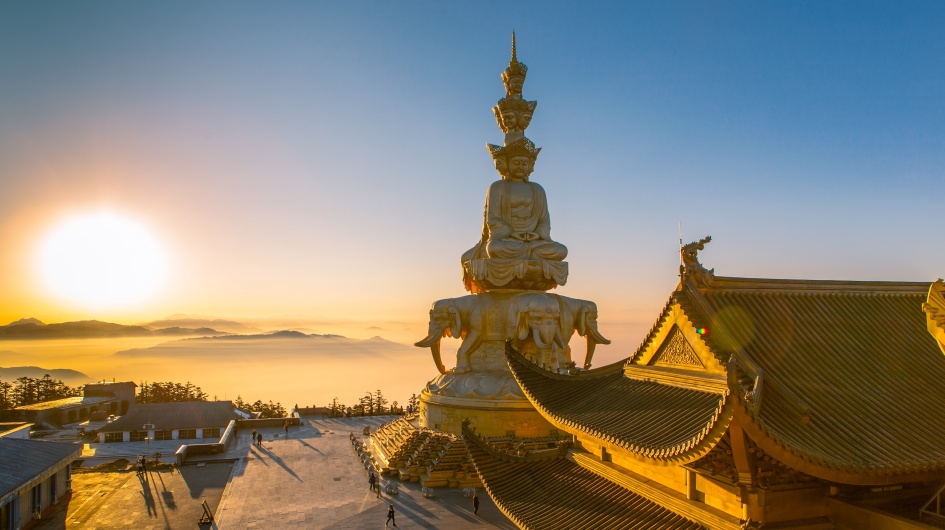 Huazang Temple
Your Journey's Rewards:
Take the sightseeing bus to Leidongping, hike past Jiyindian and Taiziping, reach the summit to admire the golden statue of Samantabhadra, and return to the hotel for rest.
Educational Focus:
Why is the 48-meter-tall golden statue of Samantabhadra built at the Golden Summit of Emei Mountain?
Takeaway:
The construction of the 48-meter-tall golden statue of Samantabhadra is mainly to solemnize Emei Mountain's status as a Buddhist sacred site, which is the fundamental dojo of Bodhisattva Samantabhadra. The height of 48 meters corresponds to Samantabhadra's "Ten Great Vows" and Buddhism's "Forty-Eight Minor Precepts", implying religious meanings. Its towering figure has further become a symbol of Emei Mountain, bringing a strong visual and spiritual impact to the believers and tourists who reach the summit. It embodies the Buddhist spirit in a concentrated way, and perfectly integrates the long-standing pilgrimage culture with the magnificent natural landscape, jointly forming the unique scenic spot of the Golden Summit.
Thought Challenge:
Why has Emei Mountain become the dojo of Bodhisattva Samantabhadra? What connection does this have with the development of Chinese Buddhism?
First, go to Leshan Giant Buddha Scenic Area to visit the Leshan Giant Buddha. This 71-meter-tall cliff-carved statue of Maitreya Buddha from the Tang Dynasty is located at the confluence of three rivers and is the world's largest stone-carved sitting Buddha. If time permit, we will take the land route: enter from the north gate, pass through Lingyun Temple, and go down to the Buddha's feet along the Nine-Zigzag Plank Road to experience the shock of the thousand-year-old carving up close. After the visit, go to the airport and take a flight to Xi'an, which takes about 5 hours in total. Upon arrival in Xi'an, check into the hotel and rest to recharge energy for the subsequent tours.
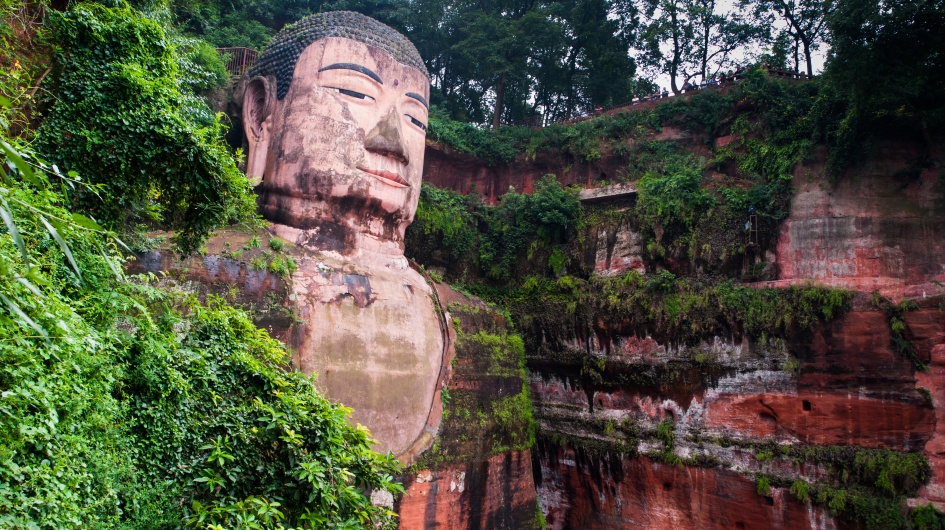 Leshan Giant Buddha
Your Journey's Rewards:
Visit Leshan Giant Buddha to admire the thousand-year-old stone carvings, take the land plank road to view the Buddha's face up close, fly to Xi'an, and check into a hotel to rest for subsequent trips.
Educational Focus:
Why was the Leshan Giant Buddha built at the confluence of three rivers rather than other places?
Takeaway:
In the past, the confluence of the three rivers had turbulent currents, making boats prone to capsizing and frequent accidents. Craftsmen of the Tang Dynasty built the giant Buddha here, intending to use the compassionate power of Maitreya Buddha to calm the floods and bless safe navigation. At the same time, the Danxia red sandstone cliff facing the river provided ideal conditions for carving, allowing the giant Buddha to sit solemnly against the mountain and by the water. It actually serves the dual functions of a spiritual sustenance for calming the river and ensuring safety, as well as an engineering miracle.
Thought Challenge:
Would the Leshan Giant Buddha still have its current value if it had not been built at the confluence of the three rivers?
Drive from Xi'an to Hua Mountain in the morning. After parking, transfer to the scenic area shuttle bus to West Peak Cable Car Station. Take the cable car up through the clouds; it takes 20 minutes to reach West Peak, the most beautiful and precipitous peak of Hua Mountain. West Peak, with an altitude of 2082 meters, is a single intact boulder shaped like a lotus petal, so it is also called Lotus Peak.
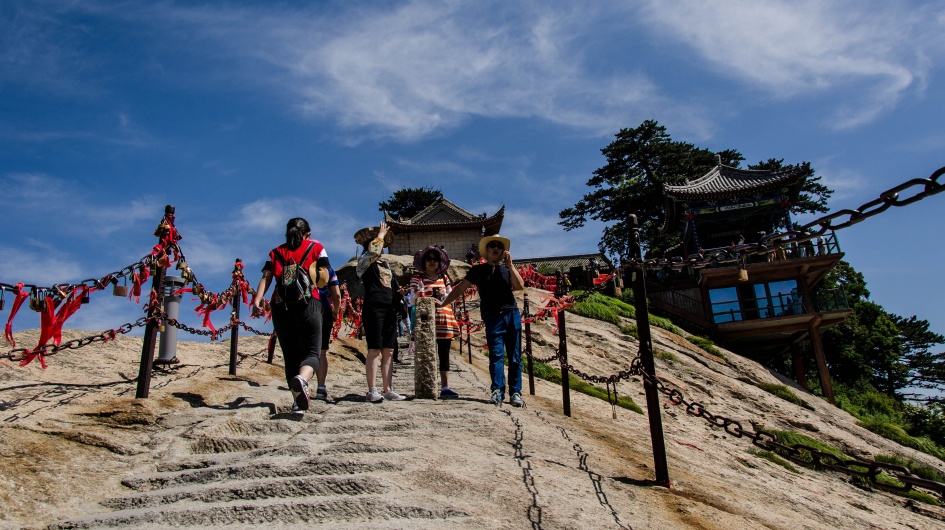 West Peak
Later, head to South Peak, the highest peak of Hua Mountain with an altitude of 2154.9 meters. On the east hillside of Nanfeng lies the Changkong Plank Road, known as "the Most Perilous Spot of Hua Mountain". There are sheer cliffs above and below this plank road, and you will experience the excitement of walking on the cliff here. After that, go to East Peak to enjoy the sea of clouds and the strange rocks of Hua Mountain. Finally, return to West Peak to take the cable car down the mountain, end the trip, and go back to the hotel to rest.
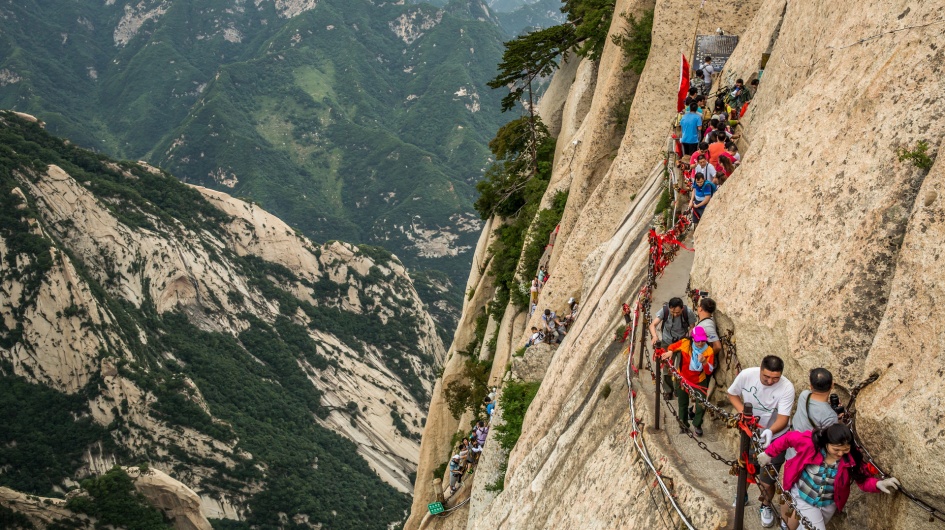 Changkong Plank Road
Your Journey's Rewards:
Drive to Hua Mountain, take the cable car to climb West Peak and admire the lotus-shaped boulder, hike up South Peak to walk along the Changkong Plank Road, head to East Peak to watch the sea of clouds, then go down the mountain and return for rest.
Educational Focus:
Was the Changkong Plank Road originally built for Taoist practitioners to retreat from the world for spiritual practice, or for the convenience of passage?
Takeaway:
The construction of the Changkong Plank Road mainly originated from the needs of Taoist spiritual practice. In ancient times, Taoist practitioners, seeking to stay away from the hustle and bustle and get close to nature, chose to open up meditation retreats between the sheer cliffs. This dangerous path was not built for convenient passage, but to create an isolated environment for spiritual practice. Meditating and seeking enlightenment on cliffs close to the sky embodies Taoism's pursuit of "Tao following nature", serves as a material carrier for practicing the concept of "harmony between man and nature", and demonstrates the ancients' wisdom in materializing their spiritual pursuits.
Thought Challenge:
Would the Changkong Plank Road lose its original value if it were reconstructed with modern technology?
In the morning, go to the Museum of the Terracotta Warriors and Horses, visit the grand army formation composed of thousands of terracotta warriors, carefully appreciate the carving details of "each warrior having a unique face", and experience the peak of Qin Dynasty's military and art. In the afternoon, head to Yongning Gate of Xi'an City Wall, ride a bicycle along the 13.7-kilometer city wall, pass by the Southwest Corner Tower to enjoy the panoramic view of the ancient city, and feel the style of integration of ancient and modern times.
After the bicycle ride, you can have a meal and rest nearby, then start the return journey to bring the trip to an end.
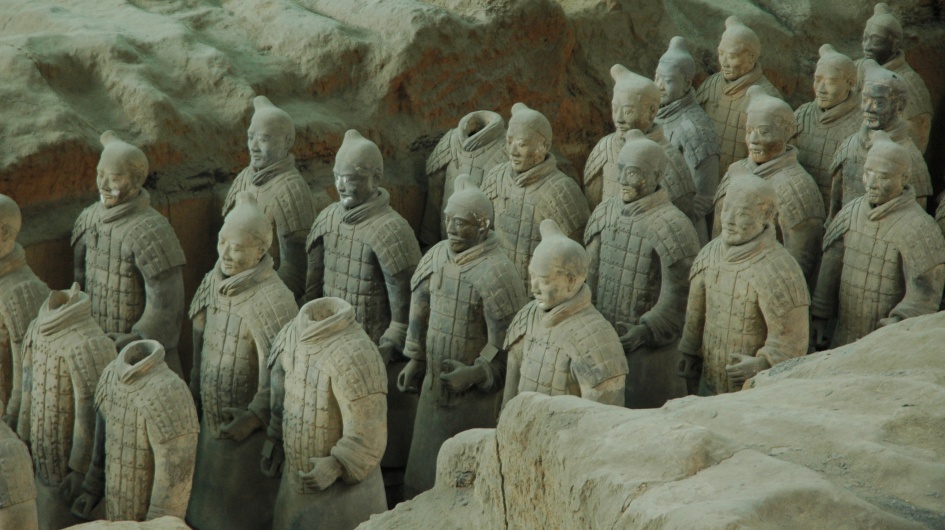 Terracotta Warriors
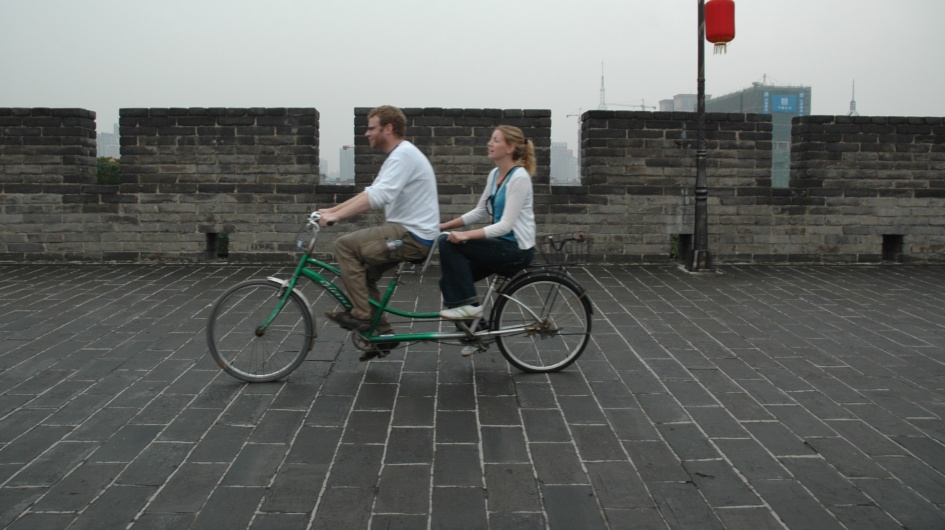 City Wall riding
Your Journey's Rewards:
In the morning, go to see the Terracotta Warriors so you can look at the Qin Dynasty's army formation and carvings. In the afternoon, take a bicycle ride around Xi'an City Wall to get the full view of the ancient city. After that, have a rest and then begin your trip back.
Educational Focus:
Why can the Terracotta Warriors of Qin Shihuang have "each warrior with a unique face" instead of a uniform appearance?
Takeaway:
The creation of this "each warrior having a unique face" feature came from the unique production system of the Qin Dynasty. Craftsmen created the terracotta warriors based on the images of real soldiers, and each warrior corresponded to a specific prototype. During the production process, the "engraving craftsman's name on the work" system was implemented, which required craftsmen to carve their names on their works to ensure quality.
Thought Challenge:
The Terracotta Warriors' unique and large-scale funeral model is absolutely rare in Chinese history; what kind of funeral culture does it represent?
This tour is suitable for: Hiking Enthusiasts, Nature Scenery Lovers, Tea Culture Lovers
What's Included
- Experienced English-speaking hiking guides
- Comfortable transportation and professional drivers
- Carefully selected comfortable accommodations
- Included fees for all scenic spot tickets and experience items mentioned in the itinerary (excluding optional experience items)
- Included commercial accident insurance
Wechat & WhatsApp: +86-13471279378