- Home
- City Tours
- Tibet Tours
- Lhasa & Yamdrokso Group Tour: TB-11
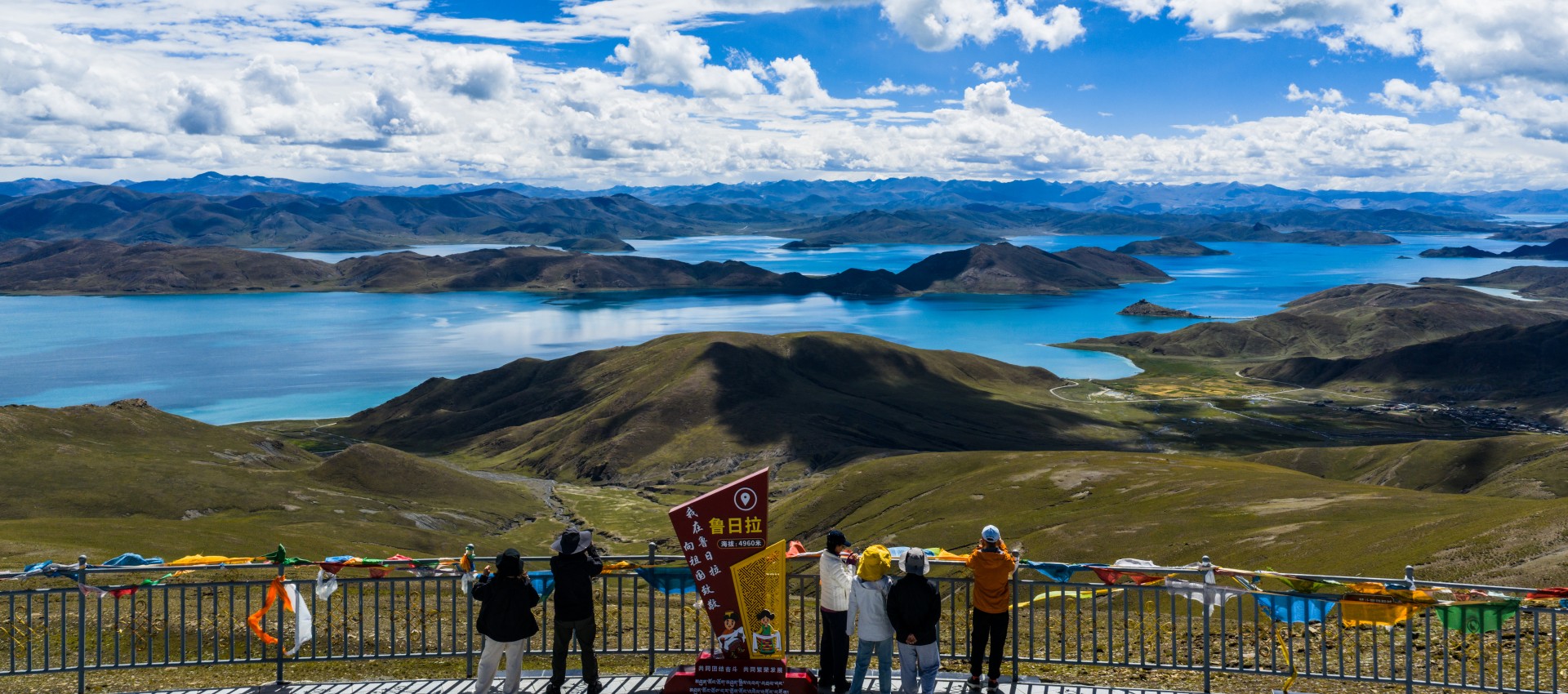
5-Day Lhasa - Yamdroktso Small Group Tour
Itinerary at a Glance
| Day | Location | Highlights |
|---|---|---|
| D1 | Lhasa | Arrive in Lhasa; transfer to hotel for check-in |
| D2 | Lhasa | Visit Lhasa Traditional Handicraft Center (experience Tibetan incense making, woodblock printing, Tibetan calligraphy); tour Sera Monastery |
| D3 | Lhasa | Explore Potala Palace; visit Jokhang Temple; stroll around Barkhor Street |
| D4 | Lhasa → Yamdrok Lake → Xiazhulin Temple | Tour Yamdrok Lake to admire the azure lake views against the backdrop of snow-capped mountains, Explore the thousand-year-old Xiazhulin Temple |
| D5 | Lhasa - Airport or Railway Station | Free time for souvenir shopping or revisiting favorite spots; transfer to Lhasa Airport/Railway Station; tour ends |
Note: Travel agency has right to change the order of visiting attractions and ensure that all attractions are visited.
The routes of Join-in group tour accept Chinese(people from mainland China, Hong Kong, Macao and Taiwan) and foreign visitors to attend the group booking, foreign guests and Taiwan tourists to Tibet, please contact us to apply for Tibet Permit.
Trip Highlights
- Experience Tibetan traditional handicrafts with hands-on participation
- Watch monks’ debate at Sera Monastery
- Tour Potala Palace and Jokhang Temple to view sacred Buddha statues, murals and stupas
- Admire Yamdrok Lake’s blue waters with snow-capped mountain views
Tour Essentials

Quality
No Shopping Traps

Group Type
Group

Tour Focus
Scenery, Culture

Accommodation
Nights:4

Best Season
Spring, Summer, Autumn, Winter
Full itinerary for 5-Day Lhasa - Yamdroktso Small Group Tour
Upon your arrival at Lhasa Airport, the tour guide will greet you and escort you to the hotel to complete the check-in procedures. For the rest of the time, you can relax and acclimatize to the high-altitude environment of Tibet.
Notice:
- Pick up/drop off: Foreign and Taiwanese travelers need a tour guide to pick up/drop off according to the regulations of the Tourism Administration.
- Altitude sickness: With its much higher elevation, some visitors may experience symptoms of altitude sickness. We recommend taking everything slowly, getting plenty of rest the first day and staying very well hydrated by drinking plenty of water to minimize the effects of the high altitude.
- Usually, you will be fine by the second day, but if you do experience severe and/or worsening symptoms, please contact your guide or a member of our staff immediately.
Today, we will take you to fully immerse yourself in the Traditional Tibetan Handicraft Center, where you will experience Tibetan incense making, woodblock printing, and learn about the Tibetan language.
While learning how the refreshing Tibetan incense is made, you can also participate in making it with your own hands—this holds quite different significance compared to buying ready-made Tibetan incense. Knowledgeable instructors will introduce the origin of the Tibetan language to you and help you write Tibetan blessings or your own name in Tibetan. Meanwhile, you can also try your hand at traditional woodblock printing. The incense you make, the printed works, and the Tibetan calligraphy can all be taken home as souvenirs.
In the afternoon, we will head to Sera Monastery. The monks’ debate is held in the monastery courtyard almost every Monday to Saturday, from 3:00 pm to 5:30 pm. You can watch this ceremony on-site and learn about this unique learning method in Tibetan Buddhism. After that, you can visit monastery buildings such as the Tsokchen Hall (Main Assembly Hall) and the Hayagriva Hall, admire the Buddha statues, murals, and precious Buddhist scriptures, and gain insights into Tibet’s art and religious history.
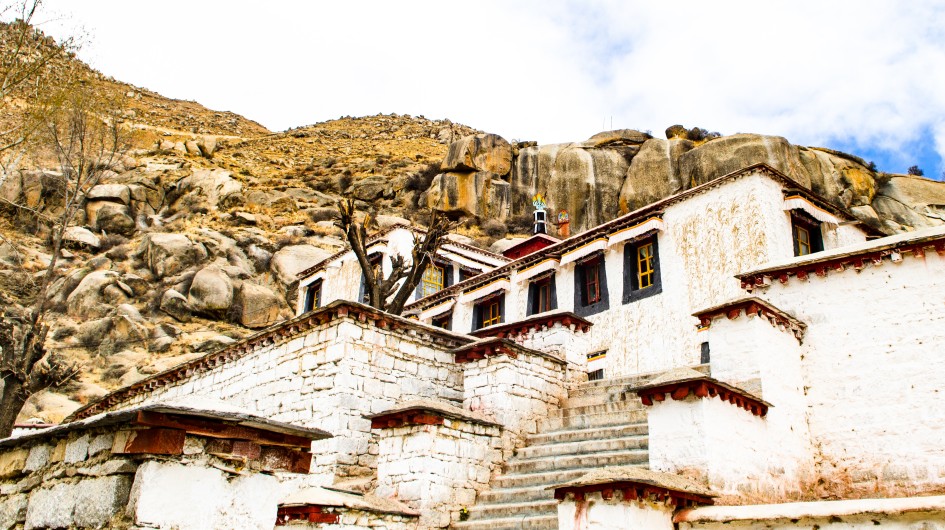 Sera Monastery
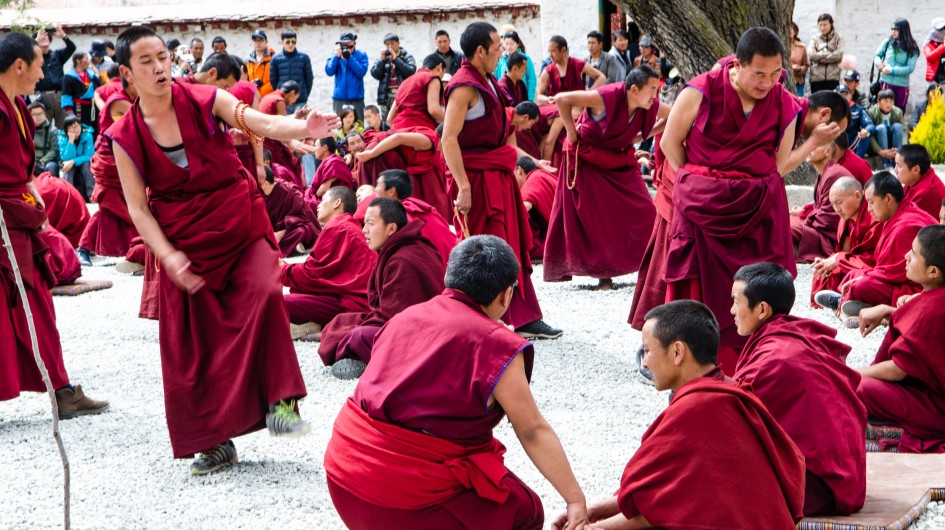 Monks Debating
Note: Please be aware that if there are special monastery activities (such as Dharma assemblies or VIP receptions) on a given day, the monks’ debate may be canceled.
After our visit to the monastery, you are free to stroll along the streets of Lhasa to soak up the atmosphere and the devout spirit of the Tibetan people. Alternatively, you may return to your hotel to rest and unwind after this wonderful Tibetan cultural experience.
Your Journey’s Rewards:
Experience traditional Tibetan handicrafts with your own hands and feel the charm of traditional craftsmanship. Watch the monks’ debate ceremony at Sera Monastery, explore Tibetan-style ancient buildings, heritage thangkas, and precious Buddha statues, and immerse yourself in the pure atmosphere of Tibetan religious faith.
Educational Focus:
What is a monks’ debate like?
Takeaway:
The monks’ debate is a unique learning method in Tibetan Buddhism. Through question-and-answer exchanges, body movements, and logical arguments, monks delve into discussions on Buddhist doctrines and philosophical issues.
Thought Challenge:
As the demand for Tibetan cultural experiences grows, how can we enable tourists to deeply experience the cultural essence of Sera Monastery while preventing excessive tourism from disrupting religious order and diluting the authenticity of its culture?
After breakfast, we will head to the Potala Palace. It is a grand castle-style architectural complex built against a mountain, and a sacred site of Tibetan Buddhism, divided into the White Palace and the Red Palace. The White Palace was the place where the Dalai Lama lived and conducted political activities, while the Red Palace is used for religious ceremonies and houses the Stupa Halls. You will also have the chance to see the Sacred Avalokitesvara Statue, known as the "Treasure of the Palace".
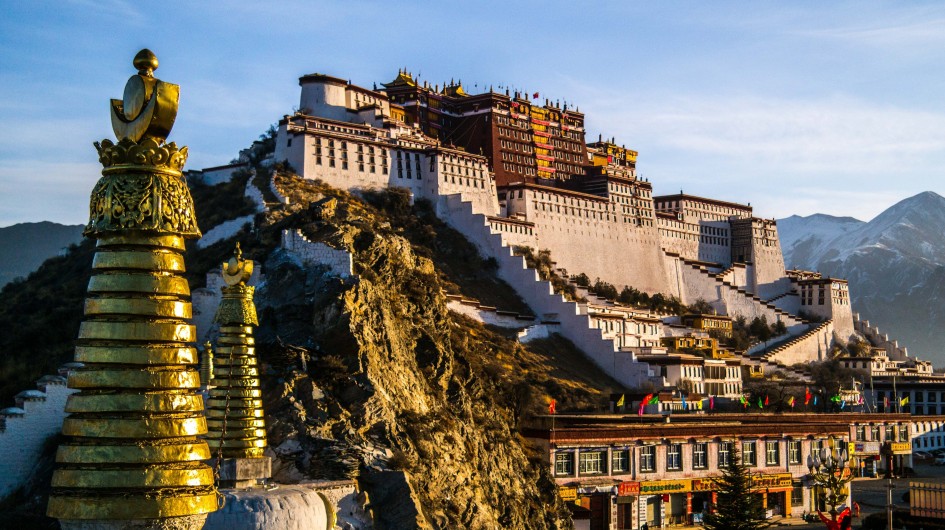 Potala Palace
Ticketing tips for Potala Palace: The Potala Palace requires real-name online ticketing and valid document (such as ID card, household registration book or passport) is required to make the reservation. Once the reservation made, the ticket cannot be re-booked within 7 days from the day of visit. If you can not enter the Potala Palace due to the wrong documents provided by yourself, we do not bear any responsibility or consequences.Therefore, it is important to take the valid documents. If the name or ID number is inconsistent with the actual ID used, you will not be able to enter the Potala Palace. Please note the ticket fee has actually been incurred and cannot be refunded.
The visiting time of the Potala Palace is randomly issued by the Potala Palace Management Office and it can not designate the visiting time. Please note the actual visiting route sequences may be different from the provided one.
In peak season, there has restrictions in visiting the Potala Palace and each travel agency has limited group bookings quotas every day. In order to ensure the group tour visiting, we solve the problem through different channels. Due to the special requirements for ticket purchases in different channels, you are requested to follow the tour guide’s arrangement. The normal arrangements are as below:
- The group tour may be divided into multiple small groups (tourists who book together might be divided, and they join with other small group to visit the Potala Palace).
- Each small group is divided into different times/dates to visit.
- Each small group follows the different guide to visit.
Subsequently, we will go to the Jokhang Temple, one of the sacred sites of Tibetan Buddhism. It enshrines the 12-year-old statue of Sakyamuni— the most sacred Buddha statue in the temple, which attracts countless believers for worship.
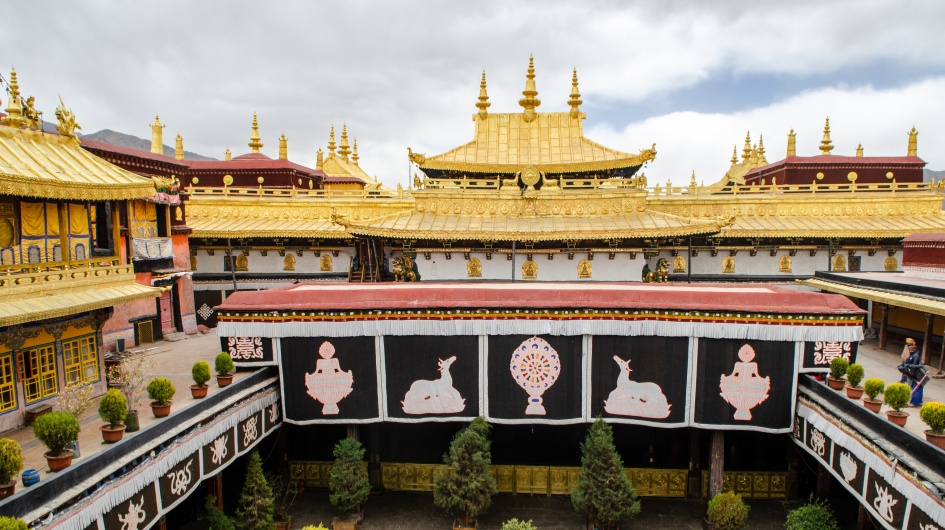 Jokhang Temple
Ticketing tips for the Jokhang Temple: The Jokhang Temple needs real-name online ticketing. Every day, from 7:00am to 23:59pm the tickets for the next day will be open to book through the We Chat applet "Jokhang Temple Reservation" until the number of reservations is full. Therefore, tickets must be reserved one day in advance. Please follow tour guide’s instruction to make the reservation.
The Jokhang Temple is a religious temple rather than a tourist attraction. Please note if encountering important religious activities, it will be closed to tourists.
After that, we will visit Barkhor Street, a circular street surrounding the Jokhang Temple. It is not only a bustling commercial street but also the "middle circuit" for believers to perform the kora (pilgrimage walk). Here, you can taste characteristic Tibetan food and purchase handicrafts such as spices and silverware.
Your Journey’s Rewards:
Pause at the Potala Palace and gaze up at the snow-region sanctuary where the walls of the White and Red Palaces interweave with golden roofs; step into the Jokhang Temple, explore Tibetan-style temple architecture and sacred Buddha statues, and gain an understanding of Tibetan Buddhist culture.
Educational Focus:
Do the wall colors (red and white) of the Potala Palace have special meanings? How are these colors formed?
Takeaway:
White symbolizes purity and tranquility, corresponding to the secular functions of the White Palace; red symbolizes solemnity and holiness, matching the religious attributes of the Red Palace. The white walls are painted with a mixture of lime, milk, and honey, which is not only environmentally friendly but also resistant to the plateau’s wind and snow. The red walls are made by crushing the locally unique "red grass", which is hard-wearing and non-fading— a reflection of the wisdom of ancient Tibetan people in adapting to the natural environment.
Thought Challenge:
As a world cultural heritage site, what challenges does the Potala Palace face in terms of cultural relic protection?
We depart in the morning and arrive at Kampala Pass (elevation: 4,797 meters), which is an excellent spot to enjoy the view of Yamdrok Lake. As one of Tibet's three major sacred lakes, Yamdrok Lake presents a blue hue under the sunlight and is also known as the "Sapphire on the Plateau". Surrounded by snow-capped mountains and dotted with herds of cattle and sheep, this place attracts a large number of photographers.
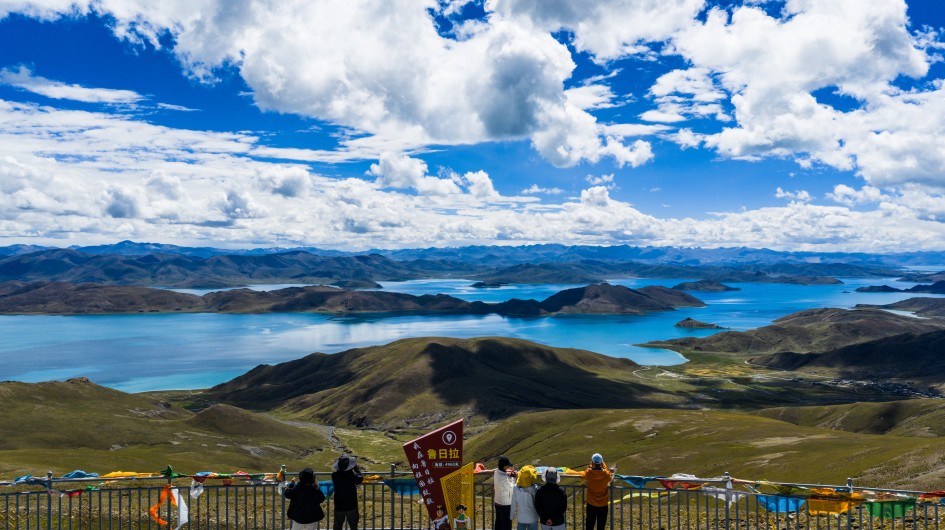 Yamdrok Lake
Next, we will visit Xiazhulin Temple. Built on a hill by the Yarlung Zangbo River, this temple is as magnificent and grand as the Potala Palace. Xiazhulin Temple is most famous for enshrining the preserved body of Palden Lhamo (the Goddess of Fortune). It has been more than a thousand years since she entered nirvana in a seated posture, and every year, many tourists come here specially to pay their respects.
Your Journey’s Rewards:
Pause by the shores of Yamdrok Lake and lose yourself in the scenery where the azure glimmers of the plateau's sacred lake reflect against the snow-capped mountains; step into Xiazhulin Temple and admire the exquisite murals and Buddha statue art inside the temple.
Educational Focus:
Why is Yamdrok Lake regarded as one of the "Three Major Sacred Lakes" in Tibetan Buddhism?
Takeaway:
Yamdrok Lake is seen as the incarnation of a dragon maiden and the residence of a female guardian deity. Tibetan people believe that the sacred lake possesses magical powers, which can bless all living beings and ward off disasters, serving as a sacred link between humans and deities. Every year, a large number of believers perform the kora (circumambulation) around the lake—this act is considered equivalent to making a pilgrimage to Lhasa, representing the adherence to faith and the prayer for a better life.
Thought Challenge:
As a plateau lake, what important role does Yamdrok Lake play in the local ecological environment?
After breakfast, you can pack your luggage and check to ensure nothing is left behind. Before departure, you still have some free time—you may go to buy souvenirs or try some Tibetan-style delicacies. The driver will take you to the airport or railway station according to the schedule, and this trip will come to an end here.
This tour is suitable for: School, Family, Team Building, Natural Scenery Lovers, Tibetan Buddhism Enthusiasts
Price of Tibet Group Tour
*Exchange Rate Note: For your reference, the current USD-CNY exchange rate stands at 1 USD = 7 RMB.*
| Hotel Class | Off-Peak Season Price (Jan 1-Mar 15, Nov 1-Dec 31, 2026) | Shoulder Season Price (Mar 16-Jun 25, Aug 29-Sep 26, Oct 7-Oct 31, 2026) | Peak Season Price (Jun 26-Aug 28, Sep 27-Oct 6, 2026) | |||
|---|---|---|---|---|---|---|
| Retail Price | Single Room Supplement | Retail Price | Single Room Supplement | Retail Price | Single Room Supplement | |
| Comfort Class | CNY 4,200 (about USD 600) | CNY 700 (about USD 100) | CNY 4,500 (about USD 643) | CNY 900 (about USD 129) | CNY 4,900 (about USD 700) | CNY 1,200 (about USD 171) |
| Luxury Class | CNY 5,200 (about USD 743) | CNY 1,600 (about USD 229) | CNY 6,500 (about USD 929) | CNY 2,600 (about USD 371) | CNY 7,100 (about USD 1,014) | CNY 2,900 (about USD 414) |
Note: Prices may fluctuate with changes in exchange rates. For Spring Festival period is settled at Shoulder Season price, and Labor Day period at Peak Season price.
Departure Details
| Year | Month | Date | Minimum Departure Number |
|---|---|---|---|
| 2026 | January | 8th, 15th, 22nd, 29th | 1 person |
| 2026 | February | 9th, 16th (Shoulder Season Price), 23rd | 1 person |
| 2026 | March | 25th, 28th | 2 people (for 28th); 1 person (for 25th) |
| 2026 | April | 1st, 4th, 8th, 11th, 15th, 18th, 20th, 22nd, 25th, 27th, 29th (May Day Peak Season Price) | 1 person |
| 2026 | May | 2nd (May Day Peak Season Price), 6th, 9th, 11th, 13th, 16th, 18th, 20th, 23rd, 25th, 27th, 30th | 1 person |
| 2026 | June | 3rd, 6th, 10th, 13th, 15th, 17th, 20th, 22nd, 24th, 27th (Peak Season Price), 29th (Peak Season Price) | 1 person |
| 2026 | July | 4th, 6th, 11th, 14th, 21st, 28th | 1 person |
| 2026 | August | 1st, 4th, 11th, 18th, 25th, 27th | 1 person |
| 2026 | September | 1st, 3rd, 5th, 8th, 10th, 12th, 15th, 17th, 20th, 23rd, 27th, 30th | 1 person |
| 2026 | October | 1st (Peak Season Price), 3rd (Peak Season Price), 6th (Peak Season Price), 8th, 10th, 13th, 15th, 17th, 20th, 22nd, 24th, 27th | 1 person |
| 2026 | November | 3rd, 10th, 17th, 24th | 1 person |
| 2026 | December | 1st, 8th, 15th, 22nd, 29th | 1 person |
Service Included
- Transportation: Tourist vehicle (7-23 seats) (If there are fewer than 4 travelers for the Lhasa city tour, we will arrange for the tour guide to take a taxi instead. The taxi fee will be borne by the tour guide.)
- Travelers may need to change tourist vehicles and tour guides due to joining a group tour.
- Tibet's tourism reception capacity is relatively limited, and tourist vehicles are comparatively older with conditions not as good as those in mainland Chinese cities.
- Sometimes the air conditioners of tourist vehicles may not work normally due to Tibet's special climatic conditions (Turning on air conditioners can easily cause engine power reduction, and the large temperature difference inside and outside the vehicles may also easily cause tourists to catch a cold).
- On certain sections of the road, speed limits are required (for example, it takes at least two driving hours to complete the specified kilometers), so the driver will randomly choose a place to stop for rest.
- The driver will pick up each tourist from different hotels before departure, and you may need to wait for the driver. Please abide by the scheduled time. Different vehicles will be arranged according to the number of travelers. If tourists abandon the itinerary, there will be no refund for the vehicle fee.
- Luggage specification: Each tourist can carry a maximum of one 26-inch suitcase and one backpack. The tour guide will inform you in advance to leave excess luggage at the counter of the Lhasa hotel. Due to Tibet's high altitude, too much luggage will cause tourist vehicles to be underpowered and slow, which will make tourists feel uncomfortable.
- Accommodation: Twin-sharing room basis with breakfast (We do not guarantee a double bed room; any extra breakfast fee beyond the room rate will be at your own expense.)
- If a single room is required due to gender reasons, we will arrange a triple room (or a standard double room with an extra bed) or you may pay the single room supplement yourself.
- For group tours, hotels are arranged by the travel agency. Designated hotels are not accepted.
- Meals: 4 breakfasts, 1 featured meal (Free of charge; the complimentary meal is non-refundable): Tibetan/Nepalese welcome banquet in Lhasa
- The free featured meal can be either lunch or dinner.
- Please arrange for the remaining meals at your own expense.
- If travelers are not accustomed to dining in Tibetan areas, you can prepare your own meals.
- Guide: Professional English, Chinese, or Chinese-English speaking tour guide
- For group tours, the travel agency will arrange a corresponding tour guide based on the languages spoken. If there are both native Chinese and English speakers in the same group, we will arrange a Chinese-English speaking tour guide. No reimbursement will be provided for issues related to the tour guide's language.
- Travelers may need to change tour guides and tourist vehicles due to joining a group tour.
- Entrance tickets: Lhasa Traditional Handicraft Center, Sera Monastery, Potala Palace, Jokhang Temple, Yamdrok Lake, Xiazhulin Temple
- We guarantee that travelers will visit all the scenic spots listed above. If a listed scenic spot cannot be visited due to policy or weather conditions, the ticket fee will be fully refunded or exchanged for another scenic spot.
- The group tour fee during the off-season already includes winter ticket discounts. No refunds or price adjustments will be made for tickets.
- Both Potala Palace and Jokhang Temple require real-name online ticket booking; please follow the tour guide's arrangements.
- Tibet Permits: Tibet Entry Permit, Alien Travel Permit, Border Pass, etc.
- Some scenic spots require a border pass, but the application process for border passes in Tibet is subject to change. We may suggest that Chinese tourists apply for a border pass in advance at their local public security bureau before the group tour starts.
- Travel Insurance: Travel Accident Insurance, Vehicle Seat Insurance, Travel Agency Liability Insurance
- Pick-up and Drop-off: Free pick-up and drop-off services are provided only on the first and last days of the group tour:
- Flights (Lhasa Gongga Airport): Free pick-up (08:00 am - 22:00 pm); Free drop-off (08:30 am - 22:30 pm)
- Train (Lhasa Train Station): Free pick-up and drop-off
- If pick-up or drop-off services are required outside the first or last day of the group tour, an additional fee will be at your own expense.
- If your flight is outside the free pick-up/drop-off time window, an additional fee will be at your own expense.
- If your flight/train arrival time is close to other group members, you may need to wait at the airport for up to 2 hours. The travel consultant will inform you of the pick-up time one day in advance. If you do not wish to wait for others, please inform the travel consultant, and we will arrange individual pick-up service at your own expense.
- Oxygen and Water
- 1 bottle of portable oxygen for emergency use
- 2 bottles of drinking water per person per day (300ml)
- 4L medical oxygen cylinder provided with the vehicle
- Service Fee
- All taxes, fees, and handling charges
- Reservation fee for visiting Potala Palace
- Accommodation and meal subsidies for the guide and driver
Service Excluded
- Single Room Supplement
- Hotels default to double occupancy. If a traveler chooses to stay in a single room, an additional single room supplement must be paid.
- Room Loss Fee
- Any room charges incurred due to changes during the itinerary, as rooms are booked with full payment.
- Personal Expenses
- Laundry, drinks, fax, telephone calls, optional tour activities, etc.
- Force Majeure
- Due to irresistible objective reasons and non-travel agency reasons (such as natural disasters, wars, strikes, Covid-19, etc.), or airline flight delays or cancellations, consulate visa delays, insufficient number of travelers and other special conditions, the travel agency has the right to cancel or change the itinerary. All additional expenses (such as visa fees, accommodation, meal and transportation fees, air ticket fare adjustments, etc.) shall be borne by travelers, and the travel agency has the right to collect such additional fees.
- Tickets
- Flight/Train tickets in and out of Tibet.
Referenced Hotel List
| DEST | Nights | Standard Hotel | Comfort Hotel |
|---|---|---|---|
| Lhasa | 4 nights | Susheng Guizang Manor Hotel, Sanor hotel, Lhasa Himalaya Hotel, Metro Polo Jinjiang Hotel or similar | Lagri Snow Dragon Manor Resort, Tibet Minshan Hotel, Thangka Hotel or similar |
Note: The travel agency has the right to choose the final hotels according to the arrangement, and does not accept designated hotels or self-arranged accommodation. Hotels in Lhasa provide oxygen supply service for Comfort class hotels.
Tips
- Tibet is located in the plateau and most of the travelers might experience altitude sickness. Please take good rest and have proper diet (do not eat too much as it will increase the burden of the stomach). Travelers can appropriately take some medicine, such as: Gaoyuan An, Rhodiola, Nuodi Kang; Travelers with serious symptoms can appropriately take oxygen or glucose drip.
- Because of the long drive in Tibet, travelers will spend a lot of time in the car, and inevitably can not eat on time, please bring some snacks and biscuits during drive.
- Due to the special conditions in Tibet, please pay attention to keep warm. On the first day of arrival, please do not try to take a bath. Taking a bath will accelerate blood circulation and increase the body's demand for oxygen.
- Tibet has a strong sunshine, especially dry climate, sunscreen, sunglasses, lip balm and other essential are necessary.
- From April to November is the best time for sightseeing.
Wechat & WhatsApp: +86-13471279378