- Home
- Educational Travel
- China Cultural Tours
- Pastoral Poetry Tour: CET-32
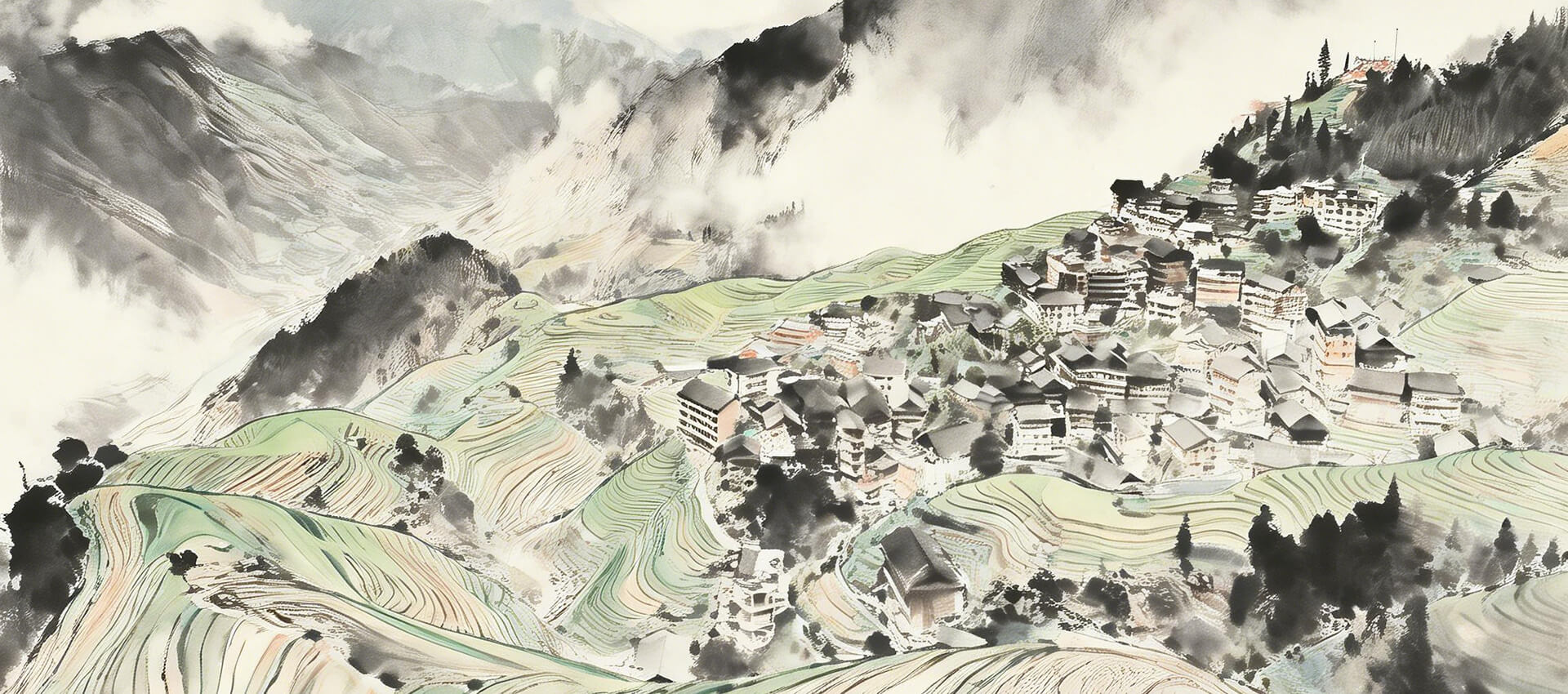
10-Day Guilin - Huangshan - Shangrao Pastoral Poetry Tour
Itinerary at a Glance
| Day | Location | Highlights |
|---|---|---|
| D1 | Guilin | Arrive in Guilin; hotel check-in; free time exploration |
| D2 | Guilin | Visit Longji Rice Terraces; hike the terraces; explore Zhuang/Yao villages; taste bamboo tube rice |
| D3 | Guilin | Bamboo raft drift on Li River; experience folding fan painting in Fuli Ancient Town; watch cormorant fishing with fishing fire at night |
| D4 | Guilin | Visit local market; join cooking class; cycle through karst peaks and rice fields; attend Chinese painting workshop for Tao Yuanming's poems |
| D5 | Guilin | Experience hands-on farming activities |
| D6 | Guilin → Huangshan | Transfer to Huangshan; hotel check-in |
| D7 | Huangshan | Visit Huangshan Scenic Area |
| D8 | Huangshan | Hike to Xidi and Hongcun villages; admire Huizhou-style architecture; make Huizhou fish lanterns |
| D9 | Huangshan → Shangrao | Go to Wuyuan Huangling; visit Huangling Scenic Area; admire terraced fields and rapeseed flowers (in spring); explore Heavenly Street and scenic spots |
| D10 | Shangrao | Check out; transfer to airport/train station; tour ends |
Trip Highlights
- Hike the breathtaking Longji Rice Terraces
- Join a Chinese painting workshop to capture the artistic conception of Tao Yuanming’s poems
- Experience hands-on farming activities
- Visit Huangshan to appreciate spectacular sea of clouds
- Explore Xidi and Hongcun, ancient Huizhou villages
- Wander in Wuyuan Huangling and enjoy the golden sea of rapeseed flowers in spring
Tour Essentials

Quality
No Shopping Traps

Group Type
Private

Tour Focus
Culture

Accommodation
Nights:9

Best Season
Spring, Summer, Autumn, Winter
Full Itinerary
Arrive at Guilin, then take a private transfer to your downtown hotel. Free time is available for you to stroll around Rongshan Lake Scenic Area, enjoy the night view of Sun and Moon Twin Pagodas, or taste local snacks such as Guilin rice noodles and river snails at Zhenyang Pedestrian Street.
First, visit the Longji Rice Terraces, known as one of “China’s Most Beautiful Terraces.” Hike through the terraces, and you will see different scenery in different seasons: during the spring irrigation period, the terraces reflect the sky like mirrors, while in the autumn harvest season, they turn into a golden oil-painting world.
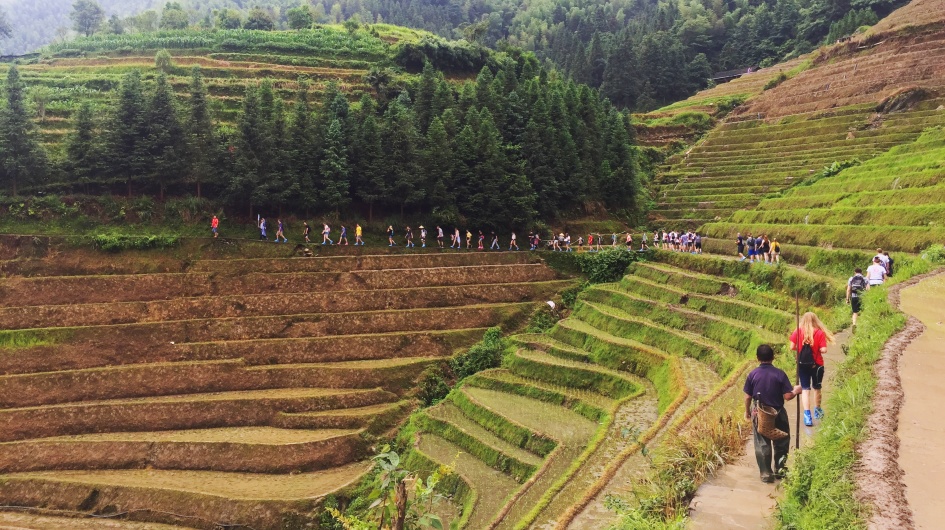 Hiking to Explore Terraces
Ethnic groups such as the Zhuang and Yao live among the terraces; their villages are mostly built on mountainsides, backed by green hills and facing rivers and streams. Just as the poet Meng Haoran described, “绿树村边合,青山郭外斜。” (lǜ shù cūn biān hé, qīng shān guō wài xié — Green trees surround the village, green hills slope gently beyond the town.) from Passing an Old Friend’s Village. You can watch local people farming on the terraces, and also have the chance to enter their villages, learn about their customs, and taste the special local food—bamboo tube rice, which is made by putting glutinous rice, cured meat, mushrooms and other ingredients into fresh bamboo and roasting them. When opened, it gives out a rich and pleasant fragrance. After the activity, you will return to downtown Guilin.
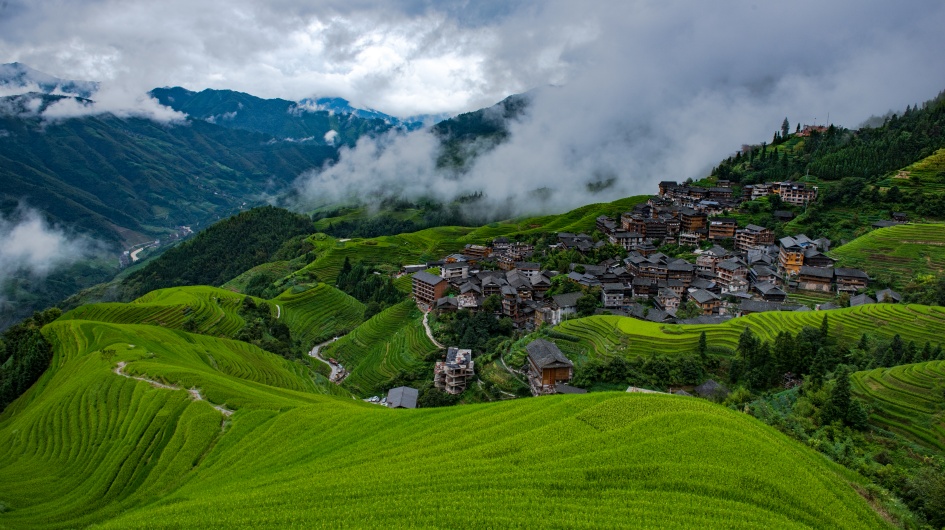 Zhuang and Yao Villages among the Terraces
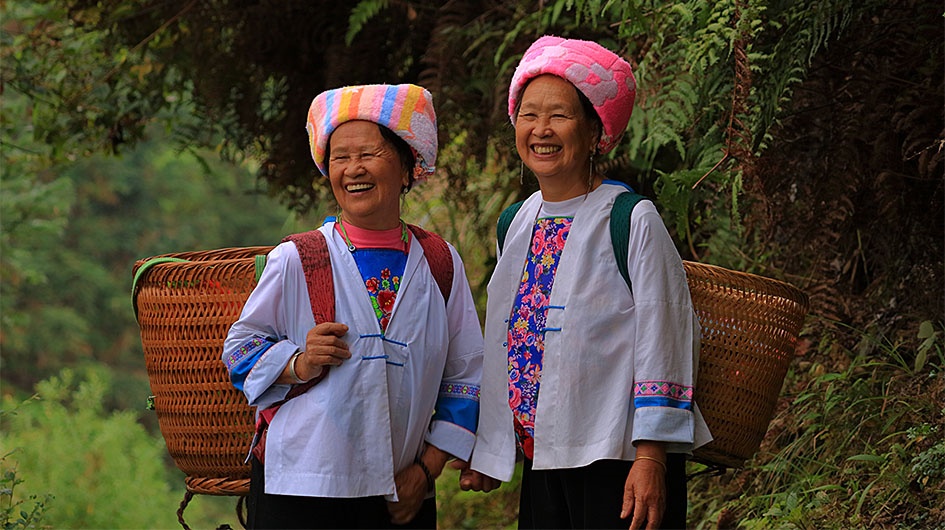 Conversations with Zhuang Farmers
Your Journey’s Rewards:
Hike the Longji Rice Terraces and experience the thousand-year-old farming wisdom of the Zhuang ancestors; visit ethnic minority villages, taste bamboo tube rice, and experience local folk customs.
Educational Focus:
How is agricultural civilization reflected in pastoral poetry?
Takeaway:
Pastoral poems often take the Twenty-Four Solar Terms and farming activities as themes. For example, Weng Juan wrote in Village in the Fourth Month, “乡村四月闲人少,才了蚕桑又插田。” (xiāng cūn sì yuè xián rén shǎo, cái liǎo cán sāng yòu chā tián — Few people are idle in the countryside in April; they just finish sericulture and go transplanting rice seedlings.). This poem describes the busy farming work in April and shows the production rhythm of agricultural society. Pastoral poems often express respect and gratitude to heaven and all living things. For example, Wei Yingwu wrote in Watching the Farming Family, He wrote, “微雨众卉新,一雷惊蛰始。” (wēi yǔ zhòng huì xīn, yī léi jīng zhé shǐ — Gentle rain makes all flowers fresh; the first thunder starts the Awakening of Insects.) from Watching the Farming Family. Taking the Awakening of Insects solar term as a clue, it describes the vibrant vitality at the beginning of spring plowing.
Thought Challenge:
Standing on the top of the Longji Rice Terraces, with layers of mountains and pastoral scenery in front of you, what lines of poetry would you use to record your truest feelings at this moment?
After breakfast, you will go to Yangdi Wharf for a bamboo raft drift and enjoy the stunning scenery of the essence section of the Li River, including natural wonders such as Carp Hanging on the Wall, Boy Worshipping Guanyin, and Nine-Horse Painting Hill. You will feel the poetic charm: “舟行碧波上,人在画中游。” (zhōu xíng bì bō shàng, rén zài huà zhōu yóu — A boat glides on the green waves, and people travel as if within a painting.) from Zhouzhuang River by Wang Wei.
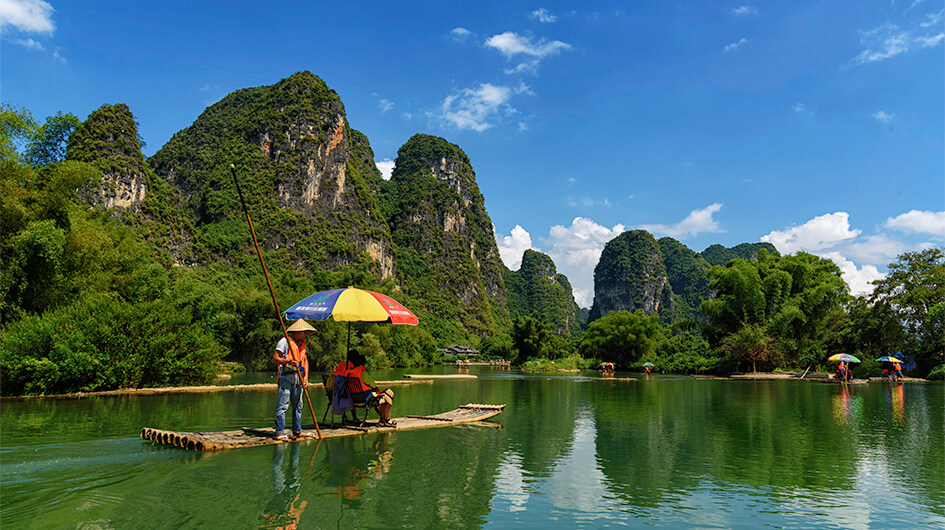 Li River Bamboo Rafting Experience
After getting ashore, go to Fuli Ancient Town, which preserves the original residential style and is famous for painted fans. You can experience folding fan painting in the old workshops of the town, drawing flowers, birds or landscapes on the fan to make a unique souvenir.
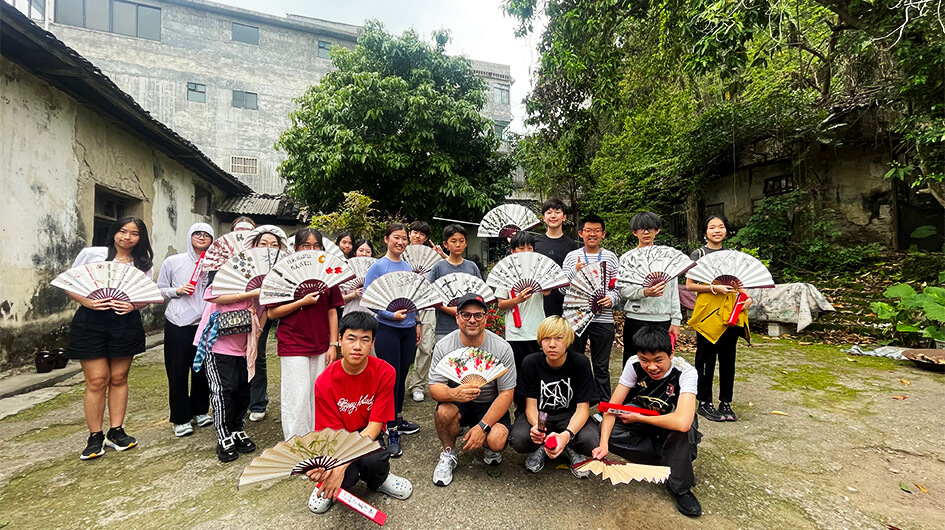 Painted Fan Artwork
As night falls, you can watch the fishing fire night view on the Li River—the ancient scene of fishermen lighting kerosene lamps and fishing with cormorants is picturesque in the night, which perfectly matches the artistic conception written by Du Fu of the Tang Dynasty in Country Cottage: “鸬鹚西日照,晒翅满鱼梁。” (lú cí xī rì zhào, shài chì mǎn yú liáng — Cormorants bathe in the setting sun, spreading their wings over the fish weirs.) The setting sun shines on the river, and cormorants rest on the fish weirs drying their wings quietly, presenting a peaceful and leisurely pastoral fishing scene.
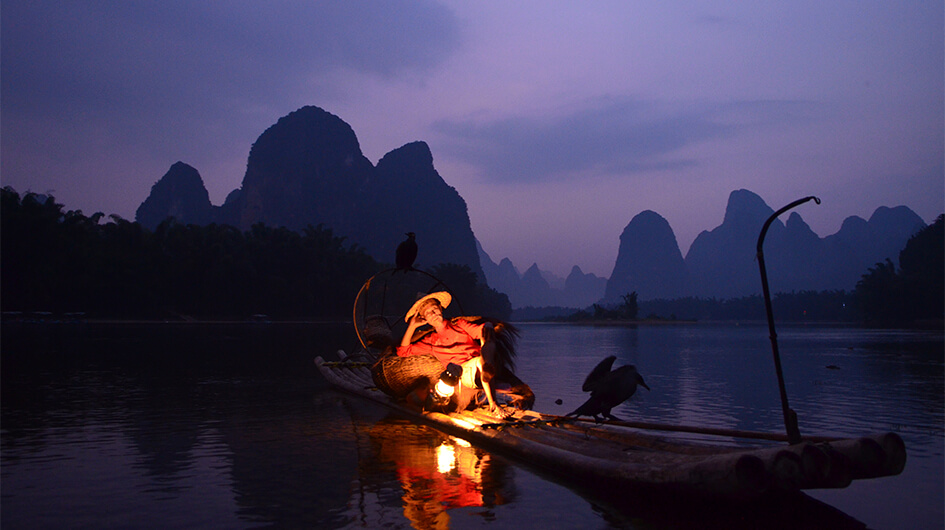 Fishing Fire Night View
Your Journey’s Rewards:
Ride a bamboo raft on the Li River and enjoy the picturesque landscapes along both banks; visit Fuli Ancient Town to appreciate the style of old residences and streets; paint a folding fan with your own hands in an old painting workshop; watch the fishing fires on the river at night and understand the images of “fishermen” and “cormorants” in pastoral poetry.
Educational Focus:
What is the development process of pastoral poetry?
Takeaway:
Descriptions of natural landscapes and pastoral life can be found in The Book of Songs and Chu Ci in the Pre-Qin period. Later, in the formative period of the Wei, Jin, Southern and Northern Dynasties, Tao Yuanming founded the school of pastoral poetry. In works such as Return to the Farm and Village, he depicted pastoral life and a hermit’s state of mind in simple and natural language, focusing on the integration of emotion, scenery and reason, laying the foundation for pastoral poetry. In the prosperous Tang Dynasty, pastoral poetry and landscape poetry merged to form the “School of Landscape and Pastoral Poetry”. In the Song Dynasty, the themes of pastoral poetry were extended to real rural life, farming activities and local customs.
Thought Challenge:
What influence has pastoral poetry exerted on the development of ancient Chinese poetry?
In the morning, visit a local market where local farmers sell fresh fruits, vegetables and local products, and feel the lively atmosphere of rural daily life. You may also learn how to bargain here. Then join a cooking class: under the guidance of a local chef, you will personally prepare and cook dishes, and enjoy the fruits of your labor.
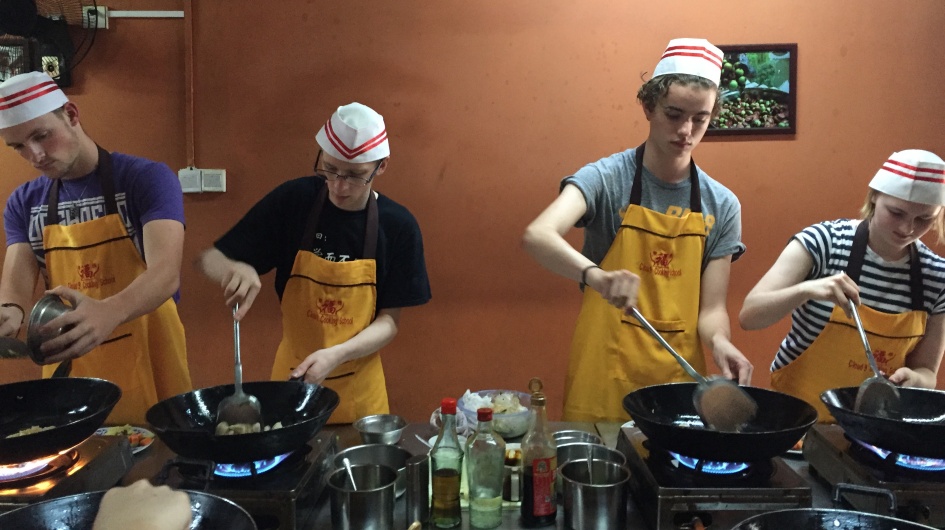 Experiencing Making Farmhouse Dishes
In the afternoon, cycle through the karst peaks and rice fields. Along the way, you can enjoy scenic spots such as Camel Crossing the River, Moon Hill and the Big Banyan Tree. The pastoral scenery blends with the karst peaks, creating a picturesque scene.
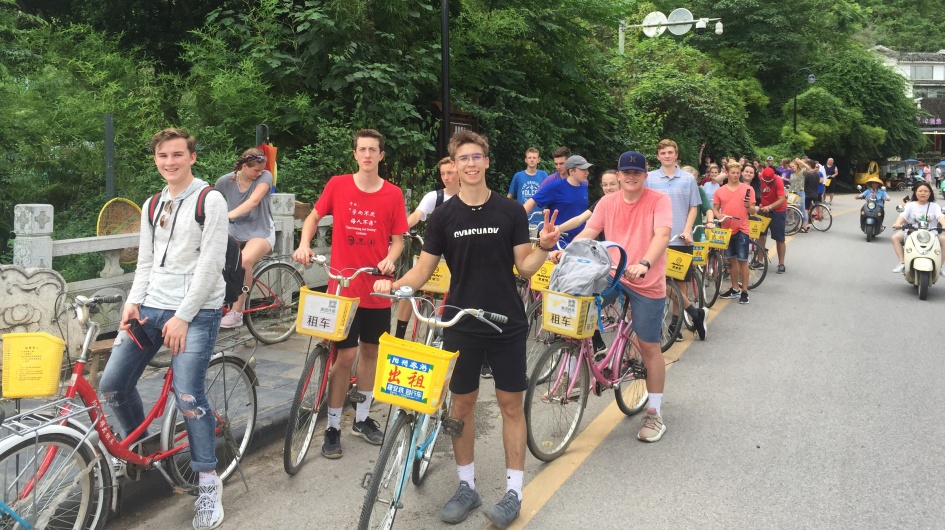 Rural Bike Tour
After cycling, you will attend a Chinese painting workshop. With the teacher’s guidance, you will read and appreciate Tao Yuanming’s Drinking · No. 5, and understand the images and emotions of “采菊”(picking chrysanthemums), “南山”(Southern Mountain) and “飞鸟”(flying birds) in the poem. Then you will paint the artistic conception of the poem in ink on rice paper, and the teacher will guide you in the basic techniques of Chinese painting. After completing your work, you may share your painting and creative ideas and receive an exclusive souvenir.
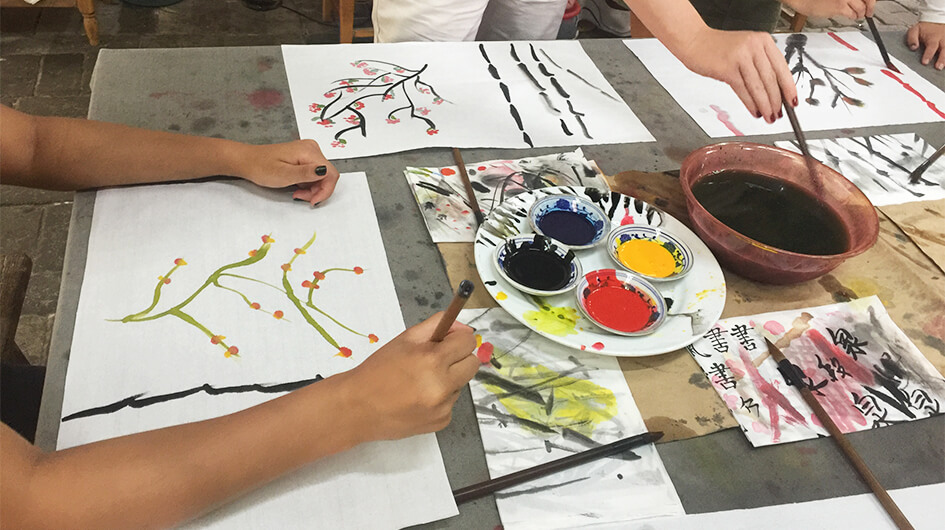 Pastoral Poetry Painting
Your Journey’s Rewards:
Visit the local market in Yangshuo, learn to cook special local dishes of Guilin, and experience real rural life; cycle along the country roads in Yangshuo and enjoy the beautiful countryside scenery depicted in pastoral poetry; take part in pastoral poetry-themed activities, learn how to appreciate pastoral poetry and improve reading skills.
Educational Focus:
As the representative poet of pastoral poetry, what are the characteristics of Tao Yuanming’s poems?
Takeaway:
The poet Tao Yuanming took part in farm work himself. He wrote, “晨兴理荒秽,带月荷锄归。”(chén xīng lǐ huāng huì, dài yuè hè chú guī — I rise at dawn to clear the wild weeds, and return home with a hoe under the moon.) This line shows his hard work. He wrote, “采菊东篱下,悠然见南山。”(cǎi jú dōng lí xià, yōu rán jiàn nán shān — Picking chrysanthemums under the eastern fence, I see the Southern Mountain calmly and peacefully.) from Drinking · No. 5. It describes his peaceful and leisurely pastoral life. His poems mainly express his aspiration to live in seclusion and his noble moral character.
Thought Challenge:
How do natural scenery, rural life and the poet’s emotions influence each other?
Take part in local farming activities throughout the day. Different farm work will be arranged according to the season, such as rice transplanting, rice harvesting, and vegetable planting. Follow local farmers to the fields, learn to use traditional farm tools, or apply fertilizer, feed chickens and ducks, and experience the hard work described in the line: “锄禾日当午,汗滴禾下土。” (chú hé rì dāng wǔ, hàn dī hé xià tǔ — I hoe the crops at noon under the sun, my sweat drips onto the soil beneath the plants.) from Sympathy for Farmers by Li Shen.
During the activity, you can communicate with farmers, listen to their farming stories, learn about their spring plowing and autumn harvesting scenes, and imagine the busy and simple pastoral life described in the poem: “昼出耘田夜绩麻,村庄儿女各当家。童孙未解供耕织,也傍桑阴学种瓜。” (zhòu chū yún tián yè jì má, cūn zhuāng ér nǚ gè dāng jiā. tóng sūn wèi jiě gòng gēng zhī, yě bàng sāng yīn xué zhǒng guā. — Men go out to weed fields by day, women spin hemp at night; everyone in the village takes charge of their own work. Little children still don’t know how to plow or weave, yet they learn to plant melons under the shade of mulberry trees.) from Miscellaneous Poems of the Four Seasons · No. 31 by Fan Chengda of the Song Dynasty.
Your Journey’s Rewards:
Experience farm work in the fields personally, learn agricultural knowledge, understand the real-life foundation of pastoral poetry, and appreciate the sincere feelings toward labor, land and nature in the poems.
Educational Focus:
What do pastoral poems aim to express by often describing farming scenes?
Takeaway:
Farming scenes are often used as a carrier for poets’ emotions. By describing the peace and leisure of pastoral life, poets express their pursuit of a quiet and comfortable life. Tao Yuanming wrote in Return to the Farm and Village · No. 3, “种豆南山下,草盛豆苗稀。” (zhòng dòu nán shān xià, cǎo shèng dòu miáo xī — I plant beans below the Southern Mountain; weeds grow lush, but bean seedlings are sparse.) By describing his own farming scene, he shows his love for pastoral life and his persistence in free will. In addition, Li Shen wrote in Sympathy for Farmers, “锄禾日当午,汗滴禾下土。谁知盘中餐,粒粒皆辛苦。” (chú hé rì dāng wǔ, hàn dī hé xià tǔ. shuí zhī pán zhōng cān, lì lì jiē xīn kǔ. — I hoe the crops at noon under the sun, my sweat drips onto the soil beneath the plants. Who knows that every grain of rice in our plates comes from hard work?) It directly describes the hardship of farmers’ labor and reflects the value of cherishing food.
Thought Challenge:
Why did ancient pastoral poets often take part in farm work themselves?
After breakfast, your guide and driver will take you to the airport or station for your trip to Huangshan according to your schedule. Upon arrival in Huangshan, your driver will transfer you to your hotel for check-in, in preparation for the mountain hike the next day.
Today you will visit Huangshan Scenic Area. First take the cable car up the mountain and hike to Guangming Peak. Along the way, you can see Huangshan’s fantastic pine trees, strange rock formations, sea of clouds and other spectacular sights. Standing on Guangming Peak, you can see the surging cloud sea and Huizhou-style villages scattered below. The poet Zhao Shixiu wrote, “山绕清溪水绕城,白云碧嶂画难成。” (shān rào qīng xī shuǐ rào chéng, bái yún bì zhàng huà nán chéng — Mountains wrap around the clear stream and water encircles the town; white clouds and green peaks are hard to paint even with art.) from Huizhou. It describes the geographical pattern of Huizhou Ancient City, which is surrounded by mountains and clear streams, as well as its stunning misty scenery.
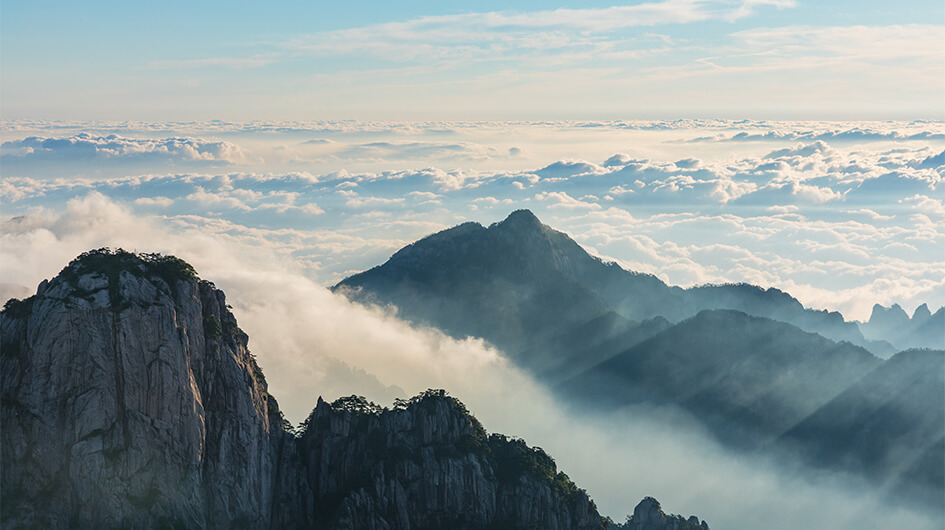 Huangshan Sea of Clouds
Your Journey’s Rewards:
Visit Huangshan Scenic Area, enjoy the fantastic pines, strange rocks and sea of clouds, and gain inner openness and peace.
Educational Focus:
What is the difference between pastoral poetry and landscape poetry?
Takeaway:
Pastoral poetry mainly describes the rural natural environment, pastoral scenery, farmers’ lives and farming activities, such as farmhouses, mulberry and hemp plants, chickens and dogs, and farming scenes. It focuses on showing the simplicity and tranquility of rural life. Landscape poetry centers on natural mountain and water scenery, such as mountains, rivers, lakes, clouds, mist, flowers, plants, insects and fish. It focuses on the shape, color and momentum of natural scenery, emphasizing the description of scenic beauty.
Thought Challenge:
Why can climbing high and looking far inspire strong emotions and creative desire in poets?
After breakfast, you will drive to Xidi Village and begin our hike to Hongcun Village. Along the way, you can admire Huizhou-style architecture with white walls and black tiles. Yi County, where Xidi Village is located, was known as "Yiyi" in ancient times. With green mountains and winding streams, it was called "Little Peach Blossom Land" by the ancients. The poet Li Bai wrote, “黟邑小桃源,烟霞百里间。” (yī yì xiǎo táo yuán, yān xiá bǎi lǐ jiān — Yi County is a little Peach Blossom Land, where mist and clouds stretch for a hundred miles.) from Little Peach Blossom Land, depicting the landscape of Yi County.
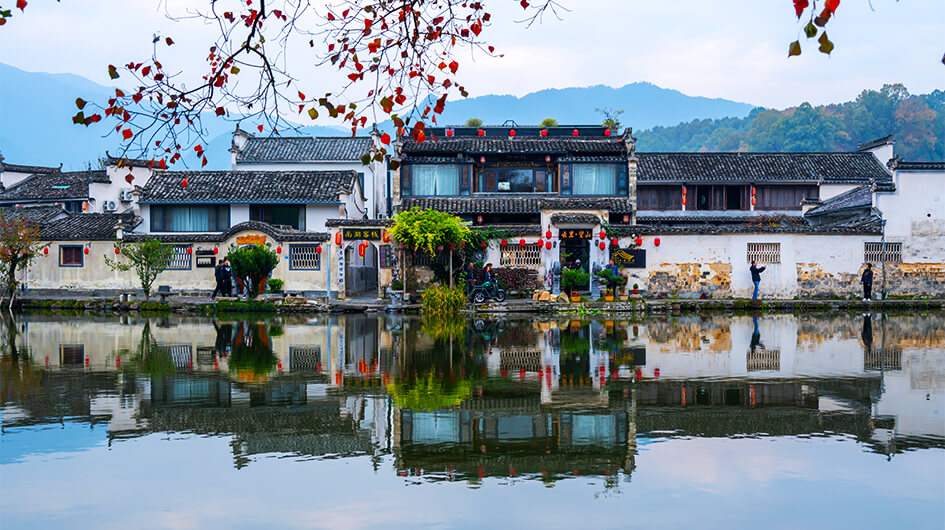 Hongcun Village
In the afternoon, you will visit Hongcun Village, including South Lake, Moon Marsh, and Chengzhi Hall, enjoying the layout of the village like an ink wash painting. Later, you will experience making Huizhou fish lanterns in a handicraft workshop—bending bamboo strips into a fish-shaped frame, pasting rice paper, and painting colorful scale patterns. After completion, you can walk and take photos by Moon Marsh or South Lake with your own fish lantern, experiencing the evening in the ancient Huizhou village.
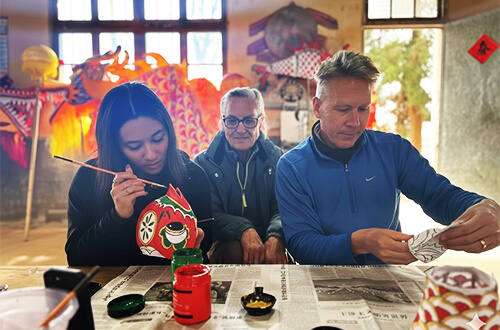 Make a Fish Lantern
 Fish Lantern Works
Your Journey’s Rewards:
Hike through the ancient villages of Xidi and Hongcun to learn about ancient Huizhou villages; experience traditional fish lantern making and understand the auspicious meanings and handicraft skills in Huizhou folk culture.
Educational Focus:
Why can the architecture and life of ancient Huizhou villages become the most classic scenes in pastoral poetry?
Takeaway:
Ancient Huizhou villages are built against mountains and facing rivers. The layout of white walls, black tiles, lanes with flowing water, and rural households is quiet and elegant, which perfectly matches the seclusion and leisure pursued by ancient poets. The poet Wang Wei wrote, “斜阳照墟落,穷巷牛羊归。” (xié yáng zhào xū luò, qióng xiàng niú yáng guī — The setting sun shines on the village, and cattle and sheep return down the quiet lanes.) from Farmland by the Wei River, depicting the warm rural life in the evening and full of longing for the peaceful pastoral life.
Thought Challenge:
Both are pastoral scenery, what is the difference in poetic feelings between ancient Huizhou villages and Yangshuo landscapes?
In the morning, depart for Wuyuan Huangling. After arrival, proceed to visit the Huangling Scenic Area. First, admire the layered terraced fields. If you visit in March, rapeseed flowers are in full bloom, turning the whole area into a golden sea. The poet Yang Wanli wrote, “儿童急走追黄蝶,飞入菜花无处寻。” (ér tóng jí zǒu zhuī huáng dié, fēi rù cài huā wú chù xún — Children run quickly chasing yellow butterflies; they fly into the rapeseed flowers and cannot be found.) from Staying at Master Xu’s Inn at Xinshi, expressing his love for the pastoral scenery and life.
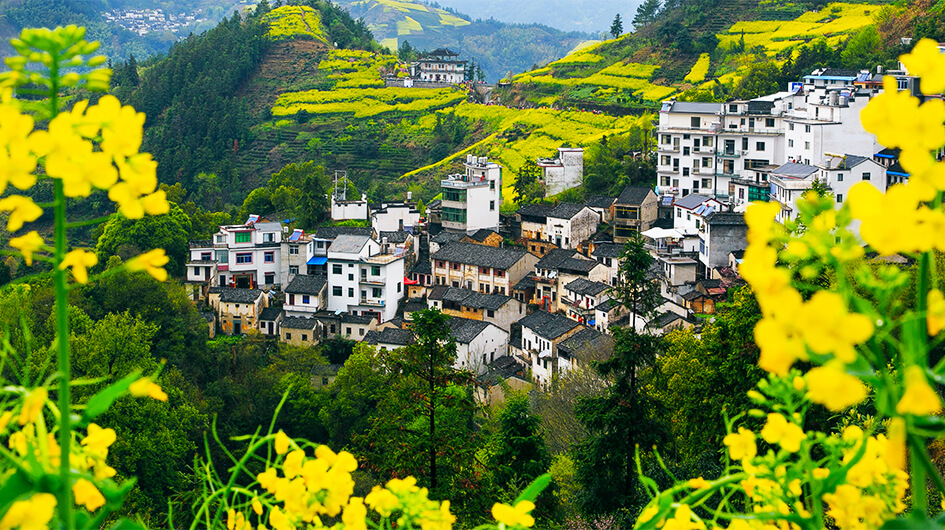 Rapeseed Flower Sea
Enter the Heavenly Street, where Huizhou-style buildings are scattered on both sides in picturesque order, and scenes of autumn sun-drying can be seen everywhere. Visit the Sun-Drying Workshop, Five Gui Hall, Strange House, and Leixin Bridge in sequence. On Leixin Bridge, you can overlook the entire terraced fields and sea of flowers in Huangling.
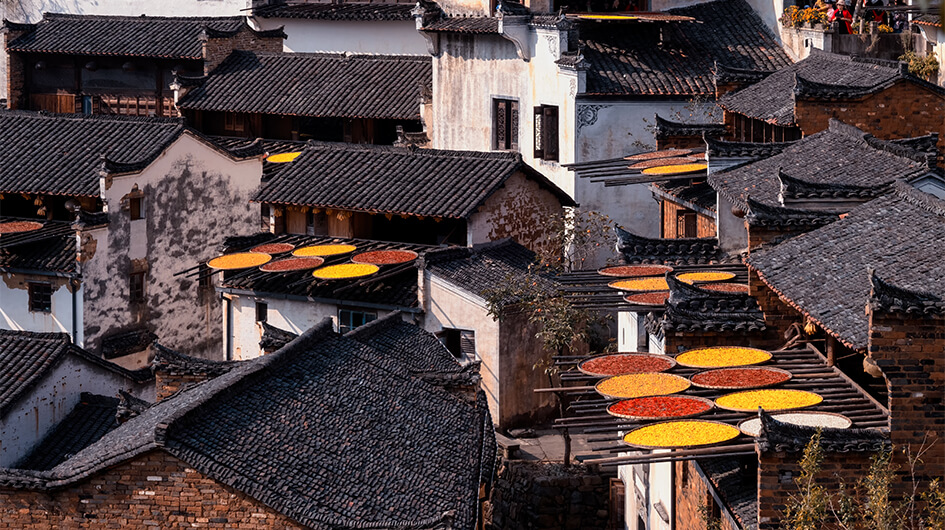 Sun-Drying Workshop
Your Journey’s Rewards:
Visit Huangling Scenic Area and enjoy the ten thousand mu of rapeseed flowers in full bloom from March to April. Watch the golden sea of flowers blending with ancient Huizhou villages, terraced fields and autumn sun-drying racks, and personally experience the real artistic conception of “a garden full of spring beauty” and “pastoral scenery like brocade” in pastoral poetry.
Educational Focus:
How does pastoral poetry create atmosphere?
Takeaway:
Landscape and pastoral poetry often use descriptions of sight, hearing, touch, taste and smell to depict scenes, making the descriptions more delicate. For example, Xin Qiji wrote in Moon over the West River · Walking at Night on the Sand Road, “稻花香里说丰年,听取蛙声一片。” (dào huā xiāng lǐ shuō fēng nián, tīng qǔ wā shēng yī piàn — Amid the fragrance of rice flowers, people talk of a good harvest; and the sound of frogs fills the air.) It depicts the peace and vitality of summer nights in the countryside from the perspectives of smell and hearing.
Thought Challenge:
Ancient pastoral poems mostly praise spring pastoral scenes. Why have rapeseed flowers become one of the most representative images of spring?
After breakfast, you will check out of the hotel. Your guide and driver will transfer you to the airport or station according to your schedule for departure. This 10-day journey comes to an end.
This tour is suitable for: School, Family, Team Building, Pastoral Poetry Lovers
What’s Included
- Experienced tour guides
- Entrance fee to all spots listed in the itinerary
- Well selected hotel accommodation
- Expert drivers and comfortable vehicles with air-conditioning
Hotel Options
- Guilin Hotel Accommodation: Guilin Bravo Hotel; Yangshuo Moondance Hotel
- Huangshan Hotel Accommodation: Pig's Inn Oil Plant Branch
- Shangrao Hotel Accommodation: Ruiyi Qinghuawu Hotel
Wechat & WhatsApp: +86-13471279378