- Home
- City Tours
- Guangdong Tours
- 5-Day Guangzhou Educational Tour
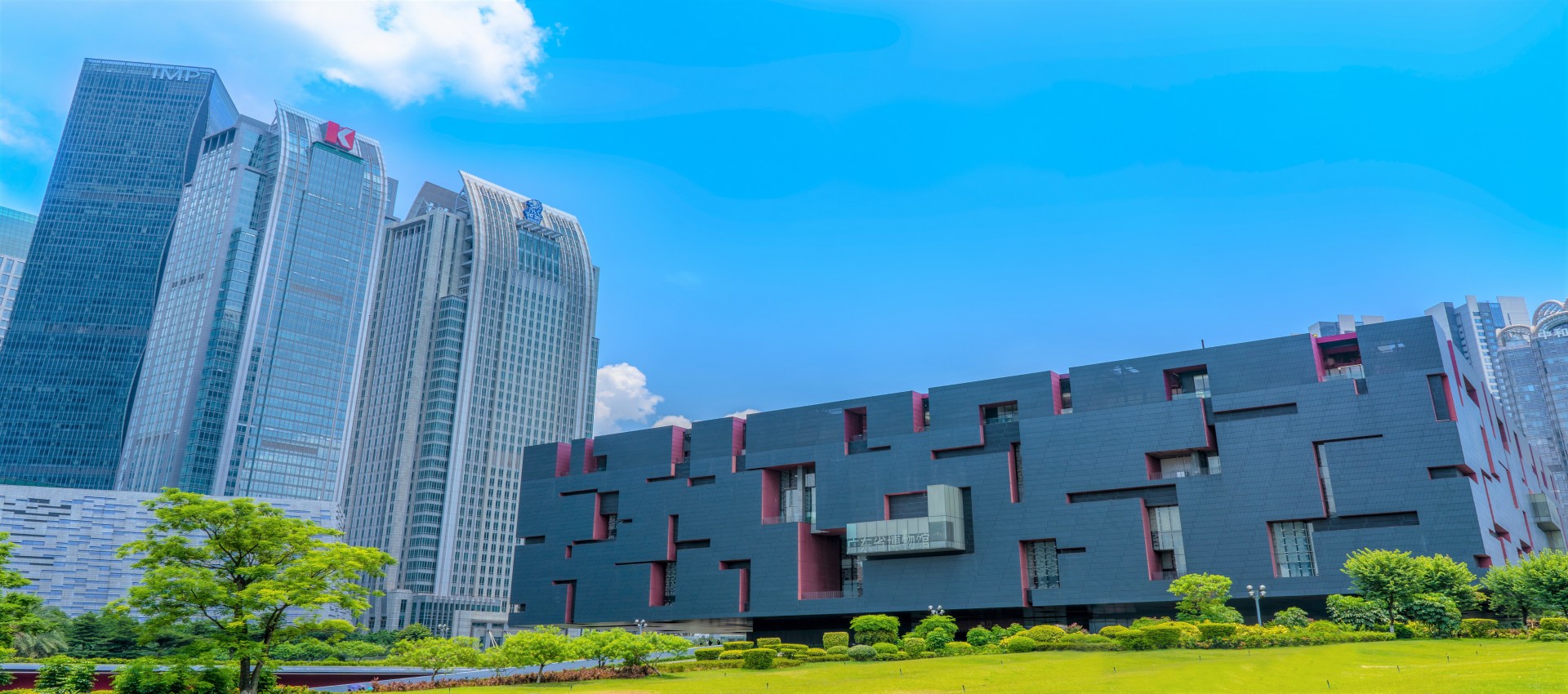
Guangzhou Educational Tour
Itinerary at a Glance
| Day | Location | Highlights |
|---|---|---|
| D1 | Guangzhou | Arrive in Guangzhou; hotel check-in |
| D2 | Guangzhou | Make rice noodle rolls at Yongqingfang to experience Cantonese food culture; visit Guangdong Museum to learn about Lingnan’s history and geography; explore Shangxiajiu Pedestrian Street to appreciate buildings and local snacks; enjoy Guangzhou’s night view by visiting Canton Tower |
| D3 | Guangzhou | Tour Huangpu Waste Environmental Treatment Plant to learn waste treatment knowledge; experience Guangcai creation at Yongqingfang; admire Lingnan traditional architectural arts at Chen Clan Ancestral Hall; explore European-style historical buildings on Shamian Island |
| D4 | Guangzhou | Experience Cantonese morning tea culture at Taotao Ju; visit Nanyue King Museum to understand Qin-Han Lingnan’s politics and culture; explore themed exhibition halls at Guangdong Science and Technology Center to learn aerospace, transportation and physics knowledge |
| D5 | Guangzhou | Visit Grandview Mall Aquarium to know polar marine organisms; be transferred to airport/railway station by driver; tour ends |
Trip Highlights
- Experience Guangcai ICH creation in Yongqingfang to learn traditional craftsmanship
- Visit Chen Clan Ancestral Hall to appreciate Lingnan traditional architectural arts
- Explore science at the Guangdong Science and Technology Center
- Visit Grandview Mall Aquarium and get to know a variety of marine organisms
Tour Essentials

Quality
No Shopping Traps

Group Type
Private

Tour Focus
Culture, History

Accommodation
Nights:4

Best Season
Spring, Summer, Autumn, Winter
Full itinerary for Guangzhou Educational Tour
Upon arrival in Guangzhou, transfer to the hotel will be provided by a driver. After check-in, luggage organization and rest are recommended to recharge energy for the upcoming itinerary.
In the morning, depart for Yongqingfang to make a traditional delicacy - rice noodle rolls. Under the guidance of local professional chefs, learn to select rice milk, prepare sauce, and personally operate the steaming process. Gain an in-depth understanding of the production secrets of rice noodle rolls, a characteristic delicacy of Guangdong, and experience the traditional food culture of Guangzhou.
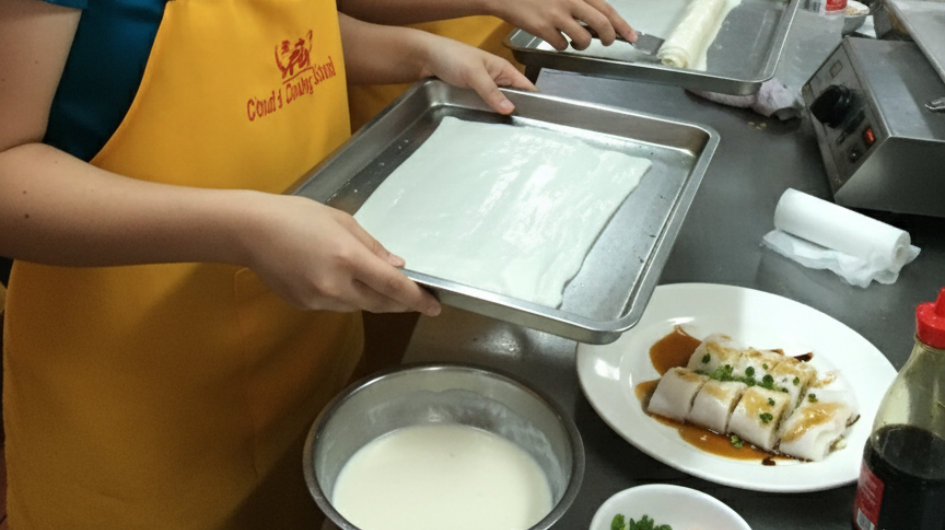 Experience of Making Rice Noodle Rolls
After the experience, depart for the Guangdong Museum. Students can visit exhibition areas with different themes such as history, ceramics, art, and geography, understand the historical changes and urban development of Guangdong, explore its unique geographical environment, and enhance their understanding of Guangzhou.
Next, explore Shangxiajiu Pedestrian Street. It has a long history and a well-preserved arcade building complex. Most notably, it gathers a large number of Guangzhou's traditional foods, Cantonese-style desserts, snacks, and Cantonese dishes. Walking on the street allows for an intuitive experience of the vivid atmosphere of Guangzhou's local folk customs. Whether it is exploring Guangzhou's local food culture or architectural features, this is an excellent choice.
In the evening, visit the Canton Tower. After the lights are turned on, the Canton Tower presents brilliant colors, and together with the surrounding commercial building complexes and the Pearl River, it forms Guangzhou's beautiful night view. The total height of the tower is 600 meters. Climbing the tower allows one to have a full view of Guangzhou's beautiful night scenery. Students can observe the urban planning on both sides of the Pearl River and understand the characteristics of Guangzhou as a city.
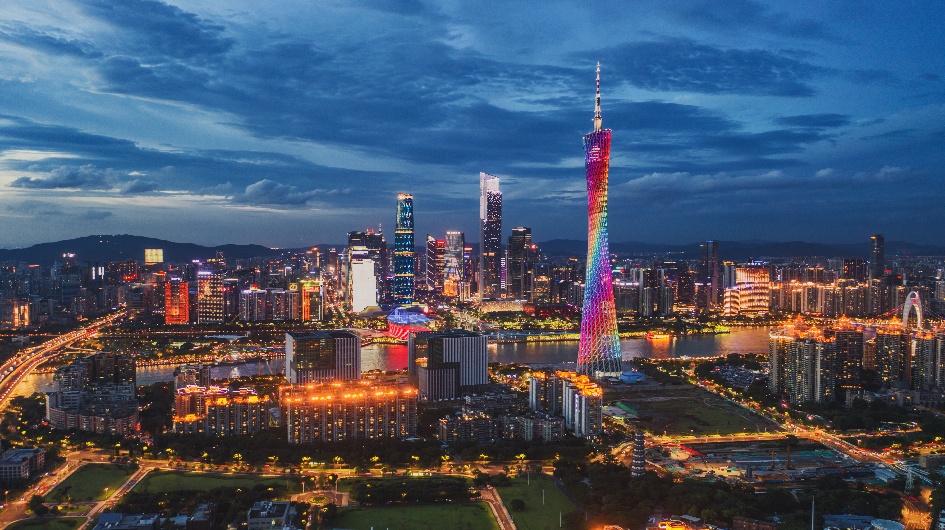 Canton Tower Night View
Your Journey’s Rewards:
Making rice noodle rolls enables students to learn the production secrets of this characteristic Guangdong delicacy and experience the traditional food culture of Guangzhou. Visiting landmarks such as the Guangdong Museum, Shangxiajiu Pedestrian Street, and the Canton Tower helps students learn about Guangzhou's history and culture and gain an in-depth understanding of the city's characteristics.
Educational Focus:
What functions do arcade buildings have?
Takeaway:
An arcade building consists of a colonnade space on the lower floor, shops, and residential and storage spaces on the upper floor. The colonnade space on the lower floor is for pedestrians to pass through; even in the scorching sun or sudden heavy rain, people can walk and shop freely. Some of the storage spaces on the upper floor are connected to the shops on the lower floor, which cleverly expands the commercial space and reflects the wisdom of Guangzhou people in space utilization.
Thought Challenge:
Some time-honored shops on Shangxiajiu Pedestrian Street have a long history but struggle to attract young tourists. How to design interactive activities to encourage young tourists to take the initiative to learn about the history and characteristics of these time-honored shops?
After breakfast, students depart to visit the Huangpu Waste Environmental Treatment Plant. Through the visit and listening to professional explanations, students can better understand the waste environmental treatment process, learn knowledge about waste classification, and establish awareness of ecological environmental protection.
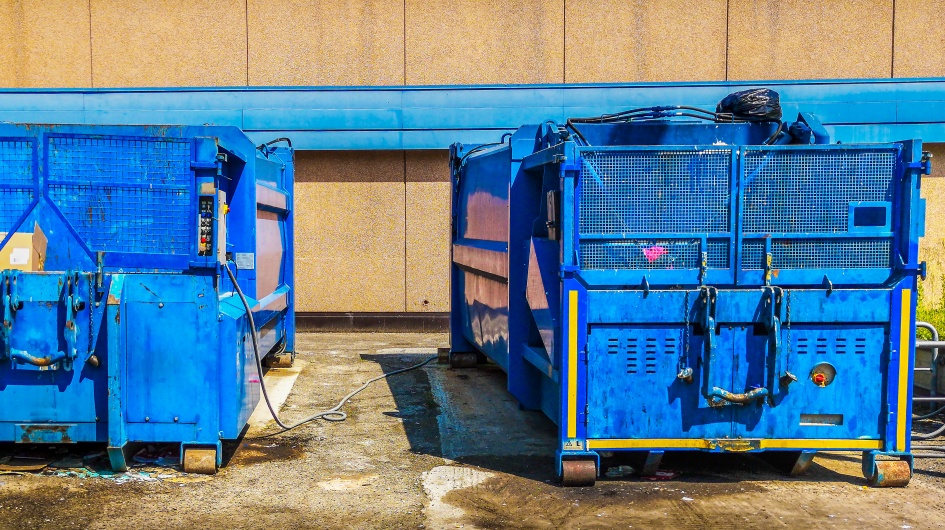 Visit Waste Environmental Treatment Plant
Then, go to Yongqingfang to experience the intangible cultural heritage (ICH) - Guangcai (Guangzhou-style colored porcelain). First, listen to a brief explanation of Guangcai culture given by an ICH inheritor. Then, under guidance, students personally create their own Guangcai works, such as porcelain plates and porcelain cups. They will learn painting techniques and feel the charm of Guangcai.
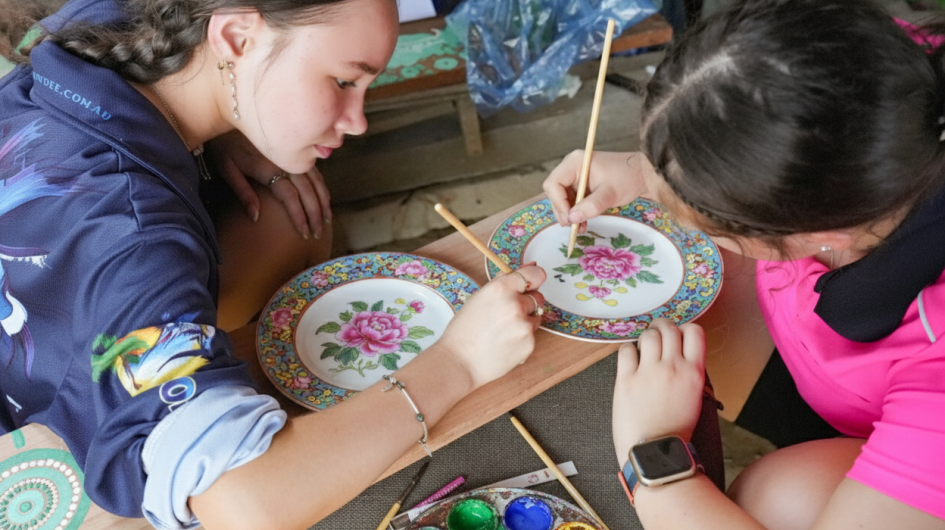 Experience of Guangcai
Next, visit the Chen Clan Ancestral Hall. Here, students can appreciate the exquisite architectural arts of the building, such as wood carvings, brick carvings, colored paintings and gray sculptures, and gain an in-depth understanding of the artistic charm of traditional Lingnan architecture. They can also visit the Guangdong folk handicrafts inside, such as wood carvings and ceramics.
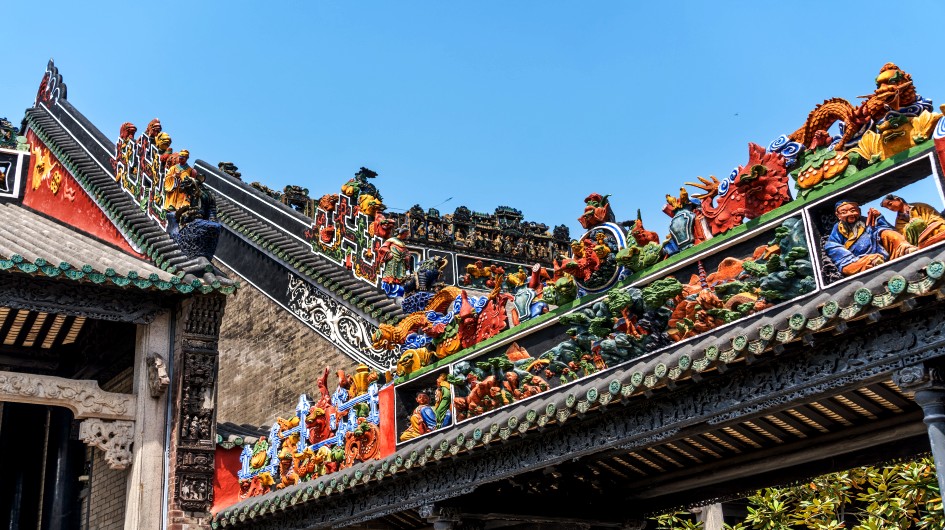 Visiting the Exquisite Grey Carvings of Chen Clan Ancestral Hall
Finally, arrive at Shamian Island and explore more than 150 European-style buildings with different architectural styles. Focus on visiting core buildings such as the former site of the Customs House and the former site of the British Consulate. Observe architectural elements such as columns, arches and reliefs of these buildings to understand European architectural elements.
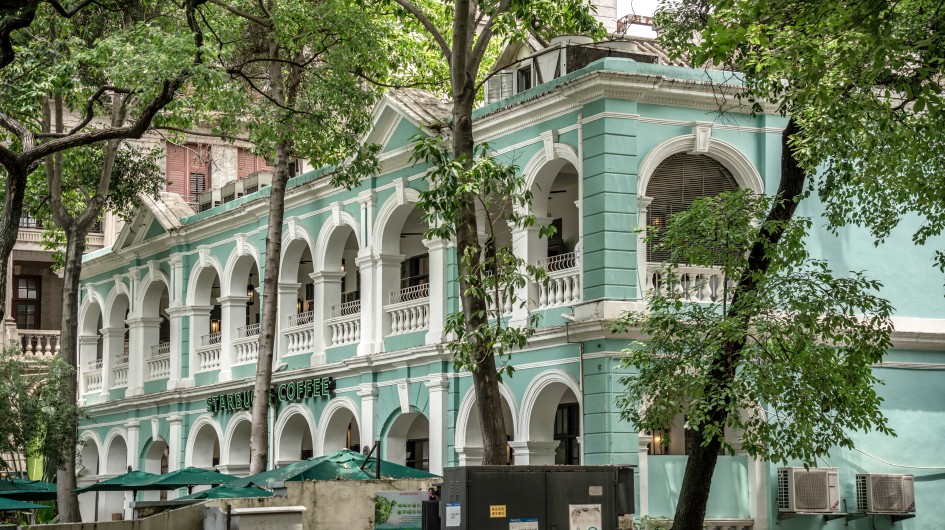 Shamian Island Architecture
Your Journey’s Rewards:
By visiting the Waste Environmental Treatment Plant, you can understand the waste environmental treatment process and establish awareness of ecological environmental protection. By experiencing ICH Guangcai, you can learn about Guangcai culture and its techniques, and feel the charm of Guangcai. By visiting the Chen Clan Ancestral Hall and Shamian Island, you can understand the characteristics of buildings with different styles and gain knowledge related to architecture.
Educational Focus:
What are the characteristics of Guangcai?
Takeaway:
Compact composition, bright colors and resplendence in gold and jade are the unique characteristics of Guangcai. Various colors, gold liquid and silver liquid are used for outlining, tracing, weaving and filling, making it seem as if countless golden and silver colored threads are woven on white jade.
Thought Challenge:
Some European-style buildings on Shamian Island have long been used as shops or office spaces, and their internal structures have been renovated, which may affect their historical style and features. How to find a balance between "rational use of building functions" and "protection of the original historical appearance"?
In the morning, go to Taotao Ju, a local time-honored teahouse, to experience Guangzhou's morning tea culture. There are many characteristic Cantonese dim sums here, such as shrimp dumplings, shaomai (steamed pork dumplings), barbecued pork buns, egg tarts and so on. Enjoy a pot of tea and order a few dim sums to experience the unique form of the slow life of Guangzhou people and understand the life culture of Cantonese morning tea.
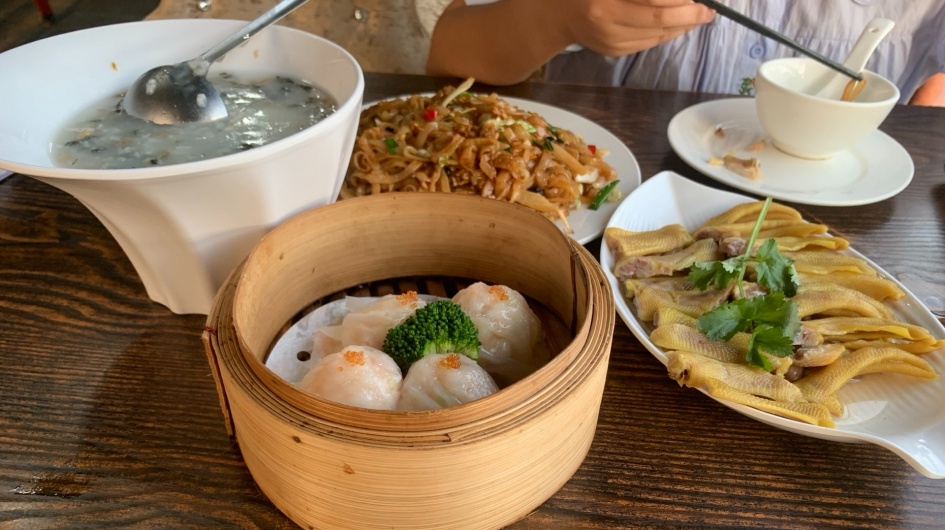 Leisurely Cantonese Morning Tea Experience
In the afternoon, head to the Nanyue King Museum. Relying on important archaeological relics of the Nanyue Kingdom, the museum is divided into two exhibition areas: the King's Tomb and the Royal Palace. By visiting the important exhibits in the exhibition areas, students can understand the development of politics, economy and culture in the Lingnan region during the Qin and Han dynasties.
Then go to the Guangdong Science and Technology Center to explore scientific and technological knowledge. As the largest science and technology venue in South China, it has multiple themed exhibition halls such as "Flying Sky", "Transportation" and "Physics". Students can not only learn aerospace knowledge, but also observe the structural principles of different types of transportation tools, or operate simulation devices with their own hands to understand scientific and technological knowledge in an interesting way and stimulate curiosity about scientific exploration.
Your Journey’s Rewards:
Deeply experience Guangdong's morning tea culture and feel its regional characteristics. Learn about the historical development and cultural knowledge of Guangzhou at the Nanyue King Museum. Conduct scientific and technological exploration at the Guangdong Science and Technology Center, learn physics and transportation knowledge, and stimulate curiosity about scientific exploration.
Educational Focus:
What kind of funeral system does the precious cultural relic "Silk-thread Jade Burial Suit" in the Nanyue King Museum reflect?
Takeaway:
The practice of burying the dead with jade was prevalent during the Han Dynasty, as people believed that jade could prevent corruption. The Silk-thread Jade Burial Suit is made of 2,291 jade pieces stitched together with red silk threads. It is currently the only complete set of silk-thread jade burial suits, reflecting the strong jade-worshiping concept of the Nanyue Kingdom and the luxurious burial custom of "valuing jade".
Thought Challenge:
The cultural relics in the Nanyue King Museum have extremely high environmental requirements. How to protect the cultural relics when the museum is open to visitors?
In the morning, visit Grandview Mall Aquarium, one of the world's largest indoor polar ocean parks. The park is equipped with facilities such as a deep-sea real-scene exhibition tank and a romantic and magnificent beluga concert hall. At the same time, it houses about 300 species of marine organisms including penguins, belugas, sharks and jellyfish, and holds more than ten world-class marine-themed performances every day. Through the vivid and interesting displays of polar organisms, students can learn rich marine knowledge and enhance their awareness of marine protection. After the visit, a driver will take you to the airport or railway station, and the itinerary will come to an end.
Your Journey’s Rewards:
At Grandview Mall Aquarium, you can get to know a variety of marine organisms and polar organisms such as penguins, understand their living habits, and improve your knowledge of organisms.
Educational Focus:
Why can penguins live so well in completely different places like ocean parks and the Antarctic?
Takeaway:
Penguins can live well in completely different places like ocean parks and the Antarctic, mainly thanks to their unique physiological characteristics and adaptability. Penguins' dense feathers and thick fat layer can prevent cold air from invading and heat from being lost. Their circulatory system can control the flow of blood to protect vital organs from the cold. In addition, the countercurrent heat exchange system in penguins' feet can reduce the temperature difference between their feet and the ground.
Thought Challenge:
What efforts can be made in daily life to protect marine organisms and polar organisms?
This tour is suitable for: School, Family, Team Building
What’s Included
- Experienced tour guides
- Entrance fee to all spots listed in the itinerary
- Well selected hotel accommodation
- Meals mentioned in the itinerary
- Expert drivers and comfortable vehicles with air-conditioning
Hotel Options
- Guangzhou Hotel Accommodation: Guangzhou Hotel
Wechat & WhatsApp: +86-13471279378