- Home
- City Tours
- Yunnan Tours
- 7-Day Dali & Lijiang Family Tour

7-Day Dali & Lijiang Family Tour
Itinerary at a Glance
| Day | Location | Highlights |
|---|---|---|
| D1 | Dali | Check in at the hotel; rest and adjust |
| D2 | Dali | Explore Yan Family Courtyard to view Bai-style dwellings; experience intangible cultural heritage tie-dyeing; visit Chongsheng Temple Three Pagodas; cycle along Erhai Lake ecological corridor |
| D3 | Dali | Take a boat tour on Erhai Lake to enjoy lake & Cang Mountain scenery; visit Zhoucheng Village to learn tie-dye culture; travel to Shaxi Ancient Town and explore its original Tea Horse Road style freely |
| D4 | Dali | Tour Shibao Mountain to appreciate Danxia landform; learn wood carving techniques and practice brush calligraphy with family |
| D5 | Dali → Lijiang | Travel to Lijiang; visit Black Dragon Pond Park; explore Mu Mansion to see multi-ethnic integrated architecture; wander Lijiang Ancient Town freely |
| D6 | Lijiang | Climb Jade Dragon Snow Mountain (Spruce Meadow/Yak Meadow) to admire alpine meadows & snow-capped peaks; visit Yuhu Village (Naxi stone dwellings) ; tour Dongba Culture Museum |
| D7 | Lijiang | Tiger Leaping Gorge & Yangtze River adventure or choose a peaceful stroll & local delicacies in Shuhe Ancient Town; airport transfer. |
Trip Highlights
- Explore Yan Family Courtyard and admire the architectural features of Bai ethnic group's dwellings
- Experience intangible cultural heritage (ICH) handicrafts such as tie-dyeing and wood carving
- Take a boat tour on Erhai Lake to fully enjoy its natural scenery
- Climb Jade Dragon Snow Mountain to appreciate the beautiful scenery of alpine meadows and snow-capped peaks
- Explore Mu Mansion in Lijiang Ancient Town and view the architecture integrating multiple ethnic cultures
Tour Essentials

Quality
No Shopping Traps

Group Type
Private

Tour Focus
Attractions, Culture, History

Accommodation
Nights:6

Best Season
Spring, Summer, Autumn, Winter
Full itinerary for 7-Day Dali & Lijiang Family Tour
Upon arriving in Dali, the driver will meet you and your family at the airport, and then take you to the pre-booked hotel. In hotel, you can rest to recharge your energy for the next day's itinerary.
After breakfast, depart for Yan Family Courtyard, one of the representatives of Bai ethnic group's architecture. Here, you can see the layout and interior of typical Bai-style dwellings, and learn about the history and cultural characteristics of the Bai people. Next, participate in the intangible cultural heritage (ICH) tie-dye experience—you and your family can make tie-dye works by yourselves. Take part in steps such as twisting, binding, and dyeing to create a unique tie-dye piece that belongs to you.
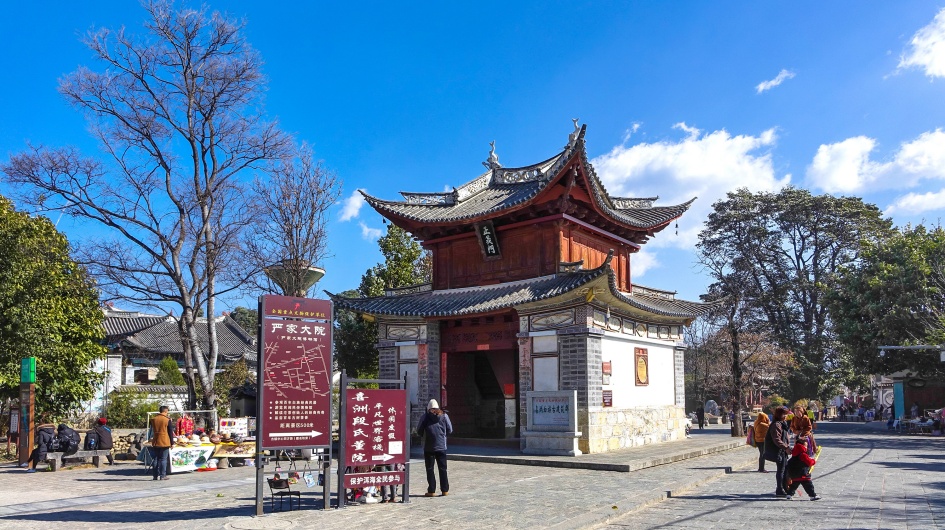 Yan Family Courtyard
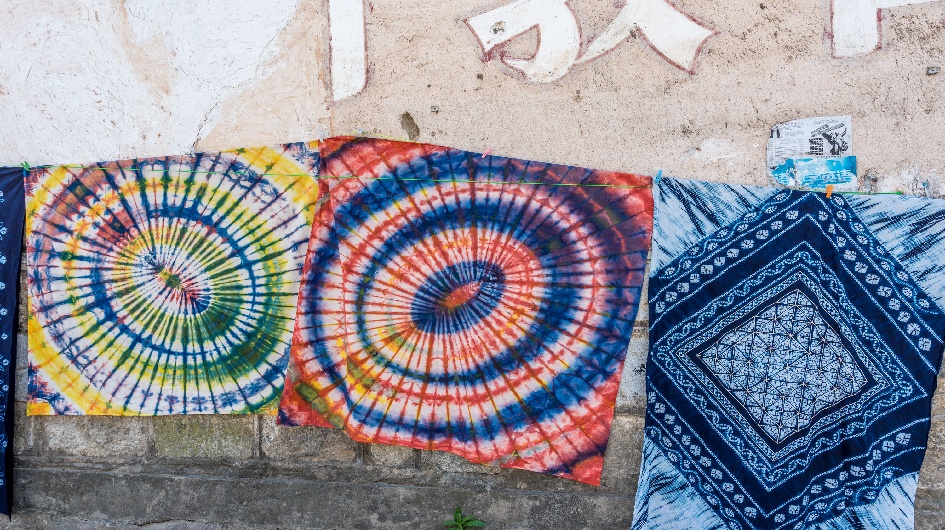 Tie-Dye Experience
In the afternoon, visit Chongsheng Temple Three Pagodas, a landmark of Dali with a history of over a thousand years. Witness the classic scene of the three pagodas' reflection here. Tour the cultural relics and buildings inside the temple to gain insights into Dali's history and culture. Afterwards, visit Erhai Lake, Dali's iconic scenic spot—you can take a leisurely bike ride or walk along the lake shore, admire the beautiful natural scenery by the lake and the distant Cang Mountain, and feel the tranquility and beauty of Erhai Lake.
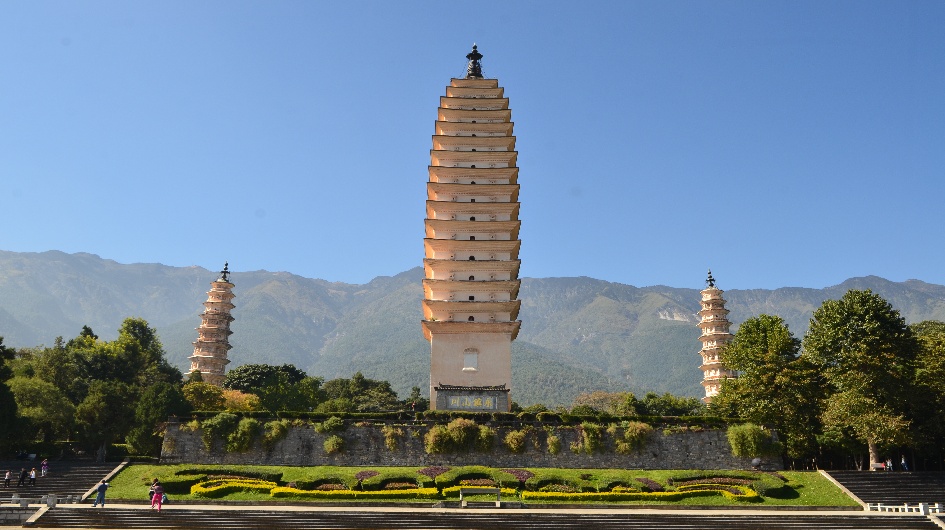 Chongsheng Temple Three Pagodas
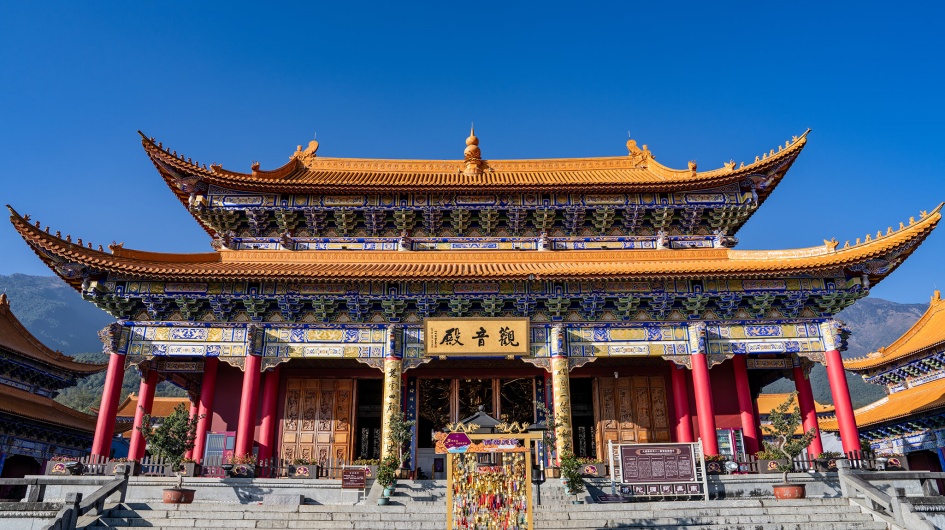 The Guanyin Hall in Chongsheng Temple
 The Scenery of Erhai Lake
Your Journey’s Rewards:
By visiting Yan Family Courtyard, understand the architectural features of Bai-style dwellings; tour Chongsheng Temple Three Pagodas and Erhai Lake to appreciate the charm of Dali's natural scenery; participate in the ICH tie-dye experience to feel the integration of traditional dyeing techniques and natural colors, as well as the allure of intangible cultural heritage.
Educational Focus:
What is the cultural connotation of Bai ethnic group's tie-dye?
Takeaway:
The Bai people integrate tie-dye with their living habits and aesthetic tastes, creating tie-dye patterns and styles with unique characteristics. This is the crystallization of the Bai people's wisdom in living in harmony with nature, through which they express their reverence for nature and yearning for a better life.
Thought Challenge:
How to protect and inherit the tie-dye technique of the Bai ethnic group?
In the morning, head to Erhai Lake. Taking a boat tour on Erhai Lake allows you to fully enjoy the scenery of Cang Mountain and Erhai Lake. After getting off the boat, depart for Zhoucheng Village, which is known as the "Hometown of Bai Ethnic Group's Tie-Dye". Here, you can see a wide range of ethnic tie-dye products, wander around the ancient town, and visit to learn about the characteristics of Bai Ethnic Group's dwellings.
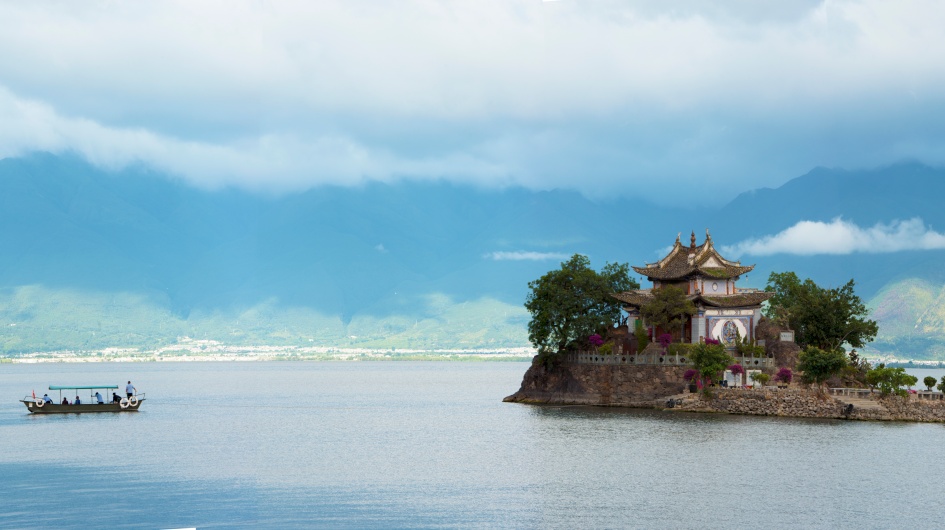 Erhai Lake Cruise
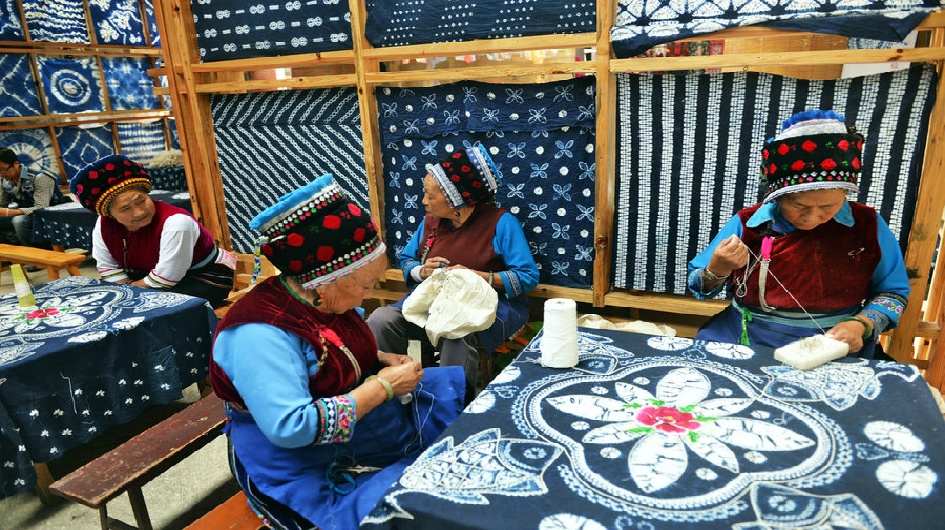 Bai Ethnic Group Residents in Zhoucheng Village Are Making Tie-Dye
In the afternoon, travel to Shaxi Ancient Town, the only surviving ancient market town on the Ancient Tea Horse Road. Upon arrival, explore the ancient town freely without a guide. You can visit Sideng Street, admire the ancient architecture, experience traditional handicrafts and traditional cuisines. In the evening, climb onto Yujin Bridge to enjoy the sunset over the ancient town and feel the tranquility and beauty of the town.
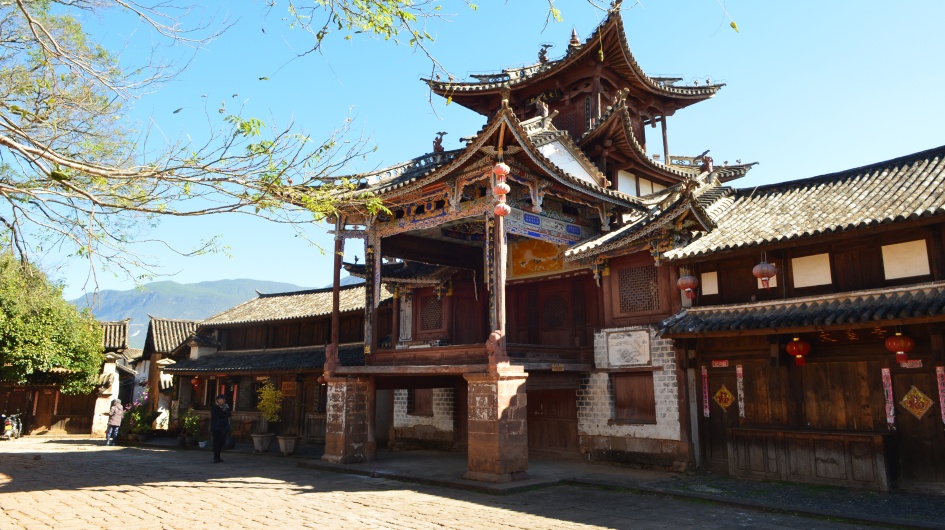 Shaxi Ancient Town
Your Journey’s Rewards:
Wander around Zhoucheng Village, appreciate a wealth of tie-dye works, learn about tie-dye culture, visit Bai Ethnic Group's dwellings, and understand the characteristics of Bai Ethnic Group's dwellings as well as their traditional customs.
Educational Focus:
What are the architectural characteristics of Bai Ethnic Group's dwellings?
Takeaway:
In Zhoucheng, you can see Bai Ethnic Group's dwellings constructed in the form of enclosed courtyards, including the "Three Houses with One Screen Wall" and "Four Houses with Five Courtyards" styles. Some exist as independent courtyards, while others consist of multiple connected courtyards, with a square plane layout. The Bai people advocate the color white, so the outer walls of their buildings mainly take white as the main color tone. Due to differences in the natural environment and aesthetic tastes, Bai Ethnic Group's dwellings have their own unique ethnic styles and local characteristics.
Thought Challenge:
As a relatively well-preserved original ecological ancient town on the Ancient Tea Horse Road, how can Shaxi Ancient Town protect the historical architectural style of the town in the process of tourism development and independent exploration experiences?
In the morning, first head to Shibao Mountain, which is famous for its peculiar peaks and rocks formed by Danxia landform. Within the scenic area, you can see unique mountains shaped by spherical weathered rocks. Focus on visiting the Shizhongshan Grottoes, which house exquisitely carved statues such as the "Nanzhao King Discussing State Affairs" and Guanyin (Avalokitesvara) statues.
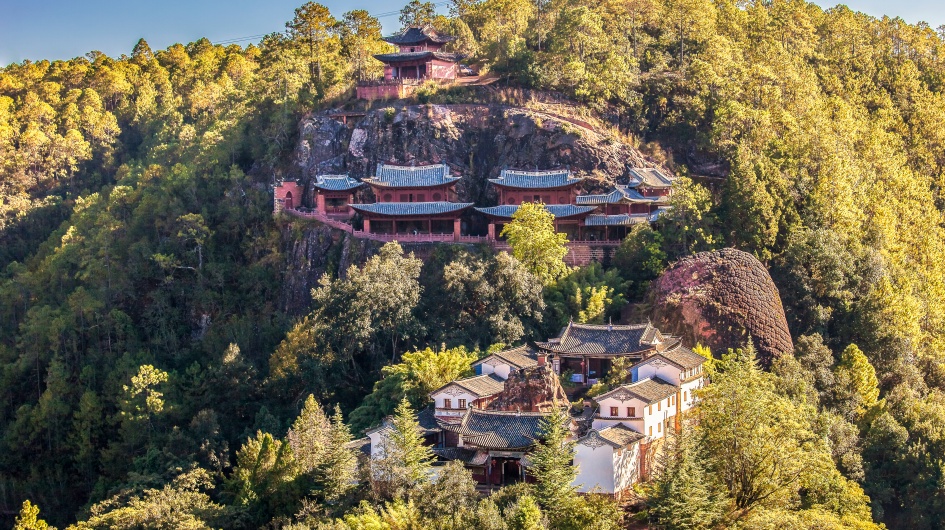 Shibao Mountain
Then, go to a local resident's home and learn wood carving techniques under the guidance of traditional craftsmen. You will get to know wood carving tools and procedures, and carve simple patterns on wood, which helps develop your child's hands-on skills. Later, participate in a calligraphy experience: learn the correct posture for holding a brush and basic brush strokes, practice writing Chinese characters with a brush, and feel the charm of calligraphy art.
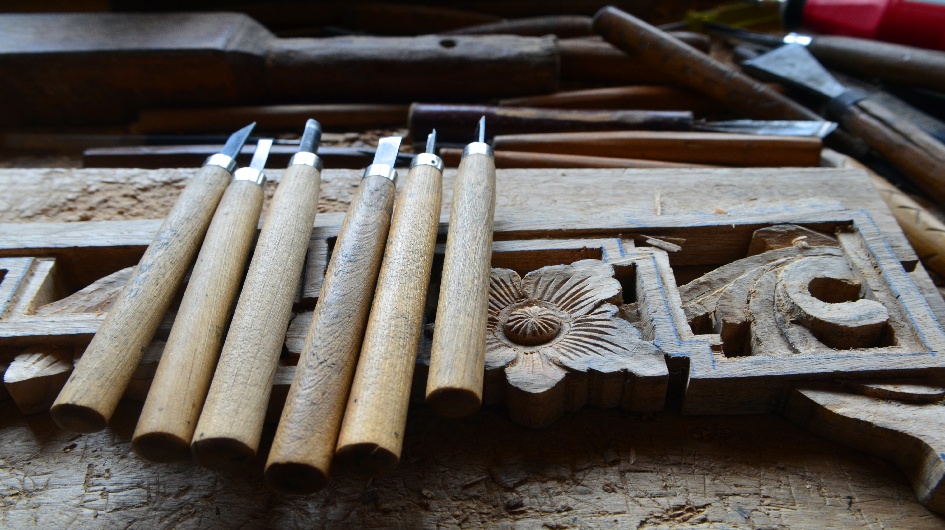 Wood Carving
 Calligraphy Experience
Your Journey’s Rewards:
Visit Shibao Mountain and admire the unique landscape of Danxia landform; experience wood carving, learn wood carving techniques, and enhance hands-on abilities; the calligraphy experience cultivates temperament, helps learn writing skills, and allows you to feel the charm of calligraphy.
Educational Focus:
What is "relief carving" among the core techniques of wood carving?
Takeaway:
Relief carving, also known as "flat carving", is a form of convex expression on a flat surface. It is divided into two categories: high relief and low relief. Low relief has a strong sense of flatness and smooth lines, presenting an elegant and tranquil artistic effect, and is closer to painting. High relief often uses the spatial undulation of three-dimensional forms or exaggerated treatment to create a rich sense of spatial depth and strong visual impact, endowing relief art with a unique expressive force and charm in shaping images.
Thought Challenge:
In the process of inheriting traditional crafts like wood carving and calligraphy, how to attract the participation of young people?
In the morning, depart from Shaxi Ancient Town for Lijiang and visit Black Dragon Pond Park, which is an excellent place to enjoy Lijiang's scenery. Inside the park, you can admire the garden landscapes, visit ancient buildings such as the Wufeng Tower (Five-Phoenix Tower) and Deyue Tower (Moon-Viewing Tower), and also take photos of the beautiful scene where the Jade Dragon Snow Mountain is reflected in the lake.

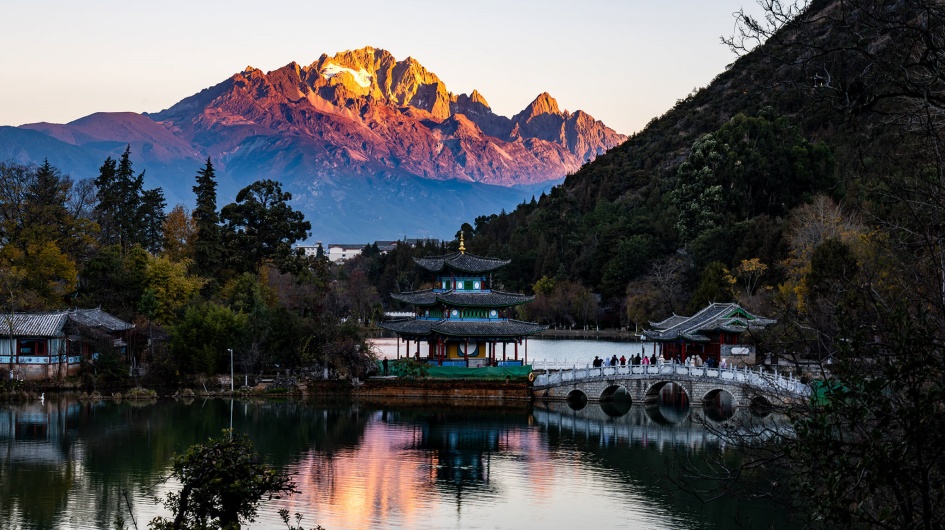 Black Dragon Pond Park
After finishing the visit to Black Dragon Pond Park, set off to visit the Mu Mansion in the ancient town. As a core cultural landmark of Lijiang Ancient Town, it was the official residence of the Mu clan, the Tusi (local chieftain) of the Naxi people during the Ming Dynasty. With its magnificent architecture, it is known as the "Forbidden City of Lijiang". You can closely observe the wood carvings and colored paintings on the buildings, listen to the guide explain the history and culture of the Naxi people, and immerse yourself in the strong historical atmosphere.
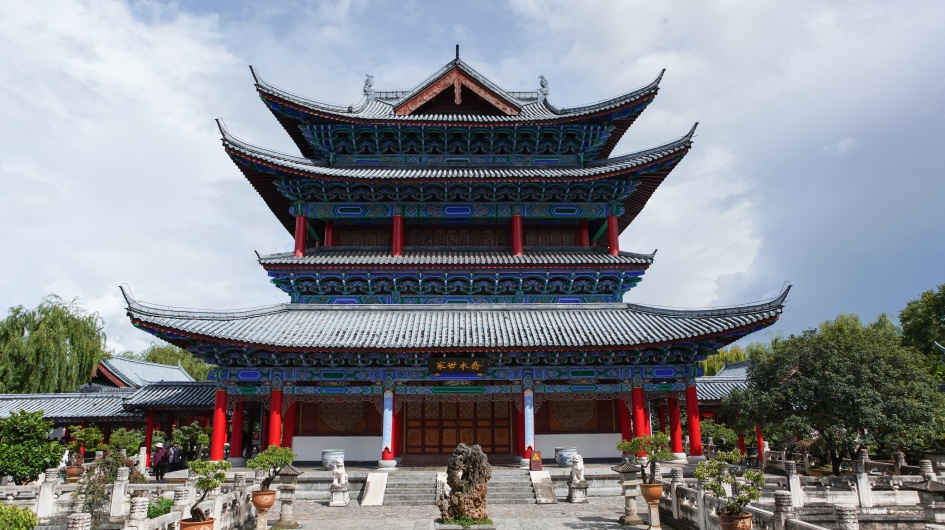 Mu Mansion
After the guide leaves, you can explore Lijiang Ancient Town freely with your family. Sifang Street (Square Street) is the center of the ancient town, where you can admire the ancient Naxi courtyards and various distinctive small shops.
 Lijiang Ancient Town
Your Journey’s Rewards:
Visit Lijiang's core scenic spots including Black Dragon Pond Park, Mu Mansion and Lijiang Ancient Town, and appreciate the charm of Lijiang's natural scenery and the strong historical atmosphere.
Educational Focus:
How does Mu Mansion reflect the integration of ethnic cultures in its architecture?
Takeaway:
Mu Mansion is a building with multiple-eaves and a pointed roof, composed of three layers of eaves and twenty upturned eaves corners. Its roof is a Tibetan-style copper roof, the colored paintings are in the Bai ethnic style, the carvings feature Naxi ethnic characteristics, and the architectural layout follows the Han ethnic style. While admiring the architecture here, visitors can feel the spiritual outlook of Lijiang's various ethnic groups engaging in extensive exchanges, comprehensive interactions and in-depth integration.
Thought Challenge:
In the process of tourism development, the cultural core of the ancient town is fading. How to establish a sustainable development model?
You will have a whole morning to explore Jade Dragon Snow Mountain. If you and your family are prone to altitude sickness, it is recommended to take the Spruce Meadow Cableway and then reach Spruce Meadow via the plank road. There are vast alpine meadows, dense spruce forests, and you can also enjoy the spectacular view of the Jade Dragon Snow Mountain peaks, which is ideal for photography.
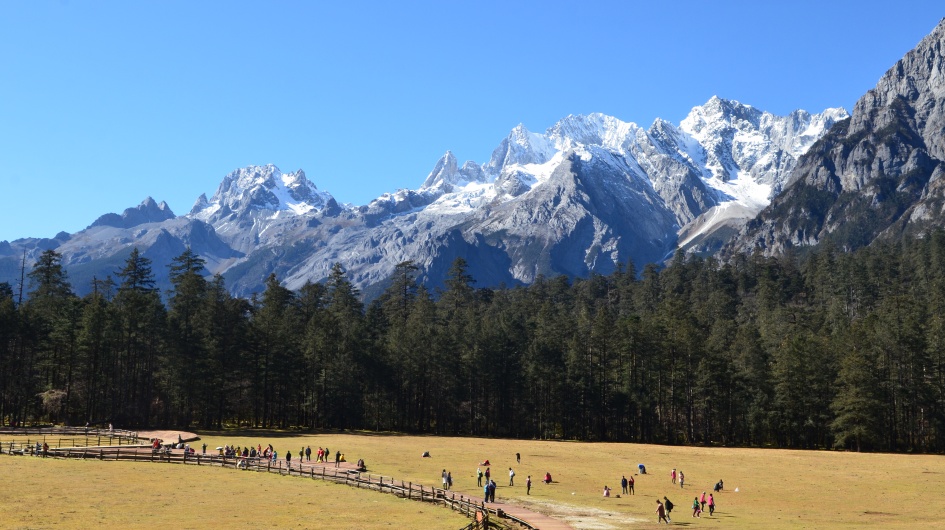 Jade Dragon Snow Mountain
 Sunlight-Kissed Golden Mountains -- The Scenery of Jade Dragon Snow Mountain
If you and your family enjoy hiking and are not prone to altitude sickness, you can choose to take the Yak Meadow Cableway and then hike to Yak Meadow. This is an excellent spot to enjoy the scenery of alpine meadows and the panoramic view of the snow-capped mountains. Usually, there are fewer tourists here, allowing you to quietly take photos of the snow-capped mountains.
In the afternoon, visit Yuhu Village, a quiet ancient village located at the foot of the snow-capped mountains with beautiful scenery. Walk among the traditional dwellings and appreciate the exquisite architecture. Visit Luo Ke's Former Residence in the village, and learn about Lijiang's ethnic culture through the pictures and text materials inside. Next, go to the Dongba Culture Museum, where you can view the precious cultural relics and artworks in the collection, and understand Lijiang's history and the characteristics of its ethnic culture.
Your Journey’s Rewards:
Climb Jade Dragon Snow Mountain and enjoy the natural scenery of the snow-capped mountains. The vast alpine meadows and spectacular snow-capped mountain views will help you feel relaxed. Visiting Yuhu Village and the Dongba Culture Museum enriches your knowledge of ethnic cultures.
Educational Focus:
What is the geological and geomorphic evolution process of Jade Dragon Snow Mountain?
Takeaway:
The geological and geomorphic evolution of Jade Dragon Snow Mountain has gone through a long and complex process. It started from the early marine transgressions and regressions, followed by the Himalayan orogeny in the Tertiary period which laid the foundation of the mountain. Since the Quaternary period, under the combined influence of alternating cold and warm climates and tectonic movements, the current geological and geomorphic pattern has been formed.
Thought Challenge:
As a niche and ancient culture, how can the complete connotation and spiritual core of Dongba culture be inherited?
In the morning, depart for Shigu Town to visit the First Bend of the Yangtze River. This is a huge "V"-shaped bend formed when the Yangtze River is blocked by mountain cliffs and makes a sharp turn as it flows through this area. On both sides of the river are green mountains and farmlands that resemble the water towns in the Jiangnan region, presenting a stunning scenery.
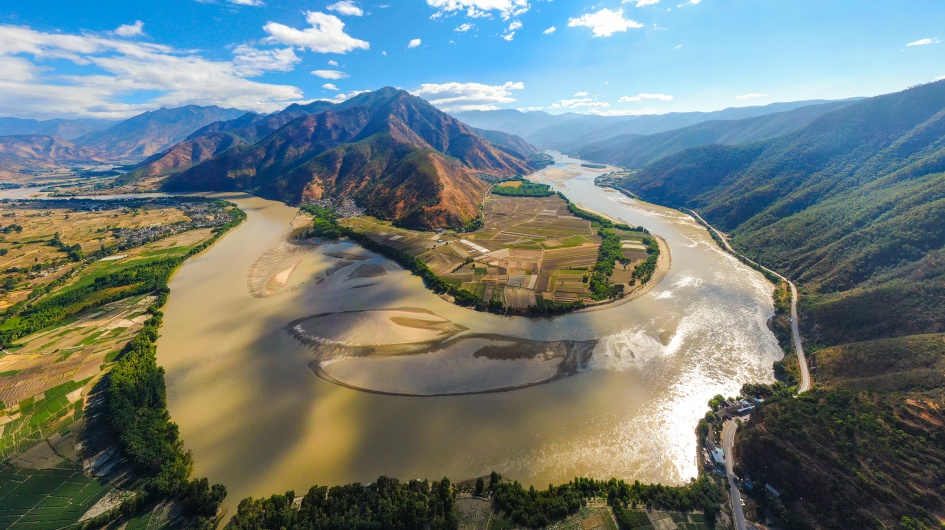 First Bend of the Yangtze River
Next, visit Tiger Leaping Gorge, which is famous for its breathtaking gorge scenery and rushing river water. Touring the precipitous cliffs and plank roads along the way makes it an ideal place to appreciate the magnificent natural scenery. After the visit, the driver will take you to the airport, and the itinerary will come to an end.
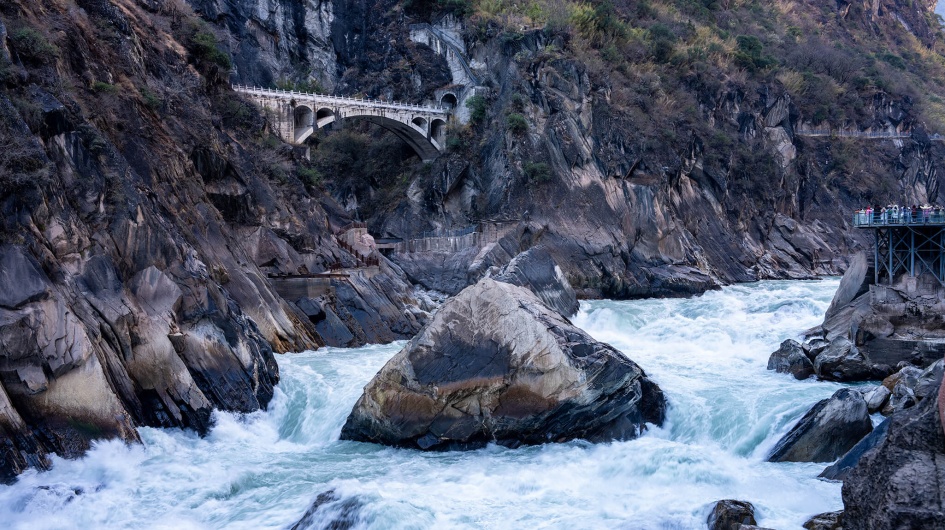 The Turbulent River of Tiger Leaping Gorge
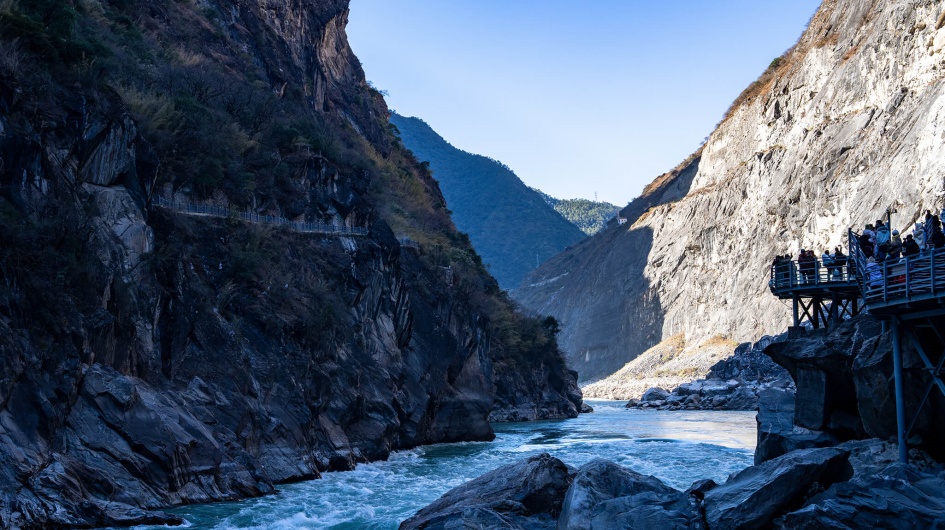 The Scenery of Tiger Leaping Gorge
If you just want a quiet and relaxing day, you can stay in a nearby ancient town called Shuhe Ancient Town. It’s a quiet historic hideout, ideal for wandering on stone paths, photographing Naxi architecture, and sampling local dishes from Yunnan by the creek.
Your Journey’s Rewards:
Visit the First Bend of the Yangtze River to enjoy the natural scenery of the Yangtze River; admire the gorge scenery and rushing river water of Tiger Leaping Gorge, and feel the spiritual shock brought by the spectacular scenery of Tiger Leaping Gorge.
Educational Focus:
How is the spectacular scenery of Tiger Leaping Gorge formed?
Takeaway:
Tiger Leaping Gorge is located at the southeastern edge of the Qinghai-Tibet Plateau. Affected by the continuous compression of the Indian Ocean Plate and the Eurasian Plate, the earth's crust continues to rise, which causes the terrain of the Jinsha River basin to rise continuously. Later, the Jinsha River underwent continuous and intense downcutting erosion, creating the spectacular landform of Tiger Leaping Gorge.
Thought Challenge:
As a region with ecological vulnerability, how can Tiger Leaping Gorge reduce the damage of tourism activities to the original ecological environment of the gorge while developing sightseeing tourism?
This tour is suitable for: Family
What’s Included
- Experienced tour guides
- Entrance fee to all spots listed in the itinerary
- Well selected hotel accommodation
- Expert drivers and comfortable vehicles with air-conditioning
Hotel Options
- Dali Recommended Hotels: The Linden Centre
- Lijiang Recommended Hotel: DuoFu Resort
- Shaxi Recommended Hotel: Landscape Garden Hotel
Wechat & WhatsApp: +86-13471279378