- Home
- Educational Travel
- China Cultural Tours
- Tang Poetry Tour: CET-30
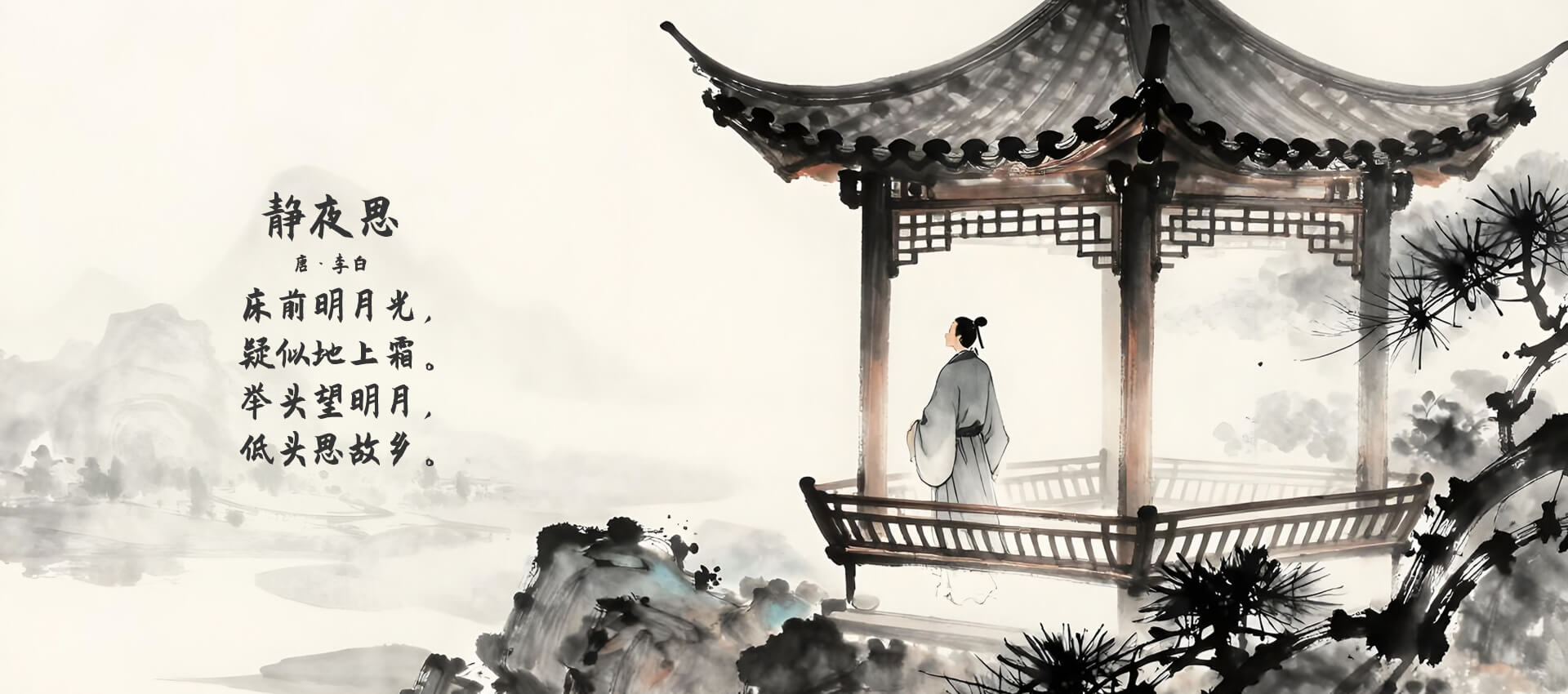
10-Day Xi'an - Luoyang - Chengdu Tang Poetry Tour
Itinerary at a Glance
| Day | Location | Highlights |
|---|---|---|
| D1 | Xi'an | Arrive in Xi'an; hotel check-in and free time |
| D2 | Xi'an | Visit Terracotta Army; cycle/walk on Ancient City Wall; Hanfu photography at Drum Tower |
| D3 | Xi'an | Tour Xi'an Museum, Giant Wild Goose Pagoda & Daci'en Temple; join Tang Poetry recital Session; visit Tang Dynasty Ever-Bright City |
| D4 | Xi'an → Luoyang | Explore Anrenfang Site Exhibition Hall; take high-speed train to Luoyang; hotel check-in and free time |
| D5 | Luoyang | Visit Xiangshan Temple; explore Longmen Grottoes; stroll through Luoyi Ancient City |
| D6 | Luoyang | Tour White Horse Temple & Mingtang & Tiantang Scenic Area; watch "In Search of the Luo River Goddess" show; stroll Cross Street Night Market |
| D7 | Luoyang → Chengdu | Transfer to Chengdu by high-speed rail/airport; hotel check-in and free exploration |
| D8 | Chengdu | Visit Du Fu Thatched Cottage & Wuhou Shrine; wander Kuanzhai Alleys; tea-tasting at local teahouse |
| D9 | Chengdu | Volunteer experience at Giant Panda Breeding Base (prepare bamboo, clean enclosures, make panda buns) |
| D10 | Chengdu | Transfer to station/airport for departure; end of Tang Poetry Tour |
Trip Highlights
- Admire the Terracotta Army, the Eighth Wonder of the World
- Join a Well-Prepared Tang Poetry Recital Session in Xi'an
- View Longmen Grottoes’ exquisite Buddhist stone carvings
- Visit Du Fu Thatched Cottage where Du Fu lived and wrote
- Take part in a giant panda volunteer program at the breeding base
Tour Essentials

Quality
No Shopping Traps

Group Type
Private

Tour Focus
History, Culture

Accommodation
Nights:9

Best Season
Spring, Summer, Autumn, Winter
Full Itinerary
Xi’an, historically known as Chang’an, was the capital of the Tang Dynasty and the center for the creation and spread of Tang poetry, making it the best destination to explore Tang poetry. Upon arrival in Xi’an, check into the hotel and enjoy free time.
Wake up early and visit the Terracotta Army, the burial pits of Qin Shi Huang’s Mausoleum, known as the “Eighth Wonder of the World”. Here you can see thousands of exquisitely carved pottery warriors and horses unearthed here, and feel the powerful military strength of the Qin Dynasty. After visiting the pits, walk to the Exhibition Hall, where you can view Terracotta Army exhibits up close, and learn about the sophisticated weapons of the Qin Dynasty and the making process of the Terracotta Army.
Poets of the Tang Dynasty often referred to the history of the Qin Dynasty in their poems. For instance, Li Bai wrote, “秦王扫六合,虎视何雄哉!挥剑决浮云,诸侯尽西来。” (qín wáng sǎo liù hé, hǔ shì hé xióng zāi! huī jiàn jué fú yún, zhū hóu jìn xī lái — King Qin swept across the six states; how majestic his gaze like a tiger! Wielding his sword, he cut through the floating clouds; all the feudal lords came west to submit.) from Ancient Style · King Qin Sweeps Across the Six States. These lines present the powerful momentum of the Qin Dynasty, echoing the military strength demonstrated by the Terracotta Army.
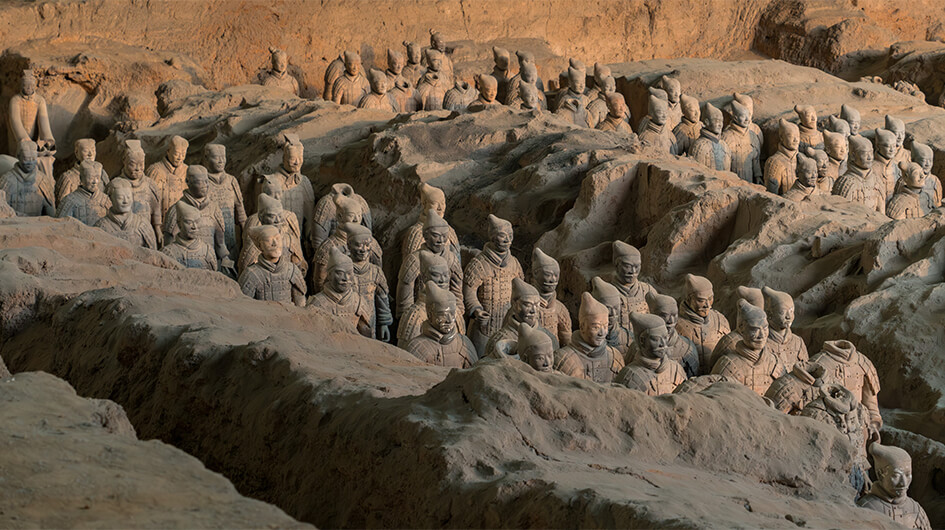 the Terracotta Army
Then proceed to the City Wall. In Tang poetry, the city wall of Chang’an often stands as a symbol of the empire’s majesty and prosperity. Cycling or walking on the wall allows you to overlook the entire ancient city. In the evening, the lights of the Drum Tower and Bell Tower turn on, making the whole building splendid and magnificent. Here you can take part in a Hanfu experience: dress in Hanfu with delicate makeup, and take memorable photos with the Drum Tower as the backdrop.
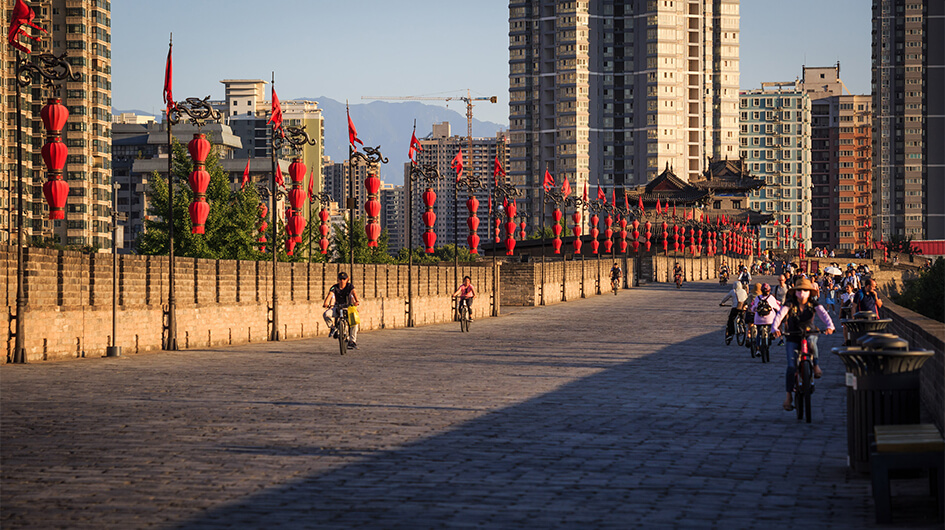 Riding along City Wall
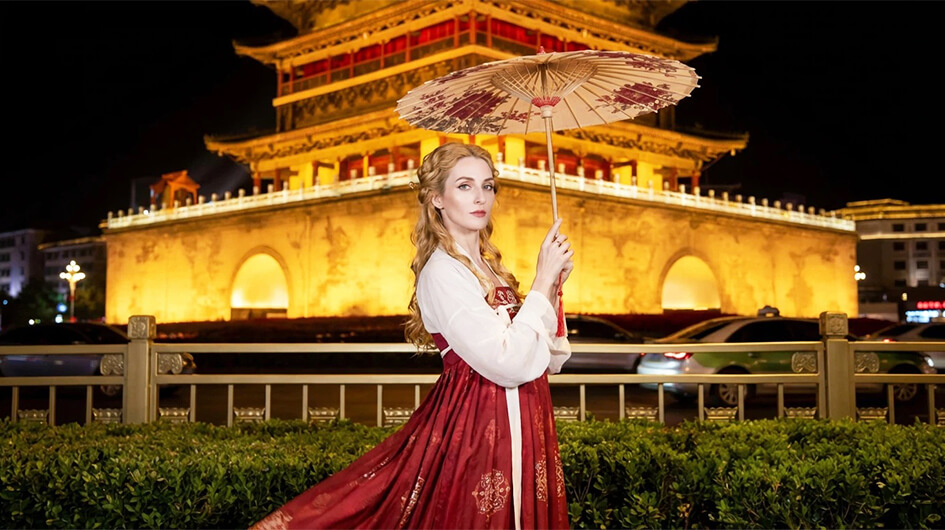 Hanfu Photo Shoot at the Drum Tower
Your Journey’s Rewards:
Visit the Terracotta Army and learn about the military and carving craftsmanship of the Qin Dynasty; cycle or walk on the ancient city wall and experience the scene where poets climbed high and looked into the distance; take photos in Hanfu at the Drum Tower and directly feel the prosperity of Chang’an depicted in Tang poetry.
Educational Focus:
Why do Tang poets often refer to the history of the Qin Dynasty in their poems?
Takeaway:
Tang poets often drew lessons from history. The history of the Qin Dynasty became material for poets to reflect on rise and fall, and to express their concerns. The military strength symbolized by the Terracotta Army reflects the devastation of war on ordinary people, strengthening the historical depth and emotional tension of the poems.
Thought Challenge:
During your visit to the Terracotta Army, what kind of poem would you like to write to express your feelings?
In the morning, depart for the Xi’an Museum. The museum houses a large collection of Tang Dynasty cultural relics, serving as a window to understand the historical background of Tang poetry creation. Tang Dynasty poet Luo Binwang once wrote in Ode to the Imperial Capital: “山河千里国,城阙九重门” (shān hé qiān lǐ guó, chéng què jiǔ chóng mén — A great nation stretching a thousand li through mountains and rivers; the imperial capital with ninefold gates and towering palaces). He depicted the grand layout of Chang’an and expressed his admiration for the city’s prosperity. The prosperous spirit of the Tang Dynasty depicted in many Tang poems can be verified by cultural relics such as tri-colored glazed pottery, gold and silver wares, and ceramics.
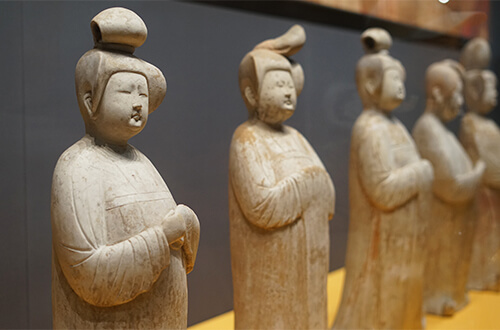 Statues of Female Figures of the Tang Dynasty in Xi’an Museum
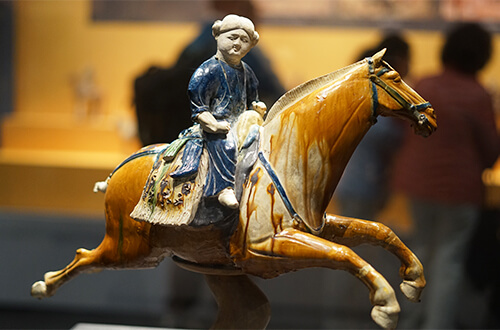 Tri‑colored Glazed Pottery of the Tang Dynasty
Next, visit the Giant Wild Goose Pagoda, an outstanding example of Tang Dynasty Buddhist architecture and a typical square multi-story brick pagoda. Cen Cen once climbed this tower and wrote the verse “塔势如涌出,孤高耸天宫” (tǎ shì rú yǒng chū, gū gāo sǒng tiān gōng — The pagoda rises as if bursting forth, standing alone and towering into the heavenly palace) from Climbing the Pagoda of Ci’en Temple with Gao Shi and Xue Ju, describing the majestic momentum of the Giant Wild Goose Pagoda. The Daci’en Temple is a royal temple of the Tang Dynasty and was once a center for the spread of Buddhist culture. With the guide’s explanation, you will learn about the influence of Buddhist culture on Tang poetry.
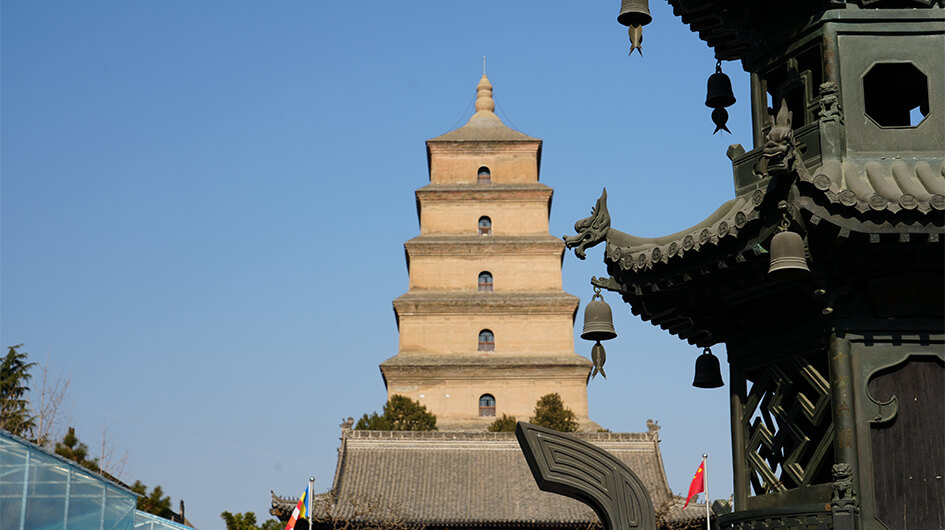 Giant Wild Goose Pagoda
In the afternoon, you will take part in a Tang Poetry Recital Session. First, a professional teacher will briefly introduce the basic skills of reciting Tang poetry, especially how to express the artistic conception and emotions of poems through level and oblique tones, rhythm, and rhyme. For example, when reciting Li Bai’s Invitation to Wine, you can emphasize bold and unrestrained feelings by stressing key words. When reading Wang Wei’s Autumn Evening in the Mountains, you can adjust your breath—deep or shallow, slow or quick—to match the ethereal mood of the poem.
Afterwards, you will be divided into small groups. Each group will select a Tang poem, discuss its emotions and recitation skills under the teacher’s guidance, and add simple gestures. Then each group will give a recital performance. Professional teachers will provide comments and votes. The winning group will receive special souvenirs.
With the knowledge and understanding gained in the afternoon’s workshop, you will visit the Tang Dynasty Ever-Bright City—a large pedestrian street styled in Tang Dynasty architecture, showcasing the prosperity of Tang culture. Here you can enjoy song and dance performances and scene shows inspired by Tang poetry, which will help you understand their artistic structure and emotional expression. You can even use what you learned at the poetry recital to interact with “poets” in ancient costumes and compose poems together on site.
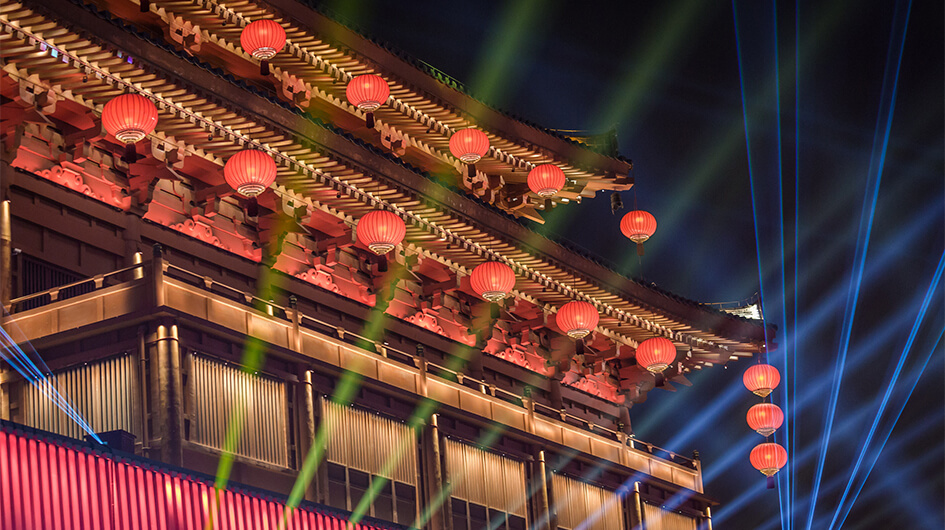 Xi'an Tang Dynasty Ever-Bright City
Your Journey’s Rewards:
Visit Xi’an Museum to learn about the history of Chang’an and experience the era when Tang poetry was created. Tour the Giant Wild Goose Pagoda and Daci’en Temple to feel their deep connection with Tang poetry. Join a Tang poetry recital workshop to master recitation skills and appreciate the rhythm and emotion of classic verses. Experience the artistic charm of Tang poetry during a night tour of Xi’an’s Tang-style city.
Educational Focus:
What emotions are mostly expressed in Li Bai’s poems?
Takeaway:
Li Bai’s poems often show strong confidence and boldness. Lines such as “天生我材必有用,千金散尽还复来。” (tiān shēng wǒ cái bì yǒu yòng, qiān jīn sàn jìn huán fù lái — Heaven has endowed me with talent, which is sure to be useful; even if I spend a thousand taels of gold, it will all come back again) from Invitation to Wine express faith in self-worth and an open attitude toward life. His works are also full of longing for freedom, as in “安能摧眉折腰事权贵,使我不得开心颜?” (ān néng cuī méi zhé yāo shì quán guì, shǐ wǒ bù dé kāi xīn yán? — How can I bow and grovel to those in power, making myself unhappy?) from Dreaming of Lushan Mountain and Waking Up. Meanwhile, he held ideals of accomplishing great things, as in “长风破浪会有时,直挂云帆济沧海。” (cháng fēng pò làng huì yǒu shí, zhí guà yún fān jì cāng hǎi — There will be a day when I ride the wind and break the waves; I will hoist my cloud-like sail and cross the vast sea) from Hard Roads. In some poems, Li Bai also expresses homesickness and loneliness, such as “举头望明月,低头思故乡。” (jǔ tóu wàng míng yuè, dī tóu sī gù xiāng — I raise my head to look at the bright moon, and lower my head to think of my hometown) from Quiet Night Thought, conveying deep nostalgia in simple language.
Thought Challenge:
The Giant Wild Goose Pagoda and Daci’en Temple carry Buddhist culture and architectural art. How did they promote the emotional expression of Tang poetry?
In the early morning, we head to the Anrenfang Site Museum, where you can fully explore the urban life of Chang’an City in the Tang Dynasty as depicted in Bai Juyi’s poem: “花枝缺处青楼开,艳歌一曲酒一杯” (huā zhī quē chù qīng lóu kāi, yàn gē yī qū jiǔ yī bēi — Where flower branches part, elegant chambers open; one lovely song, one cup of wine) from Road to Chang’an. Built directly over the archaeological ruins of Anrenfang in Tang Chang’an, this museum allows you to stroll along the glass walkway and overlook the rammed-earth wall foundations and tile relics of Tang-dynasty residential structures; its two exhibition halls comprehensively reconstruct the refined daily life of Tang people through vivid scenes of clothing, food, architecture, transportation, and cultural elements such as poetry, music, tea and wine, and with a guide’s explanation, you will gain a deeper understanding of the world in which the poets lived.
According to the schedule, you will proceed to the station and take a high-speed train to Luoyang. Upon arrival in Luoyang, you will be escorted to your hotel by your guide and driver for check-in, followed by free time.
Your Journey’s Rewards:
Visit the Anrenfang Site Exhibition Hall, view the exhibitions related to Tang Poetry, and learn about the spread and preservation of Tang Poetry in the urban life of the Tang Dynasty.
Educational Focus:
What factors influenced the popularity and spread of Tang Poetry during the Tang Dynasty?
Takeaway:
In the Tang Dynasty, emperors and nobles were keen on collecting and copying poems. The imperial court frequently held poetry events, which raised the profile of poets and their works. In addition, the advanced transportation network of the Tang Dynasty facilitated the wide spread of poetry.
Thought Challenge:
What impact do you think the spread of Tang Poetry had on the literature of the Tang Dynasty?
In the morning, visit Xiangshan Temple, one of the gathering places for Tang Dynasty poets. The poet Bai Juyi lived here for 18 years in his later years and wrote and wrote the verse “我年日已老,我身日已闲。闲出都门望,但见水与山” (wǒ nián rì yǐ lǎo, wǒ shēn rì yǐ xián. xián chū dū mén wàng, dàn jiàn shuǐ yǔ shān — My years grow old day by day, my life grows more leisurely day by day. I stroll out the city gate and gaze, seeing only water and mountains.) from Returning to Xiangshan Temple at Dusk, describing his quiet and leisurely life at Xiangshan Temple. The Tang Dynasty stone inscriptions and architecture preserved in the temple witness the integration of Tang poetry and Buddhist culture. You can stroll through it and feel the leisure in Tang poetry.
Then arrive at Longmen Grottoes, a group of caves cut into steep cliffs. The excavation began in the 5th century and continued into the Tang Dynasty. As a World Cultural Heritage, its exquisite Buddha statues and magnificent mountain scenery have attracted countless poets to stop and compose poems.
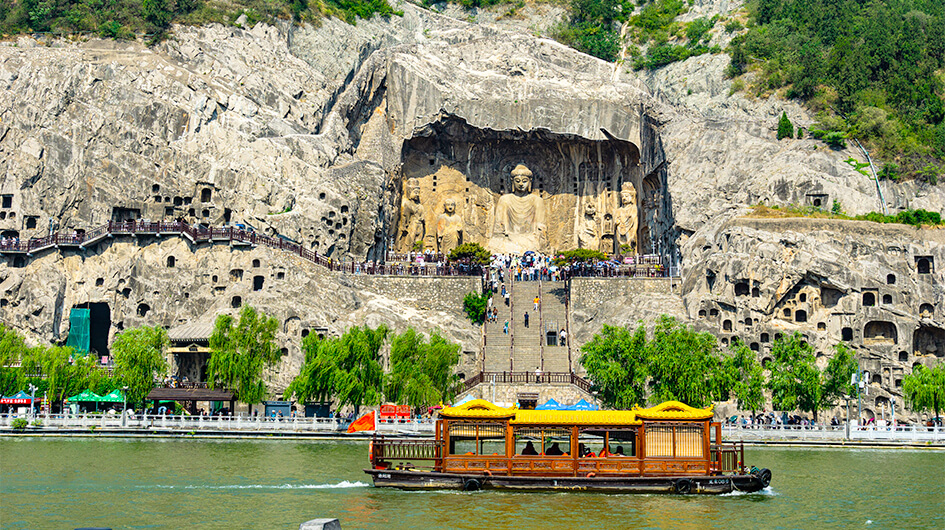 Visit Longmen Grottoes
Next, stroll through Luoyi Ancient City, which mainly features Tang and Song architectural styles and was once the commercial and cultural center of Luoyang. The urban life and prosperous night markets described in Tang poetry are reproduced here.
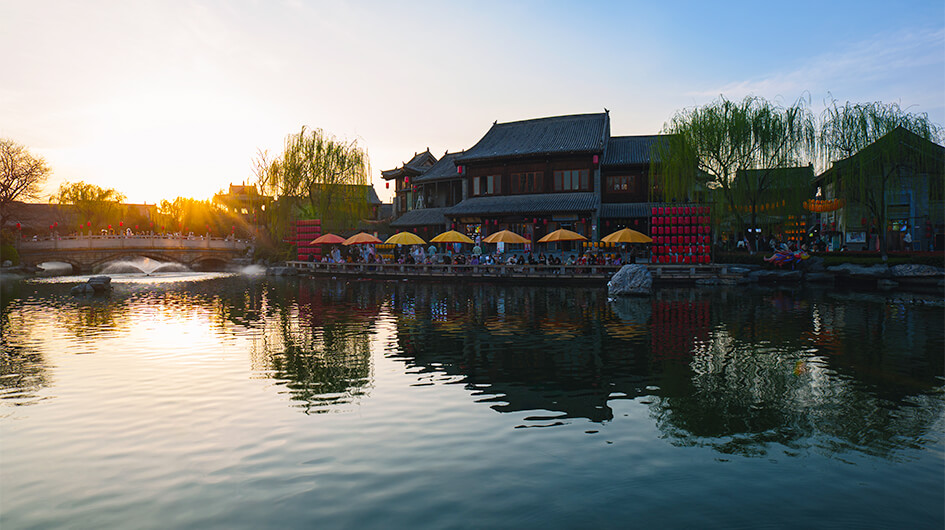 Luoyi Ancient City
Your Journey’s Rewards:
Visit Longmen Grottoes to closely appreciate the details, structure and artistic style of Tang Dynasty stone statues; tour Xiangshan Temple and walk in the courtyard to explore the retreat and poetic traces of Tang poets including Bai Juyi; wander Luoyi Ancient City in the evening to enjoy Tang-style buildings and experience Luoyang folk customs.
Educational Focus:
What influence did Buddhist grottoes such as Longmen Grottoes have on Tang poetry?
Takeaway:
Tang poets often drew inspiration from the solemnity of Buddha statues and the tranquility of grottoes in their poetic creation. The Buddhist culture in the grottoes also influenced poets’ thoughts and emotional expression, endowing the poems with philosophical thinking about life and the universe.
Thought Challenge:
The stone carving art of Longmen Grottoes and Tang poetry are both artistic treasures of the Tang Dynasty. Think about the common ground between the two in artistic pursuit and cultural connotation, and what kind of Tang social and cultural atmosphere does this commonality reflect?
In the morning, visit the White Horse Temple, the first official Buddhist temple built after Buddhism was introduced to China. You can view the ancient temple buildings and preserved Buddhist statues up close, and experience the interaction between Buddhism and Tang poetry. Next, proceed to the Mingtang & Tiantang Scenic Area. Mingtang was the main imperial palace hall during the reign of Wu Zetian, and Tiantang was the royal hall for Buddhist worship. The buildings are magnificent and splendid. You may also visit the rammed-earth ruins and murals to directly experience the prosperity of the Tang Dynasty.
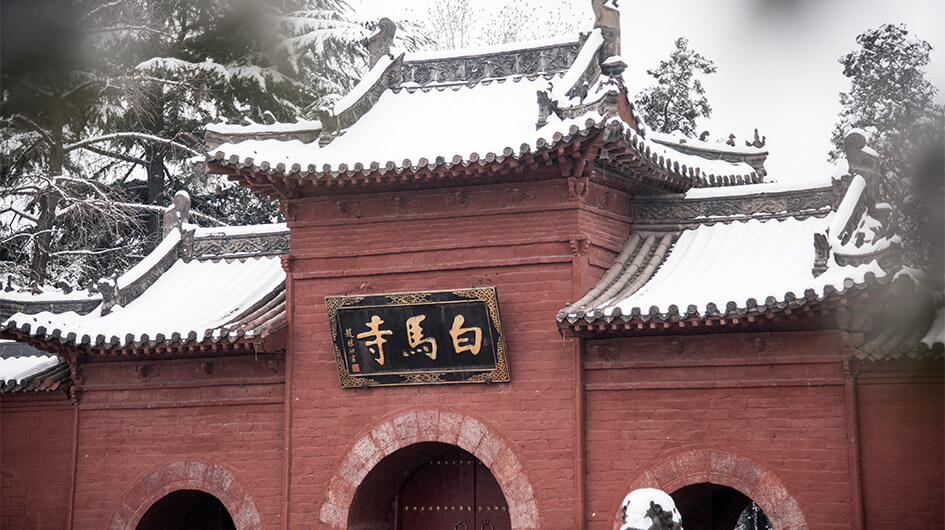 White Horse Temple
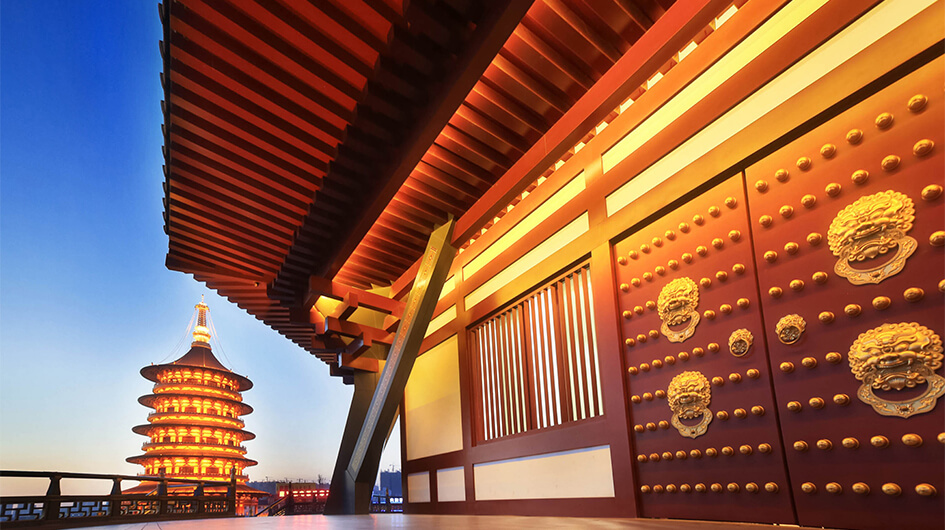 The Splendid Architecture of Mingtang and Tiantang
In the afternoon, watch the performance In Search of the Luo River Goddess. Tang poets often created poems with the Luo River Goddess as the theme. During the show, you will move through different scenes with the on-site guides and become a participant in the story.
In the evening, stroll around the Cross Street Night Market, which features a wide variety of Luoyang’s local snacks. You can taste the delicious food while experiencing the urban life depicted in Tang poetry.
Your Journey’s Rewards:
Visit the White Horse Temple and understand the connection between Buddhist culture in the Tang Dynasty and the creation of Tang poetry; tour the Mingtang & Tiantang Scenic Area and learn about the imperial palace architecture of the Tang Dynasty; watch In Search of the Luo River Goddess and explore the cultural connotation of the "Luo River Goddess" in Tang poetry.
Educational Focus:
Why is Luoyang known as the "City of Tang Poetry"?
Takeaway:
In the Tang Dynasty, Luoyang was an important political center and a major venue for cultural activities. Many great poets such as Li Bai, Du Fu and Bai Juyi once lived here and left numerous poems. As an important transportation hub at that time, Luoyang facilitated the spread and development of Tang poetry.
Thought Challenge:
How did Luoyang’s folk culture contribute to the expansion of themes in Tang poetry?
Check out from the hotel in the morning. A dedicated driver will transfer you to the high-speed rail station or airport for your trip to Chengdu. After checking in at your hotel in Chengdu, you are free to explore the surrounding area.
After breakfast, visit Du Fu Thatched Cottage, the former residence of the great Tang poet Du Fu during his stay in Chengdu. He lived here for nearly four years and wrote the verse “八月秋高风怒号,卷我屋上三重茅” (bā yuè qiū gāo fēng nù háo, juǎn wǒ wū shàng sān chóng máo — In the eighth month, the autumn wind roars high, tearing off the three layers of thatch from my cottage roof) from Song of the Thatched Cottage Ruined by the Autumn Wind, depicting the simplicity of his cottage and his difficult living conditions at that time. The cottage is now preserved as a museum, maintaining its architectural layout from the Qing Dynasty. Strolling through it, you will gain a deep understanding of the poet’s life.
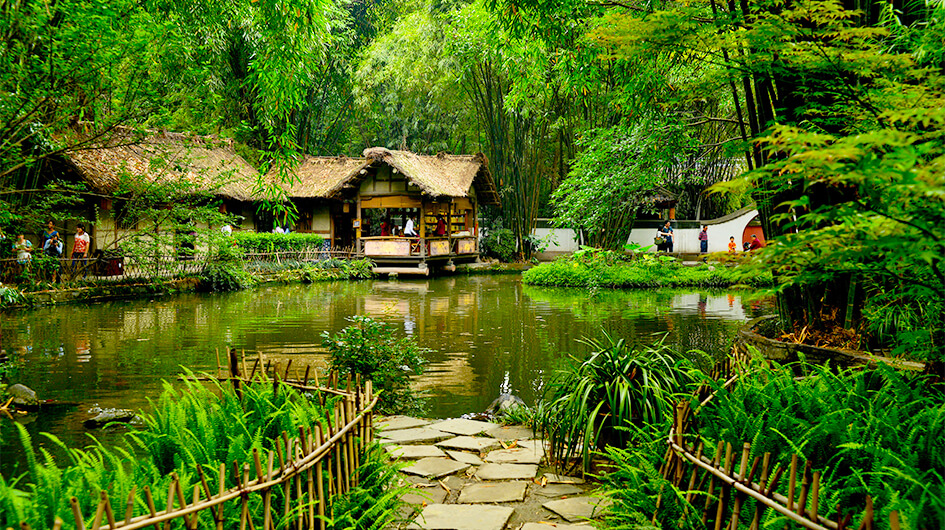 Du Fu Thatched Cottage
Leaving the cottage, proceed to Wuhou Shrine, which commemorates Zhuge Liang, the famous military strategist of the Three Kingdoms period (220–280 AD). Although built before the Tang Dynasty, it was a popular place for Tang poets to reflect on history. In Du Fu's poem Prime Minister of Shu, the verse "丞相祠堂何处寻?锦官城外柏森森" (chéng xiàng cí táng hé chù xún? jǐn guān chéng wài bǎi sēn sēn — Where to seek the ancestral hall of the Prime Minister? Beyond the city of Brocade, cypresses stand dense and deep) reflects the solemnity of the Wuhou Shrine and the historical status of Zhuge Liang. View the calligraphy plaques, inscribed tablets, and Hui Mausoleum, and learn classic stories from the Three Kingdoms.
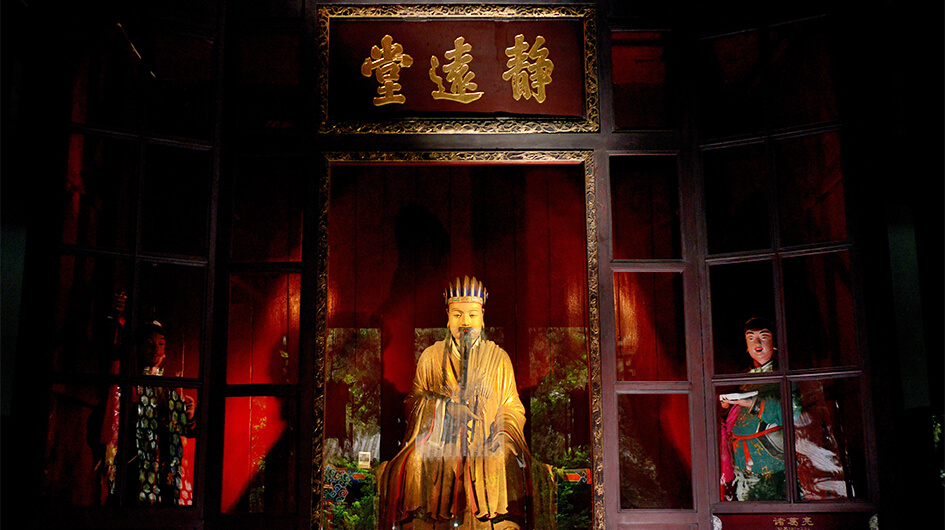 Wuhou Shrine
Next, head to Kuanzhai Alleys. The urban life depicted in Tang poetry is vividly reflected in the lanes, teahouses, and local snacks here. You will then enjoy a tea-tasting experience at a local teahouse.
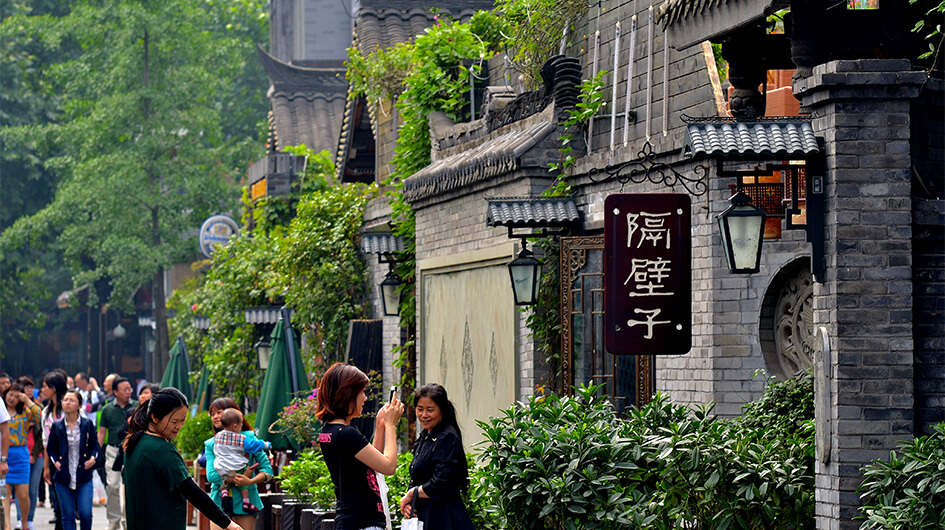 Explore Kuanzhai Alleys
Your Journey’s Rewards:
Visit Du Fu Thatched Cottage, stroll through the courtyards, view the historical relics, and learn about Du Fu’s later life and creative background; tour Wuhou Shrine, admire the ancient architecture, stone inscriptions and statues, and understand the history of the Three Kingdoms and the story of Zhuge Liang.
Educational Focus:
What impact did the Thatched Cottage have on the poet Du Fu?
Takeaway:
The natural environment and cultural atmosphere around the cottage provided Du Fu with rich creative inspiration. The scenery of Huanhua Stream, the daily life of his neighbors, and the local customs all became important elements in his poems.
Thought Challenge:
What contributions has the preservation of the Thatched Cottage made to the spread of Tang poetry?
In the morning, visit the Chengdu Research Base of Giant Panda Breeding, where you will have the opportunity to be a panda volunteer for a day. Under the guidance of professional keepers, you will prepare fresh bamboo for giant pandas, clean their enclosures, and get a chance to observe pandas up close. You can also watch a panda documentary, learn extensive knowledge about pandas, and even make the special “bamboo bun” that pandas love to eat. At the end of the experience, you will receive an official volunteer certificate and souvenir.
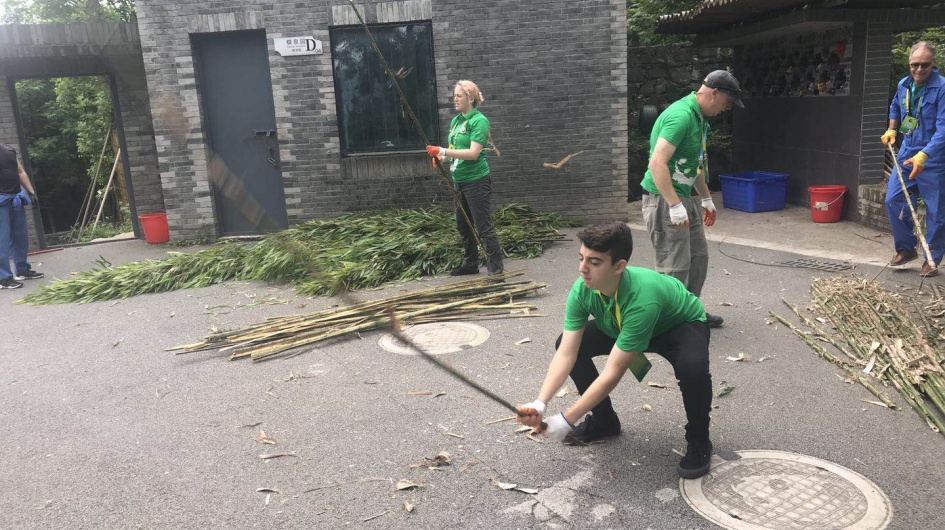 Preparing Bamboo Materials
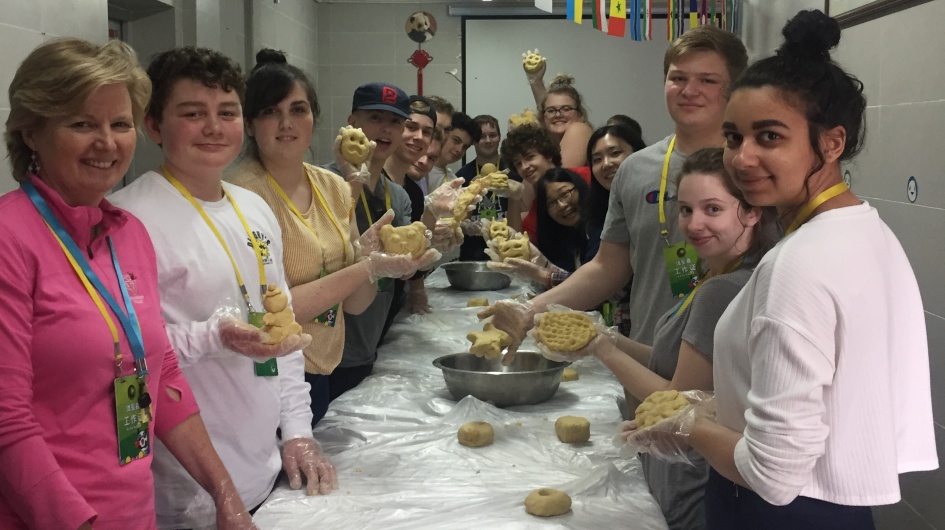 Making Panda Buns
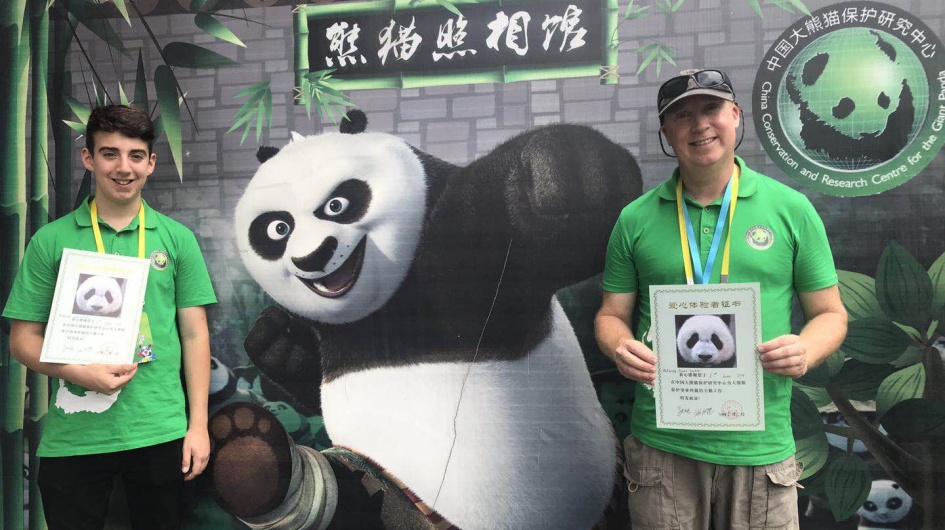 Receive the Giant Panda Honorary Certificate
Your Journey’s Rewards:
Visit the Chengdu Research Base of Giant Panda Breeding, take part in the volunteer experience, and learn basic knowledge about giant panda feeding.
Educational Focus:
What are the protection measures for giant pandas?
Takeaway:
To protect giant pandas, various measures have been taken, including establishing nature reserves, banning illegal hunting and poaching, promoting scientific bamboo planting, and setting up giant panda breeding and research centers. Meanwhile, efforts are actively made to popularize knowledge about giant pandas and protect wild pandas.
Thought Challenge:
What new challenges may giant panda conservation face in the future?
Have breakfast at the hotel in the morning. A driver will transfer you to the station or airport for your return trip according to the schedule. This 10-day Tang Poetry Tour comes to an end.
This tour is suitable for: School, Family, Team Building, Tang Poetry Lovers
What’s Included
- Experienced tour guides
- Entrance fee to all spots listed in the itinerary
- Well selected hotel accommodation
- Expert drivers and comfortable vehicles with air-conditioning
Hotel Options
- Xi’an Hotel Accommodation: Grand Soluxe International Hotel
- Luoyang Hotel Accommodation: Hyatt Place Luoyang
- Chengdu Hotel Accommodation: Tibet Hotel Chengdu
Wechat & WhatsApp: +86-13471279378