- Home
- City Tours
- Tibet Tours
- Peach Blossom Festival Tour: TB-08
Peach Blossom Festival Small Group Tour of Tibet
Itinerary at a Glance
| Day | Location | Highlights |
|---|---|---|
| D1 | Nyingchi (150km driving) | Arrive at Nyingchi; visit Gala Peach Blossom Village to enjoy peach blossoms; apply for Alien Travel Permit in Nyingchi; admire scenery at Segrila Pass and Lulang Forest Viewing Deck |
| D2 | Lulang - Guxiang Lake - Bomi Peach Blossom Valley - Ranwu Lake (300km driving, about 6 hours) | Travel from Lulang to Guxiang Lake to appreciate lake scenery; explore Bomi Peach Blossom Valley for peach blossom views; head to Ranwu Lake |
| D3 | Ranwu - Laigu Glacier - Bomi (200km driving, about 5 hours) | Visit Laigu Glacier to experience plateau glacier landscape; transfer to Bomi |
| D4 | Bomi - Lulang - Tashigang Village - Segrila Pass - Nyingchi (230km driving, about 5 hours) | Travel from Bomi to Lulang; explore Tashigang Village to experience Tibetan village life; pass Segrila Pass again; arrive in Nyingchi |
| D5 | Nyingchi - Basomtso Lake - Lhasa (490km driving, about 7 hours) | Visit Basomtso Lake, including Cuozong Temple on the central island and Jieba Village; transfer to Lhasa |
| D6 | Lhasa | Take Lhasa City Tour: visit Potala Palace to appreciate murals and Buddha statues; explore Jokhang Temple and Sera Monastery |
| D7 | Lhasa - Yamdrok Lake - Karola Glacier - Shigatse (380km driving, about 7 hours) | Travel from Lhasa to Yamdrok Lake to admire lake views; visit Karola Glacier; arrive in Shigatse |
| D8 | Shigatse - Tashi Lhunpo Monastery - Lhasa (300km driving, about 5 hours) | Visit Tashi Lhunpo Monastery; transfer back to Lhasa by tourist bus/train; stay in Lhasa |
| D9 | Lhasa - Airport or Railway Station (70km driving, about 1 hour) | Depart from Lhasa; tour ends |
Note: Travel agency has right to change the order of visiting attractions and ensure that all attractions are visited.
The routes of Join-in group tour accept Chinese(people from mainland China, Hong Kong, Macao and Taiwan) and foreign visitors to attend the group booking, foreign guests and Taiwan tourists to Tibet, please contact us to apply for Tibet Travel Permit.
Trip Highlights
- Visit Gala Peach Blossom Village and Bomi Peach Blossom Valley to see dense peach blossoms covering the Tibetan Plateau
- Stop at Lulang Forest Viewing Deck and Segrila Pass to take in plateau forests and snow-capped mountains
- Explore Laigu Glacier, Yamdrok Lake and Karola Glacier to experience glaciers and sacred lakes up close
- Tour Potala Palace, Jokhang Temple and Sera Monastery to learn about Lhasa’s core Tibetan Buddhist culture
Tour Essentials

Quality
No Shopping Traps

Group Type
Group

Tour Focus
Culture

Accommodation
Nights:8

Best Season
Spring, Summer, Autumn, Winter
Full itinerary for Peach Blossom Festival Small Group Tour of Tibet
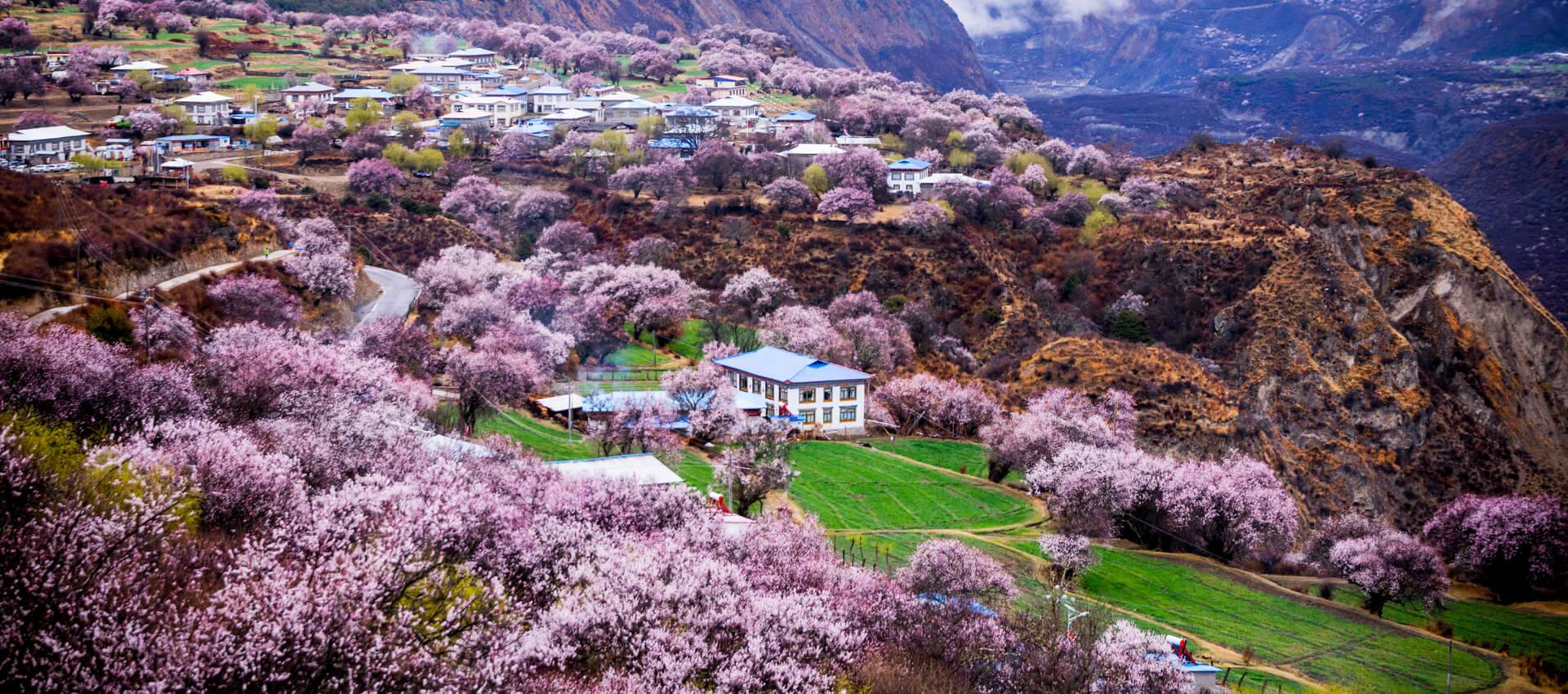
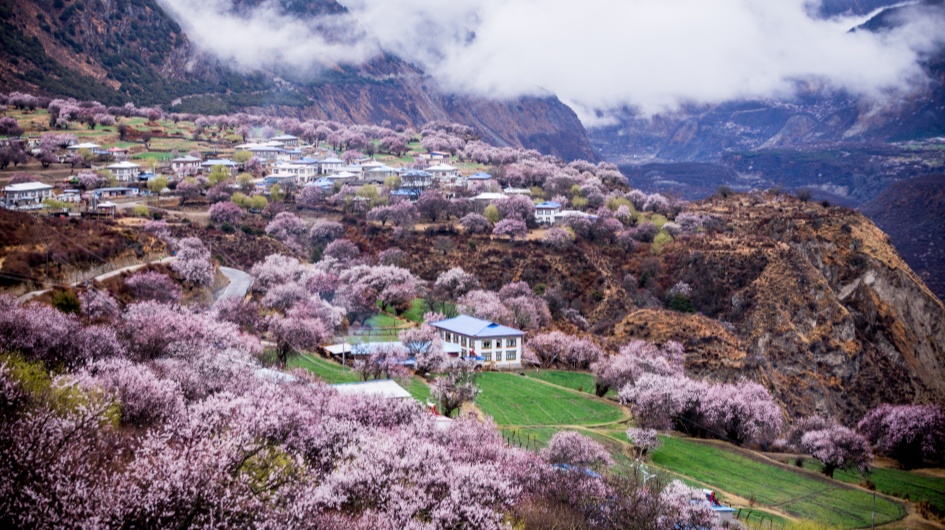
Today, we will arrive in Nyingchi, the first stop of this trip. Our tour guide will be waiting for everyone at the airport. Our first destination is Gala Peach Blossom Village, which is located at the foot of a mountain by the banks of the Nyang River, surrounded by hundreds of miles of wild peach forests. It enjoys the reputation of being the "No.1 Peach Blossom Village". More than 1,200 wild peach trees grow on over 270 mu (about 18 hectares) of land, together forming a "paradise on earth". Every spring, peach blossoms bloom in succession, turning the mountains and plains into a sea of pink flowers. After that, we will head to Bayi Town in downtown Nyingchi to complete the formalities for registration and travel permits.
 Gala Peach Blossom Village
Subsequently, we will go to Segrila Pass. Standing at the pass, you can enjoy the natural scenery here to your heart's content. On clear days, you can also look far into the distance at Mount Namjagbarwa, known as "China's Most Beautiful Mountain".
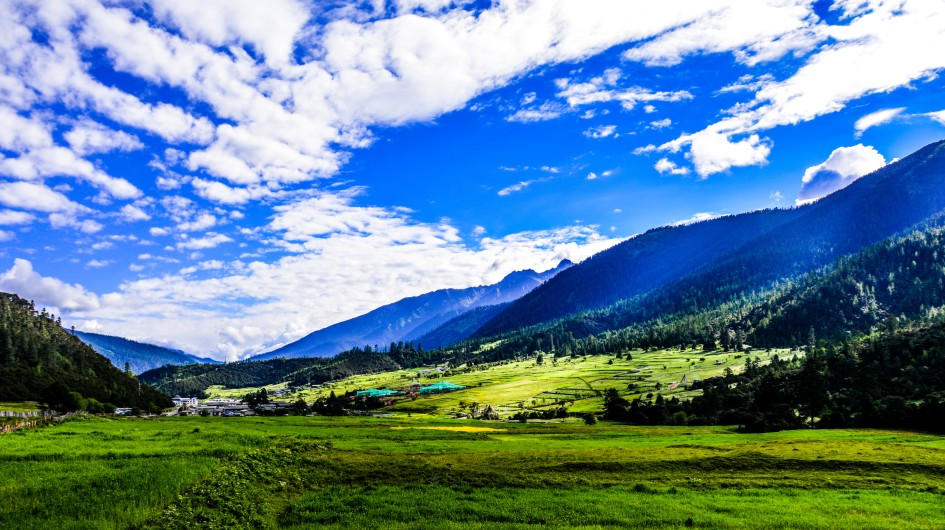
Then we will proceed to Lulang Forest. This area is home to a variety of trees and serves as the original habitat for many cuckoos, where they live and reproduce. In the forest, you can also see vast meadows, and flocks of cattle and sheep often wander near the surrounding villages. We will go to Lulang Forest Viewing Deck, where you can take in the magnificent views of towering snow-capped mountains such as Mount Namjagbarwa and Mount Jialabaili. After that, we will drive to Basomtso and stay there for the night.
 Lulang Forest
Your Journey’s Rewards:
Step into Gala Peach Blossom Village and admire the peach blossoms that cover the mountains and plains; climb up to Segrila Pass and gaze at the grand scenery of snow-capped mountain ranges including Mount Namjagbarwa; stop at Lulang Forest Viewing Deck to take in the full view of the snow-capped mountains.
Educational Focus:
What important role does Lulang Forest play for the local villages?
Takeaway:
The coniferous trees in Lulang Forest have dense and numerous root systems, which are like a "net" rooted in the soil. These roots can firmly hold the loose plateau soil in place. When it rains, the roots can just block the soil and prevent it from being washed away by rainwater, playing a role in soil consolidation and protecting the villages.
Thought Challenge:
In the process of tourism development, how to balance tourists' travel needs with the protection of the fragile plateau ecological environment and the original style of villages?
We depart in the morning for Guxiang Lake, which sits at an altitude of 2,600 meters and stretches 5 kilometers in length. It is a freshwater barrier lake, where the water is crystal clear and surrounded by primeval forests, creating a serene environment.
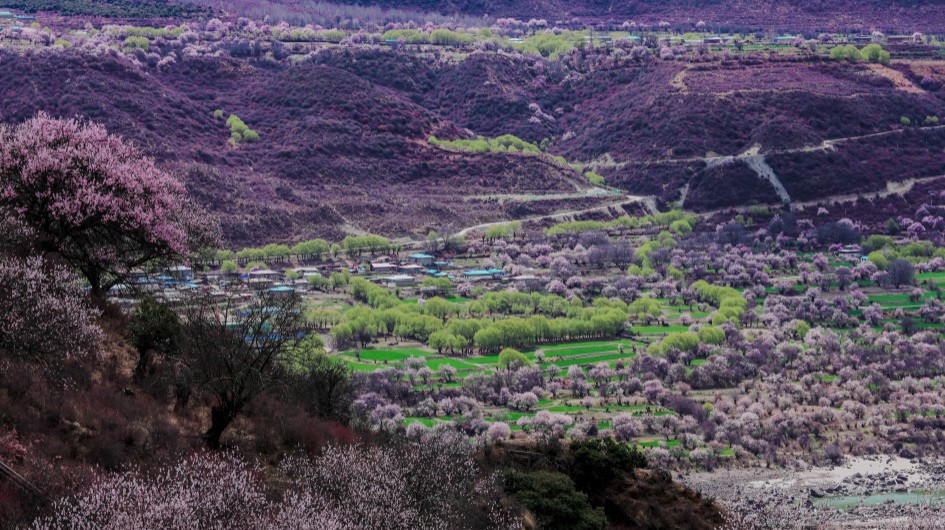
Next, we head to Bomi Peach Blossom Valley. Stretching approximately 30 kilometers, this valley is the most scenic spot for viewing peach blossoms in the Nyingchi area and an ideal destination for photographers. Here, you can capture beautiful scenes that combine peach blossoms with elements like snow-capped mountains, rivers, and villages.
 Bomi Peach Blossom Valley
After that, we proceed to Ranwu Lake. Surrounded by snow-capped mountains, Ranwu Lake is mainly fed by glacial meltwater and also serves as the source of the famous Parlung Zangbo River. Around the lake, there are lush grasslands, farmlands, and vast forests. During sunset, you may have the chance to admire the romantic view formed by the lake, surrounding snow-capped mountains, and forests.
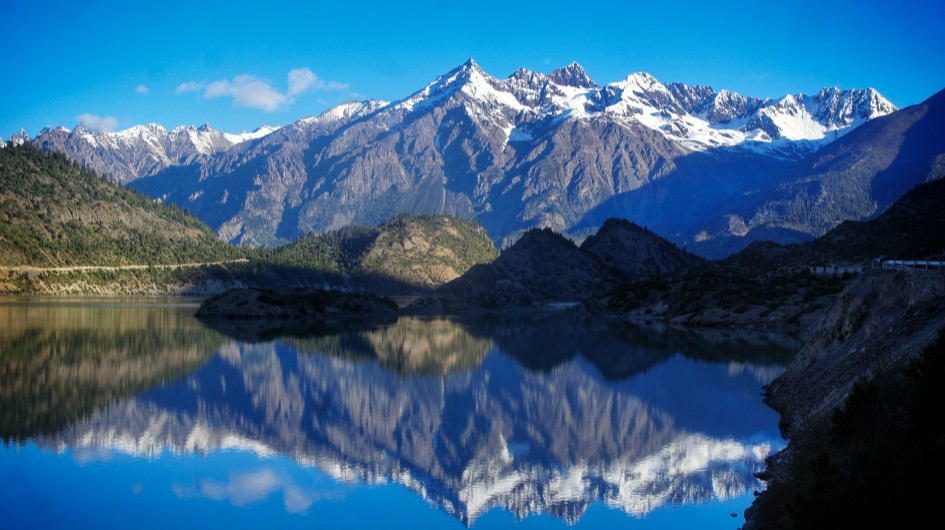 Ranwu Lake
Your Journey’s Rewards:
Watch the glacial meltwater converge into Guxiang Lake, where the lake surface reflects snow-capped mountains and cloud shadows; walk through Bomi Peach Blossom Valley to enjoy the scenery of peach forests; arrive at Ranwu Lake and admire the magnificent landscape composed of the plateau barrier lake, surrounding snow-capped mountains, and grasslands.
Educational Focus:
What natural conditions enable the century-old wild peach trees in Bomi Peach Blossom Valley to survive in the southeastern Tibet river valley at an altitude of 2,600-3,200 meters?
Takeaway:
The river valley terrain of Bomi Peach Blossom Valley blocks cold air, preventing the peach blossoms from freezing; sufficient rainfall meets the growth needs of the peach trees; the loose sandy soil accumulated in the river valley is suitable for the deep rooting of the peach trees’ roots, and the roots also play a role in consolidating the soil and preventing erosion.
Thought Challenge:
During the development of Bomi Peach Blossom Valley, how to avoid damaging the fragile ecological chain in southeastern Tibet while protecting the local traditional production and lifestyle?
We depart in the morning for Laigu Glacier. Laigu Glacier is the general name of a group of glaciers. It is located in Ranwu Town, Basu County, Changdu Prefecture of Tibet, and is close to Ranwu Lake. The meltwater from ice and snow flows into Ranwu Lake. The lakeside is covered with dense primitive forests, and there are also many local Tibetan villages nearby. Laigu Glacier includes Meixi Glacier, Yalong Glacier, Rojao Glacier, Donga Glacier, Xiongjia Glacier and Newma Glacier. The basic conditions of Laigu Glacier are limited, and different glaciers are open to visitors depending on the season. After the visit, we will head to Bomi.
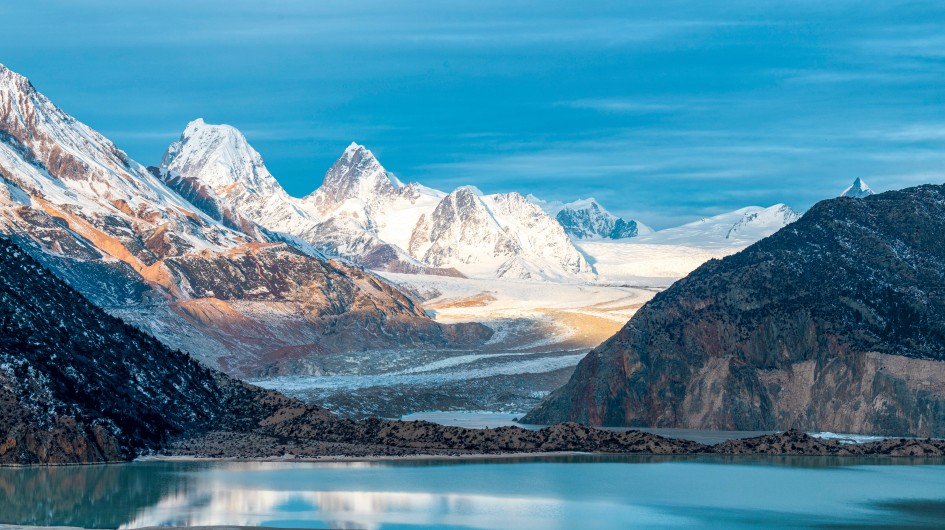 Laigu Glacier
Scenic Spot Notice: From April to September, Donga Glacier may be open. The most famous attraction of Donga Glacier is the Blue Ice Cave. Tourists must take the sightseeing bus from the Visitor Center to Summer Ranch (the round-trip distance is about 40 km). Upon arriving at Summer Ranch, visitors can choose to hike (free of charge; the round-trip distance is approximately 4 km, with an uphill section at an altitude of 4,100-4,200 meters) or ride a horse (optional; the reference price is 300 CNY per person. Tourists shall pay at the horse-riding point, and the final amount shall be subject to the scenic area’s regulation).
Your Journey’s Rewards:
View Laigu Glacier up close, stroll on the meadows around the glacier, observe traces of plateau animals such as Tibetan gazelles, and learn about the plateau ecological chain.
Educational Focus:
How is Laigu Glacier formed?
Takeaway:
Laigu Glacier is close to the Indian Ocean water vapor channel. With a large amount of water vapor pouring in, it turns into snow when encountering cold air in the high-cold mountains. Coupled with long-term layer-by-layer compression and slow movement, it has formed a maritime glacier with relatively abundant precipitation.
Thought Challenge:
The "glacier tongue" at the front of Laigu Glacier can extend directly to the shore of Laigu Lake and maintain a relatively stable shape for a long time. What kind of connection exists between this phenomenon and the glacier’s own characteristics as well as the surrounding environment?
Depart from Bomi and head to Lulang, then arrive at Tashi Gang Village. The small village is located in the lower part of a plateau mountain meadow. On both sides are green mountains, which form an endless sea of forests from low to high, consisting of shrubs and dense trees such as spruces and pines. Between the green mountains lies a neat meadow, where streams converge and flowers bloom. Wooden fences and houses decorate the area, and together with the distant snow-capped mountains and nearby forests, they form a serene and beautiful "mountain picture".
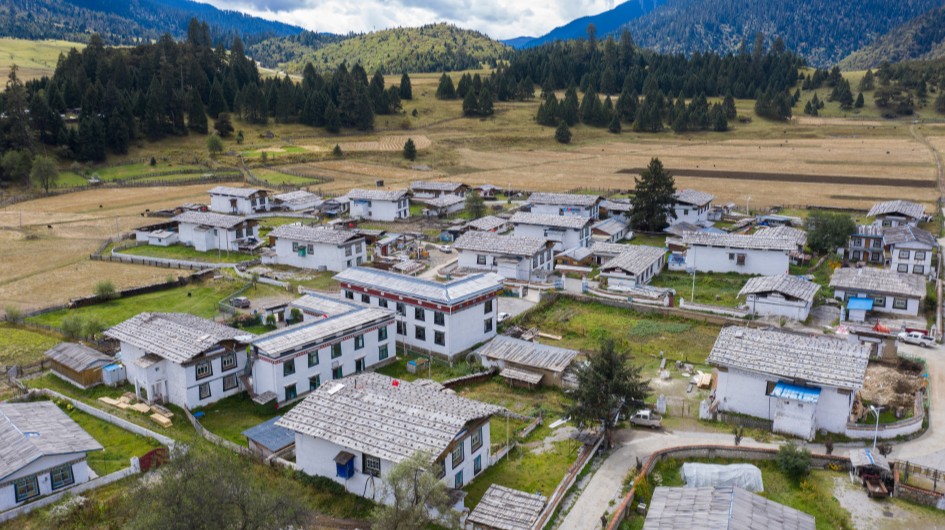 Tashi Gang Village
In spring and summer, various flowers spread across the green of the meadow and forest, vying with each other for beauty. In autumn and winter, Tashi Gang Village greets the seasons with the thickest clouds and mists. Clouds and mists surround the mountains, and the towering snow-capped peaks are faintly visible.
After leaving Tashi Gang Village, take a vehicle to Nyingchi. On the way, we will pass through Segrila Pass again.
Your Journey’s Rewards:
Step into Tashi Gang Village and wander on the plateau pastures around the village. In spring, you can see wild flowers dotting the grassland all over the mountains; in summer, you can watch flocks of cattle and sheep wandering among them, forming a beautiful scene with the distant snow-capped mountains.
Educational Focus:
How do the Tibetan-style dwellings in Tashi Gang Village adapt to the climatic conditions of the southeastern Tibet plateau?
Takeaway:
Tibetan stone houses use local stones as the main building material. The thick stone walls can resist the cold winds on the plateau, and the wooden boards and soil layers covering the roof can block ultraviolet rays and low temperatures, adapting to the plateau climate characterized by large temperature differences between day and night and cold winters.
Thought Challenge:
How can Tashi Gang Village make use of its own characteristics to design experience programs that are different from those of other Tibetan villages, allowing tourists to experience the traditional Tibetan lifestyle while driving the income growth of local villagers?
Depart from Nyingchi and head to Basomtso Lake, which integrates snow-capped mountains, lakes, forests, waterfalls, pastures, and famous ancient temples. It boasts unique scenery that varies in different seasons.
You can visit the Central Island of the lake, an exclusive island for the temple. Tour the island clockwise, and you will see scenic spots such as the "Peach-Embracing Pine" (a natural landscape where a peach tree and a pine tree grow intertwined), the former water burial platform, the "Letter Tree" (with naturally formed Tibetan letters on its leaves), the sacred spring once used by Guru Rinpoche for washing his face, as well as the scenic view where distant mountains blend with the lake water. An ancient Cuozong Temple (Cuozong Gongba Temple) stands on the island, where you can learn about some aspects of Tibetan religious culture.
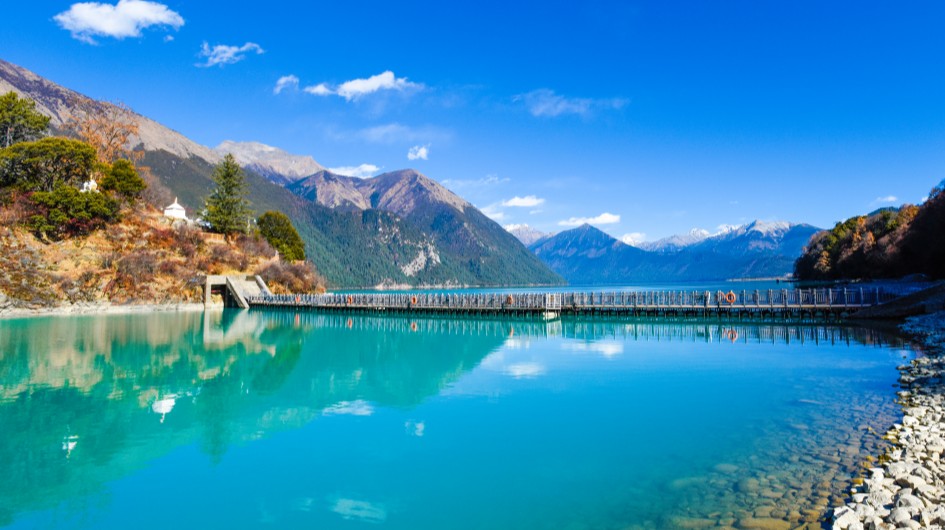 Basomtso Lake
Next, depart for Jieba Village. This is the best spot to view Basomtso Lake and the two surrounding snow-capped mountains - "King's Throne" and "Burning Flame". The village has not yet undergone commercial development and is free of commercial atmosphere; everything in sight is a gift from nature. After that, depart for Lhasa.
Your Journey’s Rewards:
Admire the natural scenery of the plateau lake and snow-capped mountains at Basomtso Lake; experience the tranquility and solemnity of Tibetan Buddhist culture at Cuozong Temple; and enjoy the views of Basomtso Lake and the two nearby snow-capped mountains in Jieba Village.
Educational Focus:
What is the reason for the blue-green color of Basomtso Lake's water?
Takeaway:
The meltwater from the surrounding snow-capped mountains and glaciers carries a large amount of extremely fine rock powder into the lake. These tiny particles are suspended in the water and strongly scatter the blue and green light bands in sunlight, making the lake water appear blue-green.
Thought Challenge:
What kind of interdependent relationship exists between the layout of Jieba Village and the natural ecology of Basomtso Lake?
In the morning, head to the Potala Palace. Initially built in 641 AD and listed as a World Heritage Site in 1994, the Potala Palace is the most popular tourist attraction in Tibet. Even if you are not a Buddhist, the halls, murals, statues and mountain views here will leave you in awe.
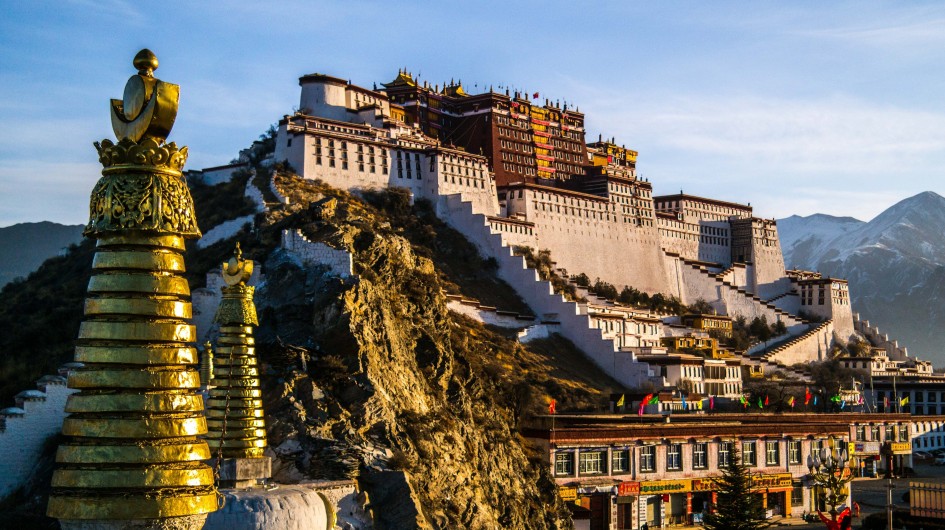 Potala Palace
Ticketing tips for Potala Palace: The Potala Palace requires real-name online ticketing and valid document (such as ID card, household registration book or passport) is required to make the reservation. Once the reservation made, the ticket cannot be re-booked within 7 days from the day of visit. If you can not enter the Potala Palace due to the wrong documents provided by yourself, we do not bear any responsibility or consequences.Therefore, it is important to take the valid documents. If the name or ID number is inconsistent with the actual ID used, you will not be able to enter the Potala Palace. Please note the ticket fee has actually been incurred and cannot be refunded.
The visiting time of the Potala Palace is randomly issued by the Potala Palace Management Office and it can not designate the visiting time. Please note the actual visiting route sequences may be different from the provided one.
In peak season, there has restrictions in visiting the Potala Palace and each travel agency has limited group bookings quotas every day. In order to ensure the group tour visiting, we solve the problem through different channels. Due to the special requirements for ticket purchases in different channels, you are requested to follow the tour guide’s arrangement. The normal arrangements are as below:
- The group tour may be divided into multiple small groups (tourists who book together might be divided, and they join with other small group to visit the Potala Palace).
- Each small group is divided into different times/dates to visit.
- Each small group follows the different guide to visit.
Then arrive at the Jokhang Temple. The Jokhang Temple is the final destination for pilgrims. The monastery houses a statue of the 12-year-old Sakyamuni, who lived in India in the 5th century BC and was the founder of Buddhism. This is the reason why Buddhists regard Lhasa as a sacred land.
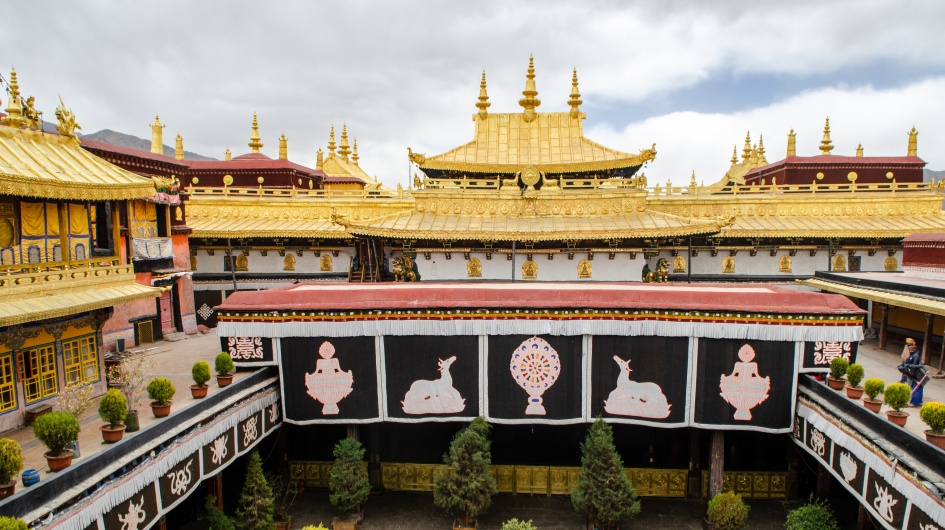 Jokhang Temple
Ticketing tips for the Jokhang Temple: The Jokhang Temple needs real-name online ticketing. Every day, from 7:00am to 23:59pm the tickets for the next day will be open to book through the We Chat applet "Jokhang Temple Reservation" until the number of reservations is full. Therefore, tickets must be reserved one day in advance. Please follow tour guide’s instruction to make the reservation.
The Jokhang Temple is a religious temple rather than a tourist attraction. Please note if encountering important religious activities, it will be closed to tourists.
Finally, go to Barkhor Street. Located near the Jokhang Temple, Barkhor Street was only a place for Buddhists to perform religious circumambulation in ancient times. Nowadays, tourists can buy exquisite souvenirs on the street, such as handicrafts, costumes, tea, prayer wheels and Tibetan incense.
Warm tips for visiting the Potala Palace and the Jokhang Temple:
- Both the Potala Palace and the Jokhang Temple need real-name online ticketing and valid document (such as ID card, household registration book or passport). You need to obey tour guide arrangement and visit at the designate time.
- You should respect the rules while visiting. Do not wear hats, wear revealing clothes or step on thresholds as these actions violate local customs.
- Do not make loud noise, chase, climb, lie down, spit, throw debris, touch cultural relic in the hall. It is forbidden to photography, taking of videos and touching cultural relics and mural in the Potala Palace, the Jokhang Temple and other temples in Tibet. Do not bring liquid drinks into the temple or palace and do not smoke or use bright fires.
- There are many steps at the Potala Palace, so it’s better to take it slowly to avoid possible altitude discomfort. The hall is relatively cold, even in summer, it is recommended to prepare a coat. The limitation of visiting time is one hour and the tour guide is not allowed to stay and explain loudly in the hall for long time, so the tour guide can only explain outside. You are requested to travel civilized and abide by the regulations of cultural relics protection units.
- The buildings of the Potala Palace and Jokhang Temple are ancient, with narrow channels and many wooden stairs. In addition, too many visitors might cause hidden dangers. Therefore, you shall leave as soon as possible after visiting. When going up and down the stairs, you should pay attention and do not crowd.
Your Journey’s Rewards:
Climb up the Potala Palace, view the precious murals, thangkas and Buddha statues inside the halls, and experience Tibetan Buddhist culture; step into the Jokhang Temple and feel the spiritual cohesion of the "center of the sacred land".
Educational Focus:
Why has the Potala Palace stood firm for thousands of years?
Takeaway:
The Potala Palace features a typical mixed structure of stone, earth and wood. Its main walls are built with local granite and limestone boulders, which are sturdy, durable and have strong load-bearing capacity. The beams, columns and eaves of the palace extensively use Himalayan spruces and Tibetan larches. With their flexibility, these woods skillfully dissipate seismic energy during earthquakes, reducing damage to the building.
Thought Challenge:
In the process of tourism development at the Potala Palace, how to solve the problem of "arrow tube obstruction" (note: the term "arrow tube" may refer to a specific structural or crowd-flow issue; if it is a mistranslation, please adjust based on the actual scenario)?
This morning we’ll take a drive up to Karola Pass (elevation 4,797 meters) where you’ll have a glimpse of Yamdrok Lake down below as well as spectacular views of the holy Mount Nyenchen Khangsar in the distance. You will need your camera ready for the turquoise waters of Yamdrok Lake, which is one of the three holy lakes of Tibet, and the beautiful Mount Nyenchen Khangsar glacier as seen from the Karola Pass. Later on we’ll be able to visit the Karola Glacier. After the visit, we will depart for Shigatse.
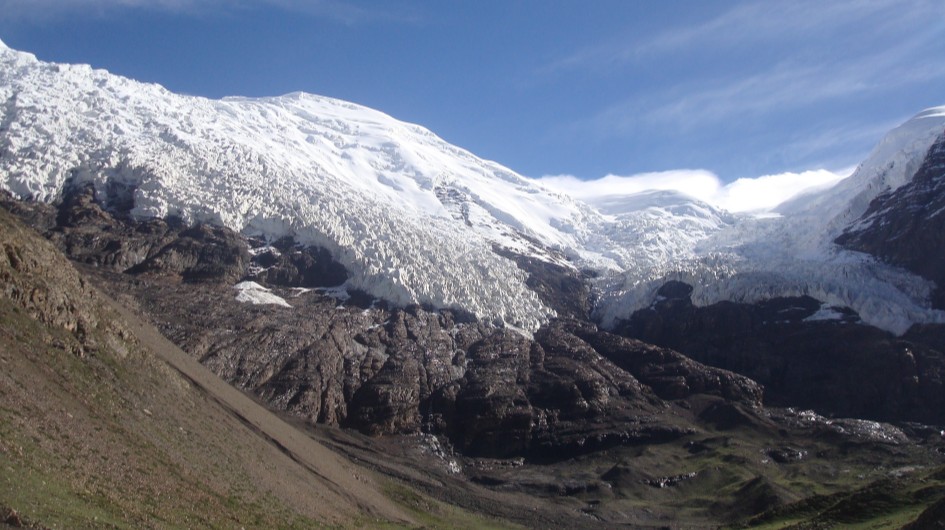 Karola Glacier
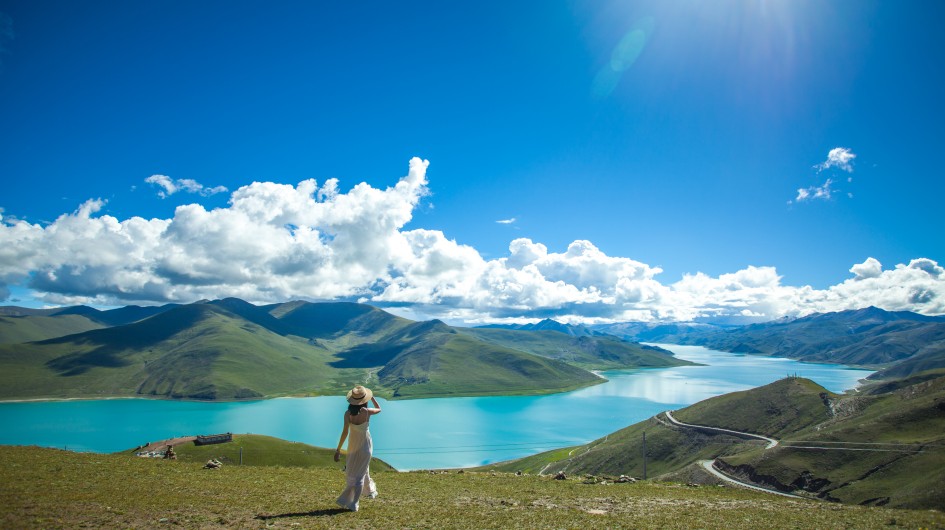 Yamdrok Lake
Notice: In addition to the Tibet Travel Permit, foreign travelers who plan to visit Mount Everest need to apply for an Alien Travel Permit in Shigatse. The tour guide may adjust the itinerary according to the application status of the travel permit.
Please be prepared for long queues when applying for the travel permit during peak seasons, which may be caused by system failures or a sudden increase in the number of applicants.
Your Journey’s Rewards:
Stand at the top of Karola Pass to overlook Yamdrok Lake and admire the natural scenery composed of the lake water, villages, cattle and sheep; head to Karola Glacier to look up at the natural beauty of the snow-capped mountains up close.
Educational Focus:
What impact will the blockage of Yamdrok Lake by mudslides have on the evolution of the geographical environment in the lake area?
Takeaway:
The area of the lake will increase, the groundwater level will rise, the microclimate in the lake area will become more humid, and the temperature difference between day and night will decrease; the lake will change from an exorheic lake (outflow lake) to an endorheic lake (inland lake), and the salinity of the lake water will increase; as the salinity of the lake water increases, the biodiversity of aquatic organisms will gradually decrease; as the area and salinity of the lake gradually increase, the area and salinity of soil salinization along the lake shore will also gradually increase.
Thought Challenge:
What adverse natural conditions need to be overcome during the construction of the Yamdrok Lake Pumped Storage Power Station?
In the morning, we head to Tashi Lhunpo Monastery, the seat of Tibet's second highest incarnation—the Panchen Lama. This vast complex is a sprawling maze of chapels, shrines, and halls, connected by mysterious alleyways and steep staircases. At the center of the monastery lies a courtyard, which once served as a venue for religious dance performances.
We will visit this dimly lit and evocative main hall, along with its numerous side altars, as well as a distinctive red building known as Jamkhang Chenmo. This building houses a magnificent yet graceful 90-foot-tall statue of Maitreya, the Future Buddha—erected in 1914 by the Ninth Panchen Lama, a time when Europe was engulfed in the chaos of war. After leaving Tashi Lhunpo Monastery, we travel to Lhasa.
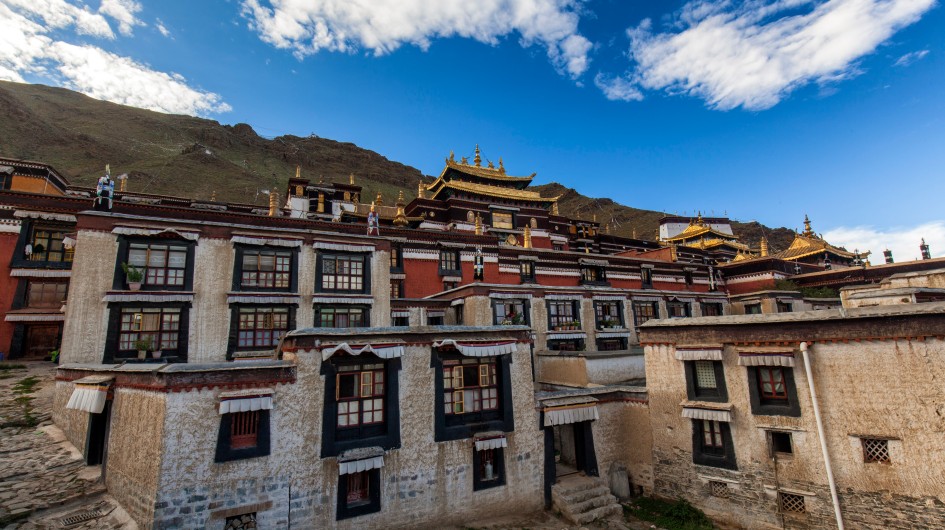 Tashi Lhunpo Monastery
Your Journey’s Rewards:
Step into Tashi Lhunpo Monastery, pay homage to the world’s largest gilded bronze statue of Maitreya Buddha, listen to the monks’ chanting, and feel the awe-inspiring power of religious art.
Educational Focus:
What makes the murals in the Tsokchen Hall of Tashi Lhunpo Monastery special?
Takeaway:
The murals cover a range of themes, including Buddhist stories, images of Dharma protectors, and depictions of Tara. Examples include scenes of Sakyamuni descending from the heavenly realm to the human world, Acala (the Immovable King), Green Tara, and Parnashavari (the Leaf-Clad Buddha-Mother). These themes not only hold religious significance but also reflect the belief system and cultural connotations of Tibetan Buddhism.
Thought Challenge:
On the premise of safeguarding Tashi Lhunpo Monastery’s religious functions and the safety of its cultural relics, how to design experiential activities that allow tourists to gain an in-depth understanding of the monastery’s culture?
Today you will have free time until your tour guide escorts you to the Lhasa train station or airport for your departing train or flight from Lhasa. This will be the end of our tour services in Tibet.
This tour is suitable for: Nature Admirers, Photography Fans, Group Travelers
Price of Tibet Group Tour
*Exchange Rate Note: For your reference, the current USD-CNY exchange rate stands at 1 USD = 7 RMB.*
| Hotel Class | Off-Peak Season Price(Apr 16-Jun 25, Oct 7-Oct 31, 2026) | Single Room Supplement |
|---|---|---|
| Comfort Class | CNY 9,900 (about USD 1,414) | CNY 2,400 (about USD 343) |
Note: Prices may fluctuate with changes in exchange rates. For Saga Dawa Festival and Labor Day holiday periods, the settlement price will increase by CNY 500 (about USD 73) per person, and the retail price will increase by CNY 600 (about USD 88) per person.
Departure Details
| Year | Month | Date | Group Size |
|---|---|---|---|
| 2026 | April | April 1 | 2-15 pax |
Service Included
- Tourist vehicle:7-23seats(If it’s less than 4 travelers doing Lhasa city tour, we will let tour guide to take a taxi instead. Taxi fee will be at the tour guide expense)
- Travelers might change tourist vehicle and tour guide due to Join in the Group tour.
- Reception capability of Tibet tourism is relatively limited, tourist vehicles are comparatively old, the condition are not as good as those in mainland cities of China.
- Sometimes air conditioners of tourist vehicles cannot work normally due to Tibet special climatic conditions(Turning on air conditioners can easily cause engine decelerated and the large temperature difference in and outside the vehicles may also easily cause the tourists to catch a cold.)
- In certain part of roads, it requires limited speed (for example, It needs to take at least two driving hours to complete the appointed kilometers), so the driver will randomly choose the stopping place to rest
- The driver will pick up each tourist at different hotels before departure and you may need to wait for driver. Please abide by the appointed time. Different vehicles are arranged according to the number of people. If tourists give up the itinerary, no refund for the vehicle fee.
- Luggage specification: Each tourist can maximally take one 26-inch suitcase and one backpack. Tour guide will inform you in advance to leave the excess luggage at the counter of Lhasa hotel. Because Tibet has a high altitude, too much luggage will cause the tourist vehicles to be under powered and slow, which will make the tourists feel uncomfortable.
- Twin sharing room basis with breakfast (We can’t guarantee a double bed room, extra breakfast fee beyond the room rate will be on your own)
- If there is a single room due to gender reasons, we will arrange a triple room (or double standard room with an extra bed) or please pay the single room supplement by yourself.
- Join-in Group tour, hotels are arranged by travel agency. Designated hotels are not accepted.
- 8 Breakfasts, 2 featured meals (Free of charge, complimentary meal is non refundable): Stone Pot-Cooked Chicken & Tibetan/Nepalese dinner in Lhasa
- Free featured meal can be lunch or dinner.
- Please take care of rest meals by yourself.
- If travelers are not used to dining in Tibetan areas, they can prepare their own meals.
- Professional Chinese or Chinese-English speaking tour guide
- Join-in Group, travel agent will arrange corresponding tour guide according to languages. If there are native Chinese and English speakers in one group, we will arrange a Chinese-English speaking tour guide. We will not make any reimbursement for tour guide language reasons.
- Travelers might change tour guide and tourist vehicle due to joining the Group tour.
- Gala Peach Blossom Village, Lulang Forest Viewing Deck, Bomi Peach Blossom Valley, Laigu Glacier+Sightseeing bus, Basomtso+Eco bus, Potala Palace, Jokhang Temple, Yamdrok Lake, Karola Glacier, Tashi Lhunpo Monastery
- We guarantee travelers will visit all scenic spots listed above. If a listed scenic spot cannot be visited due to policy reasons or weather conditions, the ticket fee will be fully refunded or exchanged for another scenic spot.
- The group tour fee in the off-season is already based on the winter ticket discount. There is no refund or price difference adjustment for tickets.
- Tibet Entry Permit, Alien Travel Permit, Border Pass, etc.
- Some scenic spots require a border pass, but the process for border passes in Tibet is variable. We suggest Chinese tourists apply for a border pass in advance at their local public security bureau before the group tour starts.
- Travel Accident Insurance, Vehicle Seat Insurance, Travel Agency Liability Insurance
- Free pick up and drop off service are provided only based on the first and last date of the Join-in Group:
- Flight: Free pick-up for arrivals at Nyingchi Airport between 08:30 am and 11:00 am. Free drop-off for departures from Lhasa Airport between 08:30 am and 22:30 pm.
- Lhasa Railway Station: Free drop-off is provided.
- If the pick-up & drop-off service is beyond the first and last date of the group, the extra pick-up or drop-off service fee shall be borne by yourself.
- If your flight is not within the free pick-up/drop-off service time, an extra fee shall be borne by yourself.
- If your flight/train arrival time is close to others, you may wait at the airport for other group members for up to 2 hours. The travel consultant will inform you of the pick-up time one day in advance. If you do not wish to wait, please inform the travel consultant, and we will arrange individual pick-up service with the extra fee borne by yourself.
- Oxygen & Water
- 1 bottle of portable oxygen for emergency use
- 2 bottles of drinking water per person per day (300 ml)
- 4L medical oxygen cylinder with the car
- Service Fee
- All taxes, fees and handling charges
- Reservation fee for visiting the Potala Palace
- Accommodation and catering subsidies for the guide and driver
Service Excluded
- Single Room Supplement
- Hotels are default to double occupancy. If a traveler needs to stay in a single room, an additional single room supplement must be paid.
- Room Loss fee
- Any room charges incurred due to changes during the itinerary shall be borne by the traveler, as the rooms are fully booked in advance.
- Personal Expense
- Laundry services, beverages, fax, telephone calls, optional tour activities, etc.
- Force Majeure
- Due to irresistible objective reasons, non-travel agency reasons (such as natural disasters, wars, strikes, Covid-19, etc.), or special circumstances including airline flight delays/cancellations, consulate visa delays, and insufficient number of travelers, the travel agency has the right to cancel or modify the itinerary. All additional expenses incurred (such as visa fees, accommodation, meals, transportation fees, air ticket fare adjustments, etc.) shall be borne by the travelers, and the travel agency reserves the right to charge such additional fees.
- Tickets
- Flight/Train tickets in and out of Tibet
Referenced hotels
- Lulang(1 night):Dayhello Hotel or similar
- Ranwu(1 night):Ranwu International Zijia RV Camp, Zen Hotel Blue Lake Station, Zichen Boyue Hotel or similar
- Bomi(1 night): Hengxin Zangwang Hotel or similar
- Nyingchi(1 night): Nyingchi Suiton Plus By Paxton, Jinjiang Metropolis Hotel, Zhongheng Zangji Xima Hotel or similar
- Lhasa(3 nights): Lagri Snow Dragon Manor Resort, Thangka Hotel, Tibet Minshan Hotel or similar
- Shigatse(1 night): Gesar Hotel-VIP building, Shigatse Shunyi Starlight Hotel, Schery Hotel or similar
Note: Only Hotels in Lhasa & Shigatse provide oxygen supply service
Tips
- Tibet is located in the plateau and most of the travelers might experience altitude sickness. Please take good rest and have proper diet (do not eat too much as it will increase the burden of the stomach). Travelers can appropriately take some medicine, such as: Gaoyuan An, Rhodiola, Nuodi Kang; Travelers with serious symptoms can appropriately take oxygen or glucose drip.
- Because of the long drive in Tibet, travelers will spend a lot of time in the car, and inevitably can not eat on time, please bring some snacks and biscuits during drive.
- Due to the special conditions in Tibet, please pay attention to keep warm. On the first day of arrival, please do not try to take a bath. Taking a bath will accelerate blood circulation and increase the body's demand for oxygen.
- Tibet has a strong sunshine, especially dry climate, sunscreen, sunglasses, lip balm and other essential are necessary.
- From April to November is the best time for sightseeing.
Wechat & WhatsApp: +86-13471279378