- Home
- China Guide
- Xinjiang
- Attractions
- Hotan Museum
Hotan Museum
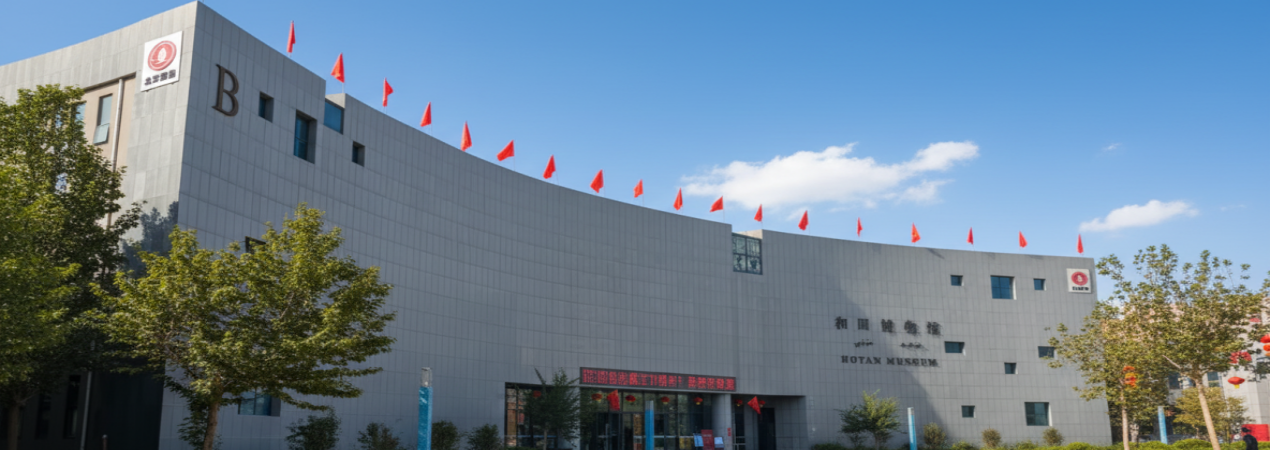
The Hotan Museum, in Hotan Prefecture, Xinjiang, integrates relics collection, protection, display, research and education, and is a cultural landmark of Hotan. It has a basic display of Hotan's history and culture, a special hall for the Niya Ruins, and nearly 10,000 relics (bronzes, pottery, jade, textiles, etc.). Through displays and multimedia, it shows Hotan's long history and splendid culture, serving as an important window to understand its history and culture.
- Chinese name: 和田博物馆 Hé Tián Bó Wù Guǎn
- Suggested time: 2 - 3 hours
- Ticket: Free
- Open hours: Summer: 10:00 - 20:30 from Tuesday to Sunday (entry stops at 20:00); Winter: 10:00-20:00 (entry stops at 19:30). Closed on Mondays. The opening hours may be adjusted during special holidays, so it's advisable to check in advance.
- The best time to visit: All year around
- Address: No. 1, Kunlun Road, Hetian City, Hetian Prefecture, Xinjiang Uygur Autonomous Region, China
- How to get there: It is recommended to take a taxi or go on a self-driving tour to reach the museum.
Must-see Exhibition Halls
Ancient Civilization Exhibition Hall
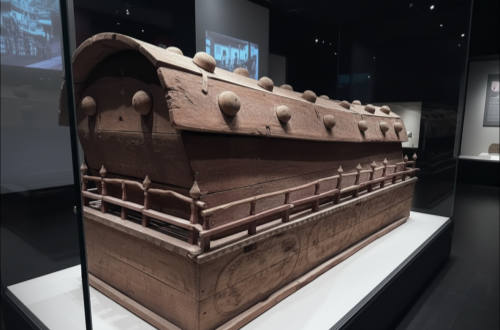 Wooden Coffin
Located on the first floor of the museum, it displays numerous cultural relics unearthed from over 30 sites, such as the Northern Cemetery along the Keriya River, Liushui Cemetery, Niya Ruins, Shanpula Ancient Tombs, and Yotkan Ruins. These relics include stone tools, pottery jars, bead ornaments, rock paintings, Chinese bamboo slips, wooden Buddha statues, clay Buddha statues, murals, as well as fragments of textiles like brocades and woolen blankets, which are bright in color and fashionable in patterns. There are also two female mummies and a painted wooden coffin.
Folk Custom Exhibition Hall
Located on the second floor of the museum, it displays the Uygur people's dietary customs, medicine, Adras silk, Hetian jade, Hetian carpets, Khotan musical instruments, etc.
Niya Ruins Special Exhibition Hall
This exhibition hall is located on the right side of the third floor, mainly exhibiting cultural relics unearthed from the Niya burial site, the former site of the Jingjue Kingdom, including the Kharosthi divorce judgment, the "bracket" (a component of traditional Central Plains architecture), female ornaments, the "first year of Yuanhe" brocade pouch, glass rhyton, etc. The left side of the third floor is a temporary exhibition hall.
Important Exhibits
"First Year of Yuanhe" Brocade Pouch
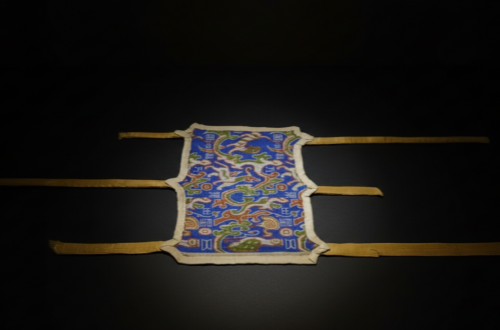 "First Year of Yuanhe" Brocade Pouch
Unearthed from the Niya Ruins, "Yuanhe" was the era name of Emperor Zhang of the Eastern Han Dynasty (84 AD). Therefore, it is the only piece of brocade with a Han Dynasty chronological record discovered so far and is also one of the treasures of the Hotan Museum. The brocade pouch is made of brocades inscribed with "First Year of Yuanhe", "Chang" (meaning "long" or "permanent"), and deer patterns, with a white silk strap. The characters "First Year of Yuanhe" are clearly woven on the pouch. This pouch was once used to store valuable items, and it also reflects the noble status of its owner.
Wooden Carving of Conjoined Twin Birds
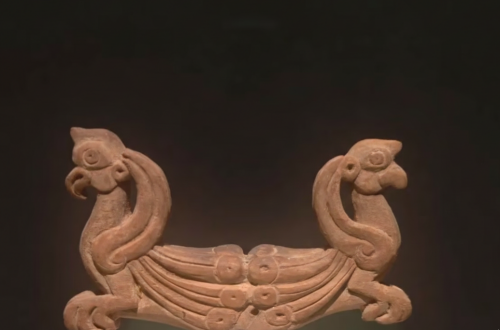 Wooden Carving of Conjoined Twin Birds
The image of the two-headed conjoined bird appears in both Indian Buddhism and Eastern mythology. It represents the exchange between Central Plains culture and Central Asian culture, and is a representative work of cultural exchanges along the Silk Road. It is a cultural relic from the Han and Jin dynasties. In India, it is called the "joint-life bird", and in China during the Qin and Han dynasties, it is known as the well-known "bird with conjoined wings" (or "Biyiniao").
Jade Monkey of the Tang Dynasty
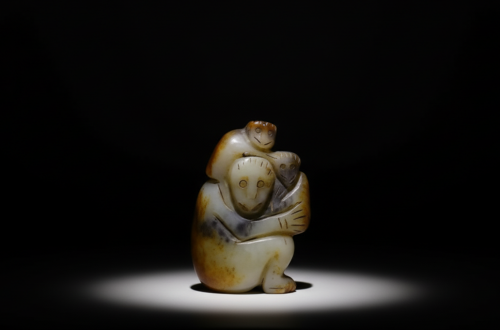 Jade Monkey of the Tang Dynasty
Carved from white jade seed material, it depicts a large monkey in a squatting posture, holding a small monkey in its arms and with another small monkey riding on its shoulder. Though small in size, this jade monkey is one of the treasures of the Hotan Museum. It is crafted from the finest mutton-fat white jade, a top-grade variety of Hotan jade. The design by the craftsman is ingenious, with natural and smooth carving lines that make the monkeys look vivid and lifelike.
Educational Value
A large number of cultural relics from Hetian, spanning ancient to modern times—including stone tools, pottery, bronzes, jade ware and textiles—systematically present Hetian’s development as a key town on the ancient Silk Road’s southern route. Their research and display offer intuitive insights into cultural exchanges and trade between the ancient Western Regions, the Central Plains and neighboring countries, deepening understanding of China’s ancient borderland history and the Silk Road.
Activities to do at Hotan Museum
Historical Study: Through visiting the museum and the guide's detailed explanation of the stories behind cultural relics, one can enhance the understanding of cultural exchanges and trade between China and neighboring countries, thereby deepening the cognition of China's ancient frontier history and the Silk Road.
Art Study: The Hotan Museum has a rich collection of rock paintings, Han Dynasty bamboo slips, woodcarved Buddha statues, clay Buddha statues, murals, and textile fragments with unique patterns. These not only provide diverse inspiration for artistic creation, but also offer vivid physical models for learning painting techniques.
Drop us a line and we'll connect you with the top China expert in no time!