- Home
- China Guide
- Xinjiang
- Attractions
- Dolan Tribe
Dolan Tribe
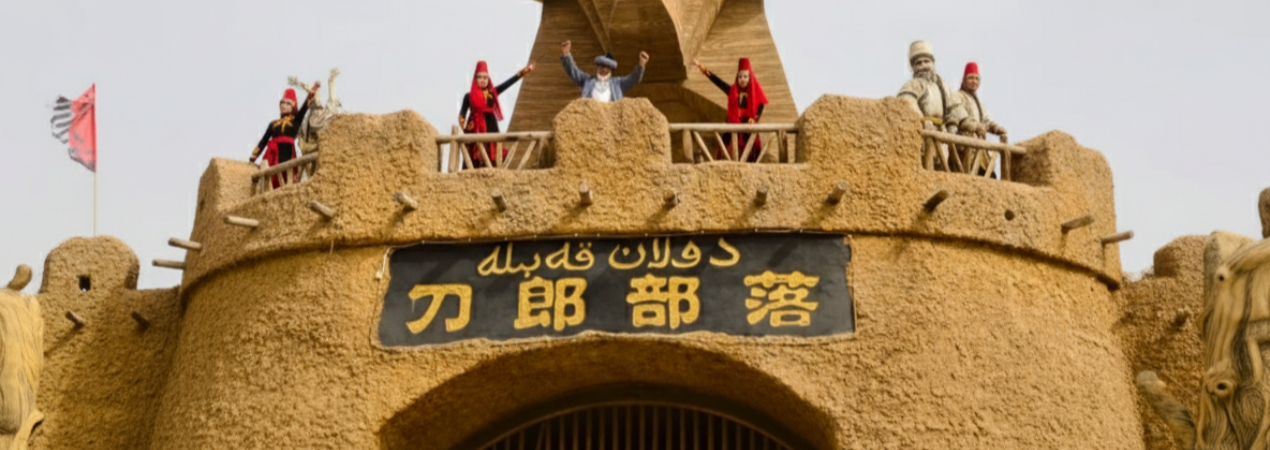
The Dolan Tribe Scenic Area, set against the backdrop of the primitive thousand-year-old Populus euphratica forest and themed around the Dolan folk culture, preserves the historical relics and original living scenes of the Dolan people. It comprehensively and perfectly showcases the Dolan people's architecture, diet, handicrafts, living customs, and festival activities, presenting the primitive and mysterious tribal civilization.
- Chinese name: 刀郎部落 Dāo láng Bù luò
- Suggested time: 3 - 4 hours
- Ticket: 45 yuan per person
- Open hours: 09:00 - 22:30
- The best time to visit: From June to October is an ideal time. However, it also has unique charm in spring with flower-viewing activities from April to May.
- Address: In the Populus euphratica forest area of Yuman Sluice, Awat County, Aksu Region, Xinjiang Uygur Autonomous Region. It is about 58 kilometers from Aksu urban area and about 18 kilometers from Awat county seat.
- How to get there: Currently, there may not be a direct public bus. It is recommended to take a taxi or rent a car from Aksu urban area or Awat county seat.
Highlights of Dolan Tribe
Origin and Experience Hall of Dolan Culture
Inside the hall, 3D virtual-real images tell the story of how military conflicts broke out during the Chagatai period, leading to people fleeing their homes in search of shelter, and how the Dolan people and Dolan culture came into being, vividly demonstrating the development history of the Dolan people.
Dolan Ancient Village
Dolan Ancient Village is a small ancient village formed by the descendants of the early Dolan people who settled here. Within the village, there are handcrafted artifacts made by local residents, as well as ancient workshops such as pottery workshops, oil-pressing workshops, blacksmith shops, wool felt workshops, and water mills. Visitors can experience the traditional handicraft-making processes of the Dolan people.
Thousand-Year-Old Ancient Populus Euphratica Zone
In the Thousand-Year-Old Ancient Populus Euphratica Zone, these withered populus euphratica trees have stood firm for thousands of years. You can get up close to feel the miracle of life embodied by the species: "Living for a thousand years without dying, standing for a thousand years after death, and remaining unspoiled for a thousand years even when fallen." The primitive populus euphratica forest, with its diverse and dramatic forms, delivers even deeper spiritual impact through the "spirit of populus euphratica."
Cherry Blossom Avenue and Crabapple Garden
Cherry Blossom Avenue and Crabapple Garden are the core spring flower-viewing attractions meticulously crafted by Dolan Tribe. Blending vibrant spring blooms with a rich regional cultural ambiance, they present you with picturesque scenery. The prime viewing period is mid-April, when petals flutter gently and fallen blossoms carpet the ground in a riot of colors—an atmosphere brimming with romance.
Tongxin Bridge and Dolan River
This stone arch bridge was built with stones jointly transported from the Aksu River by people of all ethnic groups in Dolan Tribe. Carved on the wooden baluster posts on both sides of the bridge are pomegranates, symbolizing that people of all ethnic groups work together in unity—just like pomegranate seeds, supporting each other to build a beautiful homeland. Under the bridge flows the Dolan River, whose waters mainly come from melted snow of the Tianshan Tomur Peak and mountain springs, nurturing the primitive populus euphratica forest in Dolan Tribe.
Folk Sports Ground
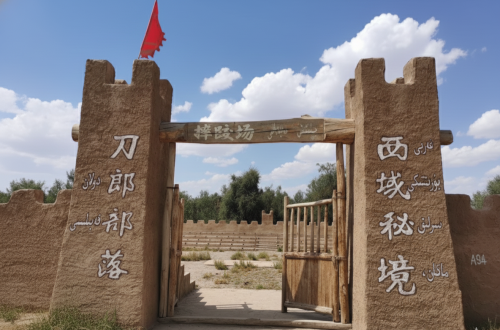 Folk Sports Ground
Composed of arenas for cockfighting, ram fighting, horse racing, and wrestling, it serves as the venue for competitions including cockfighting, ram fighting, horse racing, sheep snatching, and ethnic-style wrestling. Relevant folk sports contests are held here during major festivals every year.
When the Dolan people graze in the Gobi and populus euphratica forests, they often struggle against harsh weather and ferocious beasts to protect their flocks. When strong winds or wild animals scatter the sheep, they ride over to handle the emergency, leaning down to lift the endangered sheep onto their horses and carry them back to the main flock. Over time, this unique sheep-snatching skill has gradually evolved into the thrilling horseback sheep-snatching contest.
Educational Value
The environment where Dolan Tribe is located, with its interwoven deserts, gobi and populus euphratica forests, serves as a natural laboratory for studying ecosystems in arid and semi-arid regions. The tenacious characteristics of populus euphratica can intuitively demonstrate the adaptation mechanisms of plants to extreme environments (high temperatures, drought, salinity and alkalinity), helping you understand biological knowledge such as biological evolution and stress-resistant genes. Meanwhile, the hydrological cycle of the Dolan River and surrounding water sources can explain the importance of water resource distribution, utilization and ecological balance in arid areas.
Activities to do at Dolan Tribe
Intangible Cultural Heritage Skills Experience: Follow local craftsmen to learn Dolan embroidery and wood carving, and experience the creative process of intangible cultural heritage.
Architecture Exploration: Visit the traditional dwellings of the Dolan people, analyze how their architectural structures (such as wind-and-sand prevention designs) adapt to the desert environment, and compare the similarities and differences between modern architecture and traditional wisdom.
Drop us a line and we'll connect you with the top China expert in no time!