- Home
- China Guide
- Travel Articles
- 7 Interesting Things about Chinese Kitchens
7 Interesting Things about Chinese Kitchens
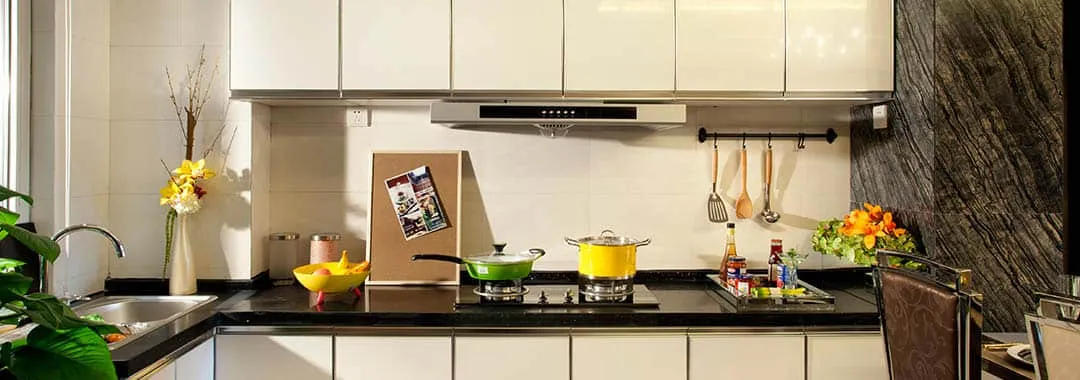
Not all kitchens in the world are the same, or even similar. It’s not just that cooking methods differ between nations; it’s that the layout, appliances, storage, etc. can be vastly different as well.
Major differences of kitchens in China verses most Western countries.
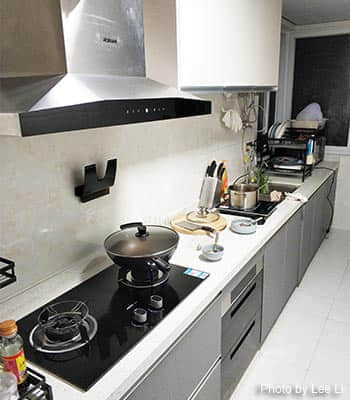
A typical Chinese family kitchen with Disinfection Cabinet (UV disinfection and drying function)
1. It’s not a dishWASHER – it’s a dishDRYER
When entering a typical middle-class Chinese kitchen, you’ll often find an appliance set under the counter that looks from the outside like a dishwasher. But don’t put your dirty plates in there and expect water to clean them up. This appliance is not a “washer”, but instead a “dryer”. Dish dryers super heat everything inside basically to the point of sanitation. Or, if you just don’t want to eat off of cold plates, the dryer will warm them up for you.
2. So, where’s the oven?
While a staple of most western kitchens, don’t expect to find an oven in China. Traditionally, baking has not been a major part of Chinese home cooking. Instead, Chinese cuisine focuses more on stir-frying, steaming, boiling, and braising. Chinese dishes are mostly made up of ingredients – like starches (noodles and rice), vegetables, and meat – that are already precut and mixed together before being served. This is why cooking in a wok makes sense. So, every kitchen has a stove, but usually that’s all. Counter-top toaster ovens are sold for those who need the ability to bake or toast.
3. Only two (maybe three) burners
And speaking of stoves, western kitchens usually have 4 to 6 burners on top as western food is mostly cooked separately (vegetables are cooked separately from the starch and meat). But Chinese stoves are mostly sold with only 2 large burners and maybe a small third burner to keep water warm. Some nicer stoves for more modern apartments may come with 4 or more burners, but it’s still fairly rare.
4. A long, thin, storage drawer?
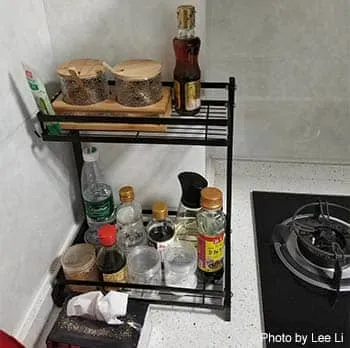
Simple storage rack in Chinese kitchen
To the side of the stove most kitchens will come with a tall, narrow, double-decked drawer. Pulled out, the drawer has wire racks inside, not solid bottoms and the width of each rack is barely wider than a wine bottle. What could this be used for? While western kitchens rely mostly on dry herbs and spices, Chinese cooking often incorporate liquid flavoring – such as vinegars, cooking wines, soy sauces, flavored oils like sesame, chili sauces, etc. This narrow draw is perfect for holding these bottles and stored in a convenient spot. From drawer to pan is less than 1 meter (3 feet).
5. Why is the fridge outside the kitchen?
Ever went to the living room to pull out a cold beverage or grab some meat to make a sandwich? Few Western homes have refrigerators outside the kitchen since it makes sense to having the cold items close to where you need them for cooking. Because many urban apartments in China have compact kitchens, refrigerators are sometimes placed in dining areas or living rooms to save space.
6. The cleaver is king
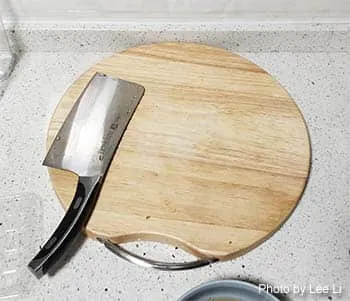
Cleaver and round wooden chopping blocks
Most western kitchens use an assortment of knives of all different shapes and sizes used for varying cutting purposes. However, in most Chinese kitchens, you may only find one or two knives, and each will probably be a different sized heavy-metal, razor-sharp cleaver. Chinese cooks can slice, dice, chop, and mince nearly anything with a cleaver – they’re not just for hacking through chicken bones.
7. Yes, they really have round, wooden chopping blocks
You may have only seen a chopping block in the movies, on TV, or in an Asian restaurant, but most Chinese kitchens have them. Flat, thin cutting boards grace nearly all western kitchens, but the Chinese seem to prefer something much heavier and longer lasting.
When traveling in China, try to find opportunities to visit people’s homes to see these differences for yourself. Many good quality tours from reputable companies will offer travelers the chance to visit regular people’s homes so you can see how that particular family really lives.
If you would like to gain first-hand insight into local family life during your China tour, this 7-Day Beijing - Xi'an Mid-Autumn Festival Tour will take you into authentic Chinese households to experience traditional festival culture. During your stay in Xi’an, you will visit a local family, explore their kitchen layout, dining habits, and daily lifestyle. You can also participate in making traditional dumplings by hand, from kneading the dough and preparing fillings to wrapping the dumplings.
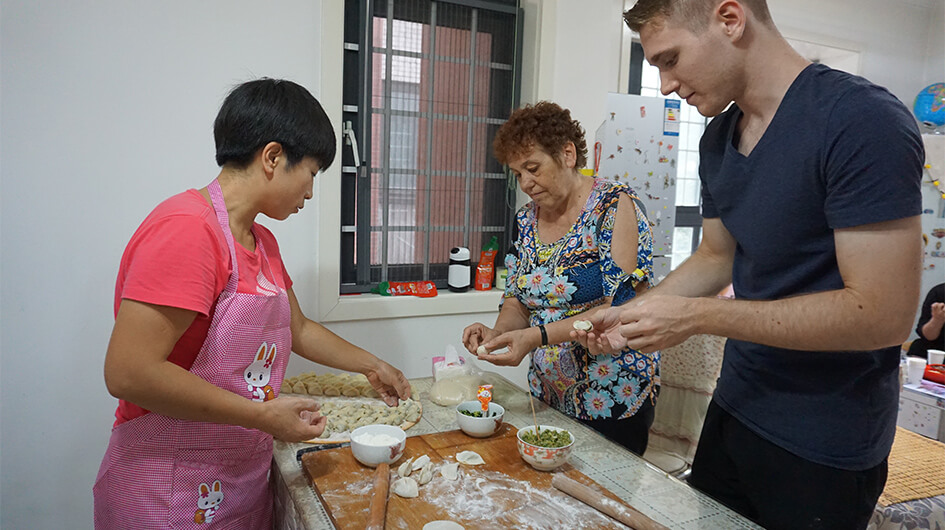 Making Dumplings with a Local Family
We can customize your itinerary based on your interests and travel requirements. Whether you want to visit local households, learn to cook traditional food, experience festive customs, or delve into the culinary cultures of different regions, we can create exclusive cultural experiences tailored for you.
 Chinese Food and Related Customs
 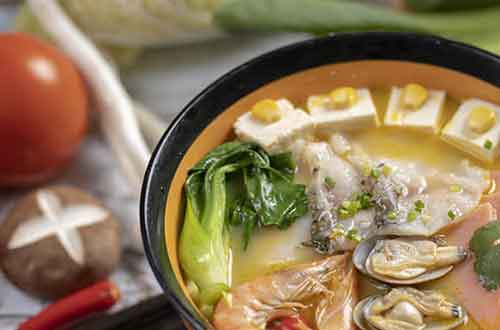 Chinese Food and Health
 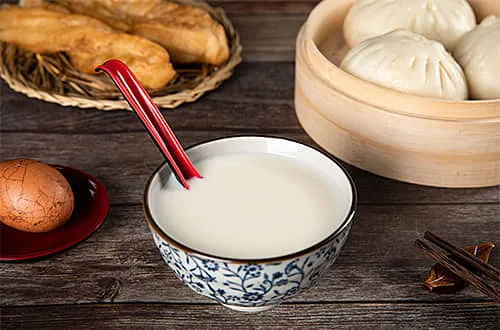 What the Chinese Eat for Breakfast
  Chinese Cooking Methods