- Home
- City Tours
- Beijing Tours
- Mid-Autumn Festival Tour: BX-01

7-Day Beijing - Xi'an Mid-Autumn Festival Tour
Itinerary at a Glance
| Day | Location | Highlights |
|---|---|---|
| D1 | Beijing | Arrive in Beijing; hotel check-in |
| D2 | Beijing | Visit Tiananmen Square and the Palace Museum; tour the Drum Tower; explore hutong and learn paper-cutting |
| D3 | Beijing | Tour the Temple of Heaven; hike the Mutianyu Great Wall; admire the full moon and taste mooncakes by Shichahai Lake in the evening |
| D4 | Beijing → Xi'an | Go to Xi'an; visit the Bell and Drum Towers; wear Hanfu and take photos with the landmarks |
| D5 | Xi'an | Visit the Terracotta Army; watch shadow puppetry at Gao Family Compound; explore the Muslim Quarter for local snacks; visit a local family and learn to make dumplings |
| D6 | Xi'an | Tour Xi'an Museum and the Small Wild Goose Pagoda; cycle along the Xi'an City Wall; immerse in the Tang-style block "Chang'an 12 Hours" |
| D7 | Xi'an | Transfer to the airport/train station; Tour ends |
Trip Highlights
- Hike the magnificent Mutianyu Great Wall with lush natural scenery
- Appreciate the full moon and taste mooncakes by the serene Shichahai Lake
- Learn the traditional craft of paper-cutting in Beijing's historic hutongs
- Wear Hanfu and take photos with Xi'an's Bell and Drum Towers
- Learn to make dumplings with a local Xi'an family
Tour Essentials

Quality
No Shopping Traps

Group Type
Private

Tour Focus
Culture

Accommodation
Nights:6

Best Season
Autumn
Full itinerary for 7-Day Beijing - Xi'an Mid-Autumn Festival Tour
Arrive in Beijing and then check in at the hotel. You may arrange the rest of the time freely afterwards, and can wander around the hotel to explore local delicacies.
First, head to Tiananmen Square to visit the Monument to the People's Heroes and the Mausoleum of Mao Zedong. Walk to the Palace Museum, where you will tour the Hall of Supreme Harmony, the Hall of Central Harmony, the Hall of Preserving Harmony, etc. Listen to the guide explain the daily governance and daily life of the emperors, visit the Treasure Gallery and the Clock and Watch Gallery to admire precious cultural relics and exquisite timepieces. Wander around the Imperial Garden and appreciate the exquisite layout of the royal garden.
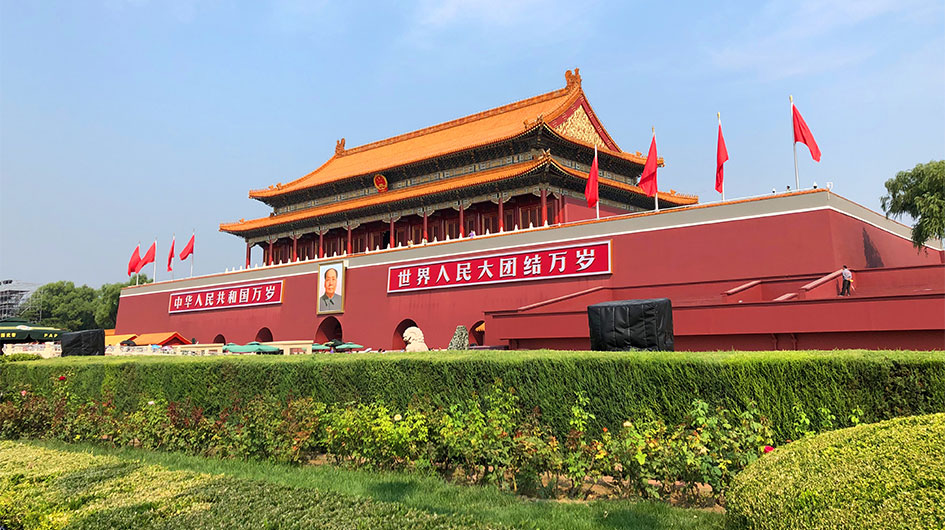
Tiananmen Square
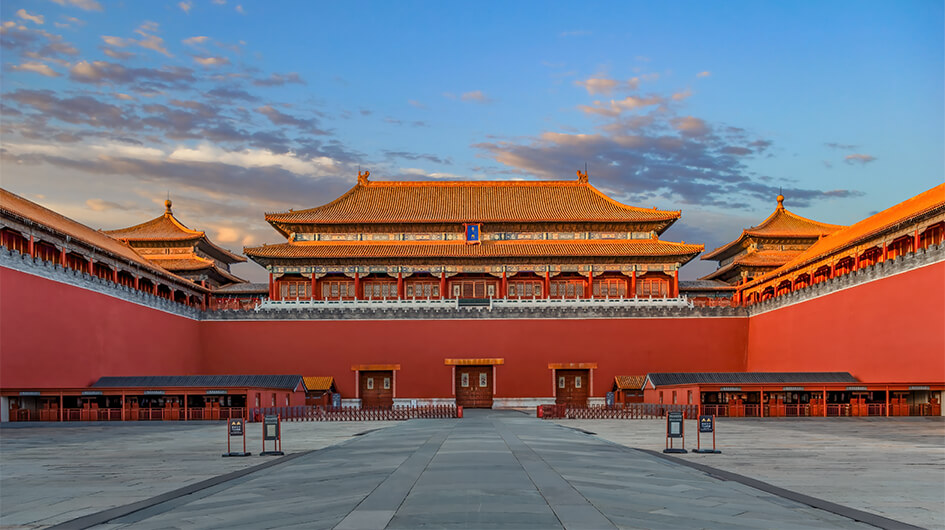 the Palace Museum
At lunchtime, you can enjoy hot pot or taste special dishes such as Peking Roast Duck. Afterwards, proceed to the Drum Tower, the time - telling center of the capital during the Yuan, Ming and Qing dynasties. Climb the tower to see the display of large drums and overlook the magnificent scenery of the Central Axis of Beijing.
Hutongs are traditional neighborhoods unique to Beijing. The guide will lead you to wander through the hutongs and explain their layout and culture. You will also learn paper - cutting in a local resident's home, personally participate in the processes of cutting, carving and tearing to create various exquisite patterns and shapes.
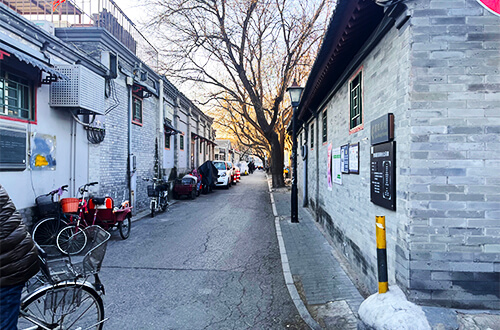 Beijing Hutong
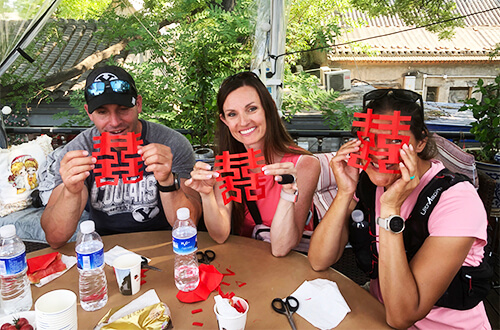 Learn Paper-Cutting
Your Journey’s Rewards
Visit the Palace Museum to feel the grandeur of royal architecture and learn about the daily life of emperors and empresses. Wander through hutongs to learn about hutong culture and traditional craftsmanship skills.
Educational Focus
What is the origin of paper - cutting?
Takeaway
Paper - cutting originated in the Han Dynasty in China, with a history of more than 2,000 years. Early paper - cuttings were mostly used for sacrificial rituals and decorating tombs. Later, they were widely used in various occasions such as festivals, weddings and childbirth. Craftsmen skillfully outline patterns of flowers, birds, fish, insects, myths and legends, etc. While decorating living spaces, they also embody people's yearning and pursuit for a better life.
Thought Challenge
How to balance the protection of Beijing's ancient architectural relics and hutong culture with the city's modern development?
In the morning, head to the Temple of Heaven, an outstanding representative of ancient Chinese sacrificial architecture, and visit the Hall of Prayer for Good Harvests — the circular hall with blue glazed roof tiles is a stunning sight. You can also visit the Imperial Vault of Heaven, the Circular Mound Altar and other structures, and listen to the tour guide explain the ancient imperial sacrificial culture.
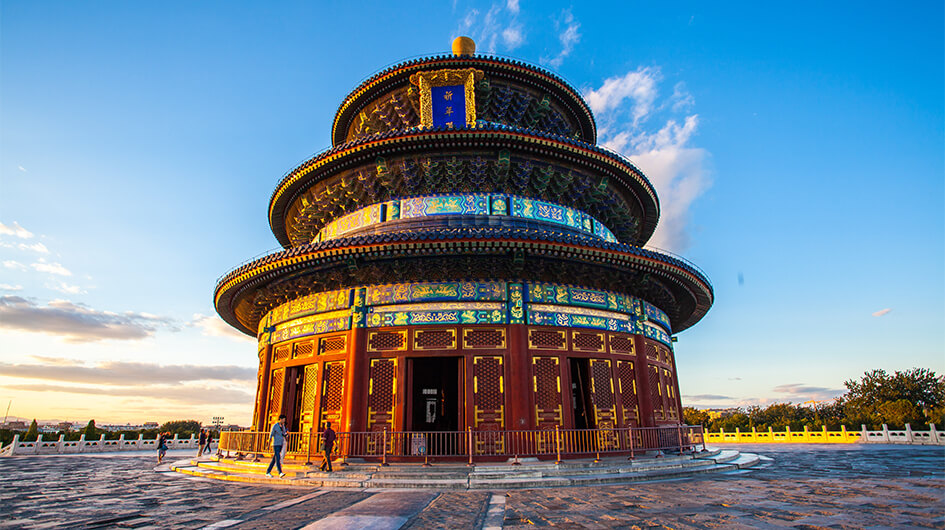 Hall of Prayer for Good Harvests, Temple of Heaven
Next, visit the Mutianyu Great Wall, a magnificent military relic where the vegetation is lush and the view is wide open. The winding Great Wall meanders along the mountain like a giant dragon. Hike to admire the beautiful scenery of the Great Wall, and then experience the thrilling slide down the mountain.
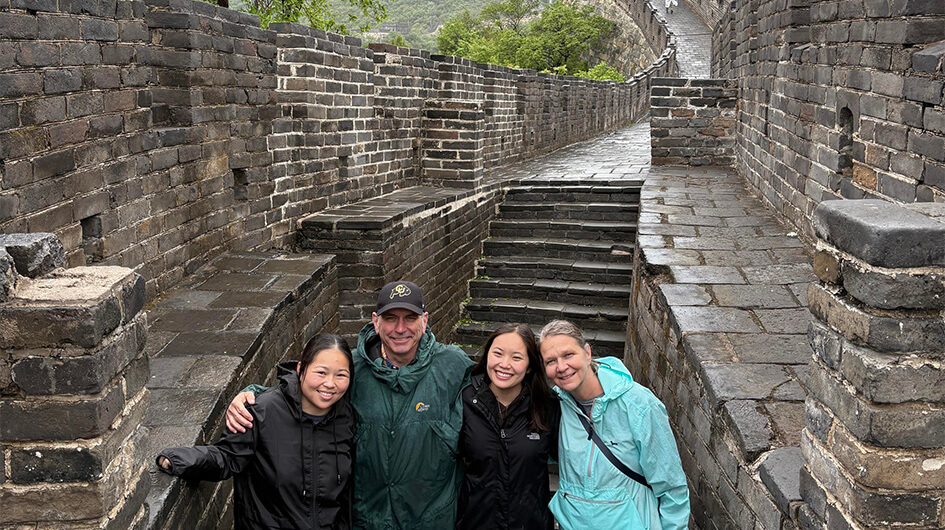 Mutianyu Great Wall
Admiring the full moon and tasting mooncakes are traditional customs of the Mid-Autumn Festival. In the evening, come to Shichahai, where the expansive lake surface mirrors the full moon, surrounding ancient buildings and willow trees, creating a peaceful and romantic atmosphere. Choose a quiet spot to admire the full moon and taste mooncakes, and savor the sweetness and warmth of the Mid-Autumn Festival.
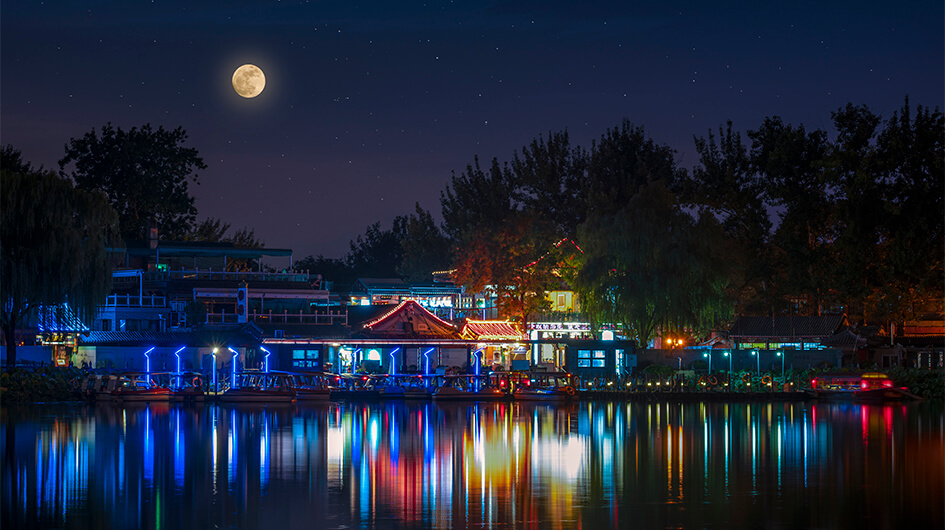 Moon Appreciation at Shichahai
Your Journey’s Rewards
Visit the Temple of Heaven to learn about ancient imperial sacrificial culture; climb the Mutianyu Great Wall to discover the grand ancient Chinese military project; admire the full moon and taste mooncakes at Shichahai to experience the Mid-Autumn Festival culture firsthand.
Educational Focus
What cultural connotations do mooncakes and moon appreciation carry in traditional Chinese festivals?
Takeaway
Admiring the full moon and tasting mooncakes are important customs of China’s Mid-Autumn Festival. Mooncakes symbolize family reunion, while moon appreciation embodies people’s longing for their loved ones and good wishes for a happy life.
Thought Challenge
In the fast-paced modern life, how can we better inherit and carry forward traditional Mid-Autumn Festival customs such as moon appreciation and mooncake tasting?
Depart from Beijing for Xi'an in the morning. In the evening, head to the Drum Tower and the Bell Tower, the iconic landmarks of Xi'an. You can put on Hanfu in styles of the Tang and Song dynasties and wear exquisite headpieces. When the night lights are lit, the night view of the Bell and Drum Towers pairs perfectly with Hanfu, making it the perfect moment to capture amazing photos.
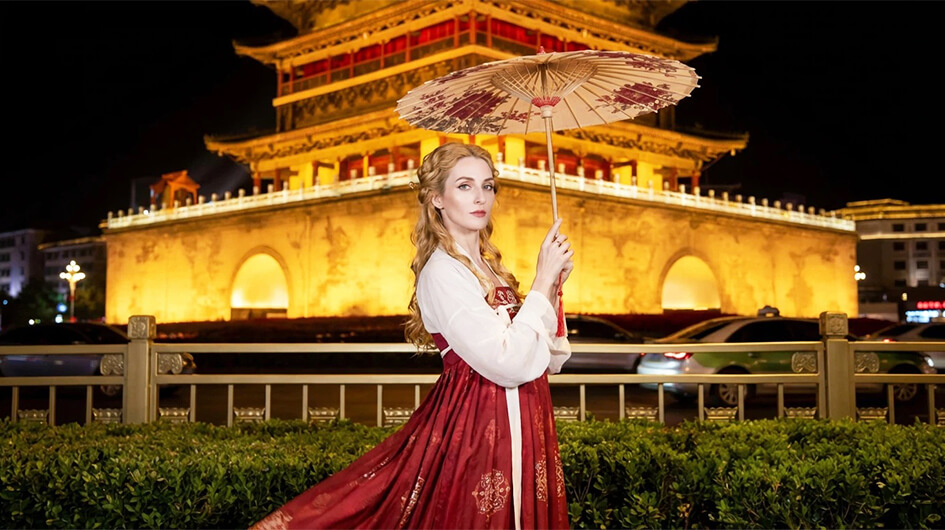 Hanfu Photo Shoot at the Drum Tower
Your Journey’s Rewards:
Visit the Bell Tower and Drum Tower in Hanfu, learn about the ancient time-telling center, and experience the unique charm of Xi'an as an ancient capital.
Educational Focus:
What important significance did Xi'an's Bell and Drum Tower hold in ancient times?
Takeaway:
In ancient times, the Drum Tower took on the important function of telling time. Bells were rung in the morning and drums beaten in the evening, and common people told the time by the sounds of bells and drums, which regulated the rhythm of their daily lives.
Thought Challenge:
As a historical scenic spot open to the public, how can the Drum Tower be protected while ensuring tourists' visiting experience?
In the morning, visit the Terracotta Army, where thousands of life-sized terracotta warriors and horses have been unearthed, forming a grand military formation and hailed as the Eighth Wonder of the World. You can tour the warrior pits to witness these exquisite carvings and their restoration process in person. You may also visit the Terracotta Army Exhibition Hall, which showcases the manufacturing process of the terracotta figures as well as the sophisticated weapons of the Qin Dynasty.
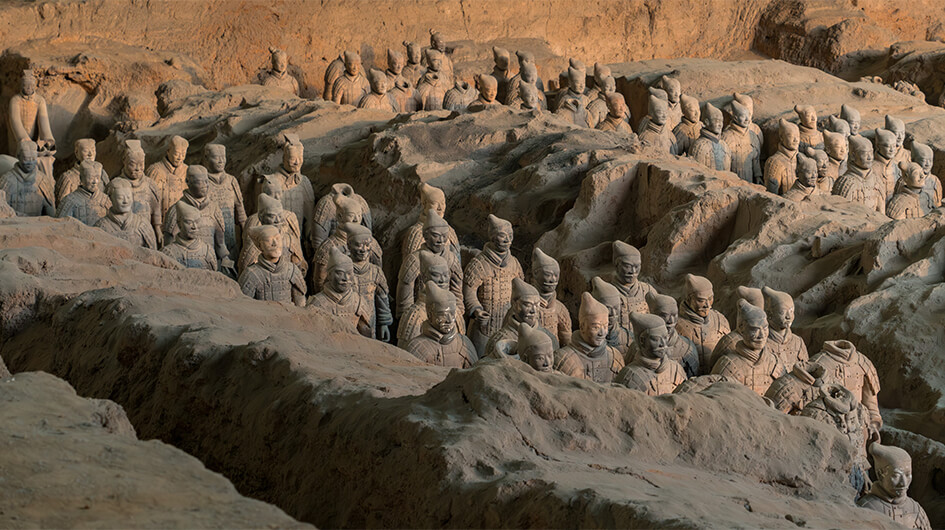 the Terracotta Army
In the afternoon, head to the Gao Family Compound. Follow your tour guide to visit this quadrangle courtyard from the Ming and Qing dynasties, admire the building structure and furniture layout inside the compound, and appreciate the exquisite brick carvings and wood engravings. There is also a shadow puppetry show in the compound, themed on local folk culture with vivid and lively performances. Then walk to the Muslim Quarter, a millennium-old residential area for the Muslim community and also a famous food street in Xi'an.
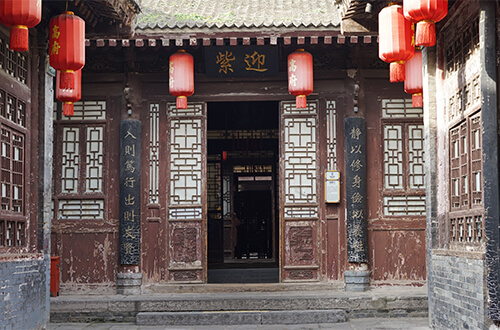 Visit the Gao Family Compound
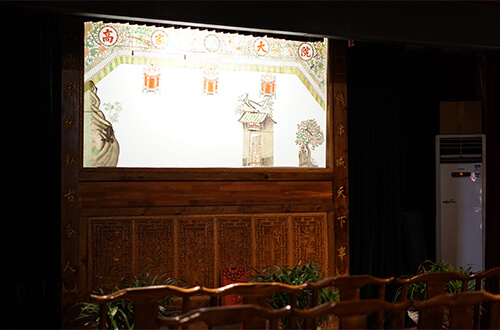 Enjoy Shadow Puppetry
You will visit a local family's home to learn how to make dumplings, a traditional Chinese delicacy. You will personally take part in kneading the dough, mixing the filling, and shaping the dumplings with your hands. Reunion is the core theme of the Mid-Autumn Festival, and you can taste the fruits of your labor with your family or friends, and feel the joyful atmosphere of reunion.
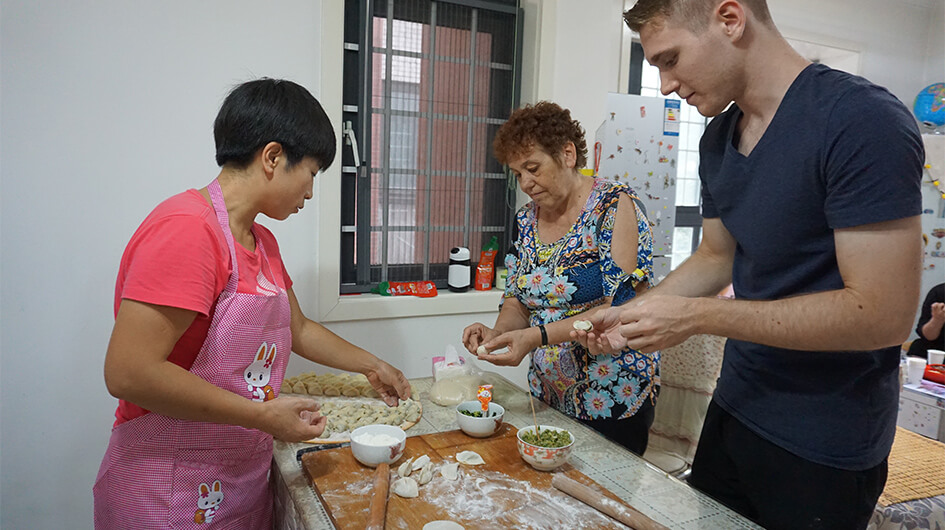 Making Dumplings with a Local Family
Your Journey’s Rewards
Learn about the sculptural art of the Qin Dynasty at the Terracotta Army, explore the Qing Dynasty residential architecture at the Gao Family Compound, and discover Xi'an's delicacies and Muslim culture in the Muslim Quarter.
Educational Focus
What core values do the archaeological discoveries of the Terracotta Army hold for the study of Qin Dynasty history?
Takeaway
The Terracotta Army is an important burial pit of the Mausoleum of the First Qin Emperor, which directly reflects the military system, social structure, cultural beliefs and other aspects of the Qin Dynasty. Its military formation layout, troop composition, weapons and equipment provide first-hand materials for the study of Qin Dynasty military history.
Thought Challenge
What influence has the firing technology of the Terracotta Army had on modern ceramic art?
In the morning, arrive at Xi'an Museum, which has a rich collection of cultural relics. You can view bronze artifacts and Tang Dynasty relics here, and see the museum's signature treasure – the Tri-Colored Glazed Flying Horse of the Tang Dynasty. Then head to the Small Wild Goose Pagoda, a multi-eave brick pagoda built in the Tang Dynasty style. It has stood firm through dozens of earthquakes without collapsing, a true architectural marvel.
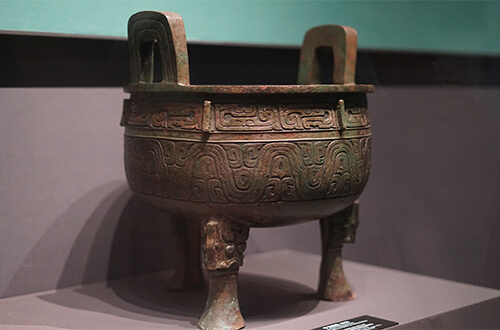 Bronze Artifacts at Xi'an Museum
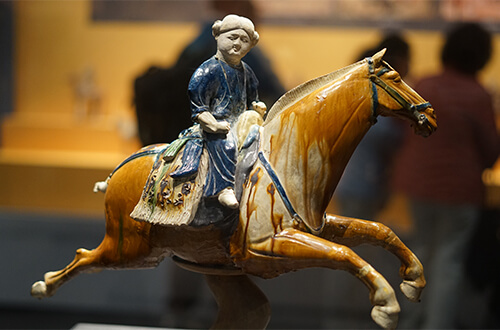 the Tri-Colored Glazed Flying Horse of the Tang Dynasty
Next, make your way to the Xi'an City Wall. Climb up the wall to enjoy the scenery of ancient Xi'an, and you can explore it by bicycle or on foot. Finally, visit Chang'an 12 Hours, a Tang-style cultural block themed on "Prosperous Chang'an of the Tang Dynasty". During the Mid-Autumn Festival, a variety of dance and music performances are held here; you can also watch acrobatics and play traditional games, experiencing the bustling Mid-Autumn night as it was in the flourishing Tang Dynasty.
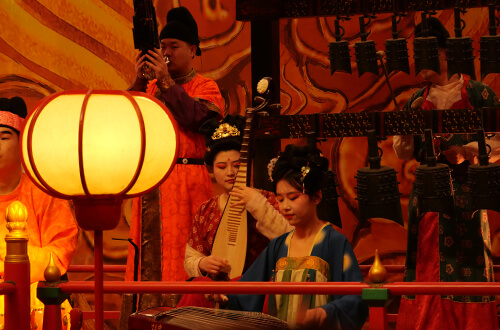 Watch Musical Performances at Chang'an 12 Hours
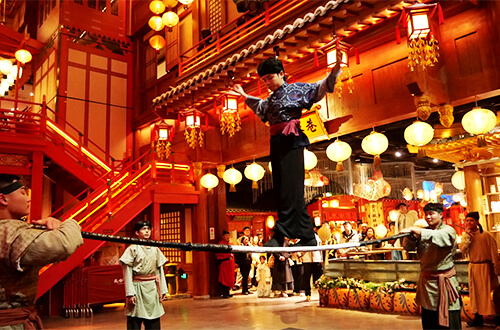 Watch Acrobatics
Your Journey’s Rewards:
Visit Xi'an Museum and the Small Wild Goose Pagoda to explore precious cultural relic collections and ancient architecture; cycle along the Xi'an City Wall and overlook the scenery of the ancient city; tour the Chang'an 12 Hours themed block and experience the cultural charm of the flourishing Tang Dynasty.
Educational Focus:
How exactly did the Xi'an City Wall achieve a tight and rigorous defense in ancient times?
Takeaway:
If enemy troops invaded, they first had to break through the first line of defense – the moat, then the sentry and arrow defenses of the gate tower. If they breached the moon city, the 66 windows of the arrow tower would unleash a simultaneous volley of arrows like a rain of arrows. Upon reaching the barbican, soldiers could shoot arrows from all sides to besiege the enemy. Even if the enemy scaled the city wall, the watchtowers on the wall could launch an all-round arrow attack to fend them off.
Thought Challenge:
How can cultural and tourism creative blocks such as Chang'an 12 Hours better balance the restoration of historical scenes with the innovation of modern tourism experiences?
After breakfast at the hotel, the driver will take you to the airport or train station according to the schedule, and the trip ends here.
This tour is suitable for: School, Family, Team Building,Culture Lovers
What’s Included
- Experienced tour guides
- Entrance fee to all spots listed in the itinerary
- Well selected hotel accommodation
- Expert drivers and comfortable vehicles with air-conditioning
Hotel Options
- Beijing Hotel Accommodation: Sunworld Hotel
- Xi’an Hotel Accommodation: Grand Soluxe International Hotel
Wechat & WhatsApp: +86-13471279378