- Home
- City Tours
- Pingyao Tours
- 7-Day Datong, Taiyuan & Pingyao Tour
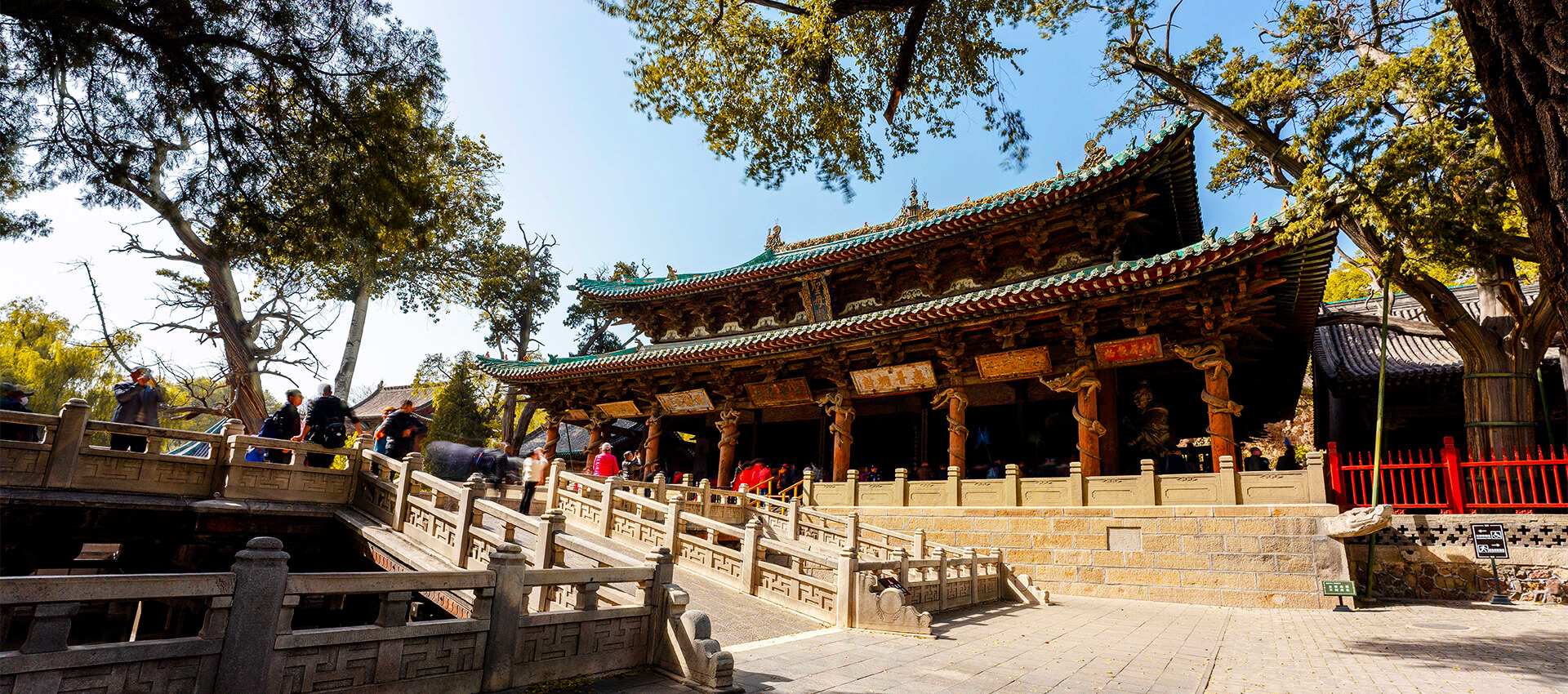
7-Day Cultural Odyssey of Datong, Taiyuan & Pingyao
This 7-day cultural journey takes you through Shanxi's historic treasures—from the Yingxian Wooden Pagoda and Hanging Temple to Yungang Grottoes' Buddhist art. Explore royal gardens at Jinci, dive into vinegar-making traditions, and step into Pingyao's ancient banking legacy. Marvel at Qing Dynasty merchant mansions like the Wang Family Compound and uncover Zhangbi Castle's underground tunnels. A perfect blend of architecture, history, and hands-on folk experiences!
Itinerary at a Glance
| Day | Location | Highlights |
|---|---|---|
| D1 | Datong | Check into hotel, explore local parks or night markets, taste knife-shaved noodles |
| D2 | Yingxian Wooden Pagoda-Hanging Monastery-Datong Ancient City Wall | Admire ancient wooden architecture, visit cliffside temple, enjoy illuminated city walls |
| D3 | Yungang Grottoes-Taiyuan | Explore Buddhist cave art, take high-speed train to next destination |
| D4 | Jinci Temple-Donghu Vinegar Garden | See royal garden architecture, make vinegar products and chocolates |
| D5 | Pingyao | Visit historic bank and escort museum, watch immersive night performance |
| D6 | Wang Family Compound-Zhangbi Ancient Castle | Tour merchant mansion's carvings, explore underground tunnels, try folk crafts |
| D7 | Departure | Check out and travel home |
Trip Highlights
- Admire the Yingxian Wooden Pagoda and Hanging Monastery's ancient architectural genius
- Enjoy the Datong Ancient City Wall's glowing night view
- Appreciate the Yungang Grottoes' time-honored stone carving art
- Make vinegar soap and taste vinegar treats at Donghu Vinegar Garden
- Watch "See Pingyao Again", a walking-style live-action show
- Try making cloth tigers or paper-cutting at Zhangbi Ancient Castle
Tour Essentials

Quality
No Shopping Traps

Group Type
Private

Tour Focus
Food, History

Accommodation
Nights:6

Best Season
Spring, Summer, Autumn, Winter
Full itinerary for 7-Day Cultural Odyssey of Datong, Taiyuan & Pingyao
When you get to Datong, first check in at your hotel. If you have extra time, take a walk in the nearby park – you'll get a feel for Datong's local culture. You can also head to a night market: enjoy the lively mood there and try the city's special Daoxiaomian (knife-shaved noodles).
Visit the Yingxian Wooden Pagoda in the morning. It was built in the 2nd year of the Qingning era of the Liao Dynasty (1056 AD) and reaches 67.31 meters high—this makes it the oldest and tallest pure-wooden pavilion-style building that still exists today. To build the whole pagoda, workers used 3,000 cubic meters of Korean pine timber, which weighs over 2,600 tons. What's special is that no iron nails or rivets were used at all; it was put together only with mortise and tenon joints. The pagoda has stood strong through a thousand years of wind and rain, many earthquakes and wars. One example is the Huairen Earthquake in the 9th year of the Dade era of the Yuan Dynasty—this earthquake hit Yingxian with an intensity of over magnitude VIII. Now, it remains firm and has become an immortal legend in architectural history.
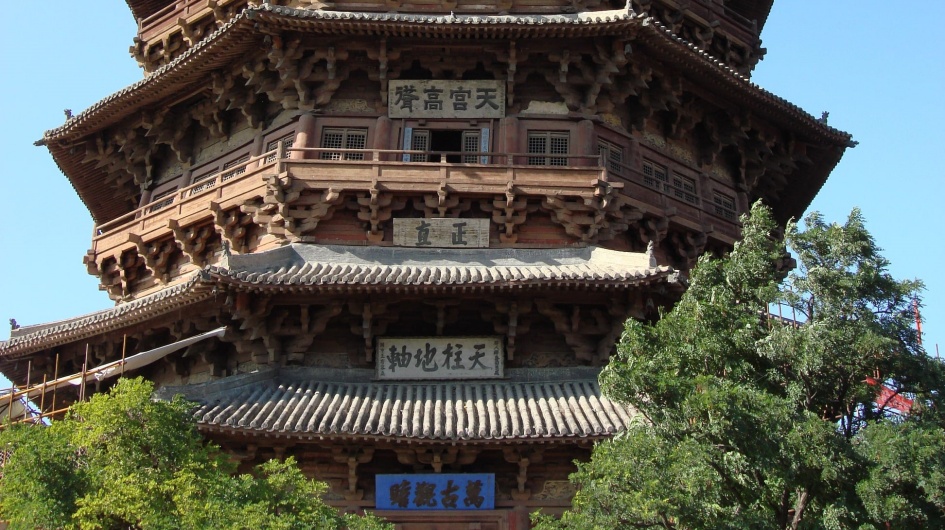 Yingxian Wooden Pagoda
Visiting the Hanging Templein the afternoon. It was first built in the 15th year of the Taihe era of the Northern Wei Dynasty (491 AD) and has stood for over 1,500 years. Its way of building is very unique: first, craftsmen dug deep holes in the steep cliff. Then they put strong, long-lasting Chinese larch beams—soaked in tung oil—deep into these holes. Wood wedges expand when wet, and craftsmen used this to fix the beams tightly, like modern expansion bolts. This is the temple's main part that holds its weight. As night falls and you return to Datong, you can admire the Datong Ancient City Wall regaining vitality under the carved light. Warm yellow and orange-red light spreads along the 14-meter-high wall, clearly outlining the wall's simple and solid outline. The 7.2-kilometer-long wall is like a golden dragon, quietly coiling around and guarding the ancient city.
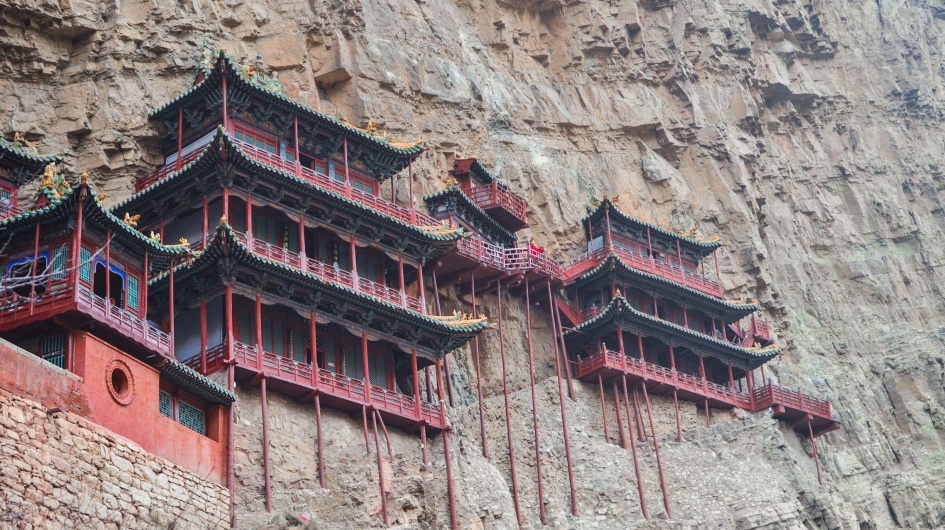 Hanging Temple
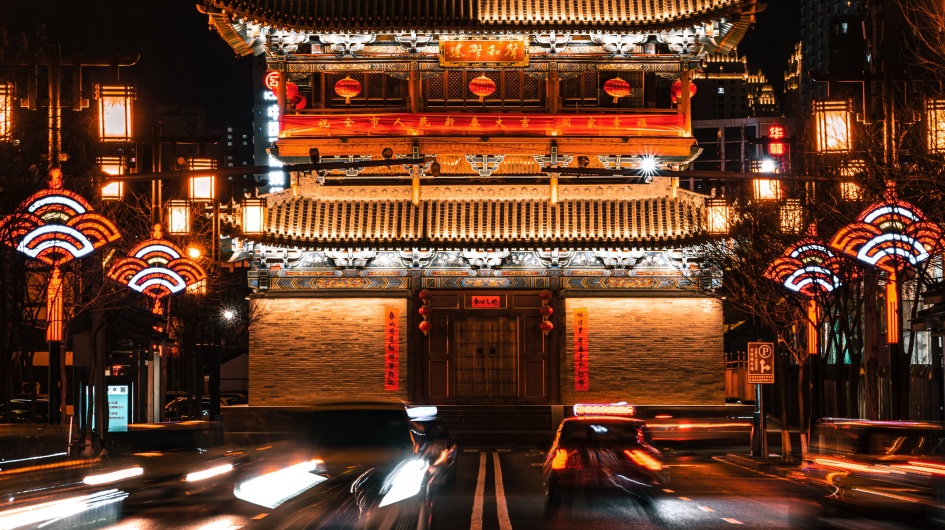 The night view of Datong
Your Journey's Rewards:
Marvel at the genius of ancient Chinese carpentry. Admire the harmonious blend of three religions. Feel the power of history and engineering.
Educational Focus:
What structural design methods did ancient Chinese builders use for the Yingxian Wooden Pagoda and Hanging Temple to ensure the structures stayed stable long-term without modern materials?
Takeaway:
Ancient Chinese builders used mortise-and-tenon joints for flexible connections to spread seismic stress when they built the Yingxian Wooden Pagoda. They also used layered independent frames to make shock absorption better. For the Hanging Temple, they put ironwood beams into the cliff holes drilled beforehand. They used wood's property of swelling when wet to fix the beams, and adjusted the building's center of gravity to keep balance. At the same time, both structures used wood's natural properties well and fit the environment to reduce erosion. This helped them stay stable for a long time without modern materials.
Thought Challenge:
Ancient builders achieved so much with limited technology. What lessons might their problem-solving methods offer for sustainable architecture in today's climate crisis?
In the morning, we will go to appreciate the grotto art of Yungang Grottoes. Located at the southern foot of Wuzhou Mountain, about 16 kilometers west of Datong City, Shanxi Province, it has a history of over 1,500 years. Yungang Grottoes is an important milestone in the development of Chinese Buddhist art. It vividly records the evolution of Buddhist art from India and Central Asia to Chinese Buddhist art, and witnesses the gradual secularization and nationalization of Buddhist statues in China. As a treasure trove of ancient Chinese carving art and a world-famous stone carving art palace, it is known together with the Mogao Grottoes in Dunhuang, Gansu Province and the Longmen Grottoes in Henan Province as the "Three Major Grotto Groups in China" and holds an important position in the world cultural heritage.
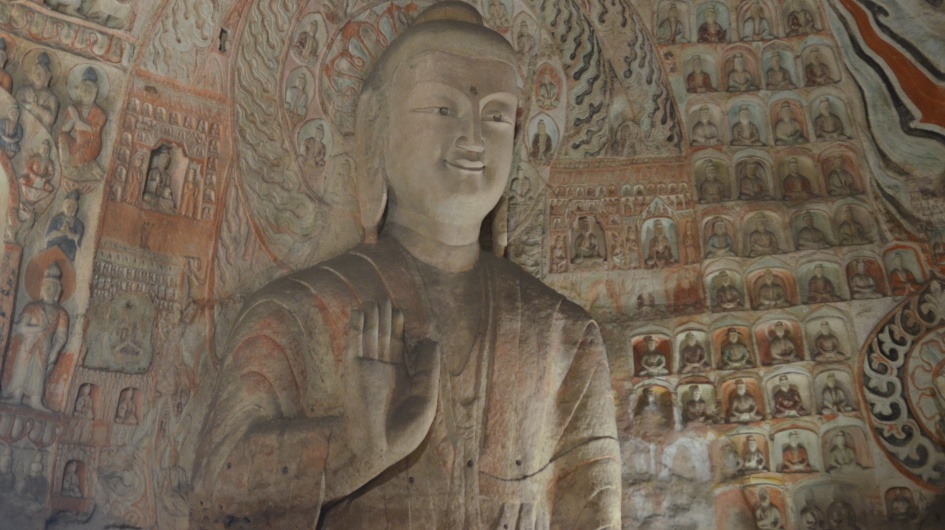 Yungang Grottoes
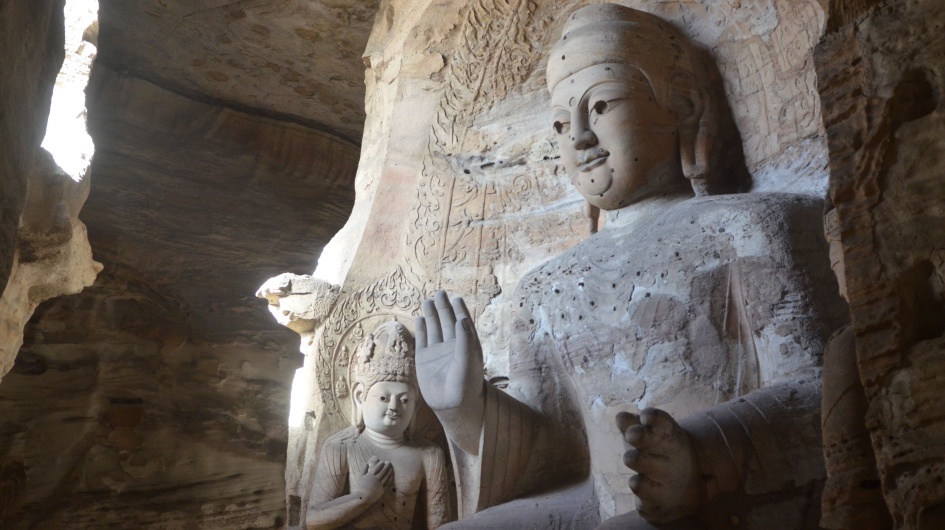 Yungang Grottoes
In the afternoon, take a high-speed train to Taiyuan and stay there overnight. During the journey, you can enjoy the scenery along the way, and the tour guide will explain Taiyuan's historical background and its folk culture characteristics, helping you gain a deeper understanding of the upcoming trip in Taiyuan.
Your Journey's Rewards:
Admire the time-honored stone carving art of Yungang Grottoes. Understand its role as a milestone in Chinese Buddhist art. Learn about the "Three Great Grottoes" of China. Enjoy the scenery en route to Taiyuan. Grasp Taiyuan's history and folk culture.
Educational Focus:
Buddhist art at Yungang Grottoes changed—first it mixed Indian and Central Asian styles, then became localized. How does this change show how Buddhism spread and adjusted in ancient China? And what effects has this localized Buddhist art had on the development of traditional Chinese culture?
Takeaway:
Yungang Grottoes has a history of over 1,500 years. It records how Buddhist art changed: first, it took in Indian and Central Asian art features, then slowly mixed with local culture to create a special Chinese Buddhist art style. This change shows how Buddhism adjusted in China—it fit local cultural conditions to be more widely accepted, which was key to its spread. As one of China's "Three Great Grottoes," its stone carvings not only make traditional Chinese sculpture art richer but also help combine Buddhist ideas with Chinese cultural elements. They become a cultural link between foreign and local civilizations and deeply affect the development of Chinese art, ideology and social culture.
Thought Challenge:
Buddhist art at Yungang Grottoes became localized because of cultural adaptation. So when we have cross-cultural exchanges today, how can we keep the original core of foreign cultures while fitting them into local situations?
In the morning, visit Jinci Temple first. Located in Jinci Town, Jinyuan District, Taiyuan City, Shanxi Province, it is China's earliest surviving royal sacrificial garden with profound historical heritage. Jinci Temple has unique and diverse architectural styles, with a complete chronological sequence, making it a vivid "history book of architecture". The world-rare cross-shaped ancient bridge, Yuzhao Feiliang, connects the four banks of the pond. Shaped like a bird spreading its wings to fly, it is the only existing example of ancient cross-shaped bridge architecture. Besides, Jinci Temple's carving art is equally amazing. The 43 colored clay sculptures of the Song Dynasty in the Shengmu Hall are life-sized, with natural postures and bright costumes.
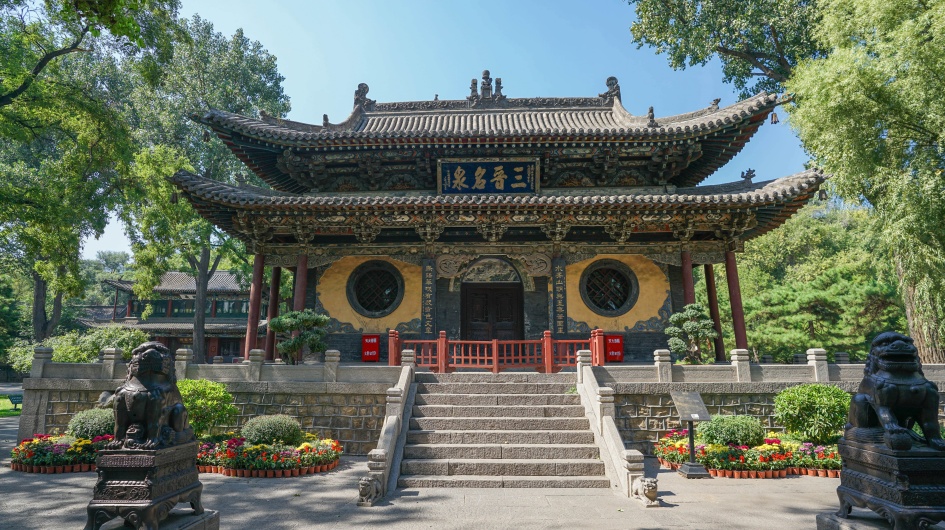 Jinci Temple
In the afternoon, head to Donghu Vinegar Garden. Located in Taiyuan, it is an excellent window to learn about Shanxi vinegar culture and has a long history. Its predecessor was "Meiheju Vinegar Workshop", which pioneered the "fumigation method" and the aging process of "sun-drying in summer and ice-fishing in winter". It improved the five-step vinegar-making process of "steaming, fermenting, fumigating, straining and aging", turning Shanxi vinegar into a unique flavor of "mellow, sour, fragrant, sweet and fresh" and becoming the founder of Shanxi aged vinegar. Here, you can see the most complete brewing technique of Shanxi aged vinegar. You can also experience making vinegar handmade soap and vinegar-flavored chocolate by yourself, or try vinegar-flavored ice cream, which brings you a unique double experience of taste and smell.
Your Journey's Rewards:
Admire Jinci Temple's ancient royal garden architecture and rare cross-shaped bridge. Appreciate lifelike Song Dynasty colored clay sculptures. Learn about Shanxi vinegar culture and its long history. Watch complete aged vinegar brewing techniques. Make vinegar soap, taste vinegar chocolate and ice cream.
Educational Focus:
How do the architectural layout (such as Yuzhao Feiliang) and sculptural art (like the colored clay sculptures in Shengmu Hall) of Jinci Temple reflect the integration of ritual culture, architectural technology and aesthetic concepts in ancient China?
Takeaway:
Jinci Temple, as China's earliest surviving royal sacrificial garden, integrates multiple cultural elements through its architecture and sculpture. Its Yuzhao Feiliang, a rare cross-shaped ancient bridge, breaks traditional linear bridge forms, showing ancient Chinese architects' innovative thinking in structural design and adaptation to spatial functions, which is a physical evidence of the development of ancient bridge-building technology. The 43 Song Dynasty colored clay sculptures in Shengmu Hall, with life-like shapes and vivid postures, not only embody the mature sculptural skills of the Song Dynasty but also reflect the ritual system and social life of the time—each sculpture's costume, expression and posture correspond to its symbolic identity, making the sculptures a carrier of ritual culture. Together, these elements show the organic integration of ritual needs, technological innovation and aesthetic pursuit in ancient Chinese garden architecture.
Thought Challenge:
Modern conservation and ancient architectural heritage come together. At places like Jinci Temple, how should we balance keeping original materials and meeting the need to keep cultural practices alive?
You'll take the morning high-speed train to Pingyao, an ancient county that has deep historical heritage and lots of cultural resources. Your guide will explain Pingyao's historical background and unique folk culture in detail during the trip, so you'll have a more helpful travel experience.
After arriving in Pingyao, you will first check into the hotel for a short rest. After lunch, you will set off to visit Rishengchang Draft Bank in Pingyao Ancient City. Founded in 1824, it was China's first private financial institution specializing in deposits, loans and remittance services, and is known as the "country grandfather" of China's modern banks. Next, you will visit the China Escort Agency Museum, which is currently the largest museum in China that fully showcases the history and culture of escort agencies, with 10 exhibition halls. Through detailed and abundant physical materials, the museum comprehensively tells the historical facts about the emergence, operation management and organizational operation of the special industry of escort agencies. In the evening, you will watch the show Encore Pingyao. It is China's first "walking-style" live-action performance. Audiences need to walk through themed spaces of different scenarios, such as escort agencies, markets and the Zhao Family Courtyard, within 90 minutes, as if traveling back to Pingyao in the late Qing Dynasty and becoming a part of history.
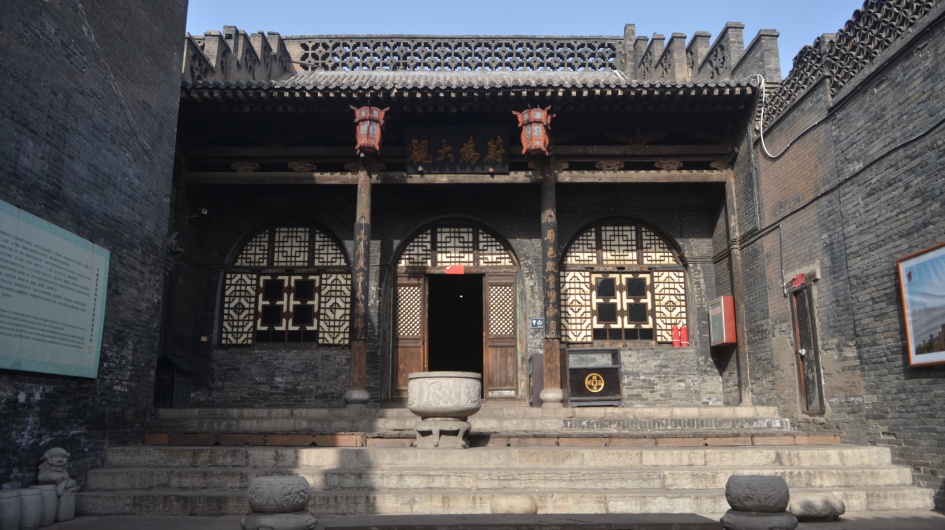 The room where Rishengchang Draft Bamk entertains guests.
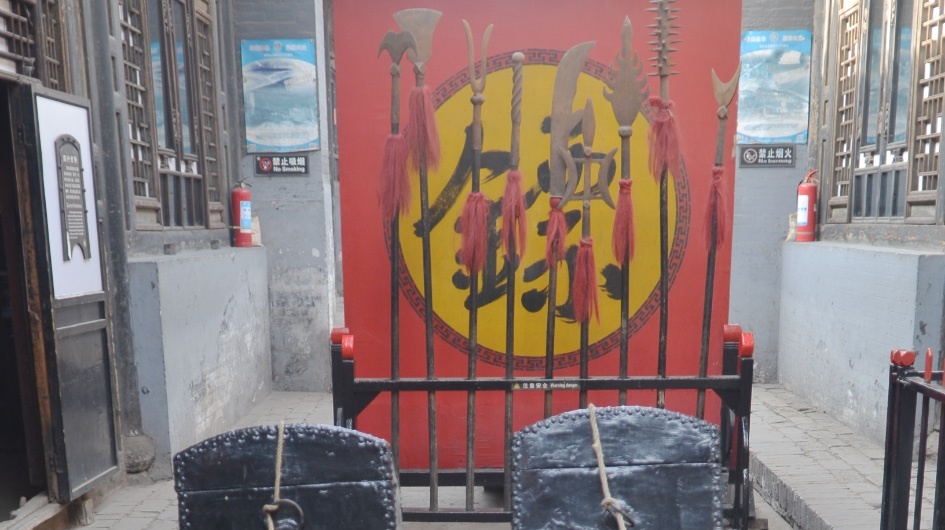 The weapons of ancient bodyguards.
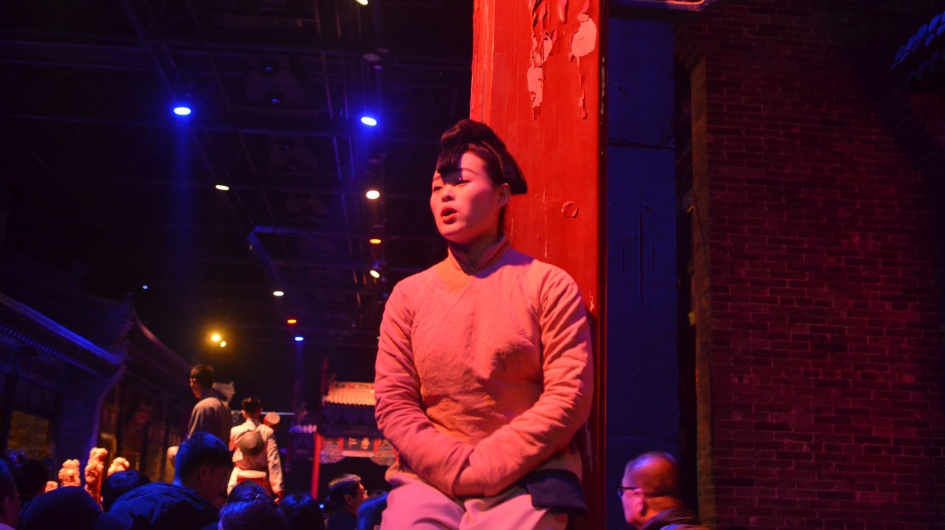 Actress performing next to the audience in the Encore Pingyao Show.
Your Journey's Rewards:
Take a high-speed train to experience a historic county; get draft bank's history and folk culture explained by guides; visit Rishengchang to learn ancient financial wisdom; explore the Escort Agency Museum to know about escort history; watch live-action shows to feel Pingyao in the late Qing Dynasty.
Educational Focus:
To support its "connecting the whole country through remittance" business and become a model for China's ancient financial industry, what new financial systems and management ways did Rishengchang Draft Bank create?
Takeaway:
Rishengchang Draft Bank made new financial systems that changed China's banking sector. It created specialized remittance services—these took the place of high-risk silver transportation by armed escorts, cutting operational costs and security risks a lot. The new "Investor-Manager Partnership System" set clear responsibilities between capital providers (Dongjia) and professional operators (Zhanggui), and this built modern corporate governance rules. Strict anti-fraud steps were used, like watermarked bills, proprietary seals and standardized weighting systems, to make sure transactions were safe. These institutional innovations helped it expand branch networks nationwide and internationally, turning Rishengchang into an iconic example of China's own financial cleverness in the Qing dynasty.
Thought Challenge:
Suppose we apply Rishengchang Draft Bank's financial innovation and risk control ideas to modern small and medium-sized financial institutions. What adjustments are needed to fit the current digital financial environment and regulatory requirements?
In the morning, we visited the Wang Family Compound. It is an excellent example of grand houses. Shanxi merchants built these houses in the Qing Dynasty. People know it as the "Folk Forbidden City." It covers 250,000 square meters in total. It is large. It has a nice layout. Two major architectural complexes are Gaojiaya and Hongmenbao. They make up the compound's core. Inside the compound are the "Three Carvings." They are wood, brick and stone carvings. These carvings are really great. The wood carving is "Golden Pheasant and Magnolia." It stands for wealth and nobility. The brick carving is "Five Blessings Surrounding Longevity." It brings good luck. The stone carving is "Generations of Nobility." It has clever hidden meanings. Every detail mixes craftsmanship and culture. It shows Shanxi merchants' wealth. It shows their strength too. It carries traditional clans' ideas. These ideas are for managing a family. You may want to experience Qing Dynasty architectural art. You may want to experience Shanxi merchant culture too. This place is a must-visit.
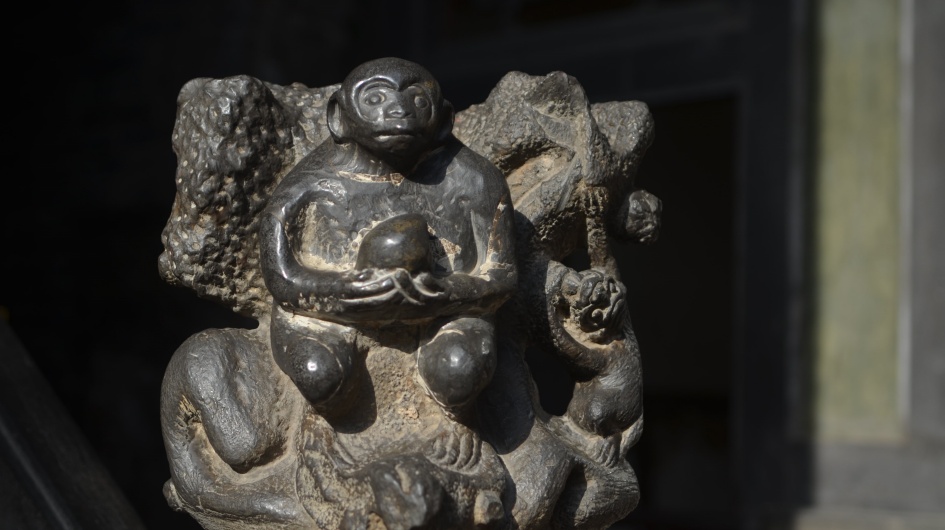 The stone carving of monkeys holding peaches at the Wang Family Compound.
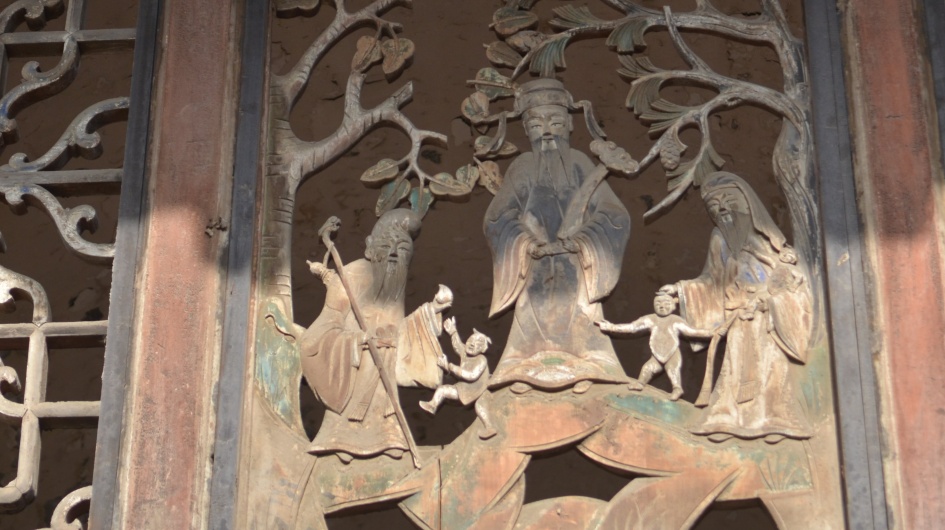 The exquisite carvings of figures on the wooden windows of the Wang Family Compound.
We'll visit Zhangbi Ancient Castle in the afternoon. Zhangbi Ancient Castle covers 0.12 square kilometers. It was built more than 1,600 years ago, during the Northern Dynasties. It sits on land with a good strategic position. It slopes from south to north, and steep cliffs surround it on three sides. The castle has ancient underground tunnels. These tunnels stretch 10 kilometers and have three levels. They also have a good defense system. We'll experience Shanxi's folk culture here. You can make a cloth tiger, or you can try paper-cutting. The cloth tiger is a traditional handicraft. It's made from yellow or red fabric. It symbolizes being healthy and strong, just like a tiger.
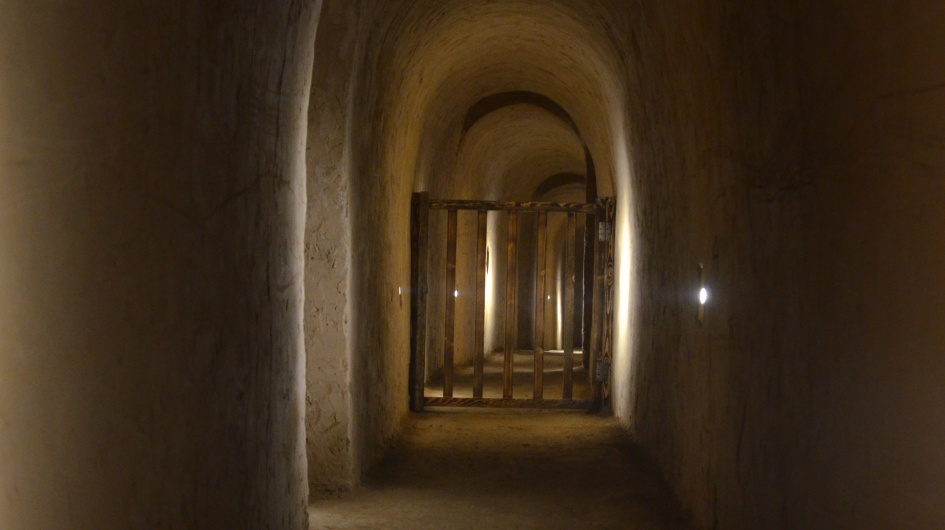 Zhangbi Ancient Castle's tunnel.
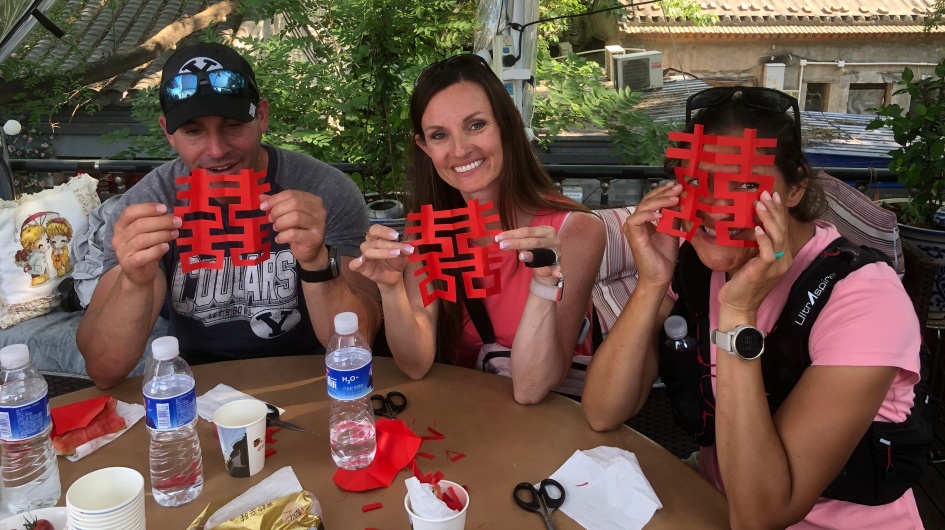 Paper-cutting
Your Journey's Rewards:
Explore Zhangbi Castle's ancient tunnels; see the grand buildings of Wang Family Compound; enjoy the nice "three carvings" art; try Shanxi folk crafts such as making cloth tigers and doing paper cutting.
Educational Focus:
How do the architectural layout and "three carvings" art of Wang Family Compound reflect the social status, business concepts and family ethics of Jin merchants in the Qing Dynasty?
Takeaway:
The architectural layout of the Wang Family Compound takes Gaojiaya and Hongmen Fortress as the core, follows the feudal hierarchy, and reflects the strict social order recognized by Shanxi merchants. The "Three Carvings" art, such as the woodcarving "Golden Rooster Magnolia" symbolizing wealth and nobility, the brick carving "Five Blessings holds longevity" conveying auspicious meaning, and the stone carving "Hou Feng for generations" implying family prosperity, integrates technology and culture. These elements not only show the economic strength accumulated by Shanxi merchants through commercial operation, but also reflect their family management concept of attaching importance to hierarchical order, pursuing auspicious meanings and inheriting family glory, which is the concrete embodiment of the combination of material wealth and spiritual culture of Shanxi merchants in the Qing Dynasty.
Thought Challenge:
How do the gaps and connections between the Qing Dynasty, Shanxi merchants' value expression via architecture and crafts and modern traditional culture inheritance look? And how can we better balance heritage and innovation today?
On the journey's last day, you can rest well to digest this trip's rich knowledge and beautiful scenery, then pack your bags and take the booked flight or high-speed train back.
This tour is suitable for: School, Family, Team Building, Adoptive Family
What's Included
- Air-conditioned vehicles
- Carefully selected comfortable accommodations
- All mentioned activities and entry fees included
- Daily breakfast and dinner provided
- Accompanied by expert local guides
- Accidental injury insurance fee
Recommended Hotel
| City | Deluxe | Comfortable |
|---|---|---|
| Datong | Datong Yungang Hotel | Jianguo Hidden Hotel |
| Taiyuan | Intercontinental Taiyuan Hotel | Sunworld Hotel Beijing |
| Pingyao | Pingyao Yunjincheng Mansion | Shanxi Grand Hotel |
Wechat & WhatsApp: +86-13471279378