- Home
- City Tours
- Guizhou Tours
- Guizhou Bridge Educational Tour
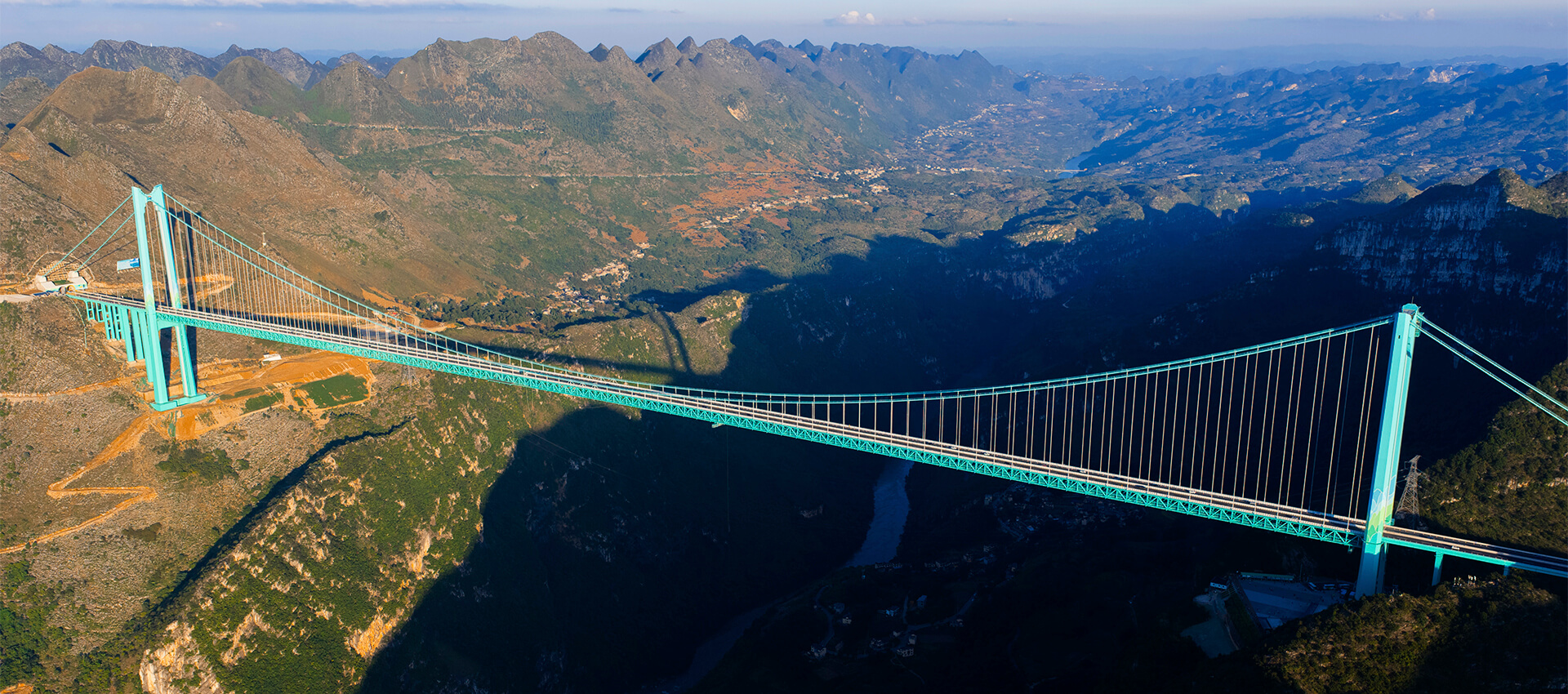
8-Day Guizhou Bridge Educational Tour
Guizhou, known as China's "Museum of Bridges", is home to some of the world's most remarkable bridge projects. This 8-day Guizhou Bridge Educational Tour takes you to explore iconic bridges such as Yachi River Bridge, Baling River Bridge, Huajiang Canyon Bridge, Beipanjiang Bridge and Pingtang Bridge, while discovering spectacular karst landscapes including Zhijin Cave, Huangguoshu Waterfall, Wanfenglin and Xiaoqikong. You will also visit China's FAST and the astronomy museum, making this journey a unique combination of engineering, nature and science.
Combining education, exploration and cultural discovery, this journey features a variety of on-site visits and interactive learning experiences. The itinerary can be flexibly adapted to different group interests and educational objectives, allowing participants to gain knowledge, broaden their horizons and create unforgettable memories.
Itinerary at a Glance
| Day | Location | Highlights |
|---|---|---|
| D1 | Guiyang | Check in hotel; visit Jiaxiu Tower; enjoy ethnic song and dance show Colorful Guizhou Style |
| D2 | Zhijin | Explore Zhijin Cave and Wujiang Hundred-Li Gallery; view Yachi River Bridge and learn about cable-stayed bridge structures |
| D3 | Huangguoshu | Visit Huangguoshu Waterfall and Tianxing Bridge Scenic Area; observe diverse karst landforms |
| D4 | Xingyi | Tour Baling River Bridge and Huajiang Canyon Bridge; visit Guizhou Bridge Museum and join bridge model assembly; boat along Little Huajiang River |
| D5 | Xingyi | Visit Wanfenglin and Maling River Gorge; learn about canyon landforms and eco-friendly bridge construction |
| D6 | Pingtang | View Beipanjiang Bridge; visit FAST and astronomy museum to learn astronomy knowledge |
| D7 | Libo | View Pingtang Bridge; tour Xiaoqikong Scenic Area |
| D8 | Libo → Guiyang | Drive back to Guiyang; transfer to airport or railway station; tour ends |
Trip Highlights
- Explore world-class bridges including Yachi River Bridge, Baling River Bridge and Huajiang Canyon Bridge
- Admire stunning karst scenery at Zhijin Cave, and Wujiang Hundred-Li Gallery
- Visit the bridge museum and join bridge model assembly activities
- Visit China's FAST and the astronomy museum to discover cosmic mysteries
Tour Essentials

Quality
No Shopping Traps

Group Type
Private

Tour Focus
Bridge, Sightseeing

Accommodation
Nights:7

Best Season
Spring, Summer, Autumn, Winter
Full itinerary for 8-Day Guizhou Bridge Educational Tour
Arrive in Guiyang. Escorted by your tour guide and driver, check in at the hotel. Afterwards, visit Jiaxiu Tower, a landmark of Guiyang. First built in the Ming Dynasty, this ancient architecture spans the Nanming River and is a fine example of traditional Chinese structure combining a bridge and a tower. When illuminated at night, the tower casts beautiful reflections on the water, ideal for photography.
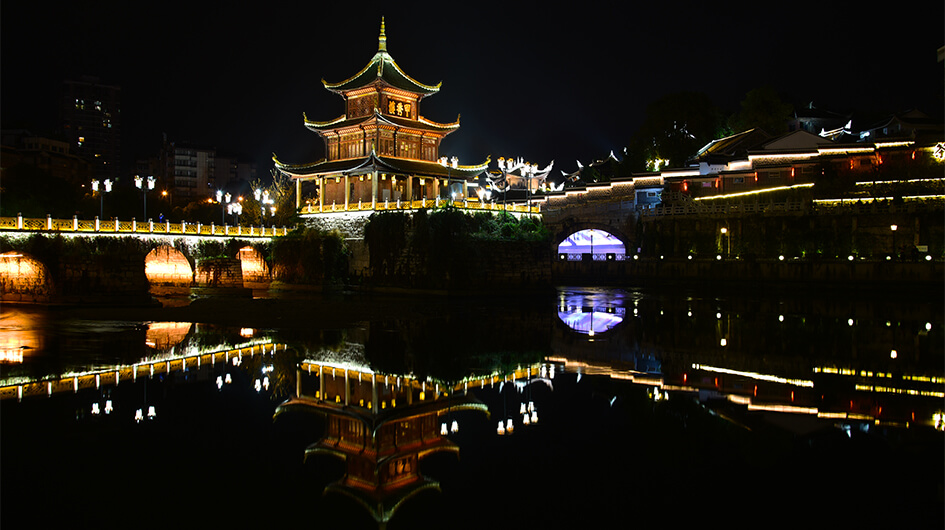 Jiaxiu Tower
Later, enjoy the grand ethnic song and dance show Colorful Guizhou Style. The performance features songs, dances and intangible cultural heritage of the Miao, Dong, Shui and other ethnic groups, offering you an in-depth look at Guizhou’s diverse ethnic cultures.
Your Journey’s Rewards:
Explore Jiaxiu Tower and admire the architectural structures and details of towers from the Ming and Qing dynasties. Watch Colorful Guizhou Style to learn about the songs, costumes and folk customs of ethnic minorities in Guizhou.
Educational Focus:
What significant impacts have the numerous bridges built in Guizhou brought about?
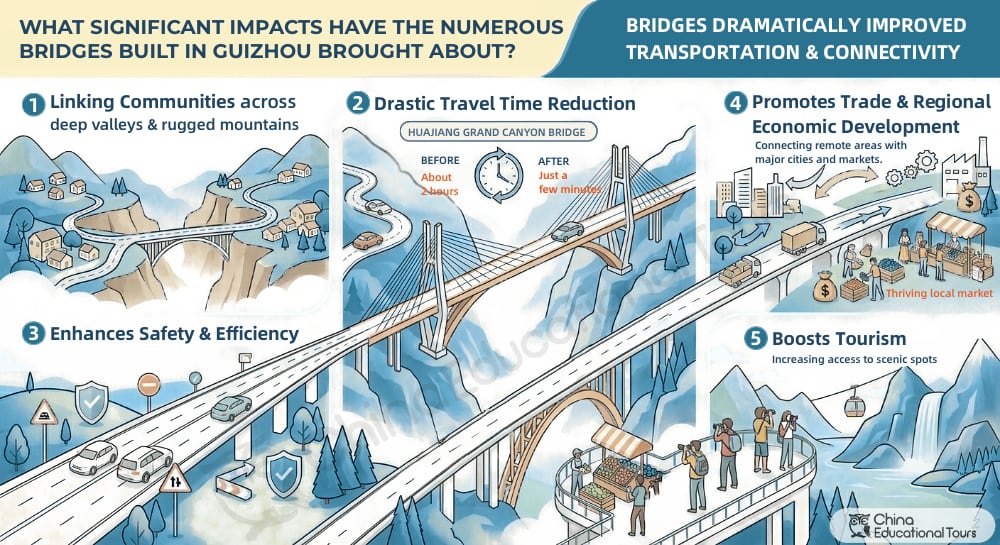
Takeaway:
Bridge construction has dramatically improved transportation and connectivity in Guizhou. Many communities that were once separated by deep valleys and rugged mountains are now linked by modern highways and bridges. For example, the Huajiang Grand Canyon Bridge has reduced travel time across the canyon from about two hours to just a few minutes. These engineering achievements not only make travel safer and more efficient but also promote trade, tourism and regional economic development by connecting remote areas with major cities and markets.
Thought Challenge:
While bridges in mountainous areas improve transportation, what potential environmental impacts may they cause? How can we strike a balance between infrastructure development and ecological protection?
After breakfast, head to Zhijin. First, visit Zhijin Cave, known as "the King of Chinese Caves" and an underground art palace. Marvel at the spectacular stalactites, underground valleys and stalagmites inside. With the guide's explanation, learn about the formation of Guizhou's karst landforms.
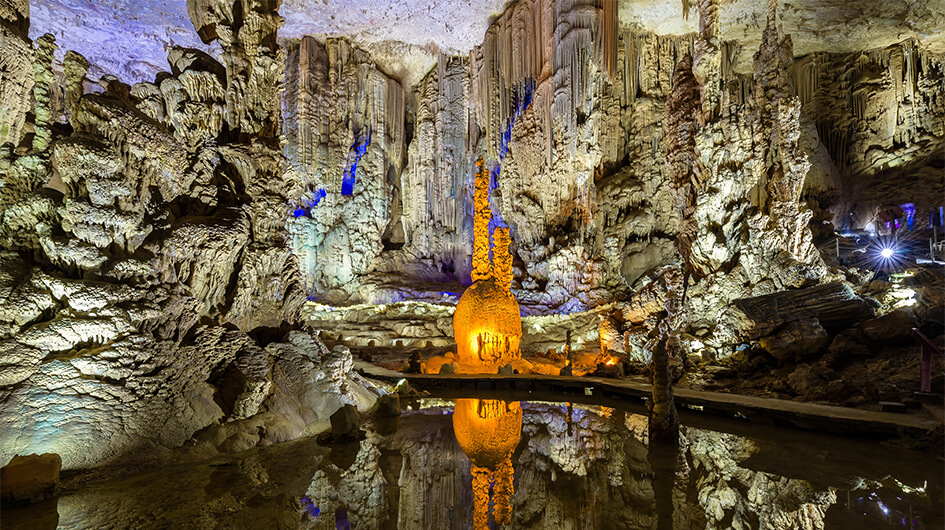 Stalactite Scenery in Zhijin Cave
Next, head to Wujiang Hundred-Li Gallery to admire the stunning natural scenery of canyons, rivers and towering mountains. Along the way, you can view Yachi River Bridge, a world-class bridge project spanning a deep valley. Famous for its two 258-meter-high bridge towers and an 800-meter main span, the Yachi River Bridge showcases Guizhou's advanced expertise in building cable-stayed bridges across deep mountain valleys. Combined with the surrounding terrain and professional interpretation, you will learn about the structural characteristics of cable-stayed bridges.
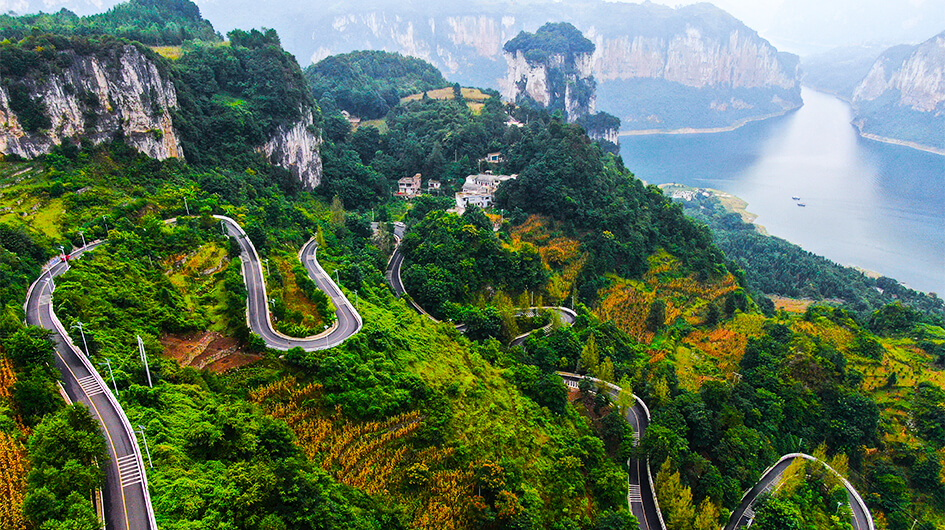 Wujiang Hundred-Li Gallery
Your Journey’s Rewards:
Admire the fantastic landscapes of karst caves in Zhijin Cave; cruise along Wujiang Hundred-Li Gallery to enjoy the canyon scenery; observe Yachi River Bridge from afar and get to know the structure of cable-stayed bridge.
Educational Focus:
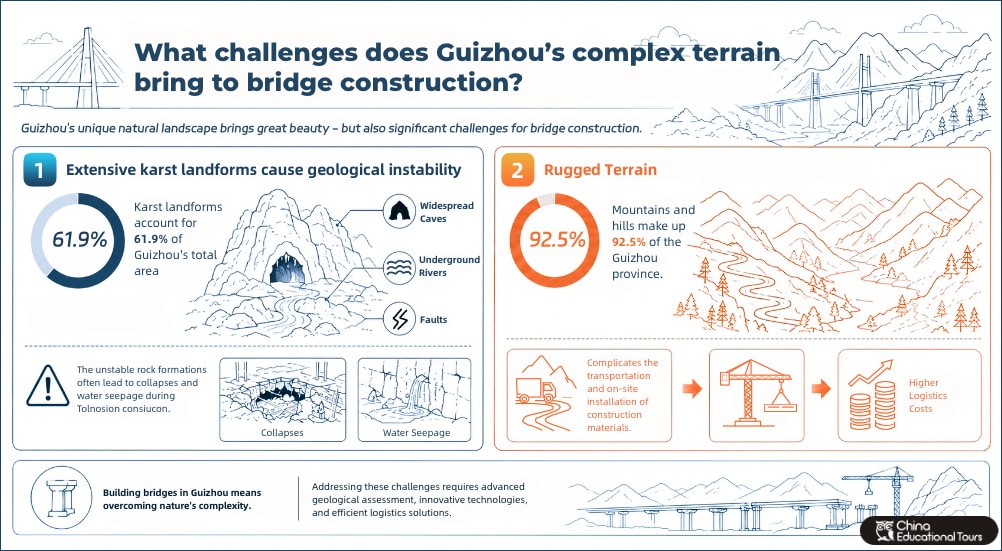
What challenges does Guizhou’s complex terrain bring to bridge construction?
Takeaway:
Karst landforms account for 61.9% of Guizhou's total area, featuring widespread caves, underground rivers and faults. The unstable rock formations often lead to collapses and water seepage during foundation construction. Mountains and hills make up 92.5% of the province. The rugged terrain complicates material transportation and installation, resulting in higher logistics costs.
Thought Challenge:
Given the fragile environment of karst mountain regions, how can engineers balance bridge construction, safety requirements and ecological conservation?
Today, we will go to Huangguoshu Scenic Area. Visit Huangguoshu Waterfall, one of Asia’s most renowned waterfalls. Get up close to witness the magnificent cascading waters, and walk through the Water Curtain Cave to experience the stunning scenery from inside the waterfall.
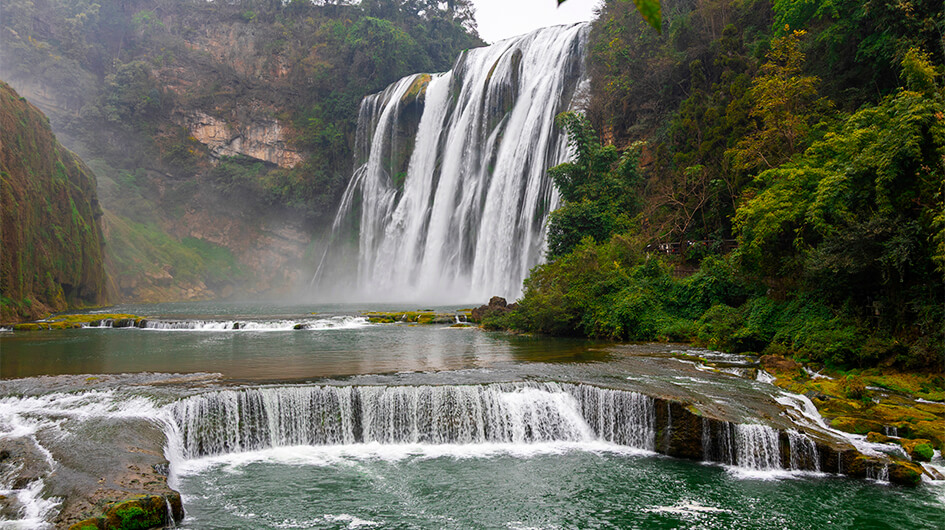 Huangguoshu Scenic Area
Afterwards, explore Tianxing Bridge Scenic Area. It features a combination of stone forests, caves, canyons and natural stone bridges, presenting a typical integrated karst landscape. Along the way, observe natural stone bridges, underground rivers and karst landforms to deepen your understanding of Guizhou’s complex terrain.
Your Journey’s Rewards:
Tour Huangguoshu Waterfall and Tianxing Bridge Scenic Area, and appreciate the grand waterfall as well as the harmonious view of karst rocks and waters.
Educational Focus:
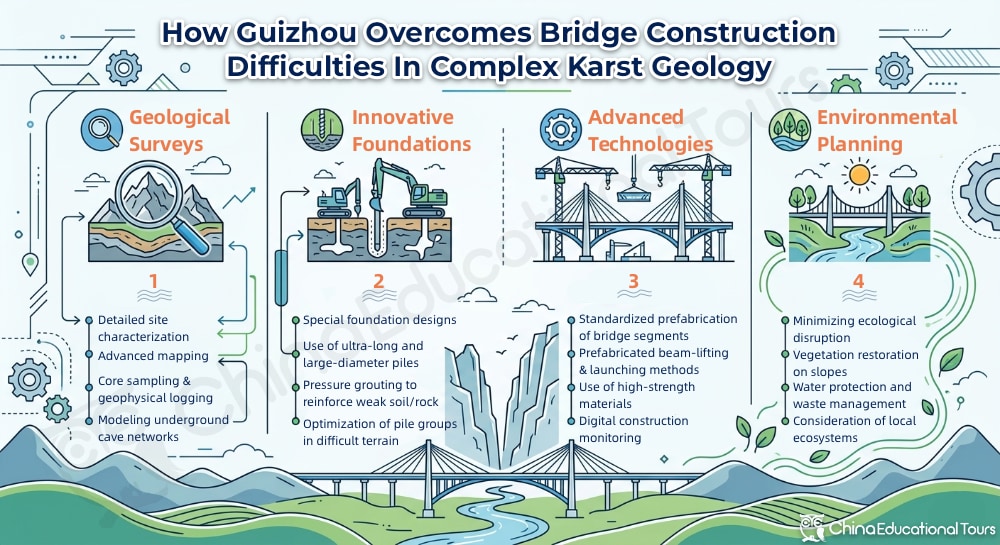
How does Guizhou overcome construction difficulties when building bridges amid complex karst geological conditions?
Takeaway:
Engineers overcome these difficulties through detailed geological surveys, innovative foundation designs, advanced construction technologies and careful environmental planning.
Thought Challenge:
Given the local terrain of numerous canyons and dense water systems, what conveniences does bridge construction bring to the development of scenic spots?
Set off for Xingyi in the morning. Visit Baling River Bridge, the world's first mountainous kilometer-class steel truss suspension bridge. Walk onto the bridge to experience the "walk among clouds" at a height of 370 meters. Overlook the magnificent canyon views, admire the marvel of bridge engineering, and learn how this structure spans rugged terrain and connects mountain traffic.
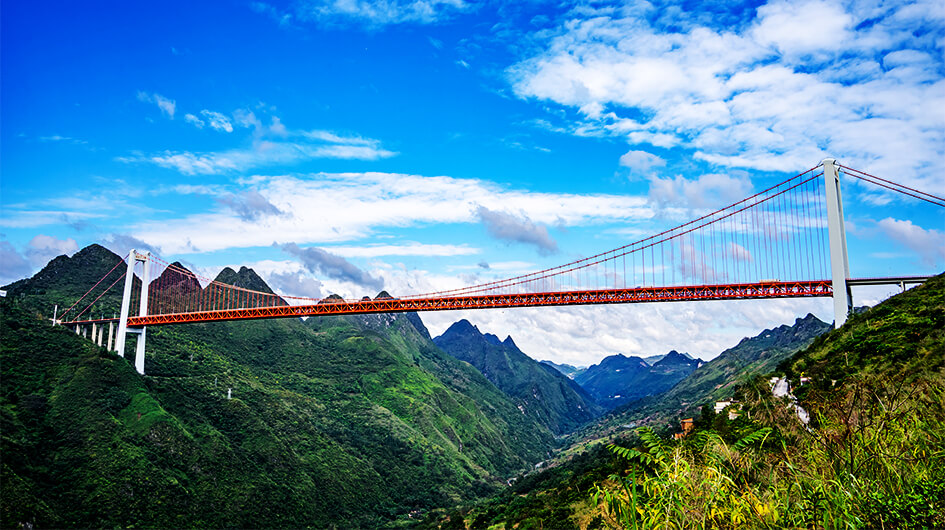 Baling River Bridge: Mountain Steel Truss Suspension Bridge
Next, arrive at Guizhou Bridge Museum. It displays a wealth of real bridge projects, scale models and construction videos, presenting the whole development process of Guizhou bridges from design and construction to maintenance. Professional guides in the museum will share knowledge about bridges. You will also join a bridge model building activity. Assemble bridge structures and perform load tests by yourself to learn about structural stability and engineering design principles.
Later, head to Huajiang Canyon Bridge. With a deck height of over 600 meters above the river and a main span of 1,420 meters, it represents one of the most ambitious bridge projects ever built in mountainous terrain. Then take a boat tour along the Little Huajiang River. View the full bridge from the canyon water and observe how the structure blends with the canyon landscape from a new perspective.
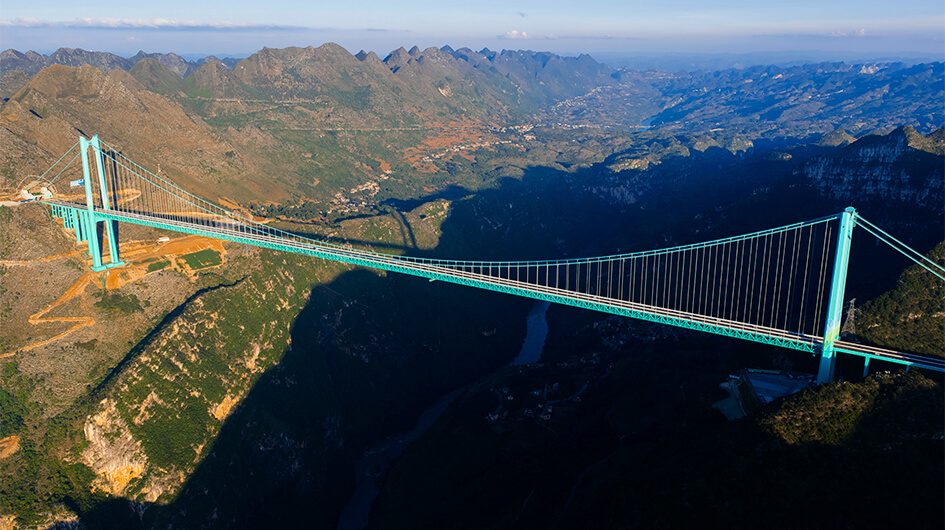 Huajiang Canyon Bridge: Large-Span Steel Truss Suspension Bridge
Your Journey’s Rewards:
Visit Baling River Bridge and Huajiang Canyon Bridge to learn about suspension bridge structures on site. Gain in-depth knowledge of bridge construction at the bridge museum.
Educational Focus:
Both Baling River Bridge and Huajiang Canyon Bridge are steel truss suspension bridges. How does this structure ensure bridge stability?
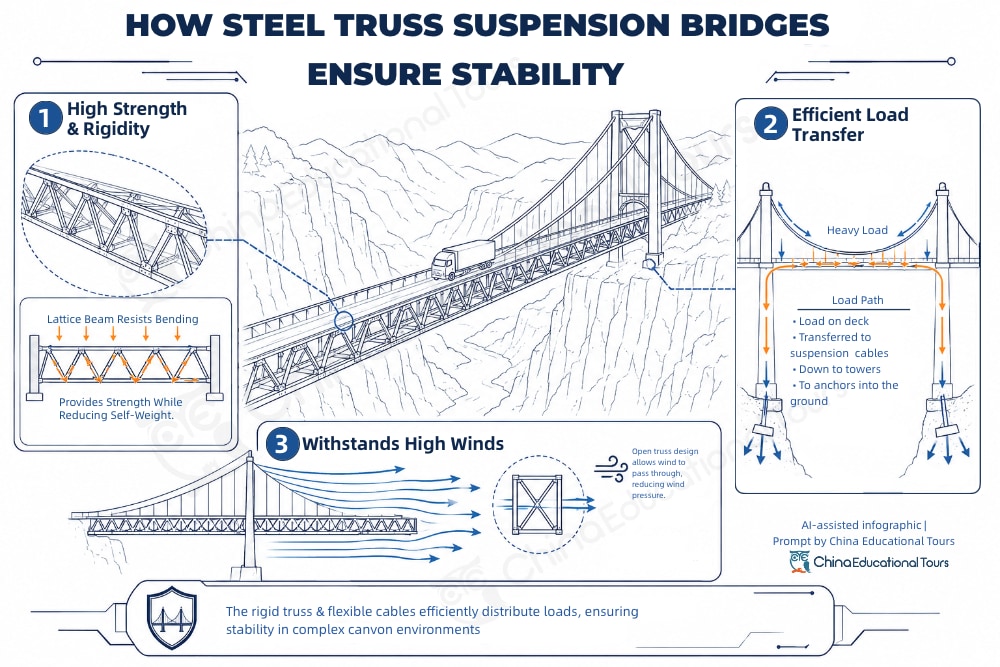
Takeaway:
Steel trusses provide high strength and rigidity while reducing the bridge's self-weight. Combined with the suspension system, they efficiently distribute loads and help the bridge withstand strong winds and complex environmental conditions in deep mountain canyons.
Thought Challenge:
As bridge projects have become local featured resources, how to integrate bridge sightseeing with traditional tourism for further development?
After breakfast, head to Wanfenglin Scenic Area. Dominated by karst peak forest landforms, the area features rolling conical peaks that blend with farmlands, villages and rivers, forming a distinctive mountain landscape. Afterwards, proceed to Maling River Gorge, known as "a beautiful scar on the earth". You will be amazed by the spectacular deep valleys, clusters of waterfalls and ground fissures.
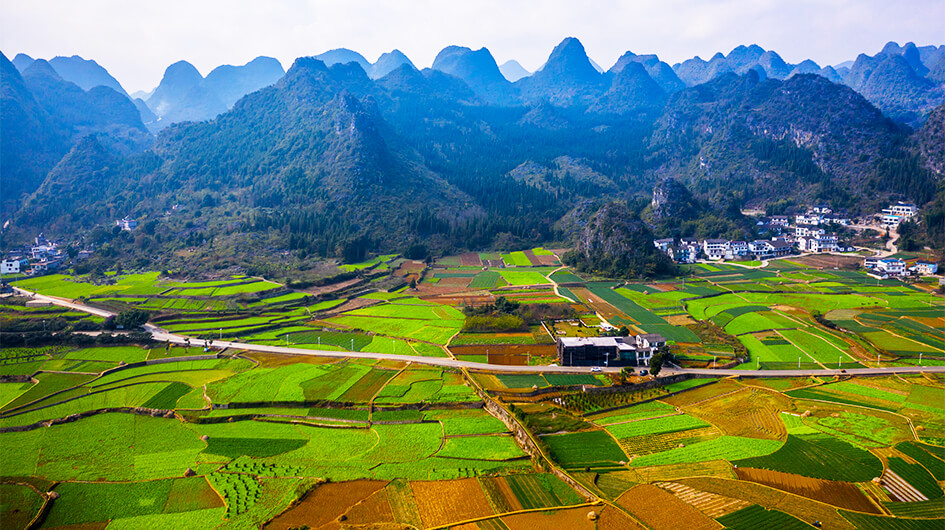 Wanfenglin Scenic Area
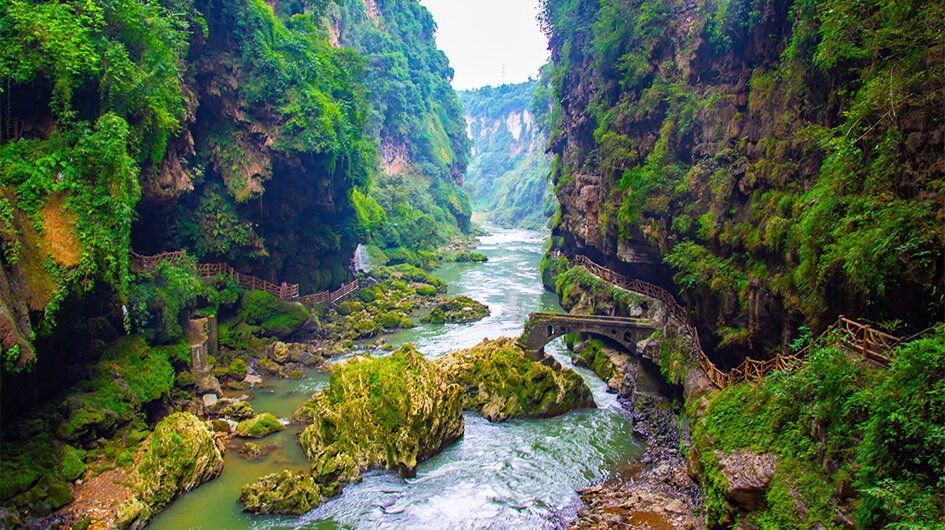 Maling River Gorge
Your Journey’s Rewards:
Visit Wanfenglin and Maling River Gorge. Observe canyon landforms shaped by river erosion, as well as features of waterfalls, underground water systems and rock strata up close.
Educational Focus:
How to implement eco-friendly concepts in bridge construction?
Takeaway:
Modern bridge projects increasingly adopt environmentally friendly materials and construction methods. For example, manufactured sand can reduce dependence on river sand extraction, while recycling construction materials helps minimize waste and environmental impacts.
Thought Challenge:
What impacts do the properties of bridge materials have on operational safety?
Your driver and tour guide will pick you up at the hotel in the morning for the trip to China's FAST. On the way, you will see the Beipanjiang Bridge, the world's highest bridge. Its deck stands 565.4 meters above the river surface, equivalent to the height of a 200-storey building, presenting a breathtaking grand view.
In the afternoon, arrive at the FAST Scenic Area. Head to the viewing platform to admire the world's largest single-aperture radio telescope with a 500-meter diameter. Listen to the guide introduce its construction background, working principles and great significance for deep space research.
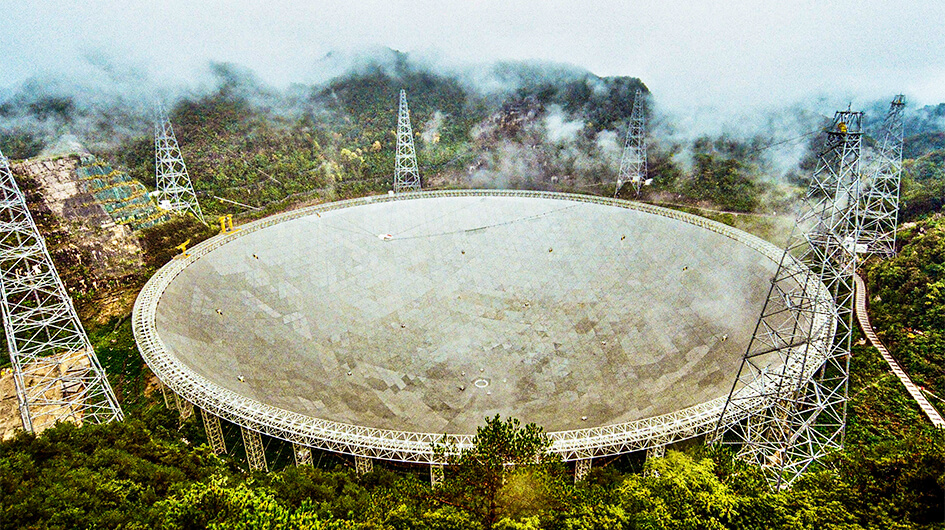 FAST – World’s Largest Single-Dish Radio Telescope
After the FAST visit, proceed to the astronomy museum. It houses a wide range of popular science exhibitions, including solar system models, the history of space exploration and the operating mechanism of FAST. You can use the intelligent audio guide to learn astronomy knowledge and explore the mysteries of the universe.
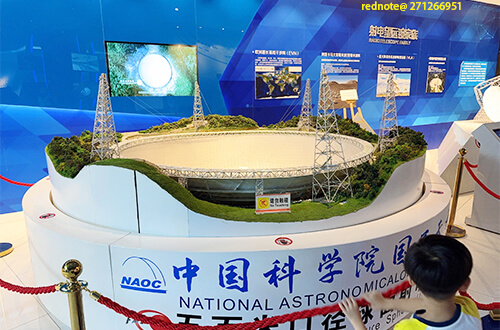 Study the structural design of FAST Telescope
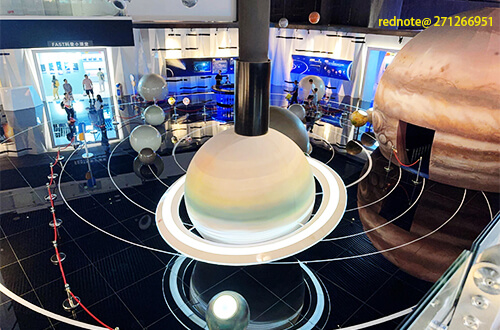 Learn about the Solar System and cosmic evolution
Your Journey’s Rewards:
View the world-famous Beipanjiang Bridge from afar; visit FAST and the astronomy museum to learn astronomical knowledge.
Educational Focus:
How does China's FAST work?
Takeaway:
FAST uses an active reflector that adjusts its shape in real time to focus radio waves onto the feed cabin. After the signals are received, converted and processed, scientists can detect extremely faint radio emissions from distant objects in the universe.
Thought Challenge:
What measures should be taken in daily operation to protect the FAST telescope?
Head to Libo in the morning and catch a distant view of Pingtang Bridge, known as the "Bridge in the Sky". It features the world's tallest concrete bridge tower at 332 meters. Spanning the Caodu River Canyon, the bridge is famous for its towering pylons and streamlined design.
In the afternoon, explore Xiaoqikong Scenic Area, a World Natural Heritage site. Admire karst forests, emerald rivers, waterfalls and ancient stone bridges. The centuries-old Seven Small Arches Bridge across the stream stands as an important witness to the history of mountain transportation in Guizhou.
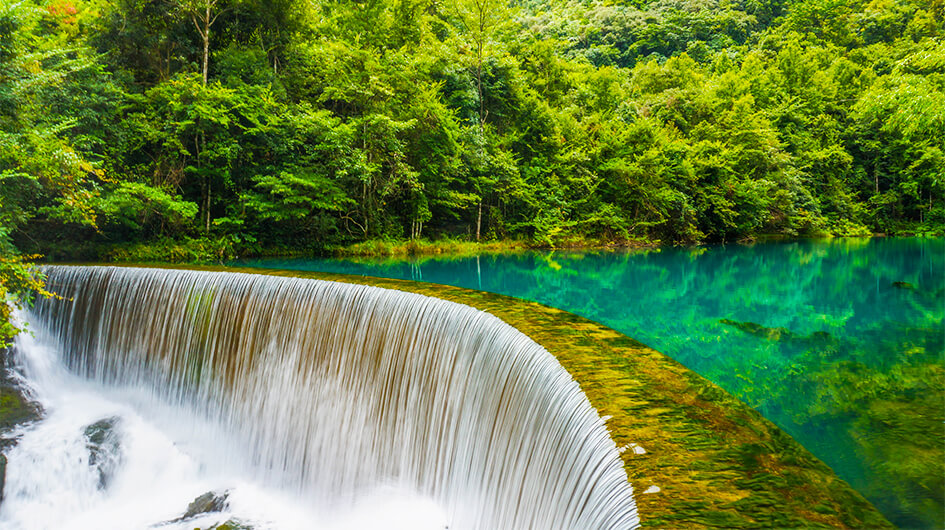 Xiaoqikong Scenic Area
Your Journey’s Rewards:
View the world-class Pingtang Bridge from afar. Wander through karst mountains and forests in Xiaoqikong, and experience the distinctive local landscape and ecology.
Educational Focus:
Canyons are frequently hit by strong winds. How do large-span mountain bridges like Huajiang Canyon Bridge resist strong winds?
Takeaway:
Such bridges adopt optimized girder structures and stabilizing plates to improve wind resistance. Professional devices are used to monitor wind conditions. Meanwhile, the Beidou System and sensors conduct real-time monitoring on bridge components.
Thought Challenge:
Why do winds in canyon areas pose greater threats to large-span bridges?
After breakfast, we will drive back to Guiyang from Libo. Along the route, you will pass through Guizhou's typical mountain and canyon landforms once again. In the afternoon, we will transfer you to the airport or railway station as scheduled, bringing this bridge study tour to a pleasant end.
This tour is suitable for: School, Family, Bridge Enthusiasts
What’s Included
- Experienced tour guides
- Entrance fee to all spots listed in the itinerary
- Well selected hotel accommodation
- Expert drivers and comfortable vehicles with air-conditioning
Hotel Options
| Location | Recommended Hotel |
|---|---|
| Guiyang | Hotel Novotel Guiyang Downtown |
| Zhijin | Zhijin Grand Hotel |
| Huangguoshu | Four Points by Sheraton Anshun Huangguoshu |
| Xingyi | Shida Fenghuang Hotel |
| Pingtang | China FAST Hotel |
| Libo | Steigenberger Icons Guizhou Xiaoqikong |
Wechat & WhatsApp: +86-13471279378