- Home
- Chinese Culture
- Water-Splashing Festival
Water-Splashing Festival
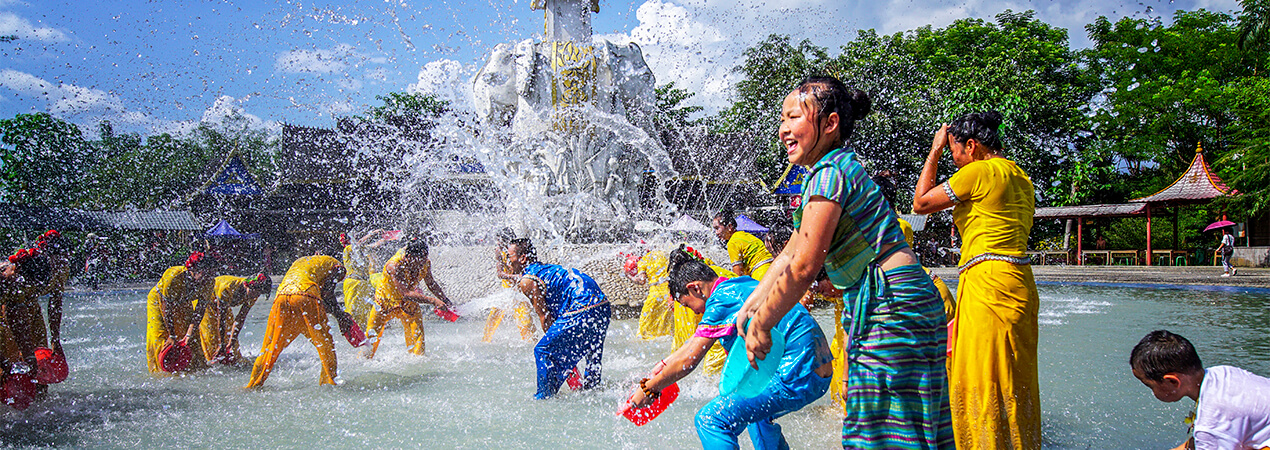
Every April, the Dai people celebrate their most important traditional festival — the Water-Splashing Festival — in the most lively and joyful way. During the celebration, people take water basins and water guns to splash water on each other in the streets, sending blessings of happiness and good fortune.
The Water-Splashing Festival is the grandest festival of the Dai people and one of the most influential and widely attended ethnic festivals in Yunnan Province.
Content of this article
What Is the Water-Splashing Festival?
 Yunnan Water-Splashing Festival (click to large)
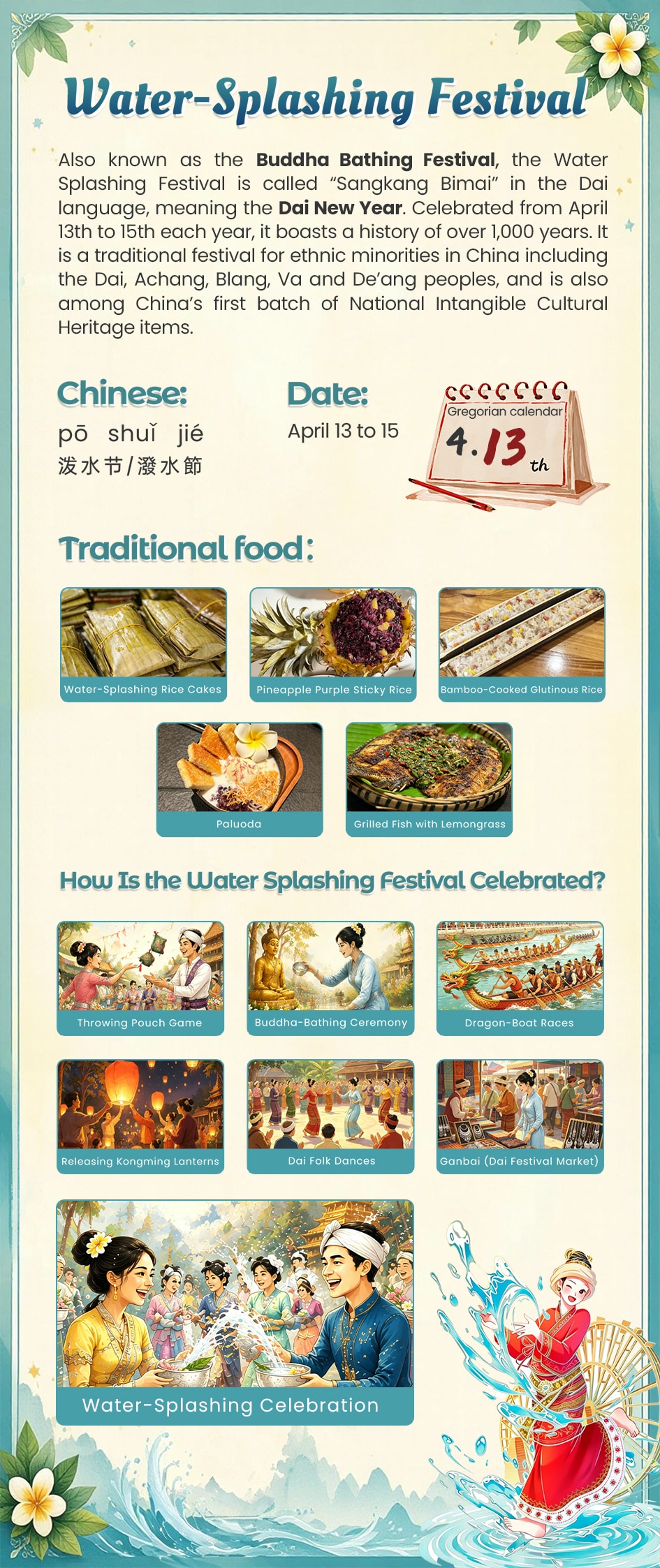
Also known as the Buddha-Bathing Festival, the Water-Splashing Festival is called “Sangkang Bimai” in the Dai language, meaning the Dai New Year. Celebrated from April 13th to 15th each year, it boasts a history of over 1,000 years. It is a traditional festival for ethnic minorities in China including the Dai, Achang, Blang, Va and De’ang peoples, and is also among China’s first batch of National Intangible Cultural Heritage items.
In Dai culture, water symbolizes purity, auspiciousness and happiness. People splash water on one another to extend blessings to relatives, friends and visitors. Beyond the lively water-splashing activities, a rich variety of traditional events take place during the festival, such as the Buddha-bathing ceremony, dragon-boat races, peacock dance performances and floating-lantern releases. These fully showcase the distinctive culture of the Dai people and offer international visitors an excellent opportunity to learn about China’s ethnic-minority cultures.
The Origins of the Water-Splashing Festival
The Water-Splashing Festival originated in India. It was later adopted by Theravada Buddhism and evolved into a Buddhist blessing ritual, the Buddha-bathing ceremony.
From the late 13th century to the early 14th century, the festival was introduced to the Dai-inhabited areas of Yunnan in China via Myanmar alongside Buddhism. It gradually merged with indigenous Dai culture and developed into a folk festival for the Dai people to bid farewell to the old year and welcome the new one.
How Is the Water-Splashing Festival Celebrated?
The Water-Splashing Festival is one of the most important traditional festivals of the Dai people and also one of Yunnan’s most representative ethnic celebrations. Every April, Dai-populated regions such as Xishuangbanna and Dehong host a wide range of festive events, drawing numerous visitors to experience the unique local ethnic culture.
Throughout the festival, people greet the arrival of the Dai New Year through water-splashing, song-and-dance performances, blessing rituals, and traditional competitive games.
Water-Splashing Celebration
 Water-Splashing
The first day of the festival is known as “Mairi”, comparable to Chinese Lunar New Year’s Eve. Families clean their homes, prepare festival food, and get ready for the upcoming celebrations.
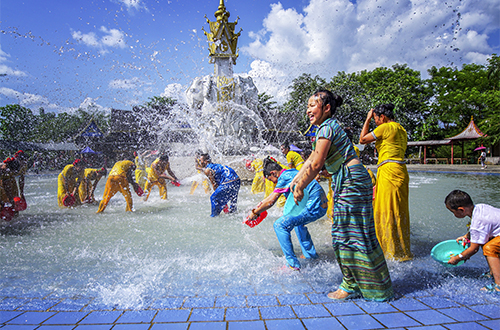
During the festival, men, women, and children of the Dai ethnic group don traditional costumes. They dip fresh flowers and leaves into clean water and splash water on one another to deliver blessings. Water-splashing symbolizes washing away misfortunes from the past year and welcoming happiness, health, and good fortune for the year ahead.
Throwing Pouch Game
The pouch-throwing game is a traditional pastime for young Dai people during the Water-Splashing Festival. Colourful pouches are mostly handmade by Dai young women. Young men and women interact by tossing these pouches back and forth, adding joy to the festive atmosphere and showcasing distinctive Dai folk customs.
Buddha-Bathing Ceremony
Before mass water-splashing begins, many Dai villages hold the traditional Buddha-bathing ceremony at local temples. People gently pour clean or scented water over Buddha statues to show respect and pray for peace, health, and good luck in the new year. Reflecting the influence of Theravada Buddhism on Dai culture, this ritual carries profound cultural significance for the festival.
Dragon-Boat Races
Dragon-boat racing is a hallmark traditional event of the Water-Splashing Festival. Crowds gather along waterways such as the Lancang River and Ruili River to watch the races. Rowers paddle vigorously in time with drum and gong beats to compete for victory. Beyond demonstrating team spirit, the races embody the Dai people’s wishes for favourable weather and a happy life.
Releasing Kongming Lanterns
In some Dai-inhabited areas, Kongming lantern releases take place during the festival. After dark, people light candles inside Kongming lanterns and set them afloat into the night sky, sending forth wishes for happiness, peace, and good fortune in the coming year.
Dai Folk Dances
The Dai people are well-known for their singing and dancing, and folk dance forms an essential part of Water-Splashing Festival celebrations. Dressed in traditional attire, locals gather on village squares to watch and join in dance performances.
The elephant-foot drum dance is performed to lively rhythms from elephant-foot drums and gongs. The Peacock Dance is celebrated for its graceful imitations of peacock movements, representing the unique artistic features and aesthetic values of the Dai people. Through these traditional dances, visitors get a taste of the Dai’s vibrant lifestyle and rich festive atmosphere.
Ganbai (Dai Festival Market)
 Ganbai (Dai Festival Market)
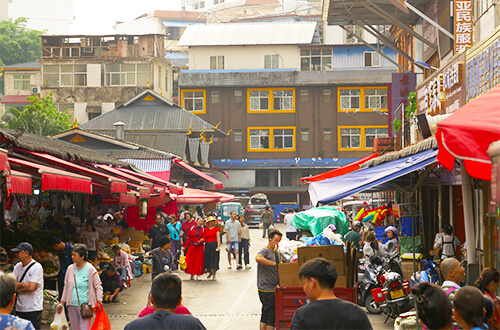
Ganbai, the Dai festival market, is held across many Dai communities during the Water-Splashing Festival. Visitors can sample authentic Dai dishes including grilled fish with lemongrass and pineapple rice. Market stalls also sell handicrafts such as Dai brocade and silver ornaments, offering a glimpse into Dai daily life and festive atmosphere.
Water-Splashing Festival Foods
During the festival, every household prepares special foods to celebrate with relatives and friends.
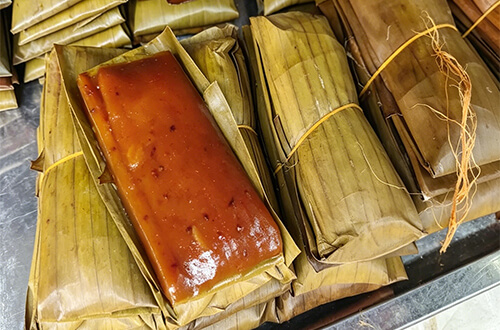 Water-Splashing Rice
Water-Splashing Rice Cakes: As one of the signature foods of the Water-Splashing Festival, water-splashing rice cakes are made from glutinous rice flour, brown sugar syrup and perilla seeds. The dough is wrapped in banana leaves and steamed. Soft, sticky and sweet, they carry a subtle fragrance of banana leaves, serving as a popular traditional snack for Dai people during the festival.
Paluoda: Paluoda is a well-known Dai dessert from Xishuangbanna. It is prepared with sago, purple glutinous rice, milk, condensed milk, specially made cream-flavoured bread pieces and fresh shredded coconut. Served chilled and sweet, it delivers rich layered textures.
Pineapple Purple Sticky Rice: It is a featured dish at Dai-style banquets. Purple glutinous rice mixed with pork and other ingredients is stuffed into a hollowed-out pineapple and steamed, with distinctive Dai characteristics.
Grilled Fish with Lemongrass: It is one of the most representative Dai-flavoured dishes. Fresh fish is seasoned with lemongrass and spices, wrapped in banana leaves and charcoal-grilled. It is a classic dish on dining tables during the Water-Splashing Festival.
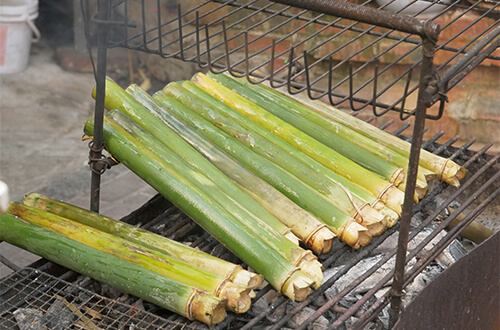 Bamboo-Cooked Glutinous Rice
Bamboo-Cooked Glutinous Rice (Fragrant Bamboo Rice): Fragrant bamboo rice is a staple traditional food in Yunnan’s Dai-inhabited areas. Glutinous rice is stuffed into fresh bamboo tubes, sealed with banana leaves and slowly roasted over a charcoal fire. It is a must-try dish for visitors wishing to experience Dai culinary culture.
Visitors may also drop by Dai festival markets (Ganbai) to sample more local snacks and experience the lively food culture and festive atmosphere of the Dai people.
Why Experience the Water-Splashing Festival in Yunnan?
The Water-Splashing Festival is an important part of Dai traditional culture and is listed as a national intangible cultural heritage item of China. During the festival, visitors can take part in traditional celebrations such as Buddha-bathing ceremonies, ethnic song-and-dance performances, and water-splashing activities. They can learn about the Dai people’s history, beliefs, and daily customs, and experience the charm of this unique ethnic culture.
The Water-Splashing Festival takes place in spring in Yunnan, when the weather is warm and pleasant for travelling. Apart from joining the festive celebrations, visitors can savour authentic Dai delicacies including grilled fish with lemongrass and pineapple rice, explore tropical rainforest scenery and local villages.
Best Places to Experience the Water-Splashing Festival
Xishuangbanna (the main destination for the Water-Splashing Festival)
Xishuangbanna is one of the most popular destinations for experiencing the Water-Splashing Festival and attracts a large number of visitors every year for its festive events. During the 2026 Water-Splashing Festival, Xishuangbanna Dai Autonomous Prefecture received a total of 2.38 million visitors.
Jinghong is one of the main celebration areas during the festival. Visitors can join water-splashing activities, watch ethnic song-and-dance performances and experience the lively festive atmosphere at the Water-Splashing Square, along the banks of the Lancang River and in Gaozhuang Xishuangjing.
In addition, the Dai Ethnic Park in Mengla County is a distinctive place for experiencing Dai cultural traditions. Travellers can visit Dai villages and learn about local architecture, cuisine and lifestyles.
Dehong Dai and Jingpo Autonomous Prefecture
Compared with Xishuangbanna, Dehong Dai and Jingpo Autonomous Prefecture preserves more traditional folk customs. Travellers can visit rural communities to take part in traditions such as water-splashing and flower-gathering, gaining a deeper understanding of the diverse cultures of the Dai, Jingpo and De’ang peoples.
Traditional festivities are held across Mangshi, Ruili, Longchuan and Yingjiang. Mangshi in particular hosts city-wide water-splashing activities, Buddha-bathing ceremonies and flower-gathering activities throughout the festival period.
Recommended Water-Splashing Festival Itinerary
Day 1: Arrival in Xishuangbanna, Experience Dai Nightlife
Upon arrival in Xishuangbanna, our driver will take you to Gaozhuang Xishuangjing Starlight Night Market in Jinghong. Sample Dai-style snacks including grilled food, tropical fruits and special local beverages, and experience local delicacies and nightlife.
Day 2: Join the Main Water-Splashing Festival Celebrations
In the morning, you will head to the Lancang River to watch the lively dragon-boat races. In the afternoon, take part in water-splashing activities at Dai Ethnic Park. In the evening, admire festive light displays, and you will have the opportunity to release Kongming lanterns (sky lanterns).
Day 3: Discover Tropical Ecology and Dai Village Culture
In the morning, visit Wild Elephant Valley to learn about Asian elephant conservation and tropical rainforest ecosystems. In the afternoon, travel to Manzhang Village to experience authentic Dai village life. You can try bamboo weaving, make local delicacies or learn about traditional architecture.
Day 4: Rainforest Hiking
Head to Jinuo Mountain for rainforest hiking to observe tropical plants and natural landscapes.
Day 5: End of Itinerary
Depart according to your flight or transportation arrangements.
For an in-depth experience of Yunnan’s Water-Splashing Festival culture, China Educational Tours can craft customized itineraries. These programs combine Water-Splashing Festival celebrations, Dai village visits, ethnic cultural experiences and nature exploration. Participants gain an understanding of China’s diverse ethnic cultures through authentic travel experiences and experience local life, distinctive cuisine and traditional festivals at a relaxed pace.