- Home
- City Tours
- Taiwan Tours
- 5-Day Taiwan Essential Tour
Taiwan Essential Tour
This 5-day Taiwan itinerary connects urban scenery with the beauty of nature and culture. From the modern engineering marvel of Taipei 101 to the thousand-year-old cultural relics at the National Palace Museum, then to the lake and mountain views of Sun Moon Lake and the forest secrets of Alishan, it also incorporates elements of Indigenous culture and Minnan religious heritage. The entire trip balances comfortable experiences with in-depth exploration, allowing you to immerse yourself in Taiwan's diverse charm between dynamic activities and quiet moments, starting a journey that combines visual shock and cultural resonance.
Itinerary at a Glance
| Day | Location | Highlights |
|---|---|---|
| D1 | Taipei | Arrive at airport, be picked up to check into hotel, store luggage and rest, get itinerary explanation, visit landmark building, take fast elevator, view wind damper and urban scenery, admire night view |
| D2 | National Palace Museum-Chiang Kai-shek Memorial Hall-Longshan Temple | Visit cultural relic hall, see precious relics, feel jade carving and bronze civilization, appreciate cultural relics of different dynasties, watch guard ceremony, learn about religious and Minnan culture |
| D3 | Sun Moon Lake-Formosan Aboriginal Culture Village | Take lake cruise, listen to legends, enjoy lake and mountain views, watch Aboriginal craftsmanship and performances, take cable car to overlook lake, return to accommodation |
| D4 | Alishan Forest Recreation Area (Zhao Ping Line-Shenmu Line) | Depart to forest area, take vintage train to park, stroll boardwalk, admire plants and mountains, walk trail to see lake reflections, hike to ancient cypresses, visit cultural site, return |
| D5 | Chiayi-Taoyuan Airport | Pack luggage, depart to airport, ensure travel documents are complete |
Trip Highlights
- Take the world's fastest elevator to Taipei 101's observation deck
- Admire precious cultural relics at the National Palace Museum
- Watch guard mounting ceremony and learn about Minnan culture
- Cruise Sun Moon Lake and listen to local legends
- Ride vintage trains and hike among Alishan's ancient cypresses
- Enjoy Aboriginal craftsmanship and song-and-dance performances
Tour Essentials

Quality
No Shopping Traps

Group Type
Private

Tour Focus
Scenery, Culture, History

Accommodation
Nights:4

Best Season
Spring, Summer, Autumn, Winter
Full itinerary for Taiwan Essential Tour
After arriving at Taoyuan International Airport, our staff will pick you up and take you to the hotel for check-in. You can store your luggage and take a short break. During the transfer, the tour guide will explain the itinerary for the upcoming days. If you have any questions, please feel free to communicate with the tour guide or our travel consultant promptly.
In the afternoon, visit Taipei 101. First, take the elevator certified by Guinness World Records as the world's fastest one—it can take you from the 5th floor to the 89th-floor indoor observation deck in just 37 seconds. Here, you can get a close look at the huge wind damper that keeps the building stable, and enjoy the view of Taipei's urban landscape through the 360° panoramic windows. If the weather is fine, you can go to the 91st-floor outdoor observation deck to experience the high-altitude view and quietly admire the stunning night view of Taipei 101.
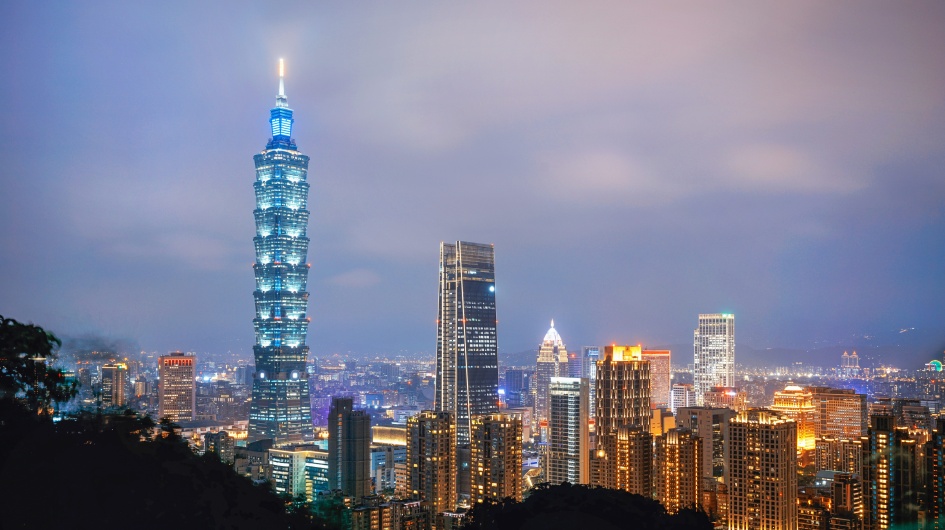 Taipei 101
Your Journey's Rewards:
Check into the hotel, overlook Taipei's cityscape and enjoy the night view, and witness engineering marvels up close.
Educational Focus:
Why can the huge wind damper of Taipei 101 keep the super high-rise building stable on windy days?
Takeaway:
To cope with strong high-altitude winds, Taipei 101 relies on the wind damper—a key device—to stabilize itself. Its working principle is similar to a pendulum; it can offset the sway of the building caused by strong winds through its own weight and swing. When wind force causes the building to shift, the damper swings in the opposite direction, generating a reverse force to reduce the building's sway amplitude. This device not only ensures the safety of the building structure but also keeps people inside comfortable, and it is an important engineering innovation for modern super high-rise buildings to resist the natural environment.
Thoughts Challenge:
Other than wind dampers, what other designs can super high-rise buildings rely on to adapt to the natural environment?
In the morning, visit the National Palace Museum in Taipei. As a hall housing 700,000 pieces of Chinese cultural relics, its architecture embodies traditional aesthetics. It is recommended to head directly to Room 302 on the 3rd floor and Room 203 on the 2nd floor first to see the "Three Treasures of the Museum"—the Jadeite Cabbage, the Meat-Shaped Stone, and the Mao Gong Ding. You can feel the pinnacle of Qing Dynasty jade carving and the profound weight of Western Zhou Dynasty bronze civilization. Wandering through the exhibition halls, from the magnificent artistic conception of Song Dynasty paintings to the exquisite craftsmanship of Ming and Qing Dynasty porcelain, each cultural relic tells a thousand-year history, allowing you to immerse yourself in the profound heritage of Chinese culture in tranquility.
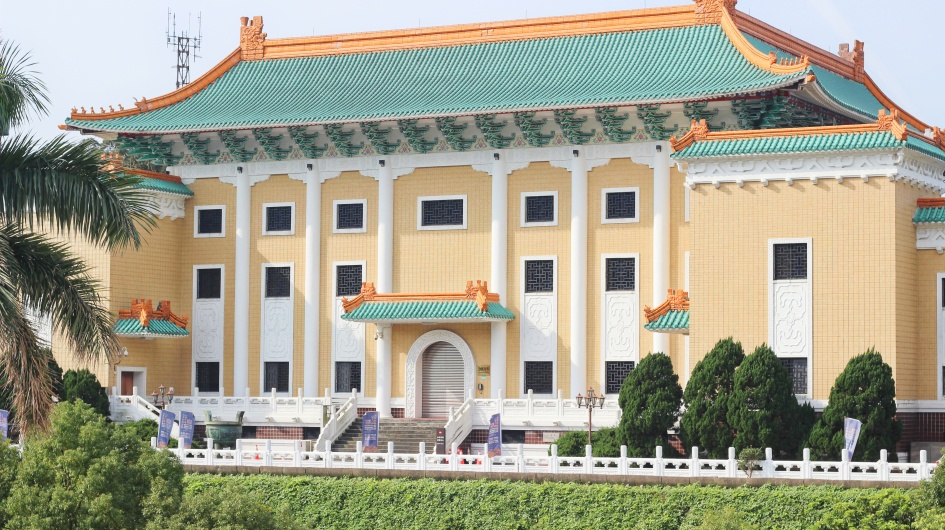 Taipei National Palace Museum
In the afternoon, go to the Chiang Kai-shek Memorial Hall. Its blue-tiled and white-walled architecture echoes traditional styles, and the archway in the square is grand and imposing. If you arrive right on the hour, you will be fortunate enough to watch the guard mounting ceremony. Later, take a vehicle to Longshan Temple. This temple, with its thriving incense, mainly worships Mazu—the goddess in charge of maritime safety and the most revered deity by people in Taiwan. As Mazu is an important representative of Minnan culture, Longshan Temple's architecture and sculptures bear distinct Minnan styles. Here, with the tour guide's explanation, you will learn about Taiwan's religious culture and the influence of Minnan culture.
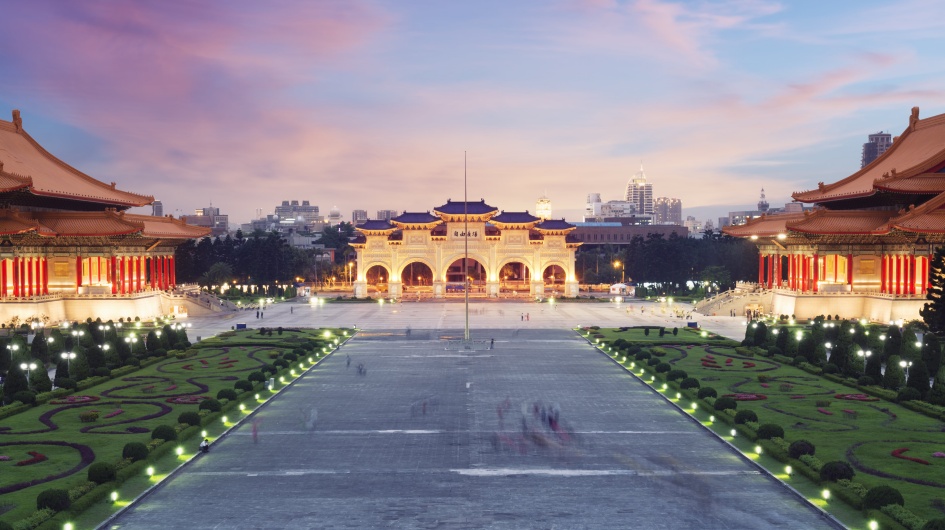 Chiang Kai-shek Memorial Hall's square
Your Journey's Rewards:
Admire the three treasures of the Palace Museum to savor the profoundness of civilization, admire beautiful architectures of the Memorial Hall to feel solemnity, explore Longshan Temple to understand the origin of beliefs, and appreciate the context of Minnan-Taiwan cultural integration.
Educational Focus:
Why is Taipei's Longshan Temple full of Minnan influences? What secrets are hidden in its architecture and beliefs?
Takeaway:
All this starts with the history of people from Fujian migrating to Taiwan. In the past, people from Quanzhou missed their hometown, so they built this temple according to the appearance of Anhai Longshan Temple in Jinjiang. The wood, bricks, stones used for building the temple, and even the craftsmen all came from Fujian—even the stone slabs in the front courtyard were the ballast stones used when crossing the sea. Mazu, the main deity worshipped in the temple, is from Putian, Fujian, and is a symbol of Minnan maritime culture. After early settlers brought the Mazu belief to Taiwan, it became a major belief, and this temple also became a vivid proof of the close connection between Minnan and Taiwan cultures.
Thoughts Challenge:
Besides temples and beliefs, through what other carriers is Minnan-Taiwan culture passed down?
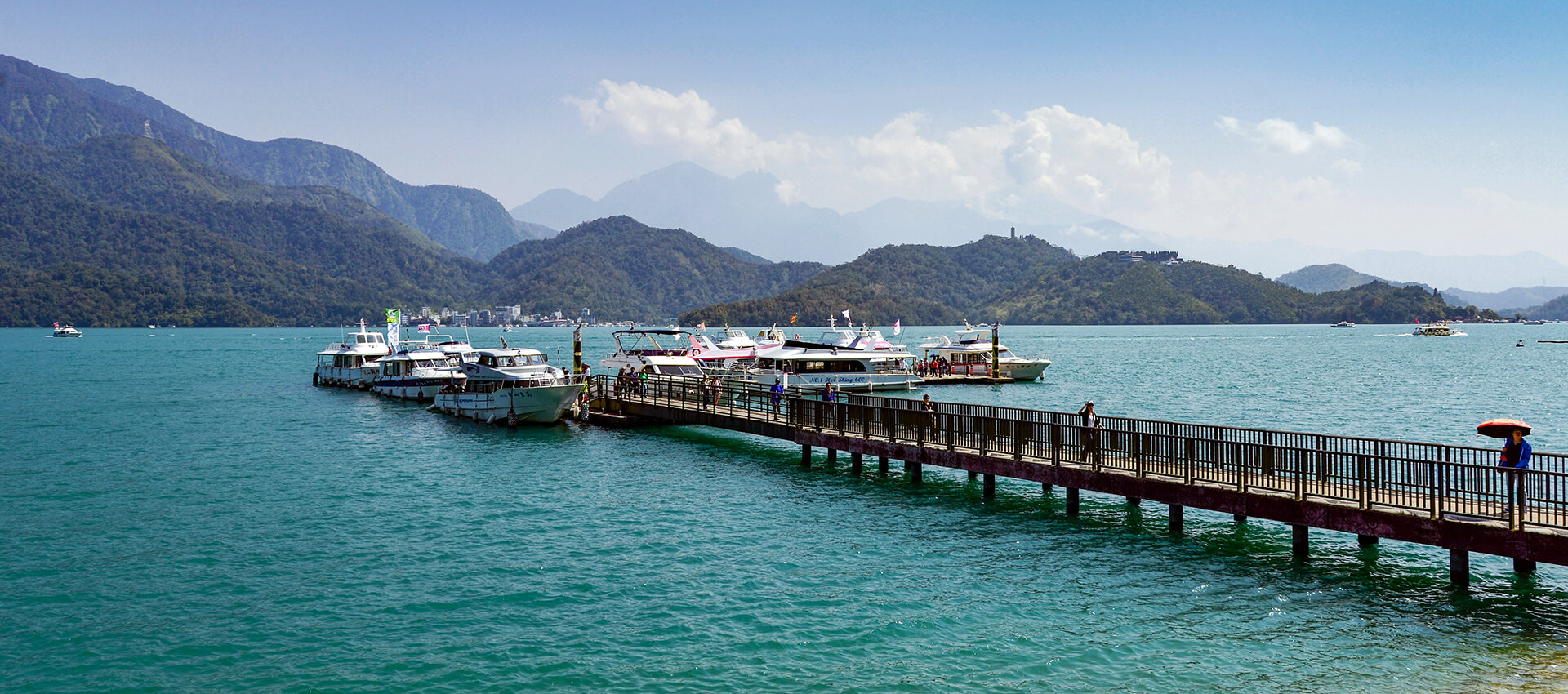
In the morning, start the Sun Moon Lake boat tour. Take a sightseeing boat cruising across the clear lake; distant mountains, dark green like ink wash, are reflected in the water, and the morning light shimmers on the lake surface. During the cruise, you can also look far at the upturned eaves of Xuanguang Temple and XuanzangTemple, and listen to the crew explain the legends of the Thao people and Sun Moon Lake. A gentle breeze blows, accompanied by the soft sound of the lake water, allowing you to immerse yourself in the tranquility and grandeur of this alpine lake.
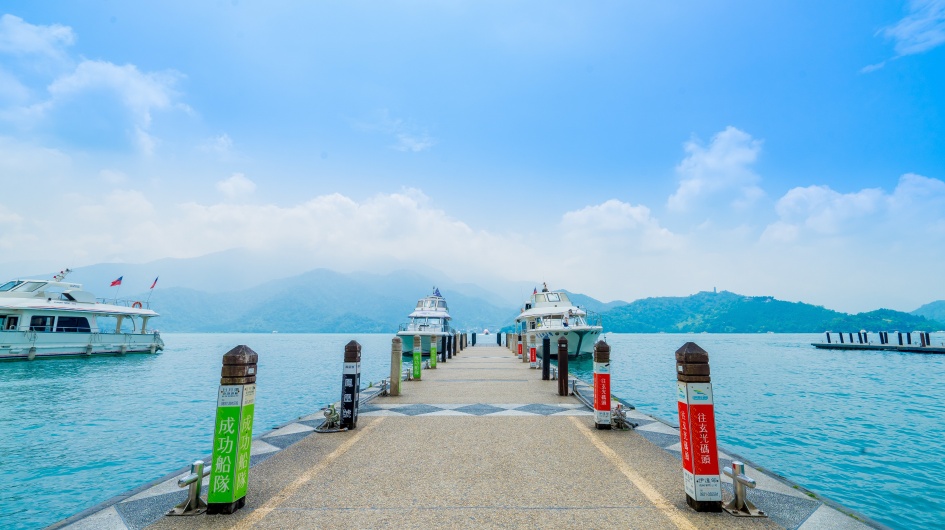 Take a boat tour of Sun Moon Lake at the pier
In the afternoon, head to Formosan Aboriginal Culture Village. In the Aboriginal tribe exhibition area, watch Atayal weaving and Tsou wood carving, and also enjoy tribal song and dance performances to intuitively experience the cultural characteristics of Taiwan's nine major Aboriginal ethnic groups. Later, take a one-way cable car up the mountain, overlook the full view of Sun Moon Lake, and enjoy the beautiful contrast between mountains and water. Leave the cultural village in the evening, return to accommodation near Sun Moon Lake, and end the day's itinerary in a cozy way amid the mountain evening breeze and the lake's night scenery.
Your Journey's Rewards:
Take a cruise to enjoy the scenery of Sun Moon Lake and listen to the Thao people's legends; visit the cultural village to experience Aboriginal culture, take a cable car for a panoramic view, and savor the comfort of the night.
Educational Focus:
How do the traditional crafts of Taiwan's indigenous peoples (such as the Atayal people's weaving and the Tsou people's woodcarving) reflect their ethnic group's life wisdom and cultural inheritance?
Takeaway:
Indigenous peoples use traditional crafts as carriers to adapt to nature and express emotions. Local materials are used in the Taroko people's weaving to make practical utensils, which implies respect for nature; the Tsou people's woodcarving, with tribal stories as themes, records the ethnic group's history. These crafts don't just show craftsmanship—they also hold the ethnic group's values and sense of belonging, letting culture pass down through handcrafting from one generation to the next.
Thoughts Challenge:
Besides cultural villages, what are some daily ways to preserve indigenous cultures?
In the early morning, depart from Chiayi by car and arrive directly at Alishan Forest Recreation Area in approximately 2 hours. First, take a short break at the visitor center. Then, take the vintage Zhao Ping Line small train to Zhao Ping Station; upon exiting the station, you will reach Zhao Ping Park immediately. Stroll along the elevated wooden boardwalk, admire the lush growth of alpine plants, and enjoy the panoramic view of the layered Tashan mountains in the distance. If you visit during cherry blossom season, you may also encounter the classic scene of cherry blossoms reflecting against the railway tracks. After that, walk along the gentle trail, pass by Sister Ponds to appreciate the forest reflections in the water, feel the tranquility of the mountains, and immerse yourself in the healing atmosphere of a forest bath.
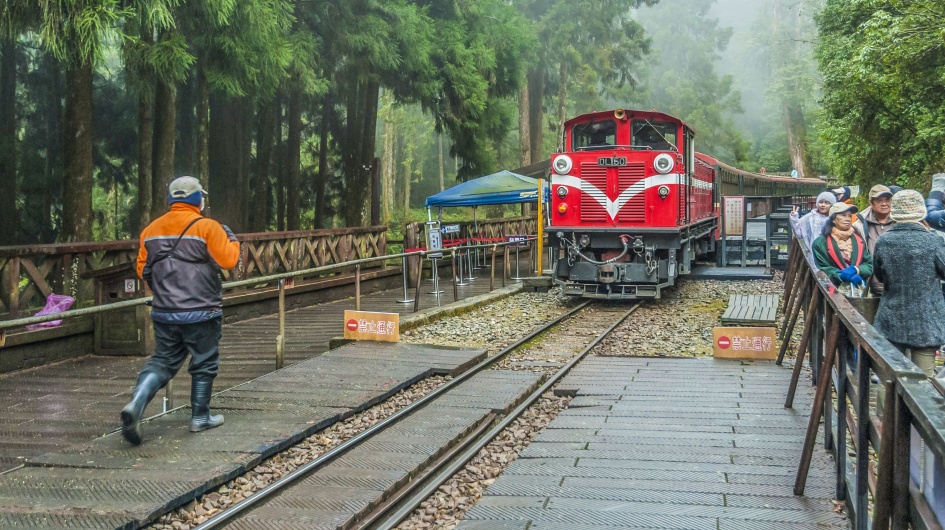 Alishan train
In the afternoon, take the Shenmu Line small train to Shenmu Station and start the Giant Tree Group Trail journey. The over 800-meter-long log boardwalk is built along the mountain; along the way, you can see 38 thousand-year-old cypress trees towering into the sky, and three log trestle bridges spanning the forest. Every step feels like walking through history. Touch the texture of the ancient trees up close, listen to the sound of wind rustling through the branches and leaves, and experience the integration of nature and humanity beside the "Tree Spirit Pagoda". After the tour, take the small train back to the park entrance, then return to Chiayi by car, concluding this fulfilling alpine forest trip.
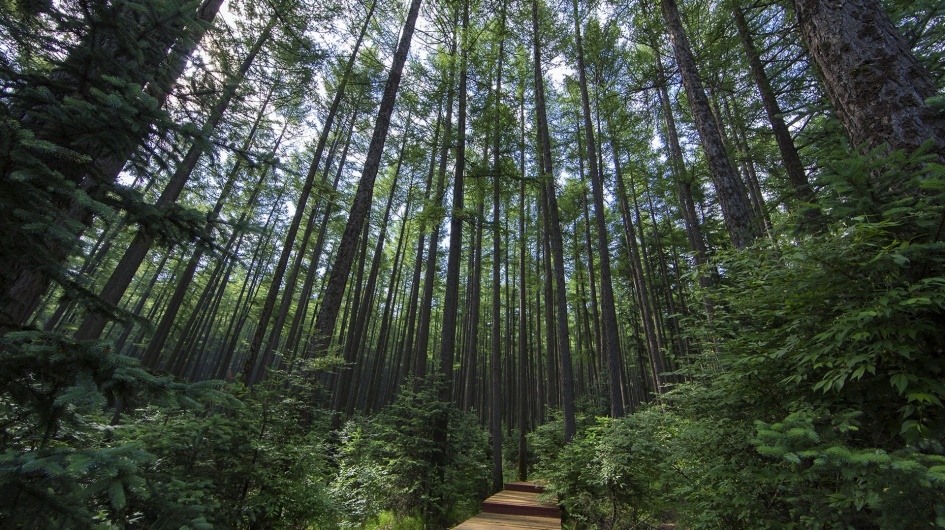 Giant Tree Group Trail
Your Journey's Rewards:
Take a retro-style train to enjoy the scenery of Alishan, and stroll along wooden boardwalks to view alpine plants. Walk the giant tree trail to encounter thousand-year-old cypresses, and feel the blend of nature and human culture beside the Tree Spirit Pagoda.
Educational Focus:
What is the connection between the survival of Alishan's thousand-year-old cypress trees and the local natural environment and cultural conservation efforts?
Takeaway:
Thousand-year-old cypress trees can't survive without Alishan's suitable high altitude, temperature, humidity and enough sunlight—these natural conditions give them a growth foundation. Meanwhile, log boardwalks have been built locally to reduce root damage, the Tree Spirit Pagoda set up to spread the idea of respecting nature, and protection measures like limiting tourist activities and checking the trees' conditions regularly adopted. These steps stop the cypresses from being disturbed too much, letting them live on with both nature's and humans' protection.
Thoughts Challenge:
How can we better balance the protection of cypress trees with tourist experience when developing tourism in Alishan?
Pack your luggage on the last day of your trip, then leave Chiayi for Taoyuan Airport to head back. The drive takes about 4 hours, so please tell us your flight time one day early—this helps us set up your airport transfer and keeps your itinerary on track. Before you go, make sure you have all your travel documents and none are left behind.
This tour is suitable for: School, Family, Team Building, Nature Scenery Lovers
What's Included
- Professional English-speaking tour guides
- Comfortable transportation with professional drivers
- Carefully selected transportation and accommodation
- Admission fees for all mentioned attractions included
- Airport pick-up and drop-off services provided
Wechat & WhatsApp: +86-13471279378