- Home
- City Tours
- Ningxia Tours
- 5-Day Ningxia Educational Tour
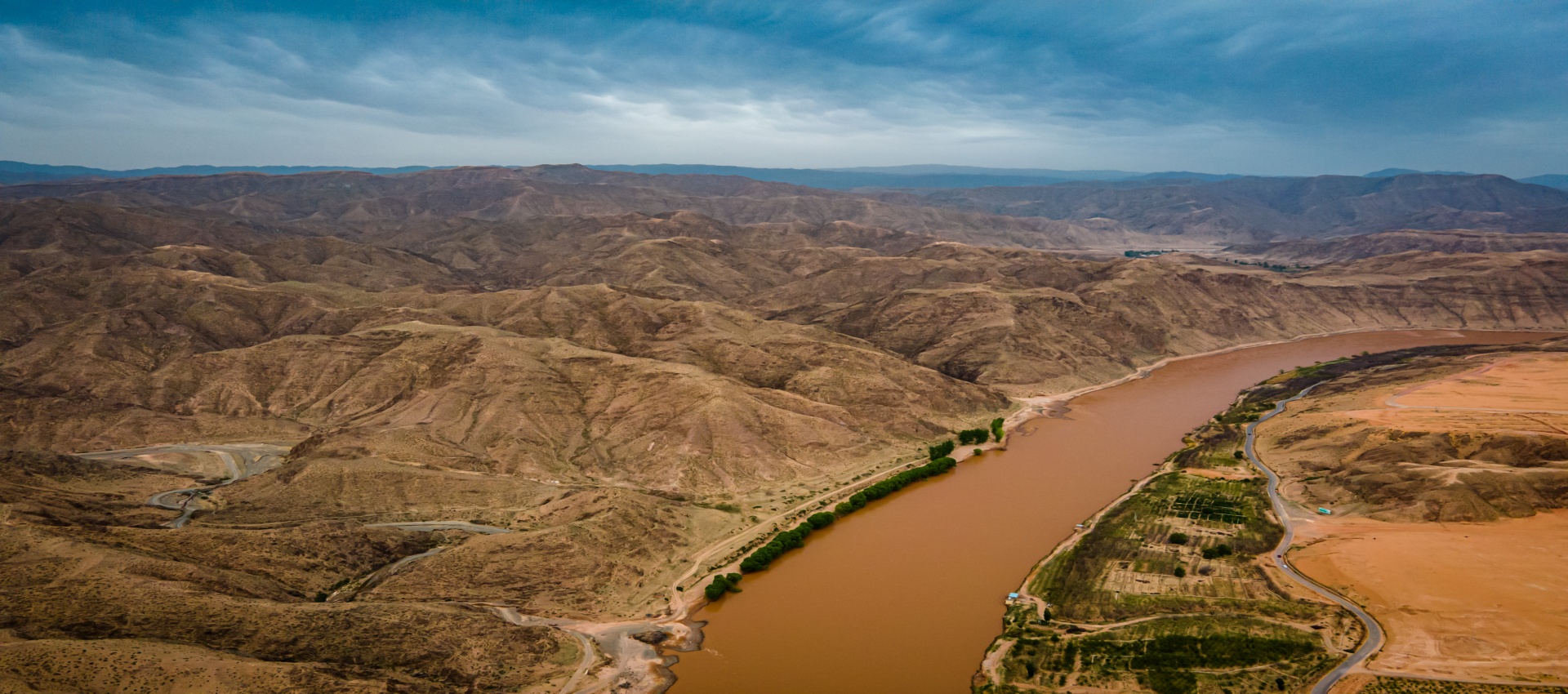
Ningxia Educational Tour
Itinerary at a Glance
| Day | Location | Highlights |
|---|---|---|
| D1 | Yinchuan | Pick up + check in and rest |
| D2 | Zhongwei | Visit Shapotou Scenic Area: explore Tengger Desert, see desert-Yellow River junction, experience sand sliding, desert hiking, camel feeding and wheat straw grid laying |
| D3 | Lingwu | Visit Xixia Tombs, observe rammed earth structures, join ICH activity; visit Shuidonggou Scenic Area: explore Ming Dynasty military defense system, experience fire making by rubbing wood and simulated archaeological excavation |
| D4 | Yinchuan | Visit Helan Mountain Rock Carvings, experience rock carving rubbing; tour Zhenbeipu Western Film Studio |
| D5 | Hotel → Airport/Railway station | Hotel breakfast; transfer to airport/railway station; end the trip |
Trip Highlights
- Experience laying wheat straw grids that can control desertification in the Tengger Desert
- Visit the Xixia Tombs to learn about the history and culture of the Xixia Dynasty
- Explore the military defense system in Shuidonggou Scenic Area
- Learn about the life of human ancestors in the Rock Carvings Scenic Area and experience making rubbings of rock carvings
Tour Essentials

Quality
No Shopping Traps

Group Type
Private

Tour Focus
Culture, History

Accommodation
Nights:4

Best Season
Spring, Summer, Autumn, Winter
Full itinerary for Ningxia Educational Tour
Upon your arrival at Yinchuan Hedong International Airportn (or Yinchuan Railway Station), a professional English-speaking guide and driver will be waiting to greet you. They will then transfer you to your pre-booked hotel safely and efficiently. The rest of the day is reserved for you to relax, recover from your journey, and recharge your energy, ensuring you are fully prepared for the upcoming explorations starting the next day.
In the morning, your guide and driver will pick you up from your hotel at the scheduled time. Then take a bus to Shapotou District. After lunch, visit Shapotou Scenic Area. Here, you can not only go deep into the magnificent Tengger Desert, but also see the magical and beautiful scenery where the desert meets the Yellow River. The tour guide will tell you in detail the basic knowledge about the formation, distribution and hazards of the desert, and lead you to learn about desert plants and get to know the "ship of the desert" — camels.
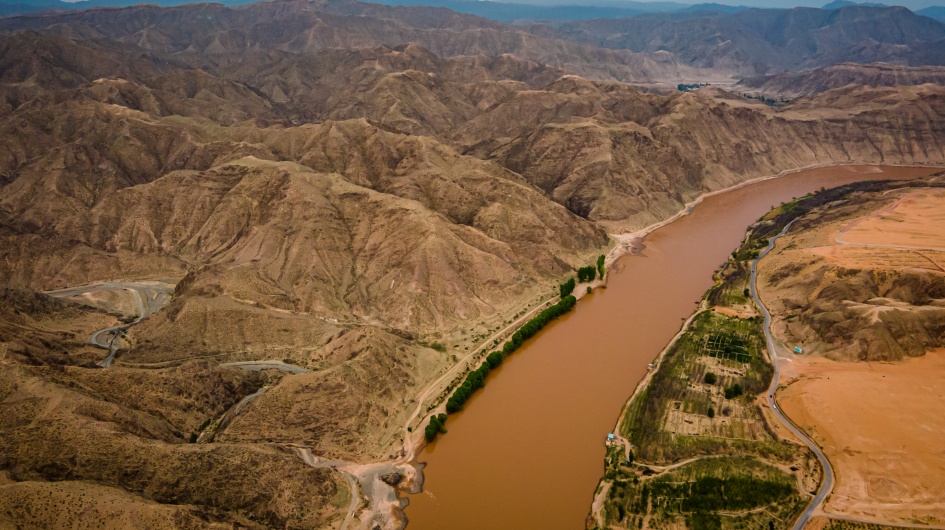 The Converging Landscape of Desert and the Yellow River
Then take the escalator to enjoy the grand scene of the surging Yellow River, and then experience the sand-sliding project in person to feel the thrill of sliding down from the 100-meter sand dune. After that, experience hiking in the Tengger Desert and feel the grandeur and desolation of the desert. You will have the opportunity to feed camels: feed forage to camels under the guidance of camel herders, and also receive a "mysterious surprise" prepared by the camel herders.
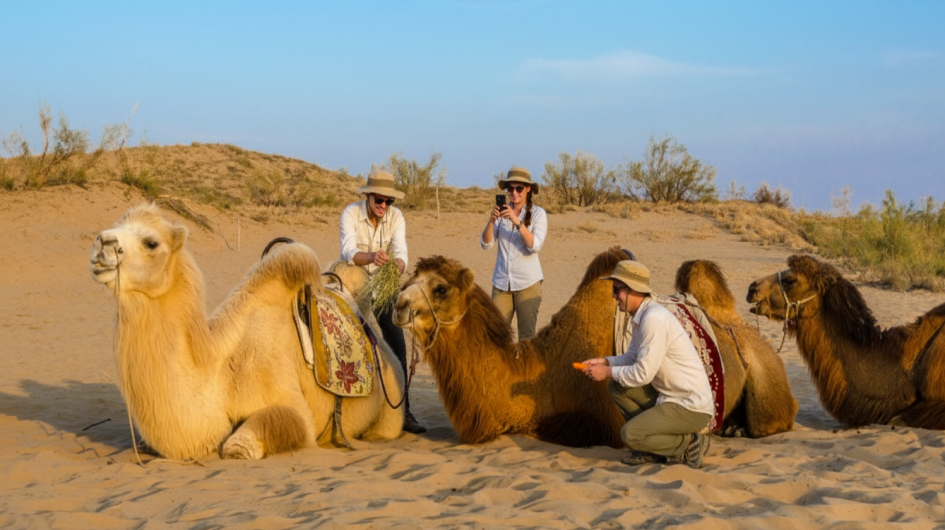 Experience of Feeding Camels
Finally, watch the world-famous desertification control achievement on site — the wheat straw grid "five-zone integrated comprehensive desertification control system", and conduct on-site labor experience to lay wheat straw grids, plant desert green plants with your own hands, practice the concept of ecological protection, and contribute your own strength to protecting the environment.
Your Journey’s Rewards:
Explore Shapotou Scenic Area and learn basic knowledge about the formation, distribution and hazards of the desert. Lay wheat straw grids with your own hands to contribute to environmental protection.
Educational Focus:
What factors are related to the formation of the Tengger Desert?
Takeaway:
The Tengger Desert is located in the mid-temperate continental climate zone, with scarce precipitation. Long-term drought leads to insufficient surface water, making it difficult for vegetation to grow. The soil is eroded and transported by wind, forming a vast desert. This is also related to human activities. Behaviors such as overgrazing, deforestation and grassland destruction lead to sparse surface vegetation, intensified soil erosion, and accelerate the process of desertification.
Thought Challenge:
What hazards does desertification bring to local human life?
Get up early and have breakfast at the hotel, then take a bus to visit the Xixia Tombs at the foot of Helan Mountain. The Xixia Tombs are the imperial mausoleums of the Xixia Dynasty (11th to 13th centuries) in northwestern China, and they are the largest and best-preserved existing historical relics of the Xixia Dynasty.
You will visit the imperial mausoleums, accompanying tombs, No. 3 Mausoleum and Shuangling Relics in the mausoleum site, observe the rammed earth structure of the buildings up close, and learn about the scale, system and structural layout that are different from the mausoleums of the Tang and Song Dynasties. During the tour, your guide will explain content related to Xixia’s history, culture, social economy and religion to help you gain an in-depth understanding of the Xixia Dynasty.
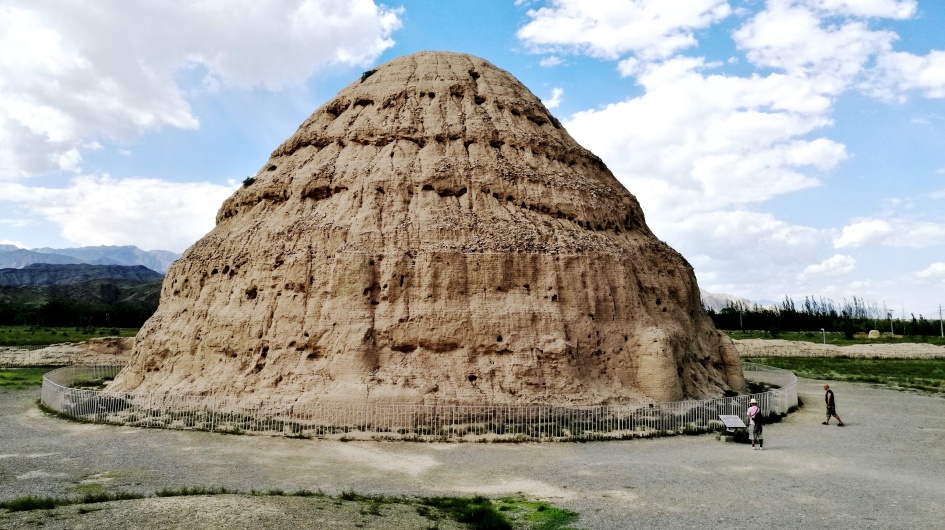 Visiting the Xixia Tombs
Next, you will participate in a intangible cultural heritage (ICH) experience activity. First, listen to the teacher explain knowledge about world heritage application, the distribution of China’s world cultural heritage and the process of the Xixia Tombs’ application for world heritage. Then the teacher will draw Chinese cultural heritage sites on the canvas. Finally, under the teacher’s guidance, you will create your own work with colored paper strips to deepen your learning of ICH culture.
After lunch, take a bus to Shuidonggou Scenic Area. It is a famous tourist scenic area in China that combines prehistoric archaeological sites with the military defense system of the Ming Dynasty. Here, you will visit China’s best-preserved three-dimensional military defense system — the Ming Dynasty Great Wall, the Grand Canyon and Hongshan Fort.
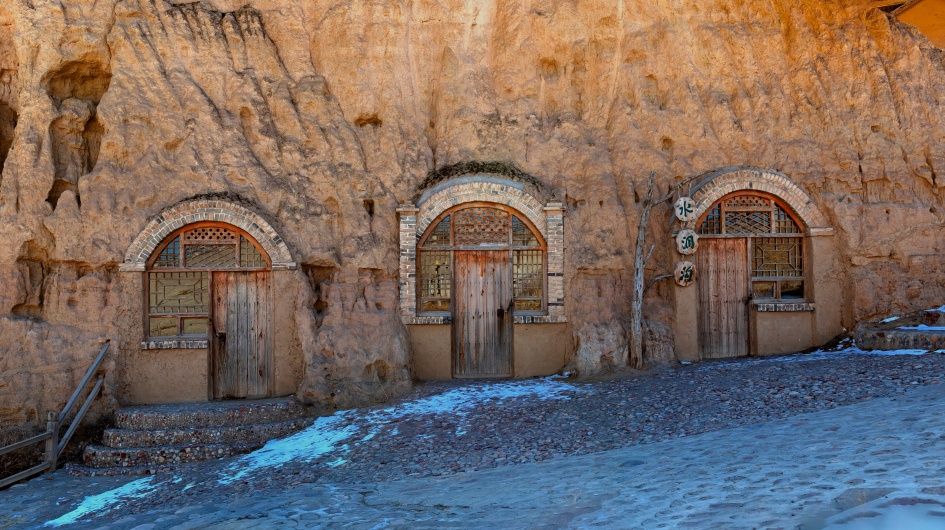 Exploring Shuidonggou
Enter the underground military castle built 500 years ago — the Tibetan Soldier Cave. There, you will learn the most primitive skill of "making fire by rubbing wood" and light a fire. Finally, you will have an archaeological experience. Under the guidance of professional teachers, use professional archaeological excavation tools to conduct an archaeological excavation experience in the simulated exploration area. This immersive experience allows you to gain a deeper understanding of prehistoric civilization.
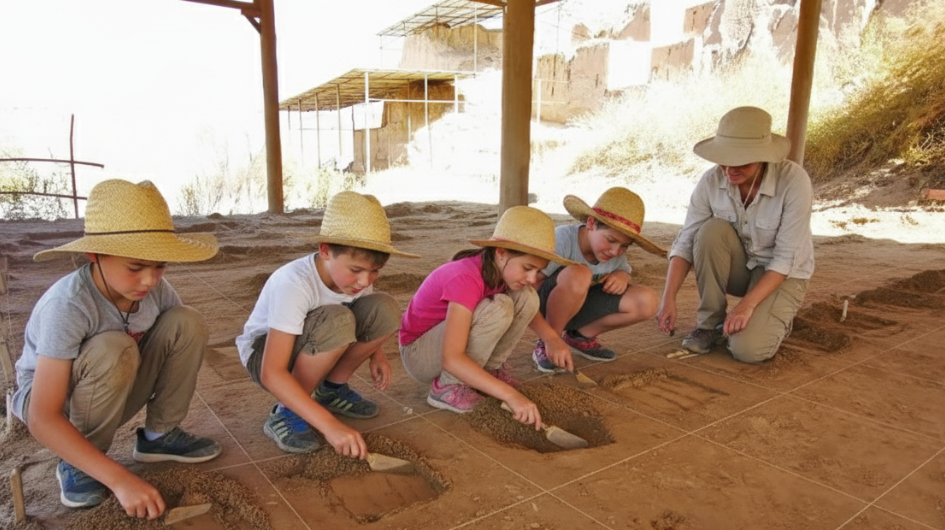 Archaeological Experience
Your Journey’s Rewards:
Visit the Xixia Tombs to learn about the living environment and technical level of humans in the Paleolithic Age, as well as content related to Xixia’s history, culture and social economy, enriching your historical knowledge. Visit China’s best-preserved three-dimensional military defense system in Shuidonggou Scenic Area.
Educational Focus:
What kind of military defense wisdom is reflected in the Tibetan Soldier Cave in Shuidonggou Scenic Area?
Takeaway:
The Tibetan Soldier Cave was dug along the mountain terrain. The structure inside the cave is complex, with functional areas such as passages, living rooms, grain depots and weapons depots. Some sections also have hidden traps and observation holes. It can not only hide military forces but also ambush incoming enemies, fully demonstrating the wisdom of ancient military defense. It also provides precious physical evidence for the study of the military defense system of the Ming Dynasty.
Thought Challenge:
What help does learning primitive skills such as "making fire by rubbing wood" bring to daily life?
After breakfast, take a bus to the Rock Carvings Scenic Area to visit the Helan Mountain Rock Carvings. The rock carvings here record the production and living scenes of ancient humans from 3,000 to 10,000 years ago, and are an important treasure house for the study of ancient civilizations. You will visit the Helan Mountain Rock Carvings Heritage Reserve to learn about the herding, hunting, sacrifice, life and other aspects of human ancestors. Then, experience the craft of making rock carving rubbings by yourself, and feel the ancient civilization through this traditional craft.
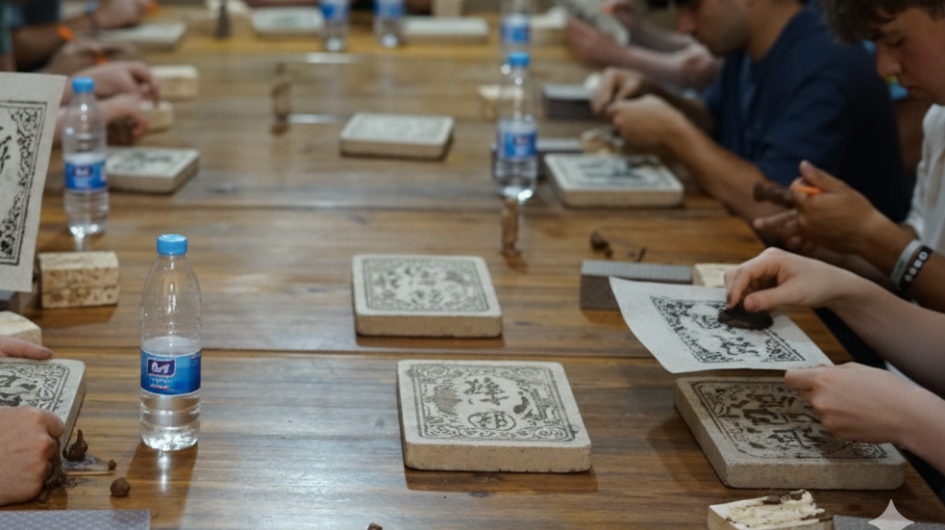 Rubbing Experience
After lunch, go to visit Zhenbeipu Western Film Studio. It was once a border defense castle during the Ming and Qing Dynasties and an important place for stationing troops. Now it is composed of two ancient cities — "Ming City" and "Qing City" — and the Old Yinchuan Street. The old shops and old streets of that year are recreated here. You can experience the life atmosphere of old Yinchuan here and taste local delicacies such as buckwheat helan (a kind of noodle) and crispy beef cakes. Return to the hotel after the visit.
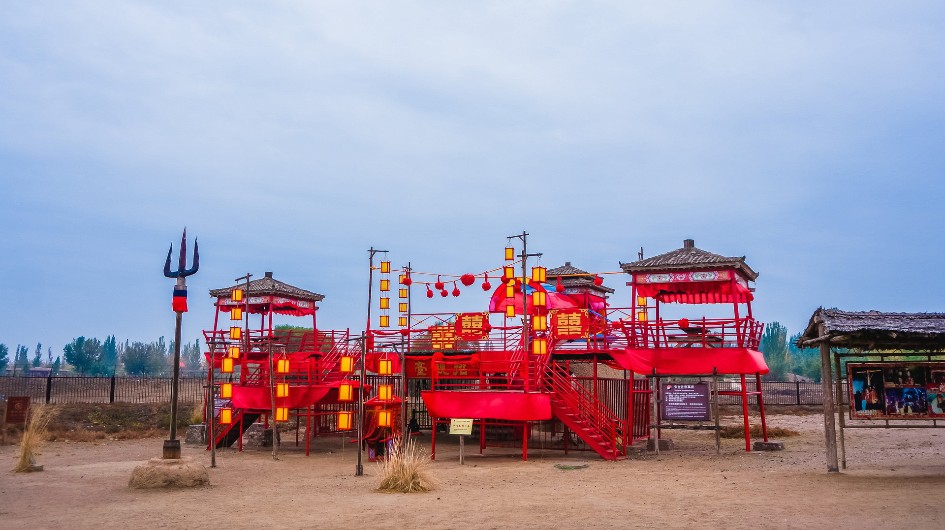 Exploring Zhenbeipu Western Film Studio
Your Journey’s Rewards:
Visit the Rock Carvings Scenic Area to explore ancient civilizations; experience the life atmosphere of old Yinchuan at Zhenbeipu Western Film Studio.
Educational Focus:
What are the characteristics of the Helan Mountain Rock Carvings?
Takeaway:
The rock carvings are closely connected with distinct themes, mostly in the form of combined patterns. The content mainly includes human faces, human figures, animals, living scenes, symbols, etc. In particular, the rock carvings of human faces are of various types and concentrated in distribution, which is extremely rare among rock carvings in the world.
Thought Challenge:
The patterns of the rock carvings in the Rock Carvings Scenic Area are becoming more and more blurred due to wind and sun exposure. What simple methods can be used to protect these "stone paintings"?
After breakfast, check your luggage to ensure nothing is left behind. Then the driver will take you to the airport or railway station. Say goodbye to your tour guide, and the trip will come to an end.
This tour is suitable for: School, Family, Team Building
What’s Included
- Experienced tour guides
- Entrance fee to all spots listed in the itinerary
- Well selected hotel accommodation
- Expert drivers and comfortable vehicles with air-conditioning
Hotel Options:
- Yinchuan Hotel Accommodation: Haiyue Jianguo Hotel
Wechat & WhatsApp: +86-13471279378