- Home
- City Tours
- Guangdong Tours
- 7-Day Cantonese Opera Tour
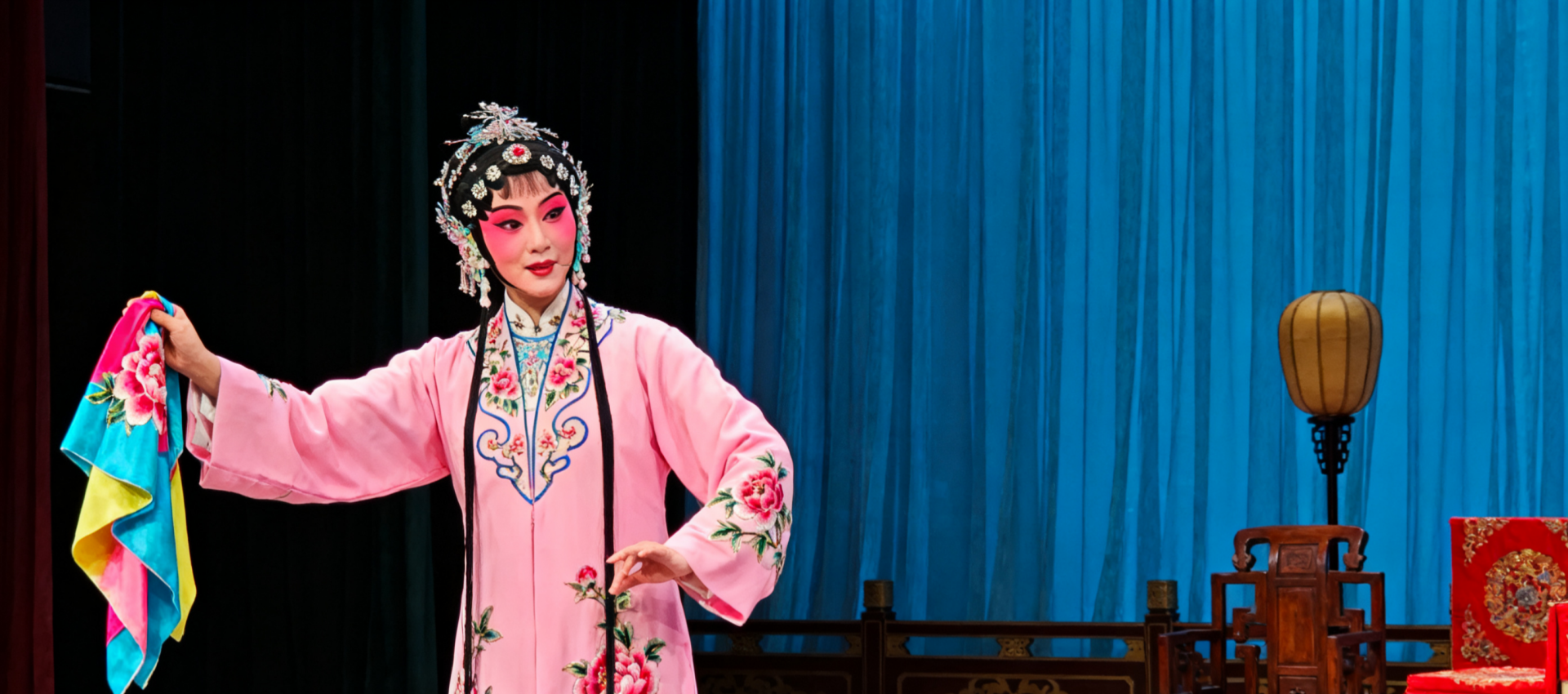
7-Day Cantonese Opera Tour
This is a 7-day itinerary specially designed for those who want to experience Cantonese Opera culture on-site, connecting two Lingnan cities: Foshan and Guangzhou. Throughout the journey, you can not only visit professional venues such as Cantonese Opera museums and art centers to learn about its history, but also listen to live Cantonese Opera performances at Qionghua Opera House and Lychee Bay Grand Stage, and even experience Cantonese Opera costume and makeup.
Whether you want to extend your stay at key venues like the Guangdong Cantonese Opera Museum, add more live performance experiences, or adjust the pace to focus on specific interests, we can tailor every detail for you. With the expertise of a leader boasting 10+ years of experience in China’s educational tourism industry, we can craft a personalized Cantonese Opera journey that perfectly aligns with your interests and travel rhythm. Inquire below to start crafting your exclusive customized itinerary.
Itinerary at a Glance
| Day | Location | Highlights |
|---|---|---|
| D1 | Foshan (Hotel) | Arrive in Foshan; hotel check-in |
| D2 | Foshan | Admire Lingnan-style architecture and traditional-modern integration at Lingnan Tiandi; learn about Cantonese Opera’s history and relics at the museum; taste local snacks at the pedestrian street |
| D3 | Foshan → Guangzhou | Visit Foshan Ancestral Temple and Wanfu Stage; enjoy tea and watch performances at the teahouse; transfer to Guangzhou and check in at the hotel |
| D4 | Guangzhou | Experience Cantonese morning tea culture; wander around Yongqing Fang’s arcade buildings; learn about Bruce Lee’s life and his father’s Cantonese Opera background; immerse in Cantonese Opera art at the museum |
| D5 | Guangzhou | Understand Cantonese Opera’s organizational inheritance at the guild hall; explore the master’s life and "Hong School" art at the former residence; relax at the Cantonese Opera-themed café; learn about Hongxiannu’s artistic achievements at the art center |
| D6 | Guangzhou | Enjoy lake scenery at the park; explore ICH crafts at the center; watch free public performances at the stage; enjoy tailored Cantonese Opera costume and makeup experience |
| D7 | Guangzhou, Airport/Railway Station | Hotel check-out; be sent to the airport or railway station by driver and guide; say goodbye to the guide and end the trip |
Trip Highlights
- Visit the 900-year-old Foshan Ancestral Temple and Wanfu Stage
- Taste tea and watch Cantonese Opera in the teahouse
- Watch free Cantonese Opera at Lychee Bay under the banyan tree
- Get Cantonese Opera makeup and costume
Tour Essentials

Quality
No Shopping Traps

Group Type
Private

Tour Focus
Chinese Opera

Accommodation
Nights:6

Best Season
Spring, Summer, Autumn, Winter
Full itinerary for 7-Day Cantonese Opera Tour
Upon arriving in Foshan, you will be escorted by a driver and a tour guide to your pre-booked hotel to rest and recharge. In the evening, you can set off on your own to explore local cuisines.
After having breakfast at the hotel in the morning, you will depart for Lingnan Tiandi. This area preserves the architectural style of Lingnan residential buildings, such as grey-brick houses and winding streets, while integrating modern commercial elements. Here, you can enjoy the unique scenery where tradition and modernity blend.
Then, walk to the Guangdong Cantonese Opera Museum, a typical Lingnan ancestral hall-style building. Inside, it exhibits Cantonese Opera scripts, costumes, musical instruments, props, audio-visual materials, etc. Follow the guide to learn about the formation and historical development of Cantonese Opera. Among the exhibits, the "Red Boat Model" represents the unique way early Cantonese Opera troupes toured and performed on water.
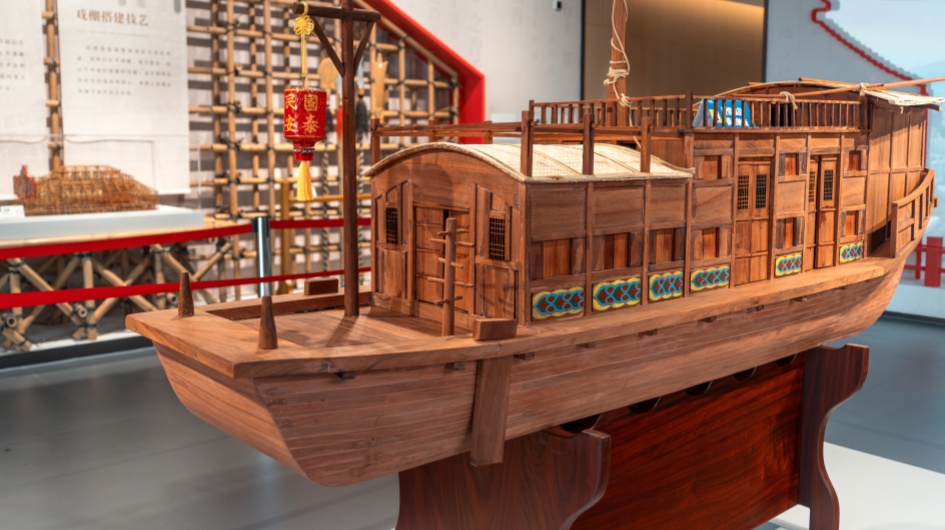 "Red Boat Model"
In the afternoon, take a vehicle to Daliang Huagai Road Pedestrian Street, a well-known food gathering spot. It gathers many time-honored stores that offer featured local cuisines, such as double-skin milk, Lunjiao cake, Chencun rice noodles, and Jun'an roasted pork. Meanwhile, the pedestrian street is home to hundreds of international brand chain stores, mainly selling clothing and general merchandise, making it an ideal place for shopping.
Your Journey’s Rewards:
At the Guangdong Cantonese Opera Museum, admire Cantonese Opera costumes, props, and historical documents to learn about the origin and development of Cantonese Opera. Listen to audio clips of classic arias and intuitively experience the artistic charm of "singing, acting, reciting, and martial arts" (the four core performing skills of Cantonese Opera). Wander around Lingnan Tiandi and appreciate the Lingnan arcade-style buildings.
Educational Focus:
What is the origin of the "Red Boat Model" collected in the Cantonese Opera Museum?
Takeaway:
The Red Boat of Cantonese Opera originated in the late Ming and early Qing dynasties. At that time, the Pearl River Delta was crisscrossed by a dense water network, making water transportation convenient. Red Boats thus became the main means of transportation and living quarters for Cantonese Opera troupes when they went out to perform. Early Red Boats were mostly converted from ordinary cargo ships, and later gradually developed into specialized ships for opera troupes.
Thought Challenge:
While displaying static cultural relics, how can the Guangdong Cantonese Opera Museum attract young people through interactive experiences and make Cantonese Opera culture more accessible to contemporary people?
After breakfast, depart for Foshan Ancestral Temple, one of the representatives of Lingnan architecture with a history of over 900 years. The Wanfu Stage inside Foshan Ancestral Temple is the oldest existing stage in Guangdong. Every day, many Cantonese Opera enthusiasts gather here to communicate or perform, giving you the opportunity to have an exchange about Cantonese Opera with them. If you visit here during Chinese holidays, you may also have the chance to watch a grand lion dance performance, as well as Cantonese Opera performances by actors on the Wanfu Stage.
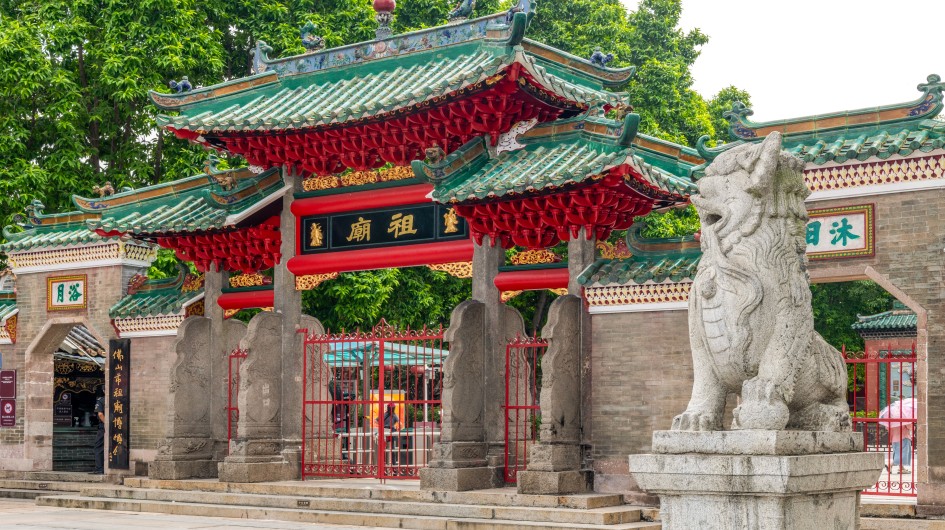 Foshan Ancestral Temple
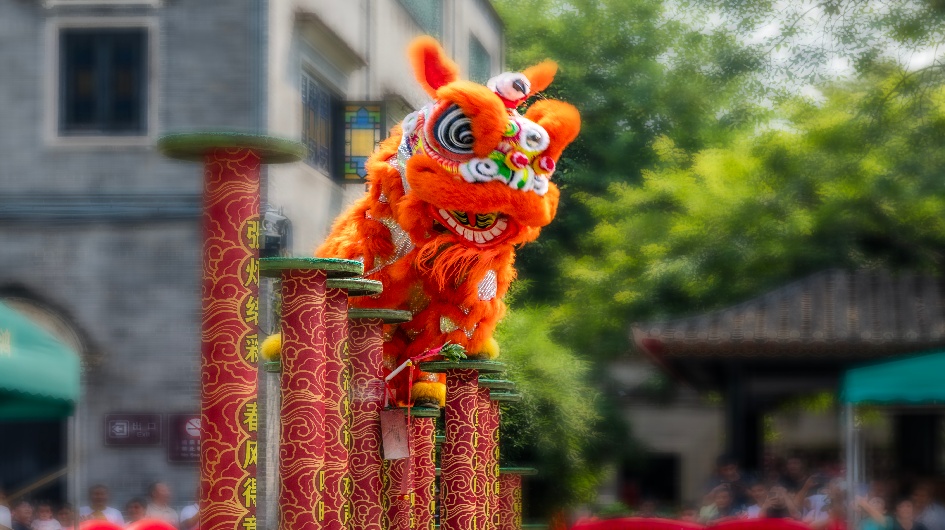 Watching the Lion Dance Performance at Ancestral Temple
Next, head to Qionghua Opera House・Teahouse. Renovated from a century-old ancient house, the teahouse retains the Lingnan architectural style. Here, you can enjoy tea while watching performances—there are regular Cantonese Opera, guzheng (Chinese zither) and lion dance shows to watch, and you can also taste Cantonese-style dim sum such as shrimp dumplings, chicken feet and Malay sponge cake.
After leaving the teahouse, a driver will take you to the station to head for Guangzhou. Upon arrival, check in at the hotel in Guangzhou, and then you can explore nearby food on your own.
Your Journey’s Rewards:
Visit the Wanfu Stage in Foshan Ancestral Temple to understand its importance to the spread of Cantonese Opera; step into Qionghua Opera House · Teahouse to experience the leisurely life of "watching opera while drinking tea in a teahouse".
Educational Focus:
What important role does the Wanfu Stage play for Cantonese Opera troupes?
Takeaway:
The Wanfu Stage was originally built for praying for blessings. During the Red Boat era, before a newly established opera troupe or an out-of-town opera troupe performed publicly in Foshan, their first show had to be staged on the Wanfu Stage. This not only served to pray for a smooth performance, but also made it easier to review the troupe's performance lineup and check the quality of the plays to be staged.
Thought Challenge:
While showcasing Cantonese Opera culture, how does Foshan Ancestral Temple protect its architecture?
In the morning, depart for Taotao Ju, a time-honored Cantonese dim sum restaurant, located in the Shangxiajiu Commercial District. As a long-established morning tea restaurant in Guangzhou, it features elegant and retro Lingnan-style decor. Here, you can order Cantonese delicacies such as shrimp dumplings, pineapple buns, sticky rice in lotus leaf, and boat congee. You can leisurely enjoy tea, eat dim sum, and chat with family or friends—this is exactly the most comfortable "tan cha" (a Cantonese term meaning "enjoying tea leisurely") moment in Guangdong's tea-drinking culture.
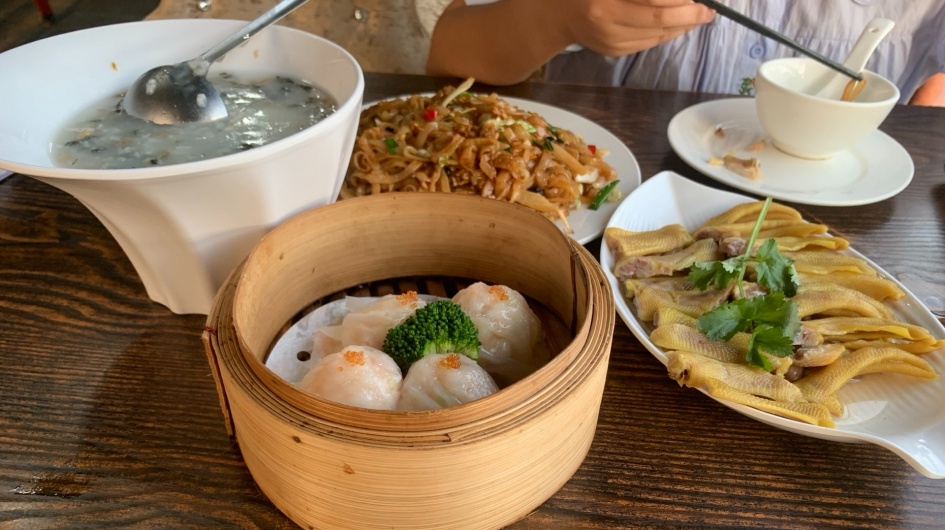 Leisurely Cantonese Morning Tea Experience
After the morning tea, head to Yongqing Fang. The streets here are lined with well-preserved arcade buildings, and many intangible cultural heritage (ICH) cultural and creative stores are scattered throughout the area. Follow the guide to Bruce Lee's Ancestral Home, which was originally the residence of Bruce Lee's father, Li Haiquan—one of the "Four Great Clowns" in Cantonese Opera. Influenced by his father, Bruce Lee began practicing martial arts at an early age. The cultural relics displayed in the ancestral home tell the life story of Bruce Lee.
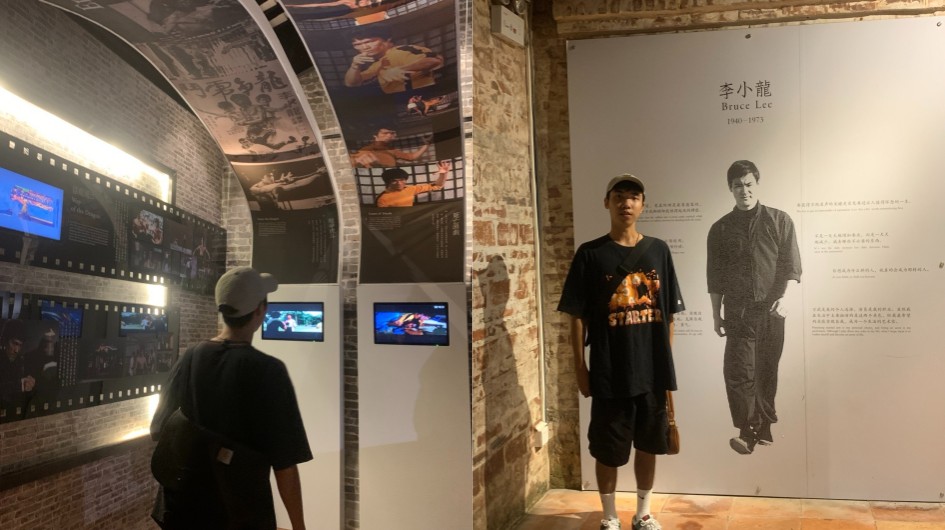 Visiting Bruce Lee's Ancestral Home in Yongqingfang
Next, set off for the Cantonese Opera Art Museum—the first museum dedicated to Cantonese Opera art in Guangzhou. It has functional areas including exhibition halls, a theater, a garden scenic area, and spaces for the inheritance and protection of Cantonese Opera art. You can wander through the buildings with Lingnan garden style, enjoy precious collections such as exquisite embroidered opera costumes and kingfisher-feather hair accessories, watch Cantonese Opera performances, learn about the life stories of famous opera stars, and explore Cantonese Opera in an immersive way.
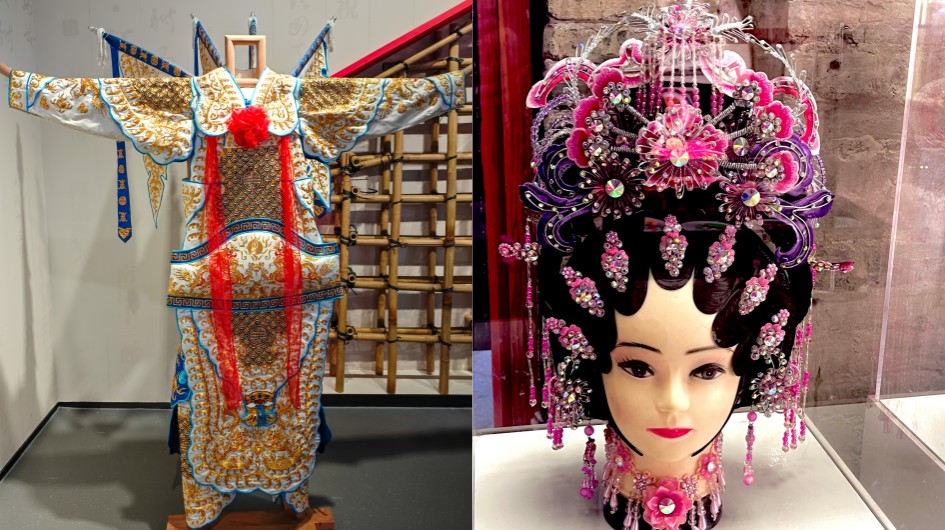 Admire Exquisite Cantonese Opera Costumes and Headwear
Your Journey’s Rewards:
Experience Guangzhou's tea-drinking culture at Taotao Ju; step into the Cantonese Opera Art Museum to gain an in-depth understanding of the role types and performance techniques of Cantonese Opera.
Educational Focus:
In what aspects does the unique charm of Cantonese Opera lie?
Takeaway:
Cantonese Opera is performed in Cantonese, which gives it a unique charm different from other local operas in terms of phonology, rhythm, and performance. Cantonese has rich tones, providing more expressive space for the arias of Cantonese Opera.
Thought Challenge:
How can Cantonese Opera achieve modern innovation and development?
In the morning, head to the Bahe Guild Hall. Once the central organization and command center of the Cantonese Opera industry in Guangdong Province, it was where renowned artists such as Ma Shizeng, Bai Jurong, Liang Shaojia, Hongxiannu, and Luo Pinchao once shone. The hall displays precious cultural relics including old opera costumes and handwritten scripts, which record the development trajectory of Cantonese Opera.
Next, visit Hongxiannu's Former Residence. This was the place where Hongxiannu lived and worked during her lifetime, and also an important exhibition platform for the "Hong School" art of Cantonese Opera. The former residence consists of a semi-three-story Western-style building with an off-white exterior wall and pink eaves, as well as an independent garden. The guide will lead you to visit functional areas such as the living room, practice room, study, cloakroom, and painting room to learn about Hongxiannu's life story.
 Hongxiannu's Statue in the Former Residence
Then, proceed to Hongmen Coffee. This café is filled with Cantonese Opera and Cantonese music elements. Its interior is decorated with Cantonese Opera-themed calligraphy and paintings, exquisite Eight-Immortal-style tables and chairs, and windows. There are also over 100 delicate miniature scenes and car models collected by the shop owner. Tradition and modernity collide here—this is the perfect time to order a cup of coffee and a pastry, and enjoy the surroundings slowly.
After learning about Hongxiannu's life at her former residence, arrive at the Hongxiannu Art Center to learn about her achievements in Cantonese Opera. You can browse the center's exhibitions of Hong School art research results, several sculptures of Hong School art figures, and hundreds of precious photos, gaining an in-depth understanding of Hongxiannu's artistic life and her achievements in fields such as opera and film.
Your Journey’s Rewards:
Step into the Bahe Guild Hall to learn about the organizational inheritance history of the Cantonese Opera industry; visit Hongxiannu's Former Residence to understand the integration of the Cantonese Opera master's art and daily life in a life-like setting; tour the Hongxiannu Art Center to review the achievements of "Hong School" art through exhibits and videos.
Educational Focus:
What are the special features of the "Hong School" singing style?
Takeaway:
Based on the traditional singing style of Cantonese Opera female roles (huadan), Hongxiannu integrated the singing methods of Peking Opera, Kunqu Opera, and Western bel canto techniques to create the "Hong Style" singing. With a wide vocal range and a balance of strength and softness, the Hong Style not only retains the gentle and delicate characteristics of Cantonese Opera but also incorporates a bold and magnificent style.
Thought Challenge:
As a traditional organization in the Cantonese Opera industry, how can the Bahe Guild Hall attract young Cantonese Opera practitioners in the contemporary era to maintain the organization's vitality and inheritance?
After breakfast, depart from the hotel for Liwan Lake Park. As an epitome of Lingnan water towns, the park is composed of multiple lake areas. Ancient bridges, pavilions, corridors and weeping willows set off each other, and you can stroll along the long corridor to enjoy the scenery. The grand stage in the park hosts free Cantonese Opera performances every day.
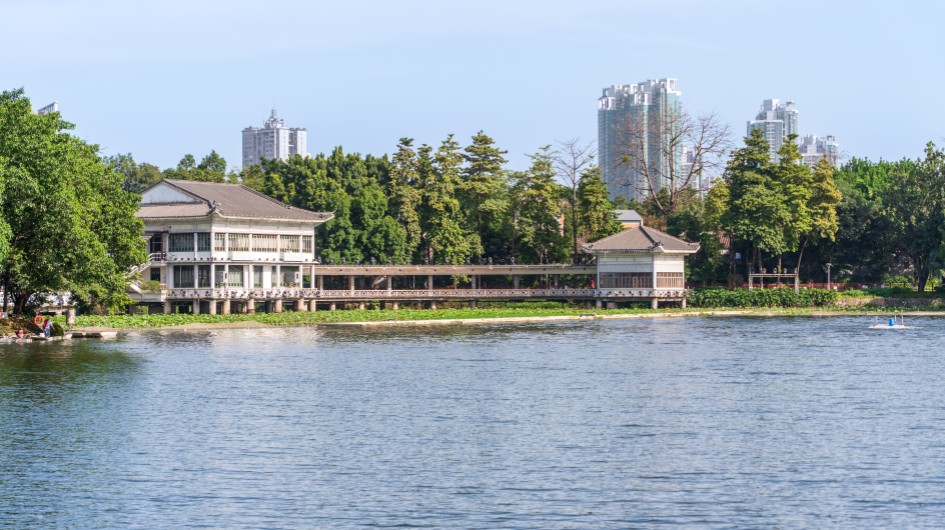 Liwan Lake Park
After leaving the park, head to the Guangzhou Cultural and Art Development Center (Guangzhou Cantonese Opera Inheritance Institute). There is an intangible cultural heritage (ICH) handcraft area here, where you can experience techniques such as mother-of-pearl inlay and kingfisher-feather inlay—skills often used in the production of Cantonese Opera costumes. You can personally practice these ICH crafts and create a unique work of art.
In the afternoon, go to the Lychee Bay Grand Stage, which holds public welfare performances of Cantonese Opera and Cantonese music every afternoon. The stage is under a large banyan tree; you can sit on the stone steps under the banyan tree and enjoy the performances by Cantonese Opera actors together with many Cantonese Opera enthusiasts.
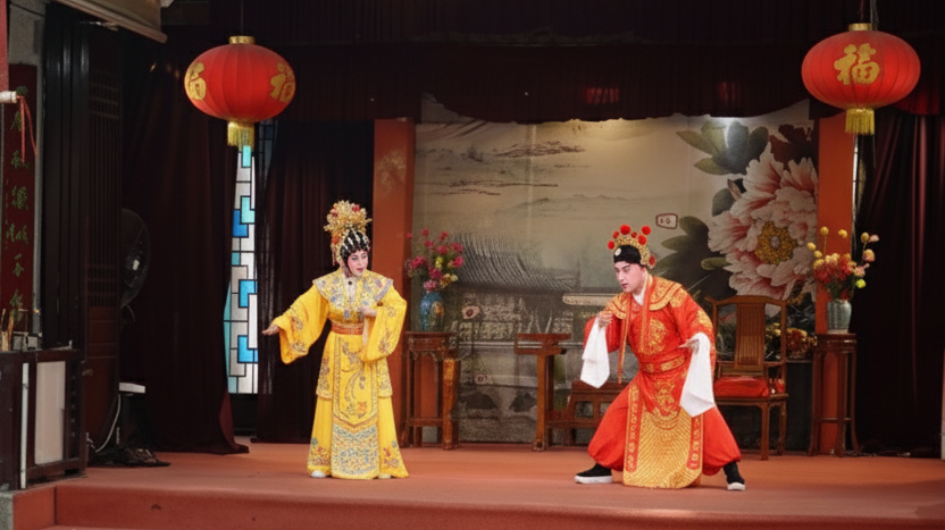 Lychee Bay Grand Stage
Finally, visit the Yueyouzhuang Art Space to experience Cantonese Opera character dressing. A makeup artist will create a tailored makeup look and hairstyle for you, and you will put on exquisite costumes such as phoenix coronets with embroidered robes and python robes (traditional robes for noble roles in opera). Finally, a senior photographer will take photos of you to record your opera look.
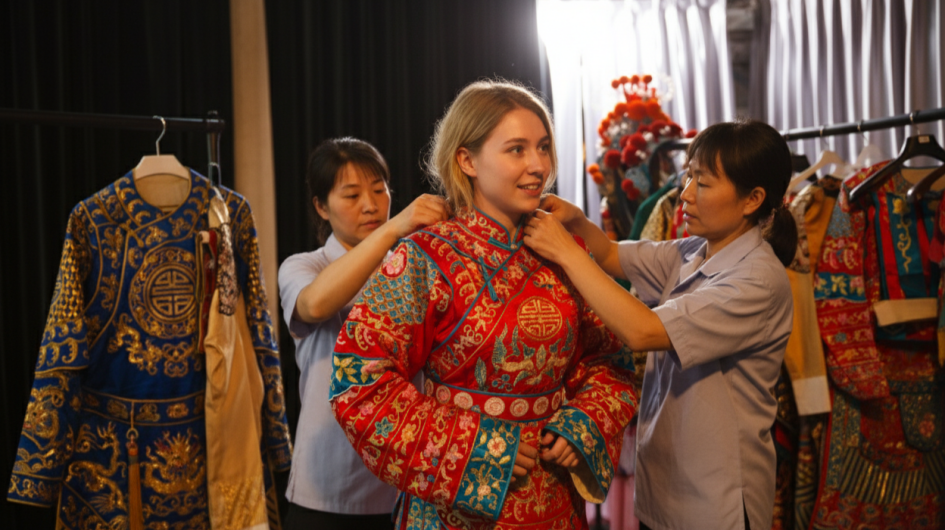 Cantonese Opera Role-Playing
Your Journey’s Rewards:
Learn about ICH handcrafts at the Guangzhou Cultural and Art Development Center (Guangzhou Cantonese Opera Inheritance Institute); enjoy folk Cantonese Opera performances at the Lychee Bay Grand Stage; experience Cantonese Opera costume wearing and makeup at the Yueyouzhuang Art Space, and personally feel the fun of "transforming" into a Cantonese Opera character.
Educational Focus:
What significance does the free Cantonese Opera performance at the Lychee Bay Grand Stage have for the dissemination of Cantonese Opera culture?
Takeaway:
Free open performances allow many teenagers to be exposed to Cantonese Opera in their daily lives, gradually develop an interest in it, and become potential inheritors. These free performances also provide a practice platform for Cantonese Opera actors and enthusiasts, encouraging them to make innovative attempts based on traditions.
Thought Challenge:
How can the free performances at the Lychee Bay Grand Stage attract more young people to stop and watch?
After breakfast, pack your luggage and double-check to ensure nothing is left behind. Then, a driver and tour guide will take you to the airport or railway station. Say goodbye to the guide and conclude your trip.
This tour is suitable for: School, Family, Team Building, Traditional Opera Enthusiasts
What’s Included
- Experienced tour guides
- Entrance fee to all spots listed in the itinerary
- Well selected hotel accommodation
- Expert drivers and comfortable vehicles with air-conditioning
Hotel Options
- Foshan Hotel Accommodation: Canton First Estate
- Guangzhou Hotel Accommodation: Guangzhou Hotel
Wechat & WhatsApp: +86-13471279378