- Home
- Asia Tours
- CET-VN-02
South Vietnam Cultural and Service Tour
Itinerary at a Glance
| Day | Location | Highlights |
|---|---|---|
| D1 | Ho Chi Minh City | Arrive at airport & check into hotel; visit striking post office, Notre Dame Cathedral & bustling markets; explore War Remnants Museum & hidden war-era bunker |
| D2 | Ho Chi Minh City → Cu Chi → Ho Chi Minh City | Explore Cu Chi Tunnels; join "Great Race" urban challenge |
| D3 | Ho Chi Minh City → Mekong Delta | Cruise Mekong Delta waterways; explore small island cottage industries; stay at family homestay |
| D4,5 | Mekong Delta | Meet local school staff & construction team; start school renovation project |
| D6 | Mekong Delta → Ho Chi Minh City → Departure | Finish school renovation & attend community thank-you ceremony; cycle around village & explore Ho Chi Minh City’s bustling market; say goodbye at airport & board flight home |
Trip Highlights
- Explore the Cu Chi Tunnels to learn about the military wisdom during the Vietnam War
- Discover architectural wonders such as Notre Dame Cathedral and the striking post office
- Participate in the rural school renovation service project to gain an in-depth understanding of Vietnam’s education system
- Explore waterways—one of the important means of transportation in the Mekong Delta region
- Meet and interact with local families in the Mekong Delta to learn about their daily life in the delta
Tour Essentials

Quality
No Shopping Traps

Group Type
Private

Tour Focus
Culture, History

Accommodation
Nights:5

Best Season
Spring, Summer, Autumn, Winter
Full itinerary for South Vietnam Cultural and Service Tour
After arriving at Ho Chi Minh International Airport, you will be greeted by a tour guide who will escort you to your hotel. After a short rest, you will set off to explore the bustling markets in Ho Chi Minh City, where a variety of snacks, handicrafts, and souvenirs are available, and you can also taste local delicacies. Next, you will explore some architectural wonders. First, you will visit the striking post office—a masterpiece of French-style architecture, with its cream-yellow exterior walls paired with green window frames, exuding strong French charm.
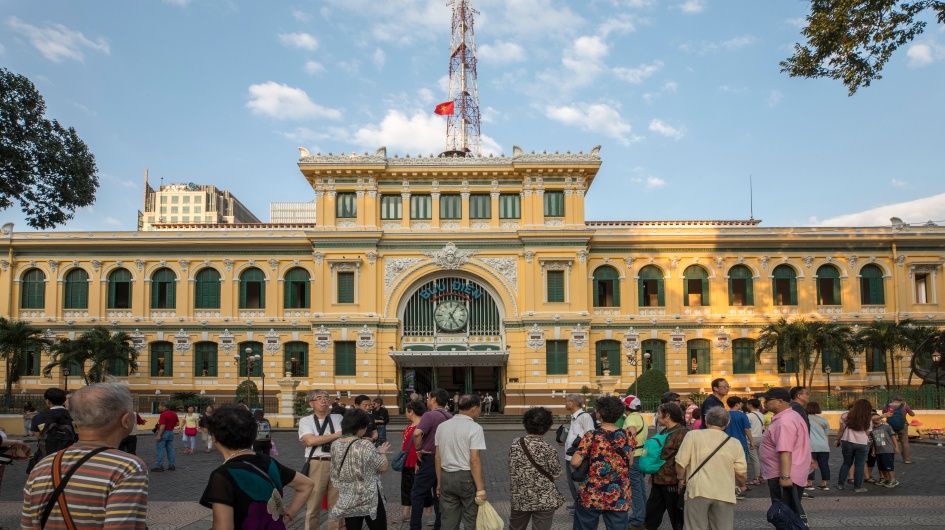 The Architecture of the Striking Post Office
Then, you will visit Notre Dame Cathedral, one of the most iconic buildings in Ho Chi Minh City. Its red-brick exterior walls and towering twin spires are modeled after Notre-Dame de Paris, featuring a unique Gothic architectural style. You will then proceed to the War Remnants Museum. The museum displays various cultural relics, photos, and materials from the Vietnam War, as well as large military equipment such as tanks and aircraft. Here, you can gain an in-depth understanding of the complexity of the Vietnam War (referred to as the "American War" in Vietnam).
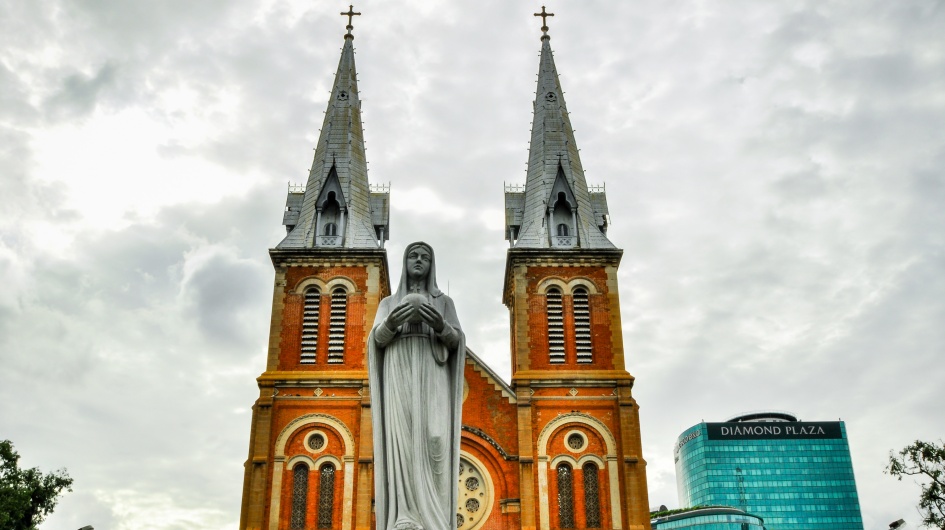 Appreciating the Architectural Style of Notre Dame Cathedral
Finally, you will set off to explore the hidden war-era bunker beneath the Independence Palace. During the Vietnam War, this bunker was used to store a large amount of weapons, and revolutionaries would gather here to plan military activities. The bunker exhibits cultural relics such as old communication equipment and battle maps, serving as an important window to understand the history of the Vietnam War. You can visit the offices and equipment here to learn about urban warfare tactics of that era.
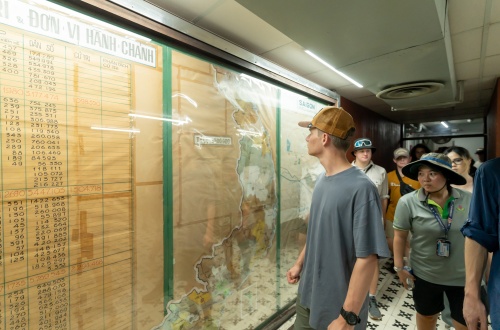 Visiting the Bunker
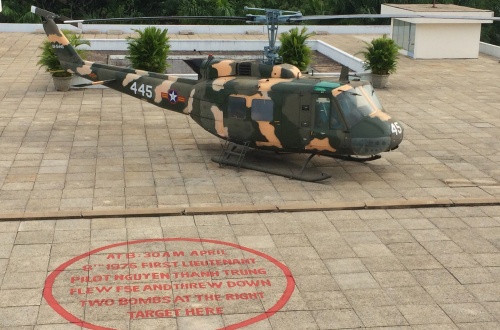 Helicopter Equipment Exhibits
Your Journey’s Rewards:
Learn about the architectural features of landmarks like Notre Dame Cathedral and the striking post office. Gain insights into Vietnam’s war history through explorations of the War Remnants Museum and the war-era bunker.
Educational Focus:
What is the structure and function of the war-era bunker?
Takeaway:
The war-era bunker is a two-story underground structure, with multiple functional rooms inside, including a combat command room, a communication room, an equipment room, a map room, and offices. The bunker’s corridors are narrow and cramped, and its spatial layout is labyrinth-like—this design enhances concealment and defense capabilities during combat. Isolated from the outside world, the bunker has extremely strong security performance and once served as the core command center of the South Vietnamese regime.
Thought Challenge:
What cultural significance does the war-era bunker hold as a historical attraction?
In the morning, set off to explore the Cu Chi Tunnels. These were important military facilities during the Vietnam War. The tunnel system is vast and complex—during the war, it served as a hiding place, a communication and supply route, and even a living area for up to 14,000 Viet Cong guerrillas. You will walk and crawl through these narrow spaces, inspect the ingenious traps, and watch a black-and-white propaganda film to gain an in-depth understanding of the tunnels' functions and the history of the war.
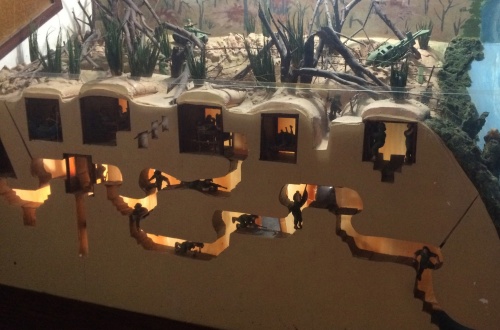 The cross-sectional model of the Cu Chi Tunnels
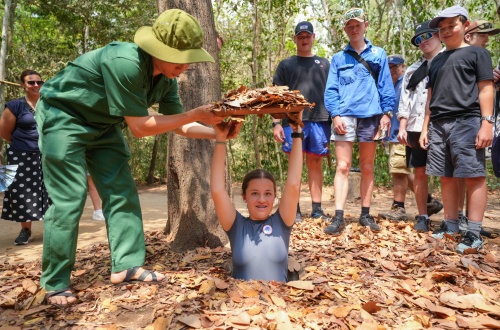 The interpreter explaining how to enter the tunnel
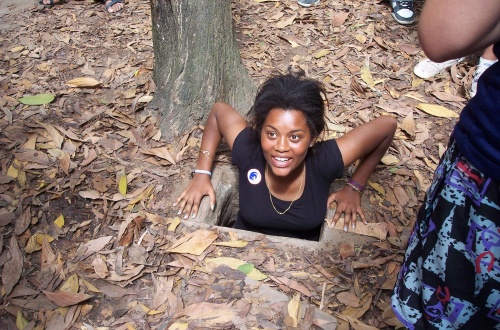 Entering the tunnel
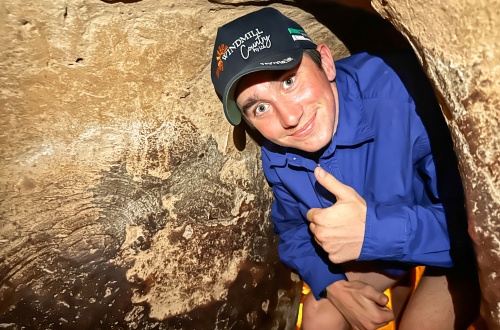 Inside of the tunnel
After returning to Ho Chi Minh City, participate in a fun race competition. Your team will be divided into smaller groups, and each group will be provided with a simple map and task instructions. Navigate through the busy streets according to the map, complete a series of written and photography tasks, and identify key elements of the city's infrastructure at the same time. This will allow you to gain a deeper understanding of the city.
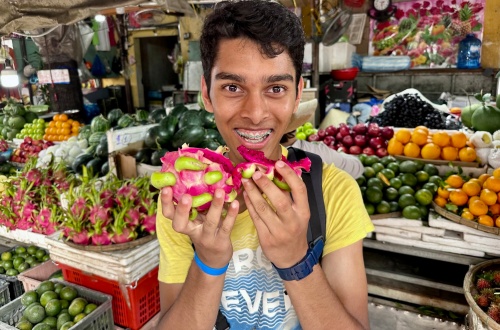 Students Participating in the Racing Competition
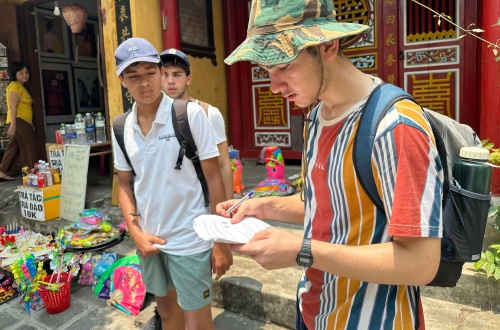 Cooperating in groups to find the hidden answers in the information
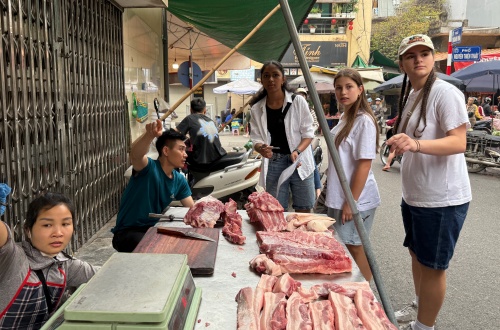 Students asking local residents for help
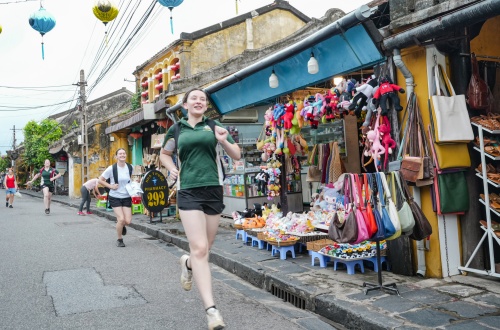 Students racing for important information
Your Journey’s Rewards:
Gain an in-depth understanding of the tunnel functions and war history during the exploration of the Cu Chi Tunnels. Participate in an educational competition and learn about the city's characteristics through the competition.
Educational Focus:
What defensive designs does the Cu Chi Tunnels have?
Takeaway:
The top of the tunnels is designed in a triangular or arch shape, which can withstand the pressure of a 50-ton tank rolling over and the impact of a 100-kilogram bomb. The entrances are concealed, often camouflaged with leaves and weeds, and only large enough for one person to enter or exit. Additionally, the interior is equipped with various defensive mechanisms such as traps and bends (to block toxic gas).
Thought Challenge:
What drawbacks does the Cu Chi Tunnels have?
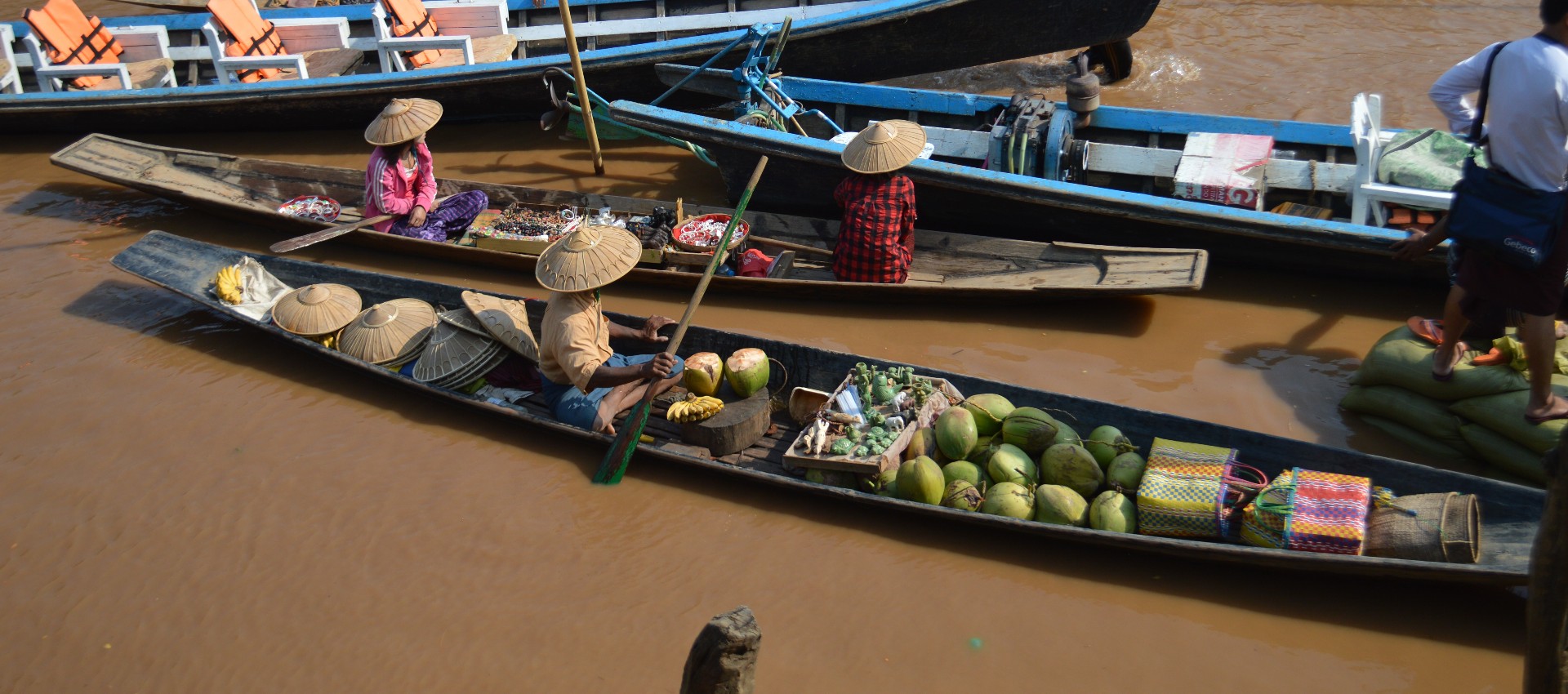
Today, you set off for the waterways of the Mekong Delta. Waterways are one of the important means of transportation in the Mekong Delta region. Local residents often travel between villages and towns by boat to transport people, agricultural products, daily necessities, and other goods. Next, you head to a small island in the Delta to experience a family homestay in the Mekong Delta. During the homestay, you and your team need to help prepare meals.
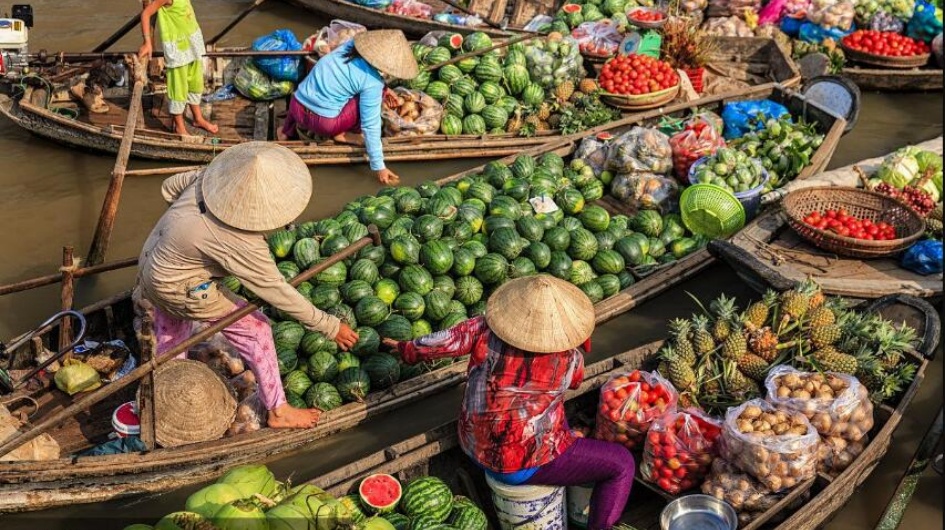 Floating Market on the Waterway
In the afternoon, you will cruise along the Ham Luong River and stop at a small island in the Delta to explore local family-run cottage industries, including a workshop specializing in coconut shell crafts. There, you will learn about the traditional coconut handicraft techniques. Finally, you will meet with several local families and talk about daily life in the delta.
Your Journey’s Rewards:
Learn about the important means of transportation in the delta region, and gain in-depth understanding and experience of daily life there.
Educational Focus:
What help does the delta’s waterway system provide to the local rural areas?
Takeaway:
The abundant waterway system provides sufficient water sources for agricultural production in the delta region. Water from rivers and waterways can be diverted to farmland for irrigation, meeting the growth needs of crops such as rice and fruits. At the same time, during the rainy season, the waterways also play a role in drainage to prevent floods. Numerous tributaries and waterways have become an important way to connect villages.
Thought Challenge:
While waterways bring convenience to villagers, what hazards might they also cause?
After breakfast, you will meet with staff from the local school and the construction team you will collaborate with to learn important information and receive training on relevant skills. Afterwards, you will launch the rural school renovation service project, which includes renovating the public areas around the school, improving sidewalks, fences, and amenities.
You and other teams will collaborate to take charge of various construction and maintenance tasks, such as bricklaying, cement plastering, hammering, sawing, and transporting materials. Local craftsmen and our tour guides will provide supervision and assistance. Each afternoon, you will return to the family homestay in the Mekong Delta to help prepare meals.
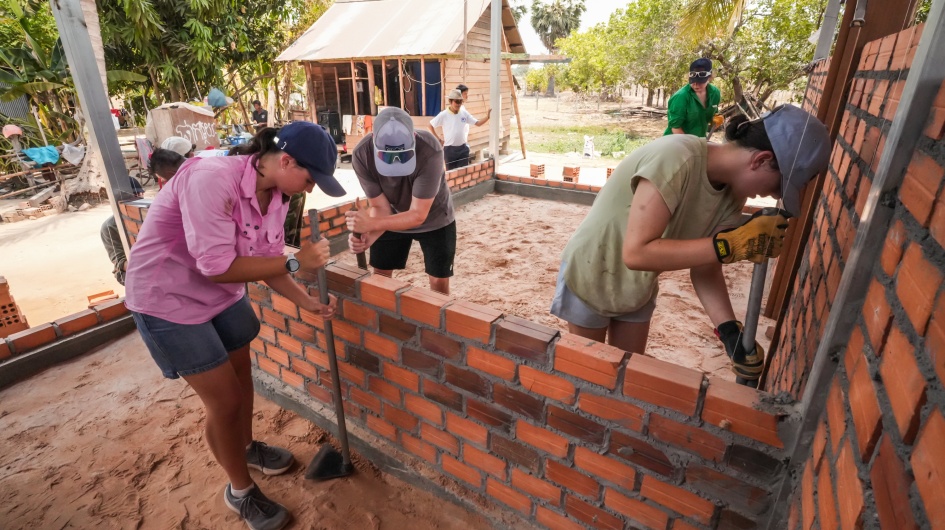 School Construction
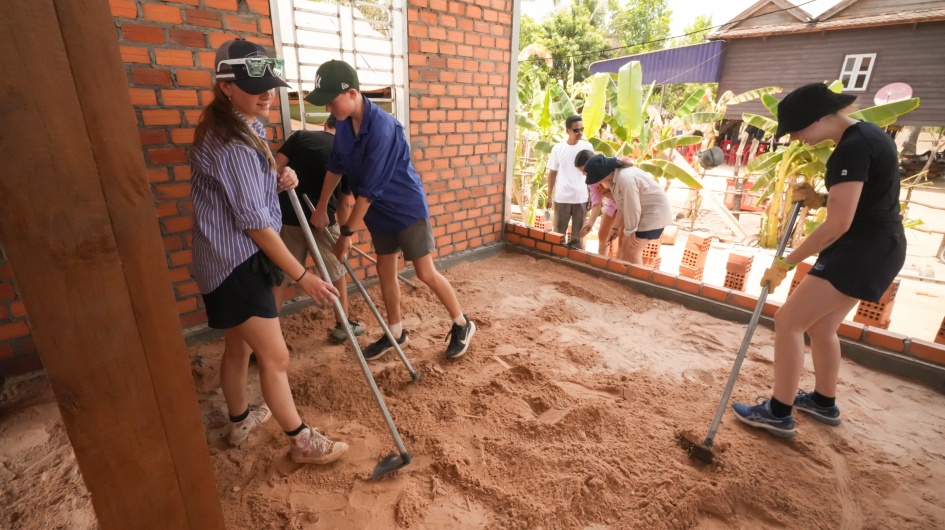 Student Collaboration
Your Journey’s Rewards:
Participate in the rural school renovation service project—while improving the environment of the local school, you will also learn a variety of construction skills.
Educational Focus:
What problems has the Mekong Delta encountered in the process of educational development?
Takeaway:
Characterized by rivers and waterways, the delta still faces significant challenges in investing in facilities and human resources. The construction of facilities mainly focuses on meeting the needs of classrooms; many schools in the region still lack subject-specific classrooms, multi-purpose halls, and workshops. In some areas, there is also a shortage of teachers.
Thought Challenge:
What measures can be taken to address the problems in the educational development of the delta?
This morning is dedicated to the final finishing work for the school renovation and maintenance project, followed by participation in a short appreciation ceremony. Before returning to Ho Chi Minh City, you will ride a bicycle around the village for a tour and visit family-run small handicraft workshops to learn about the rural life here.
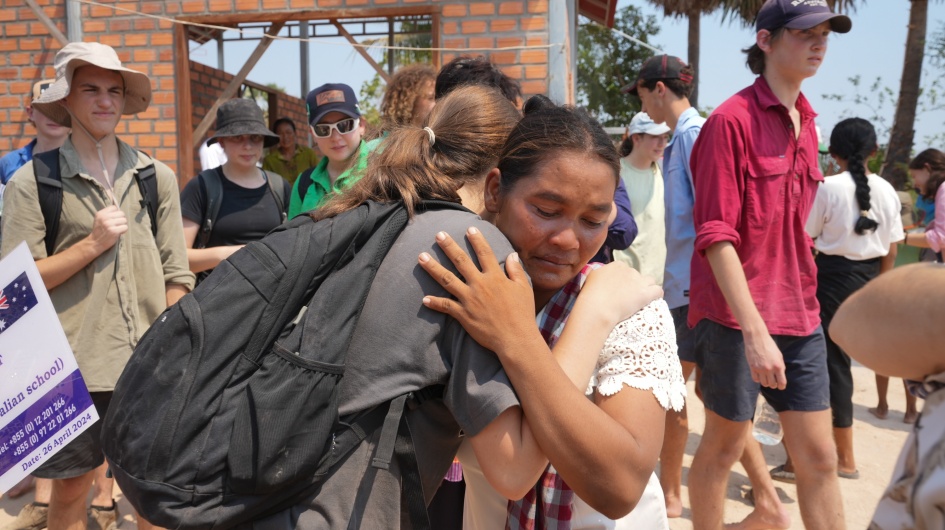 Farewell to Villagers After Community Project Conclusion
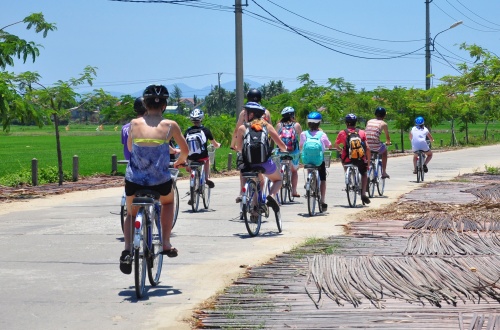 Cycle to a serene beach
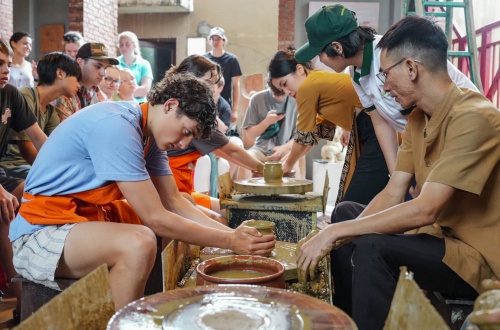 Visiting Family-Run Small Handicraft Workshops
Finally, you will explore a lively market to learn about the characteristic goods and handicrafts here, and test your bargaining skills. After the visit, you will head to the airport, say goodbye to the tour guide and complete the check-in process there, marking the end of the trip.
Your Journey’s Rewards:
Visit family-run small handicraft workshops in the delta to understand the impact of these small-scale handicraft industries on the rural economy. Observe the local people’s food culture and lifestyle during the market exploration.
Educational Focus:
What are the important handicraft workshops in the Mekong Delta?
Takeaway:
There are bamboo weaving workshops, coconut processing workshops, silk and weaving workshops, wood carving and furniture workshops, and ceramic workshops. These handicraft workshops are not only an important supplement to the local economy but also important carriers for the inheritance of traditional culture.
Thought Challenge:
Coconut processing workshops are one of the important economic sources for the local area. What products can coconuts be processed into?
This tour is suitable for: School, Family, Team Building
What’s Included
- All accommodation, transport, activities, entrance costs and other programs as described in the itinerary
- Professional Edventure Travel tour leader throughout the trip & additional specialist guides
- Extensive destination-specific risk management and assessment
- School renovation costs valued at (US$2,000) per group
- 24-hour IN-COUNTRY support
- Certificate of Achievement (including community service, activities, and skills developed)
- Tips for tour leaders, local guides & drivers
Wechat & WhatsApp: +86-13471279378