- Home
- Asia Tours
- CET-VN-03
North Vietnam Educational & Community Service Tour
This 8-day Vietnam trip focuses on historical exploration, cultural immersion and hands-on experience, taking you to Hanoi, Mai Chau and Ninh Binh. In Hanoi, visit spots like the Old Quarter, Temple of Literature, French-style buildings and war landmarks. Then join Mai Chau's White Thai cultural activities and help build a community house, before enjoying Ninh Binh's karst scenery. It mixes learning and practical tasks, deepens your understanding of Vietnam's history and culture, shares sustainability ideas and makes the trip educational and warm.
Itinerary at a Glance
| Day | Location | Highlights |
|---|---|---|
| D1 | Hanoi | Arrive and check into the hotel, attend itinerary schedule review meeting |
| D2 | Hanoi | Stroll ancient commercial streets with craft heritage, visit thousand-year-old scholarly temple with imperial exam steles, tour wartime prison museum, watch traditional water puppet show |
| D3 | Hanoi | Pay respects at Soviet-style revolutionary mausoleum, view wartime aircraft wreckage by lake and hike nearby village, taste fusion food at vocational training restaurant, admire French Gothic and neoclassical architecture, relax by historic lake, explore night market |
| D4 | Hoa Binh - Mai Chau | Learn hydropower knowledge at Soviet-built dam, watch turbine operation in underground workshop, visit White Thai stilt houses, enjoy local family dinner, attend community house-building project briefing |
| D5 | Mai Chau | Learn stilt house construction steps and safe tool use, work in groups on nailing/sawing/material transport, use recycled wood for eco-friendly building, collaborate with local villagers on construction |
| D6 | Mai Chau | Continue White Thai community stilt house building, weave protective nets and lay roof materials, work with local craftsmen, follow traditional ethnic architectural design |
| D7 | Mai Chau - Hanoi | Finish stilt house finishing work, attend community housewarming ceremony, bid farewell to White Thai villagers, take hands-on Vietnamese cooking class, learn to make local dishes |
| D8 | Ninh Binh | Cycle through limestone karst mountains and terraced rice fields, take wooden boat cruise past karst formations, explore caves with glowing stalactites |
| D9 | Ninh Binh - Hanoi | Visit ancient Buddhist pagoda and learn local Buddhist traditions, climb 400 steps to karst viewing platform for panoramic views, Optional: visit thousand-year-old ancient imperial citadel, transfer to airport, check out and depart |
Trip Highlights
- Explore Hanoi’s historic sites and watch water puppet shows
- Join White Thai community to build traditional stilt houses
- Learn hydropower knowledge at Hoa Binh Dam
- Cycle through Ninh Binh’s limestone mountains and take cave cruises
- Attend hands-on Vietnamese cooking class in Hanoi
- Visit Bich Dong Pagoda and climb for karst panoramic views
Tour Essentials

Quality
No Shopping Traps

Group Type
Private

Tour Focus
Culture, Education, Community Service

Accommodation
Nights:8

Best Season
Spring, Summer, Autumn, Winter
Full itinerary for North Vietnam Educational & Community Service Tour
When the students get to Hanoi International Airport, our tour guide will meet them and take them to the hotel to check in. We'll have a short meeting later to go over the schedule and make sure everyone knows what to expect on the trip.
First, we visit Hanoi's famous Old Quarter. Its 36 Old Streets once each sold a specific type of product, and their layout still shows traces of skilled craftsmen serving past dynasties. Next, we go to the Temple of Literature, which preserves Hanoi's ancient traditions: it has buildings with a 1,000-year history and a stone stele engraved with the names of those who passed the imperial exams—modeled after China's imperial examination system in ancient Vietnam.
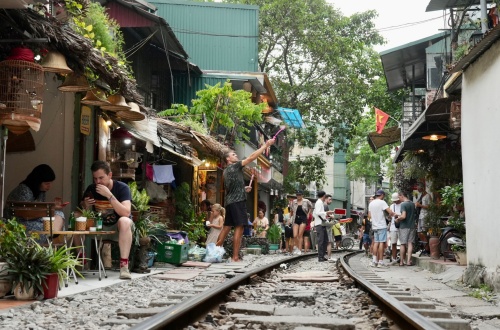 The train street near the 36 Old Streets
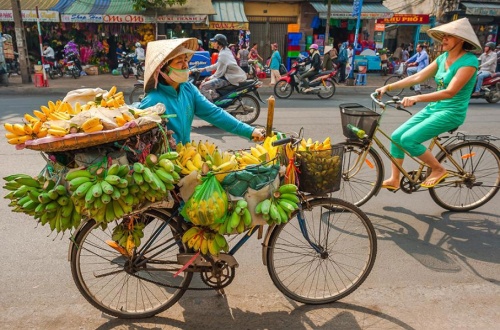 A Vietnamese woman selling bananas by bike
Next, we visit the historic Hoa Lo Prison Museum. "Hoa Lo" is a Vietnamese transliteration, meaning "fire stove" originally, so named because there were many blacksmith shops nearby in the early years. During the Vietnam War in the 1960s-1970s, downed U.S. pilots were detained here. This notorious prison was ironically called "Hanoi Hilton" by the pilots—"Hilton" is an international, well-known hotel brand, and they used it to mock the prison's conditions.
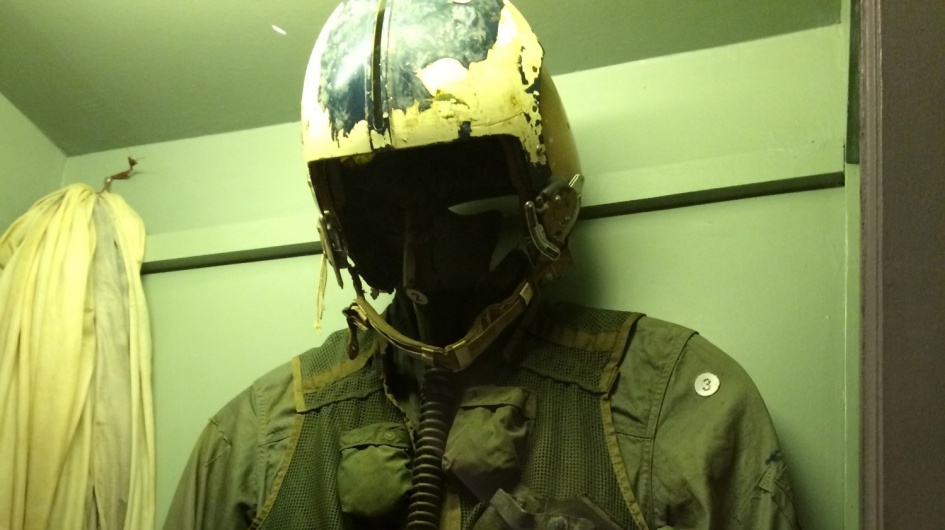 Soldiers' uniforms in the Hoa Lo Prison Museum
We watch a show by Hanoi's famous Water Puppet Troupe at the end of the day's schedule. The "water stage" is a pond, where folk tales and old stories are brought to life by performers. Using their secret puppet-handling skills, plus fireworks and storytelling, the puppeteers make us feel like time-traveling—we experience this ancient entertainment that used to be popular in villages.
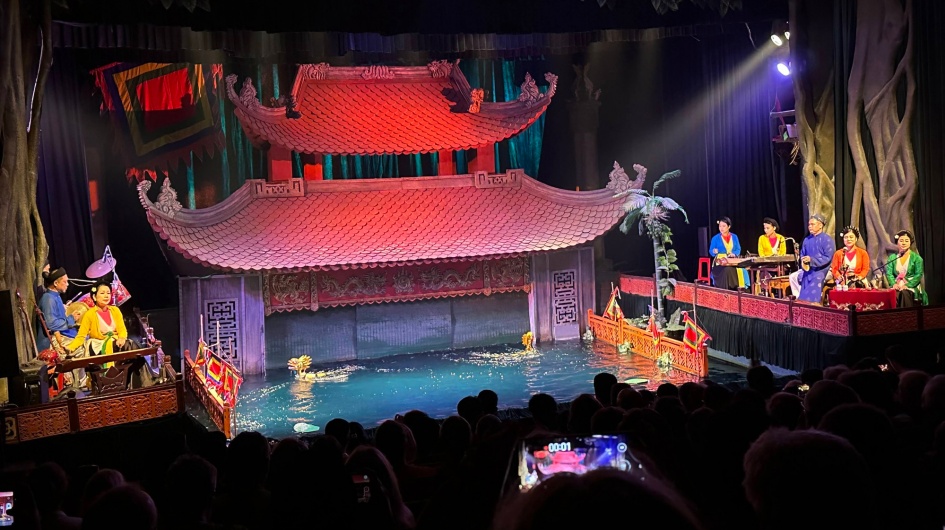 Water puppetry
Your Journey's Rewards:
Explore Hanoi's Old Quarter to see historical craft traces. Visit the Temple of Literature to learn ancient traditions. Tour the Hoa Lo Prison Museum to learn about the era's history. Watch water puppet shows to experience traditional entertainment.
Educational Focus:
How do the imperial exam-related relics kept at the Temple of Literature show the cultural and educational exchanges between ancient Vietnam and China?
Takeaway:
The Temple of Literature has stone steles with imperial exam passers' names and 1,000-year-old buildings. These show that ancient Vietnam used China's imperial examination system. This shows cultural and educational exchanges—Vietnam used China's education model to pick talents, helping Confucian culture spread locally. These relics prove cross-cultural learning shaped ancient Vietnam's education and how it chose social talents, showing how deep regional cultural interaction was.
Thought Challenge:
How might ancient Vietnam's historical education development and social talent structure have been different from what the Temple of Literature's relics now show if it had not used China's imperial examination system?
We first go to the Ho Chi Minh Mausoleum this morning. It's a Soviet-style building with a simple, solemn look, and it's where Ho Chi Minh rests. In the 1960s during the Vietnam War, Ho Chi Minh was North Vietnam's President and leader. Later, he became a very influential nationalist leader and political strategist in Vietnam. He died in 1969—about 6 years before the war ended—and many Vietnamese still respect him a lot today.
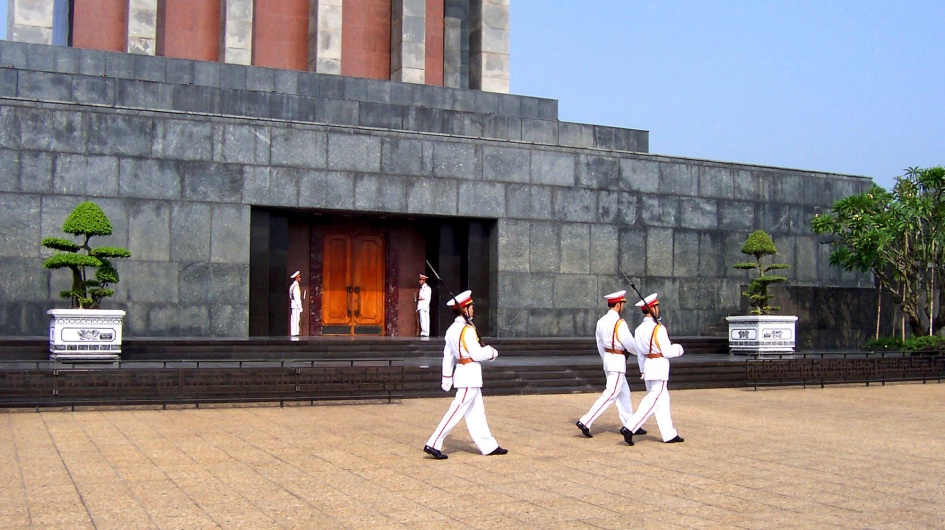 The on-duty soldiers in front of Ho Chi Minh Mausoleum
Later, we come to B52 Lake, where a U.S. military aircraft was shot down in the late stage of the Vietnam War. Around the lake is a small village. We will hike through this village to explore these lively roadside markets and experience the daily life atmosphere of Hanoi's suburbs firsthand.
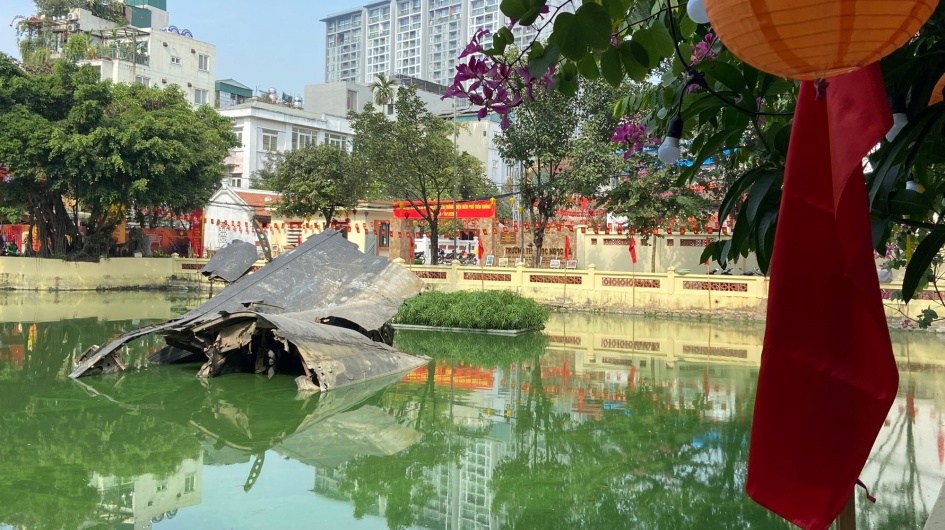 B52 Lake
We eat lunch at KOTO Restaurant—a vocational training place. It gives hospitality and catering skills to disadvantaged youth to help them get jobs. Staff tell us about the social enterprise's way of working and where graduates go, like star hotels and chain restaurants.
In the afternoon, we go to the French-style area. We check out the Gothic St. Joseph's Cathedral and the neoclassical Hanoi Opera House. In the evening, we'll walk by Hoan Kiem Lake to enjoy the view, then go to Hanoi Night Market to feel the local evening mood.
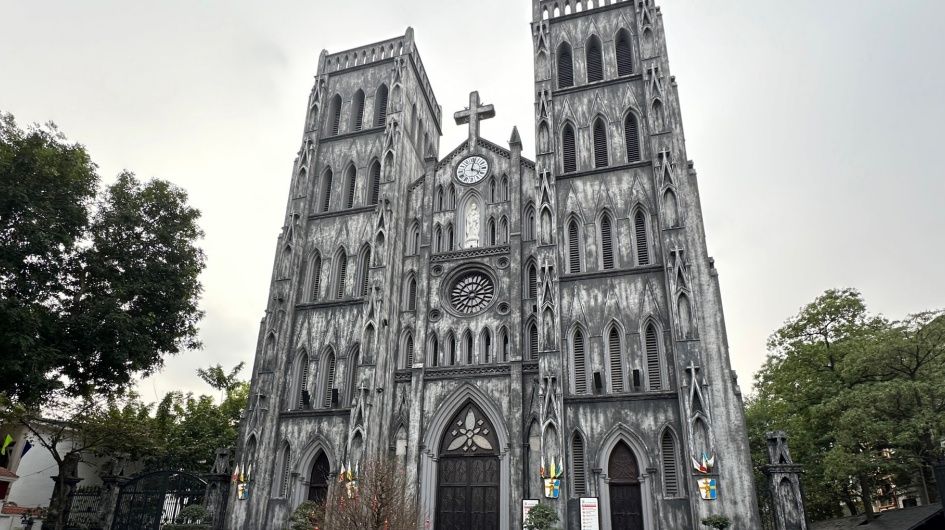 St. Joseph's Cathedral
Your Journey's Rewards:
Discover Vietnam's past at Ho Chi Minh Mausoleum and see war remains at B52 Lake. Enjoy French-style buildings after lunch at KOTO, which helps young people learn job skills. End your day exploring Hanoi's busy night market near Hoan Kiem Lake.
Educational Focus:
How does the Soviet-style architecture of Ho Chi Minh Mausoleum relate to Vietnam's nationalist narrative?
Takeaway:
The Soviet-style architecture of the Ho Chi Minh Mausoleum is a materialized reflection of ideological trends during the Cold War. Its solemn geometric form and large scale not only follow socialist realist aesthetics but also integrate the axial layout of traditional Vietnamese mausoleums. This architectural language strengthens Ho Chi Minh's symbolic status as the "Father of the Nation" through spatial authority, and at the same time reflects Vietnam's integration of multiple modernities in the process of decolonization—rejecting French colonial heritage while reconstructing national identity through the Soviet model.
Thought Challenge:
When a building holds revolutionary memories, national identity and tourism functions, how to balance its political narrative and diverse historical interpretation possibilities?
We will go by bus southwest to Hoa Binh Province and Vietnam's Da River basin. The trip, focused on the Hoa Binh Hydropower Dam—a key local energy place built with Soviet help (1979-1994)—will involve over 35,000 workers, soldiers and 750 Russian engineers who provided technical support. Via explanations, you will learn hydropower's clean, sustainable good points, then go to the underground workshop to watch huge high-speed turbines closely and see core power equipment work.
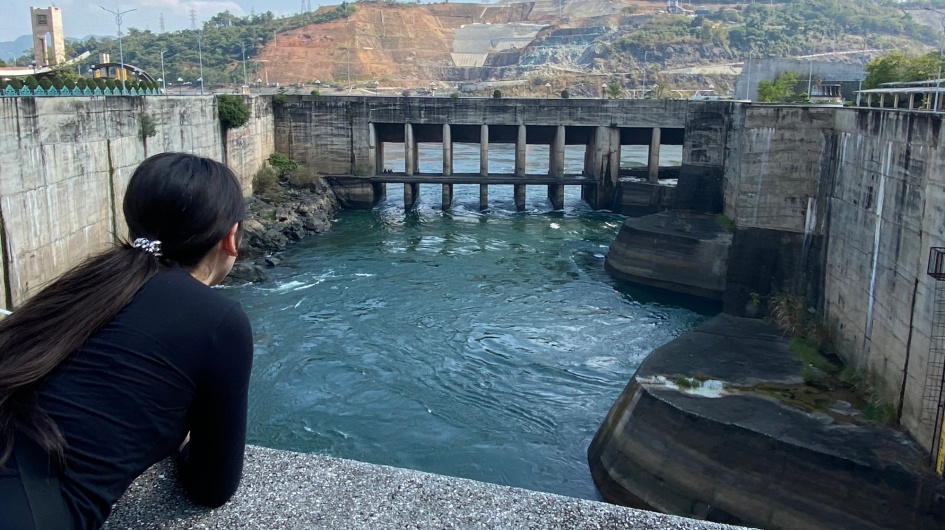 Hoa Binh Hydropower Dam
Next, we go to Mai Chau. Vietnam's mountain-dwelling White Thai people live there in traditional stilt houses—these homes stay dry in humid weather and fit the landscape. Their culture shows in harvest dances and special ceremonies, which thank nature for rice crops.
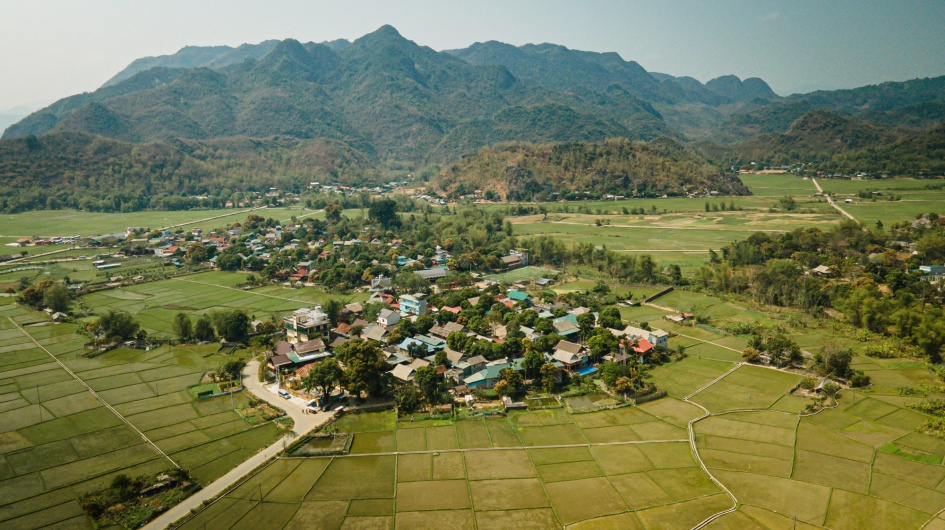 Overview of the Mai Chau
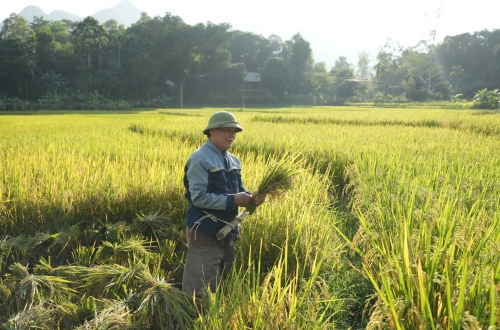 The beautiful golden rice fields during harvest season
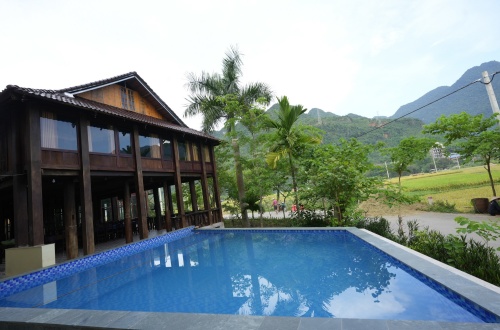 The accommodation environment in Mai Chau
Tonight our host family welcomes us with a hearty dinner while sharing local traditions. After eating, we'll review tomorrow's house-building project - how families are chosen through village meetings with elders, and what work we'll do. Staff explain the selection rules and government coordination needed.
Your Journey's Rewards:
First learn Hoa Binh Dam's hydroelectric history, then see Mai Chau's White Thai culture in their traditional stilt houses. A local meal and a briefing on tomorrow's construction work with villagers will end the day.
Educational Focus:
How does the Soviet-built Hoa Binh Dam represent Vietnam's post-war energy strategy and global infrastructure partnerships?
Takeaway:
The Hoa Binh Hydropower Dam (Soviet-assisted, 1979-1994) shows Vietnam's post-war energy strategy: it uses large-scale hydropower to meet domestic energy needs and boost industry and agriculture. It also shows international infrastructure cooperation—over 35,000 workers, soldiers and 750 Russian engineers built it, and foreign technical and human support helped Vietnam's key projects, laying the foundation for its long-term energy security and regional development.
Thought Challenge:
We know Hoa Binh Hydropower Dam helps Vietnam's development and the White Thai in Mai Chau keep their traditions—how to balance modern infrastructure needs with ethnic cultural heritage protection in such regions?
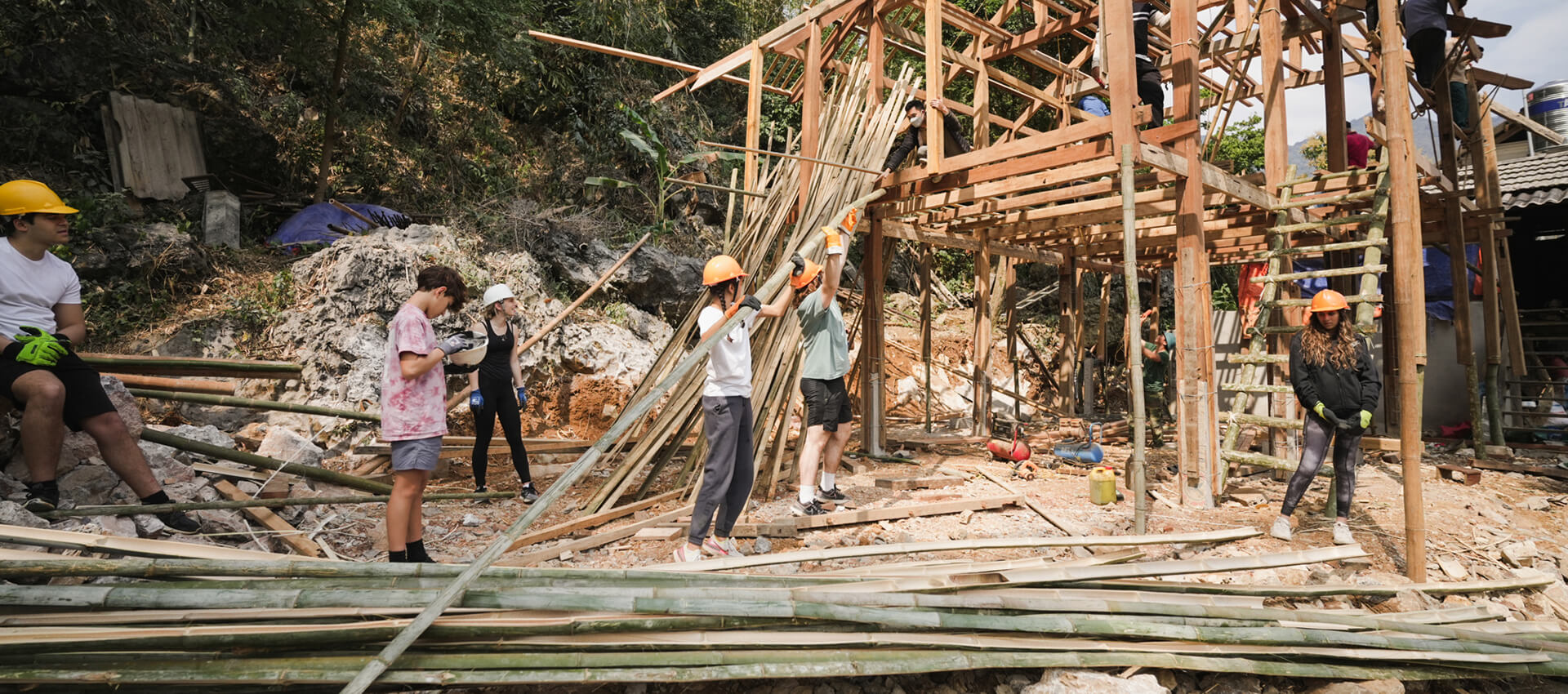
After breakfast on Day 5, the construction supervisor and senior team leader guided us together to officially start the community house-building project. Before work begin, the staff talk in detail about the next two days' construction steps—like putting up walls and fixing frames—and stressed key technical points, such as using tools safely and checking wood sizes right.
We split into 5-6 person groups by task, switching every 2 hours to do jobs like nailing, sawing wood, weaving protective nets (prepping materials) and carrying brick-and-tile supplies. The families getting help and their relatives/friends joined on their own, working with us to put parts together. The site had a lively feel of community help. To keep work safe, experienced local craftsmen did all high-up jobs, like laying roof tiles and installing trusses.
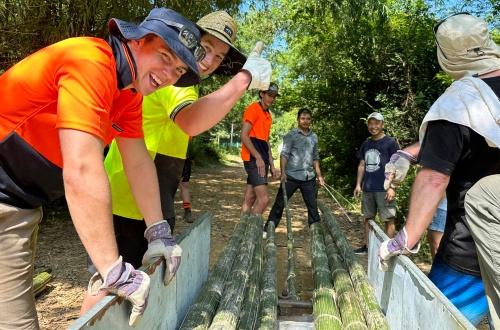 The students transport wood needed for construction
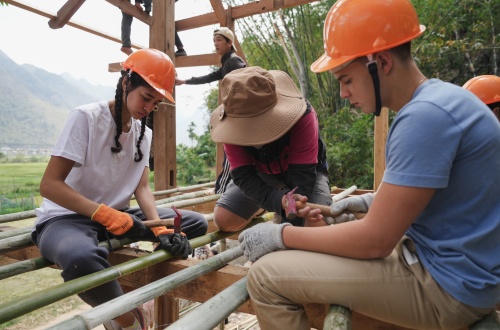 Nail the wood to the roof beams
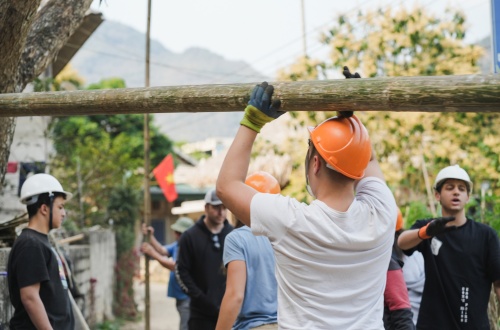 Transport wood needed for construction
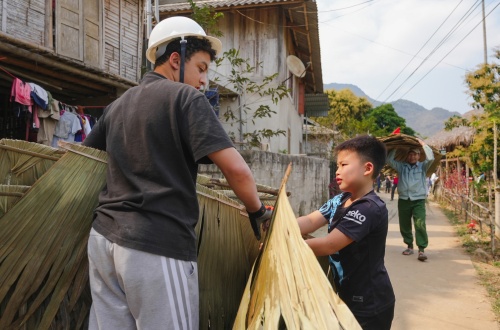 Woven palm leaves
During construction, we used recycled wood from old houses and new timber too—it cut costs and kept us eco-friendly. The stilt house we built copies White Thai traditional architecture, like sloped roofs and wooden frames. As we worked together, students grew more respectful of the White Thai's "building homes together" community spirit and their cultural traditions.
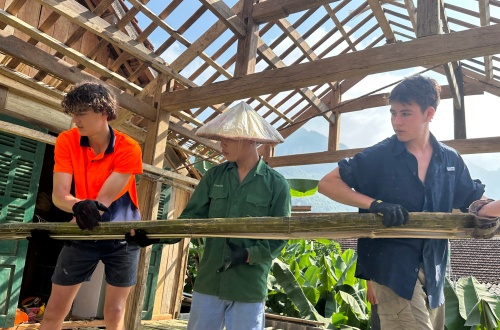 Help workers transport wood
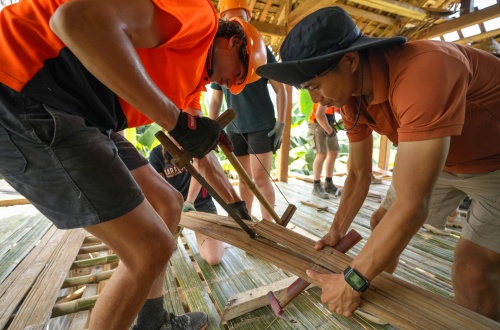 Cut the wood into the right size
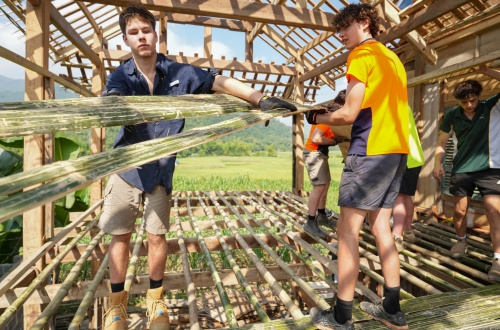 Place the cut wood in the right position
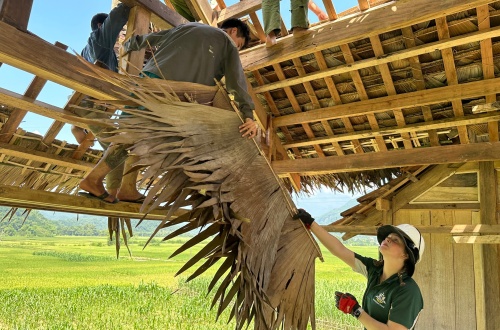 Lay the woven palm leaves on the roof
Note: The house-building project can also be replaced with a school renovation project or a two-day hiking trip.
Your Journey's Rewards:
Learn community house-building steps and safe tool use. Collaborate with locals on nailing, sawing, and material prep. Gain insights into White Thai architecture and community spirit. Cut costs via recycled wood and practice eco-friendly construction.
Educational Focus:
When we build stilt houses with White Thai communities—using recycled materials and following their traditional architectural features—how does this process show the mix of practical construction skills, sustainable ideas and ethnic cultural inheritance?
Takeaway:
Building stilt houses with White Thai communities mixes practical construction skills, sustainable ideas and ethnic cultural inheritance. It teaches skills like putting up walls, fixing frames and using tools safely. Mixing recycled and new wood shows eco-friendly ideas by cutting costs and wasting fewer resources. Following traditional features—sloped roofs and wooden frames—saves White Thai architectural culture, and working with local families helps understand their "building homes together" community spirit, making skill learning, sustainability and cultural inheritance combine well.
Thought Challenge:
In community house-building, how to turn combining modern construction efficiency, traditional ethnic architecture and sustainable materials into a long-term (not one-time) model for ethnic cultural preservation and local development?
At dawn, we go back to the village to finish the stilt house—hanging doors, putting in windows and smoothing the wood. We have a warm housewarming ceremony to thank our hosts, then hug the White Thai community goodbye. We pack our bags, get on the bus to Hanoi, and keep our eyes on the village getting smaller through the windows.
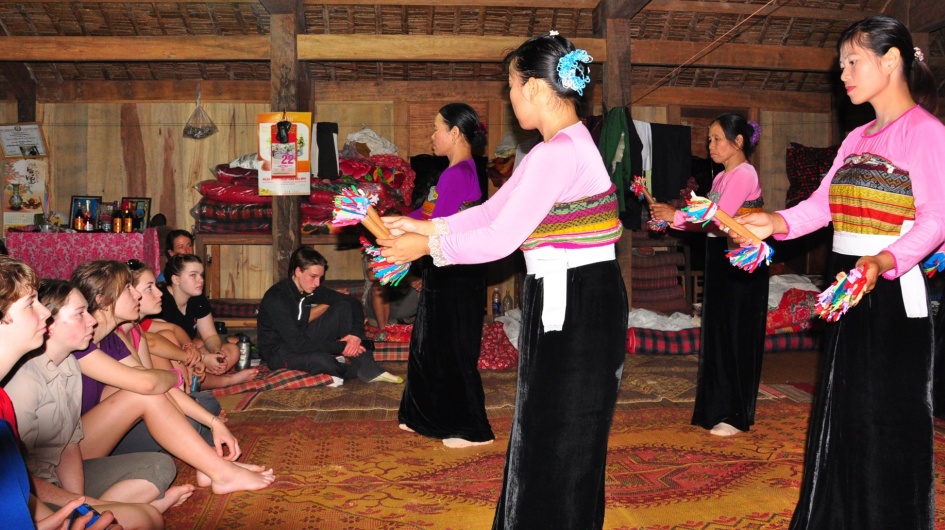 Warm housewarming ceremony
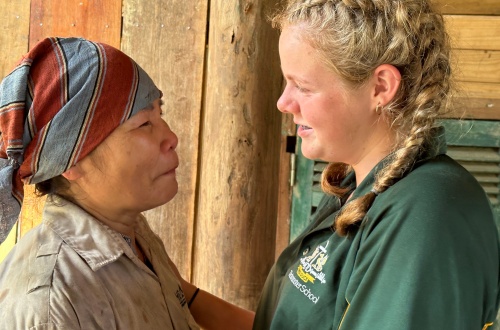 Talk to the local woman before leaving
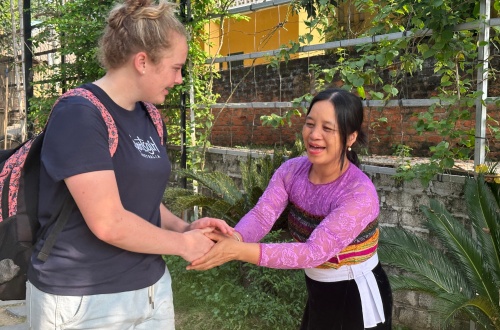 Say goodbye to the local
This afternoon, a local chef is leading our hands-on cooking class. We'll learn to make three delicious Vietnamese dishes and understand their flavor secrets—smooth textures and well-balanced tastes. Each person gets a wok and ingredients to try out possibly unfamiliar cooking techniques.
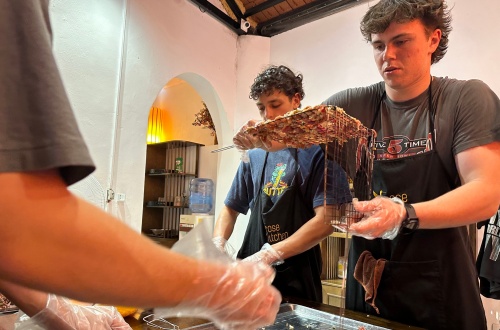 Prepare traditional Vietnamese dishes
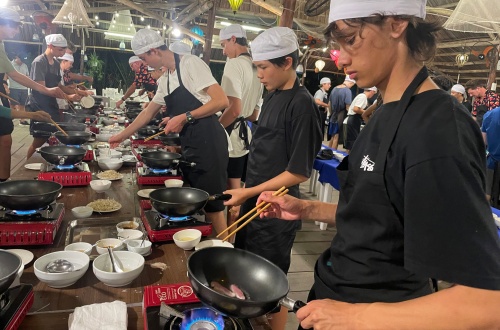 Learn to cook Vietnamese food
Your Journey's Rewards:
Complete stilt house finishing work; attend a warm housewarming ceremony; bid farewell to the White Thai community; join a hands-on Vietnamese cooking class; learn to make three local dishes; master basic Vietnamese cooking techniques.
Educational Focus:
What core characteristics do Vietnamese dishes, as demonstrated in the hands-on cooking class, show in terms of taste and texture?
Takeaway:
Vietnamese food has tender textures and a balanced mix of sweet, sour, salty and savory flavors. Herbs, fish sauce and lime—local ingredients—create this harmony. It comes from a tradition of fresh farm food and a culture of moderation, making the food both tasty and naturally healthy.
Thoughts Challenge:
How can Vietnamese food keep its special balance of flavors and smooth texture when adapted for global tastes?
We're off to Ninh Binh this morning for its amazing karst views - a two-hour drive south. Limestone cliffs tower over quiet rivers and old caves, landscapes you've seen in "Kong: Skull Island" (2017). It's nicknamed "Halong Bay on Land" but actually has more to do than the bay.
After lunch, we'll cycle through Ninh Binh's limestone mountains, passing terraced rice fields and villages with white walls and black roofs where water buffalo roam. Following a short break, local boatmen will row us in wooden boats past stunning karst formations and through three caves with beautiful stalactites glowing in the light.
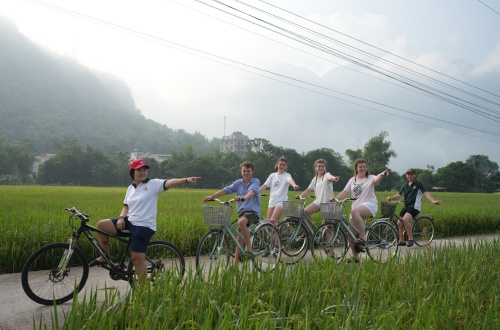 Cycle through Ninh Binh
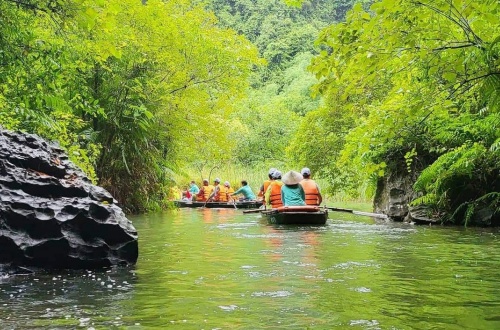 Boat trip
Your Journey's Rewards:
Marvel at towering limestone karst cliffs; spot familiar landscapes from "Kong: Skull Island"; cycle past terraced fields and rural villages; glide through caves with glowing stalactites.
Educational Focus:
How do the geological processes over millions of years shape Ninh Binh's karst landscapes and the formation of stalactites in its caves?
Takeaway:
Ninh Binh's cliffs and caves form when acidic groundwater slowly eats away at limestone over time. As mineral-rich water drips from cave roofs, it leaves behind deposits that grow into stalactites across hundreds of years - their sparkle comes from light bouncing off crystal surfaces.
Thoughts Challenge:
How might tourism and farming change Ninh Binh's caves and rock formations in 50 years?
We take a short drive to the historic Bich Dong Pagoda to learn about Vietnamese Buddhist traditions and customs. Later, we climb 400 steps to Hang Mua Viewpoint for a spectacular panoramic view of the karst landscape.
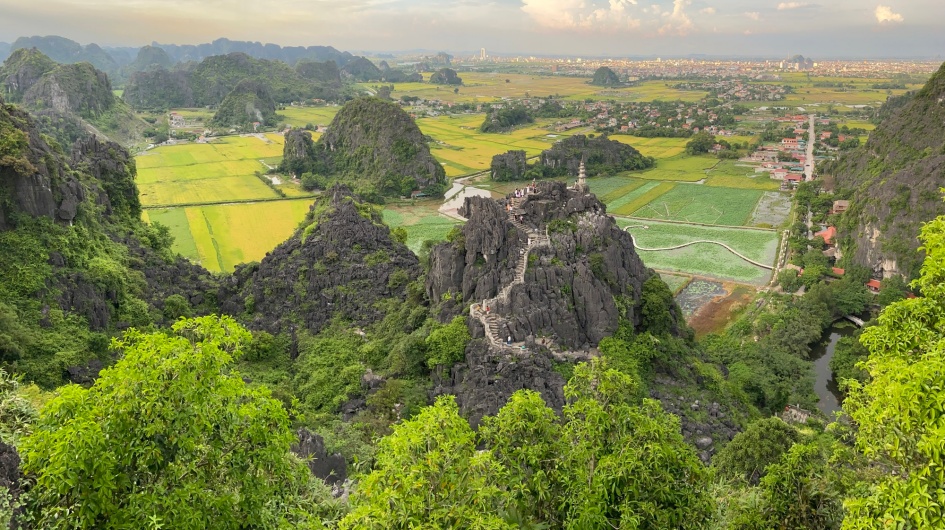 Spectacular panoramic view of the karst landscape
We'll visit Hoa Lu Ancient Citadel if time allows - Vietnam's 1,200-year-old former capital featuring ruins of temples, fortresses, stone monuments, bridges and gardens. Then we'll take a two-hour coach ride to Hanoi Airport for our return flight home.
Your Journey's Rewards:
Explore Vietnamese Buddhist traditions at Bich Dong Pagoda. Enjoy panoramic karst landscape views from Hang Mua Viewpoint. Discover 1,200-year-old historical ruins at Hoa Lu Ancient Citadel.
Educational Focus:
How do the old buildings left at Hoa Lu Ancient Citadel show what Vietnam's political, cultural and social systems were like when the citadel was the country's capital?
Takeaway:
Fortress designs in Hoa Lu Ancient Citadel's old buildings show Vietnam's past political structure—they protected leaders and stood for state power. Inside the citadel, temples show how religion and government mixed, since they were probably used for royal ceremonies and to make political rule acceptable. Stone monuments and bridges tell about social order: monuments might note royal orders or history, and bridges show infrastructure for trade and daily life. Together, these parts explain how the citadel worked as a center for political control, cultural expression and social organization when it was the capital.
Thoughts Challenge:
Can keeping historical places like Hoa Lu Citadel balance what modern tourism needs and the original cultural and political importance of these places?
This tour is suitable for: Students, Teachers, Schools, Educational Groups, Families, Educational Travelers
What's Included
- All accommodation, transport, activities, entrance costs and other programs as described in the itinerary
- Professional tour leader throughout the trip & additional specialist guides
- Extensive destination-specific risk management and assessment
- Meals as listed in the itinerary
- 24-hour IN-COUNTRY support
- Certificate of Achievement (including community service, activities, and skills developed)
- Tips for tour leaders, local guides & drivers
- House building costs valued at US$4,500
Wechat & WhatsApp: +86-13471279378