- Home
- Asia Tours
- CET-KH-01
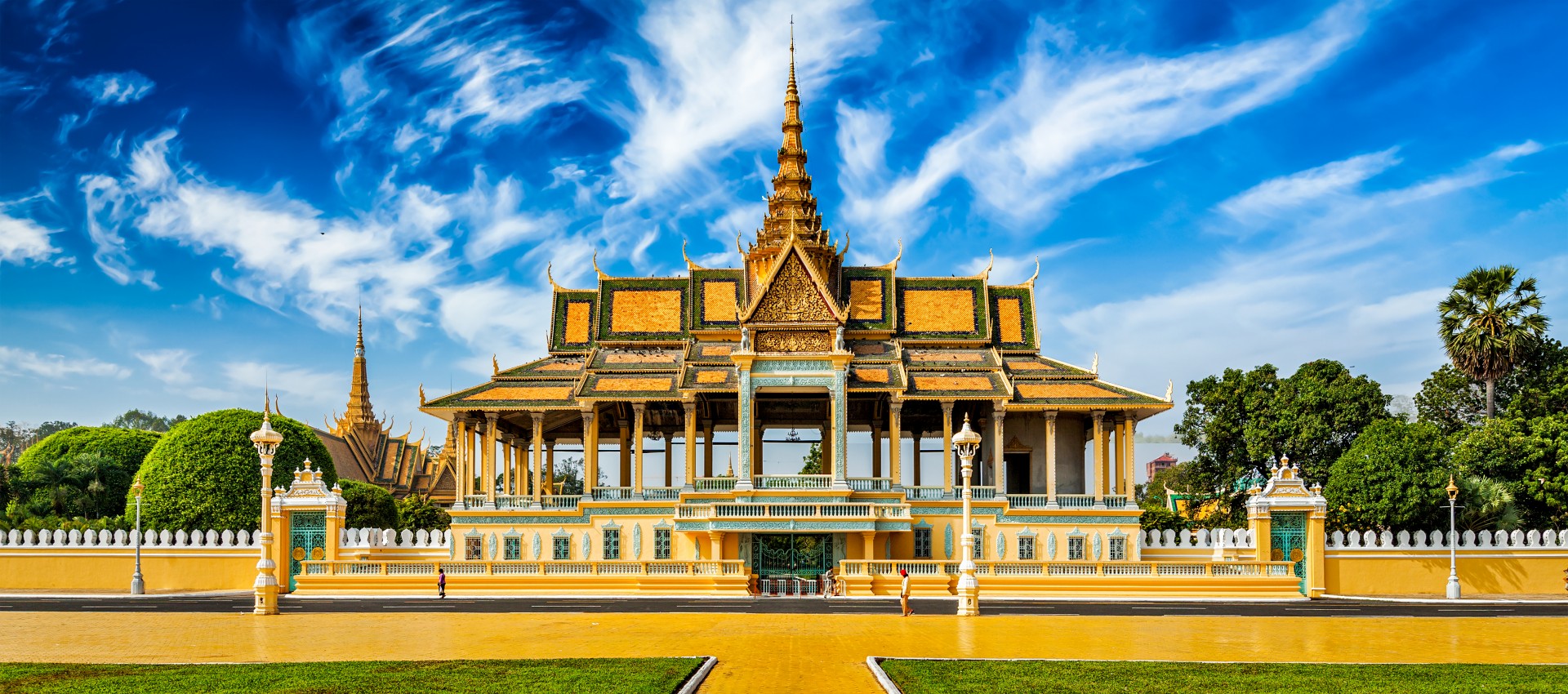
Cambodia Educational Tour
Itinerary at a Glance
| Day | Location | Highlights |
|---|---|---|
| D1 | Phnom Penh | Arrive; visit Silver Pagoda; street walking |
| D2 | Phnom Penh | Visit Tuol Sleng Genocide Museum & Killing Fields; explore Central Market; evening Tonle Bassac/Mekong river cruise |
| D3 | Phnom Penh → Siem Reap | Full-day drive; hotel pool swim; hands-on Khmer cooking class |
| D4 | Siem Reap | Explore Angkor Temples (Angkor Wat, Ta Prohm, Preah Khan) |
| D5,6,7 | Siem Reap (Remote Village) | Start 3-day community service (renovate village school; plant crops) |
| D8 | Siem Reap → Siem Reap Airport | Alternative Options (Anlong Veng District, Mt. Kulen or Tonle Sap Lake); tour ends |
Trip Highlights
- Visit the Silver Pagoda to view national treasures and Indian myth murals
- Cruise Tonle Bassac-Mekong Rivers, watch river confluence and lit Royal Palace roofs
- Join a hands-on Khmer cooking class to learn to make classic dishes
- Tour the magnificent Temples of Angkor to admire ancient Khmer architectural and carving art
- Help renovate a Siem Reap village school
Tour Essentials

Quality
No Shopping Traps

Group Type
Private

Tour Focus
Culture, History

Accommodation
Nights:7

Best Season
Spring, Summer, Autumn, Winter
Full itinerary for Cambodia Educational Tour
After arriving at Phnom Penh International Airport, you will be greeted by a tour guide and a driver, and then depart for your accommodation. During the journey, listen to the guide explain important information about Phnom Penh.
For your first outing, you will visit an important buildings within the Royal Palace of Phnom Penh—the Silver Pagoda, one of Cambodia’s most representative Buddhist sacred sites. You can visit the buildings, murals, and Buddha statues there to learn about the life of the Cambodian royal family and the history of the former French colonial rule. The temple houses hundreds of national-level gold and silver treasures, gifts from foreign heads of state, and gold-inlaid murals; these cultural relics reflect Cambodia’s glory and prosperity in history.
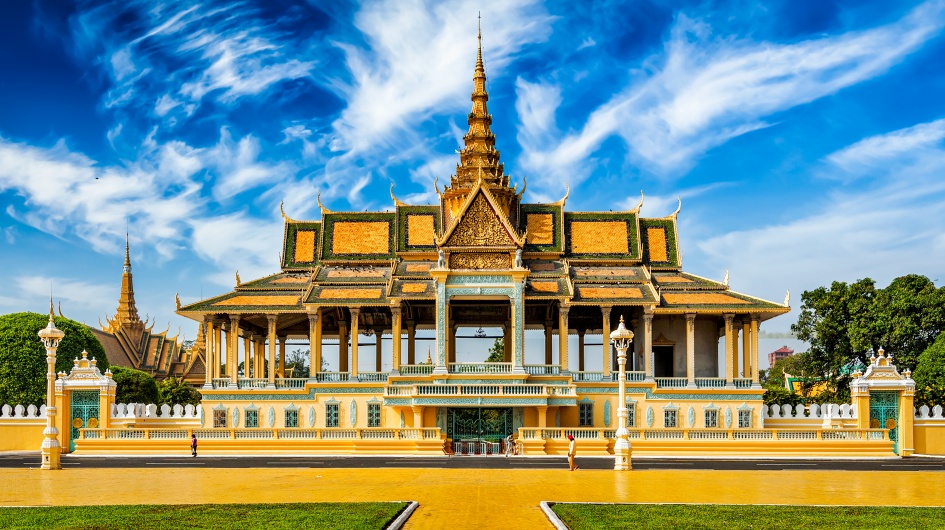 Royal Palace of Phnom Penh
After leaving the Silver Pagoda, you will take a walking tour of Phnom Penh's street life to gain an in-depth understanding of local life. Explore the specialty snacks on the streets, street art such as graffiti, and French colonial buildings from the colonial period.
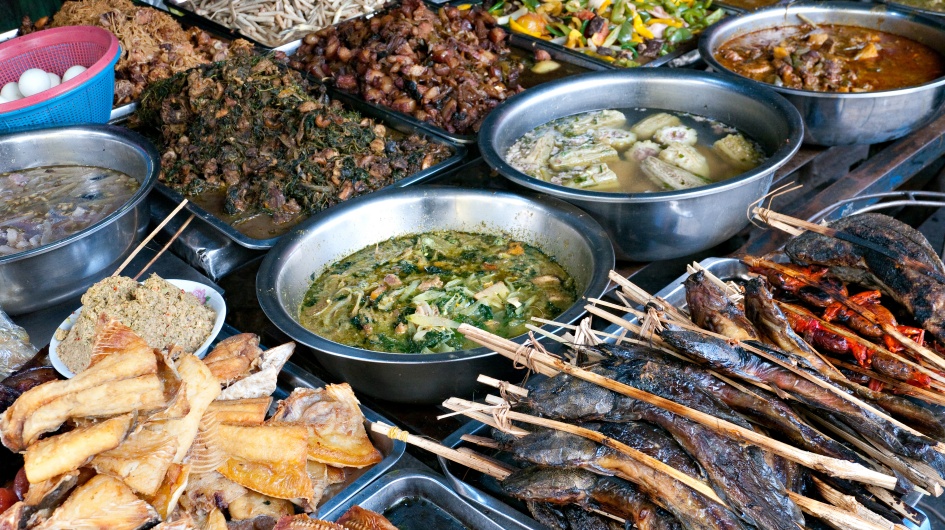 Street Food in Phnom Penh
Your Journey’s Rewards:
Visit the Buddha statues and murals at the Silver Pagoda to learn about the life of the Cambodian royal family and the history of the former French colonial rule. Explore local specialty snacks and architecture on the streets of Phnom Penh to understand the lives of local people.
Educational Focus:
What cultural significance does the Silver Pagoda hold?
Takeaway:
The Silver Pagoda is not only a symbol of Buddhist belief, but also a concentrated embodiment of Cambodian royal power and culture. The pure silver floor tiles inside the temple and hundreds of national treasure-level gold and silver artifacts all demonstrate Cambodia’s glorious past. In particular, the cloister of the temple features murals depicting Indian mythological stories, painted by 40 artists—allowing visitors to fully explore the art and culture here.
Thought Challenge:
How was the protection work of the Silver Pagoda carried out when Cambodia was experiencing wars?
After breakfast, you will visit the infamous Tuol Sleng Genocide Museum (Tuol Sleng Prison) and the Killing Fields. Both are tragic relics of Cambodia’s modern history during the Khmer Rouge rule from 1975 to 1979, when an estimated 2 million people died from overwork, starvation, and executions.
During this dark period in history, a little-known teacher named Pol Pot imposed a reign of terror across the country. You can visit historical relics in the prison, such as interrogation rooms, torture instruments, and archival photos of prisoners, and listen to perpetrators or victims share their heartbreaking experiences in this notorious prison.
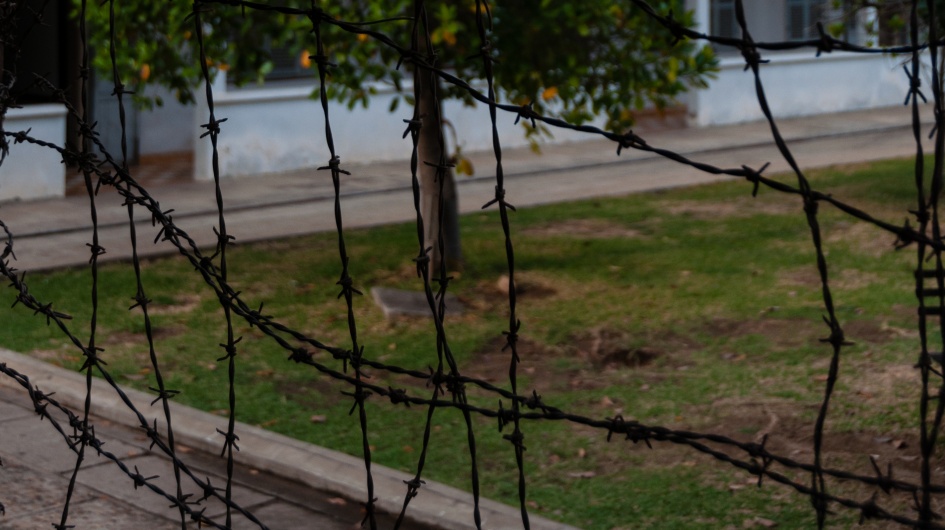 Tuol Sleng Prison
Next, you will explore the Central Market—one of Phnom Penh’s iconic buildings and the most distinctive local market. It is filled with a wide variety of goods, including jewelry, handicrafts, sculptures, and silk products. There, you can experience local life and learn bargaining skills for shopping.
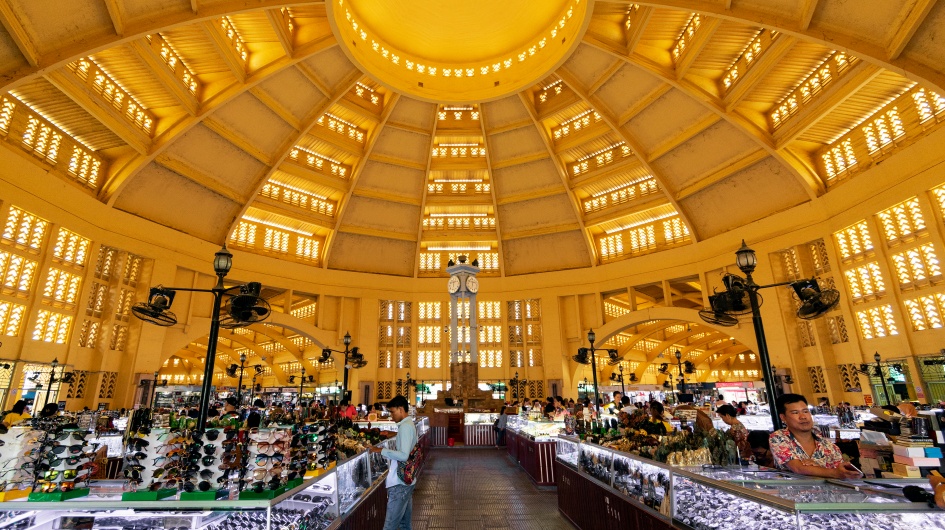 Central Market
In the evening, you will take an evening boat cruise on the Tonle Bassac River and Mekong River. From the cruise ship, you will enjoy a distant view of the glittering golden roofs and spires of the Royal Palace of Phnom Penh under the lights, as well as the unique water scenery formed by the confluence of the Mekong River and the Tonle Sap River. You will listen to the guide explain the importance of this river system.
Your Journey’s Rewards:
Visit the Khmer Rouge sites to understand why Cambodia struggled for decades after the overthrow of Pol Pot’s reign of terror. Explore the Central Market to experience local life and learn bargaining skills for shopping. Take an evening cruise on the Tonle Bassac River and Mekong River to learn about the importance of this river system.
Educational Focus:
What are the beneficial impacts of the seasonal change in the flow direction of the Tonle Sap River?
Takeaway:
The mutual water replenishment between the Mekong River and the Tonle Sap Lake regulates the water volume of both the Mekong River and the Tonle Sap Lake. It can reduce the flood risk in the lower reaches of the Mekong River during the flood season, alleviate drought in the lower reaches of the Mekong River during the dry season, and improve navigation conditions in the lower reaches of the Mekong River during the dry season.
Thought Challenge:
What mainly determines the seasonal change in the flow direction of the Tonle Sap River?
After breakfast, you will take a vehicle to Siem Reap, traveling through the central region of the country. Several stops will be made along the way, giving you the opportunity to learn about some local people’s eating habits and local customs. Upon arriving in Siem Reap, you will first relax by swimming in the hotel pool before having dinner. In the evening, you will sit together to discuss the positive and negative impacts of tourism on Siem Reap, helping you understand the problems and trade-offs that developing countries face when balancing sustainability and development.
Later, you will attend a hands-on Khmer cooking class, where you will learn about the ingredients and spices used in Cambodian cuisine, as well as the authentic methods of preparing Cambodian dishes. Under the guidance of experienced local chefs, you will personally cook a feast, including dishes like Amok Chicken and Khmer Spring Rolls.
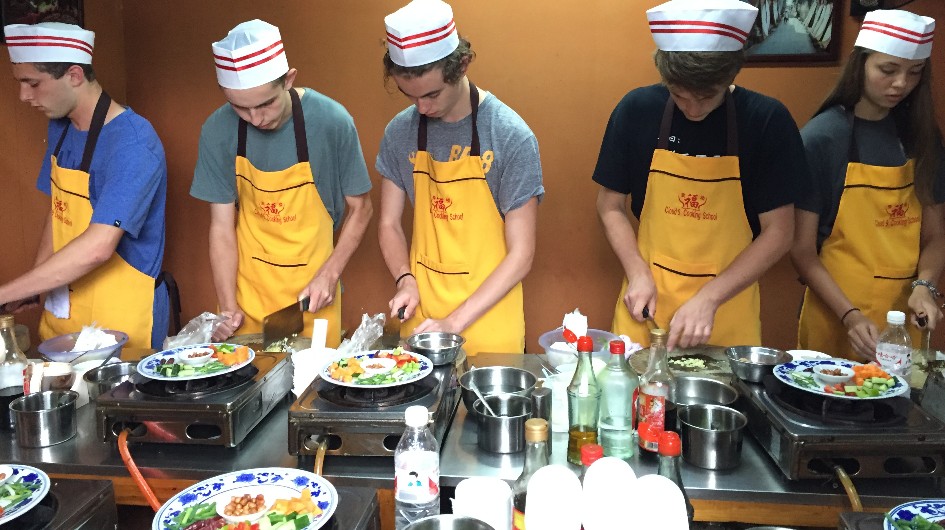 Khmer cooking class
Your Journey’s Rewards:
Learn about the eating habits of people in Siem Reap and local customs, and discuss and exchange views on the positive and negative impacts of tourism on Siem Reap. Participate in the Khmer cooking class and learn the cooking skills of Cambodian cuisine.
Educational Focus:
What are the characteristics of Cambodian cuisine?
Takeaway:
Cambodian cuisine is also known as Khmer cuisine. The characteristic of Khmer cuisine lies in its balance of the five flavors—sour, sweet, bitter, spicy, and salty. It emphasizes the freshness of ingredients and the matching of spices, and has a unique Southeast Asian flavor.
Thought Challenge:
What impacts did the colonial period have on the characteristics of Cambodian cuisine?
In the morning, you will set off to explore the magnificent Angkor Temple Complex, which was originally built as a temple dedicated to the Hindu god Vishnu. These temples demonstrate extremely high craftsmanship in architecture and carving art, reflecting the beliefs and religious life of the ancient Khmer people. During the visit, listen to the professional guide explain the role of the temples in Cambodian society.
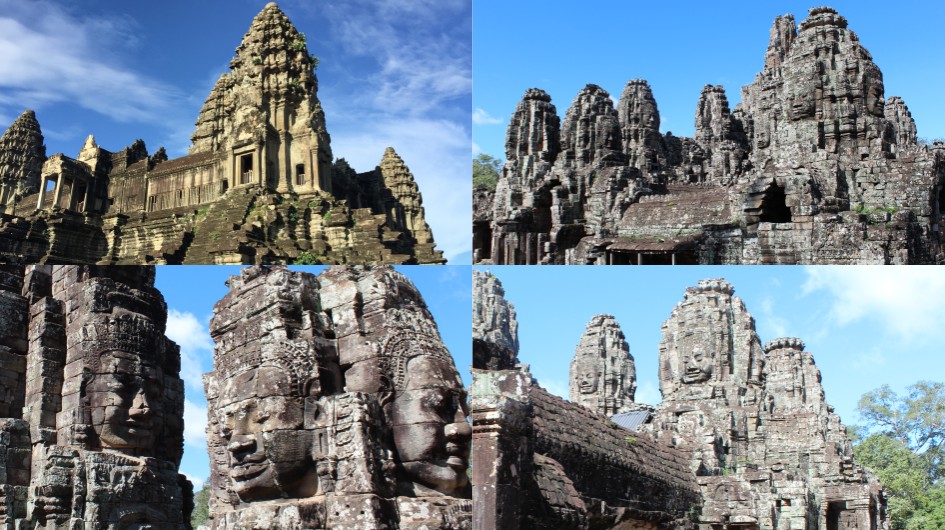 Explore the Sculptures in Angkor Wat
First, you will visit Angkor Wat Temple—the main temple of Angkor, a massive three-tiered pyramid-shaped structure. Surrounded by a moat, the temple features exquisite bas-reliefs covering Hindu myths and Khmer history. It is the core representative of the Angkor monuments and the prototype of the pattern on Cambodia’s national flag.
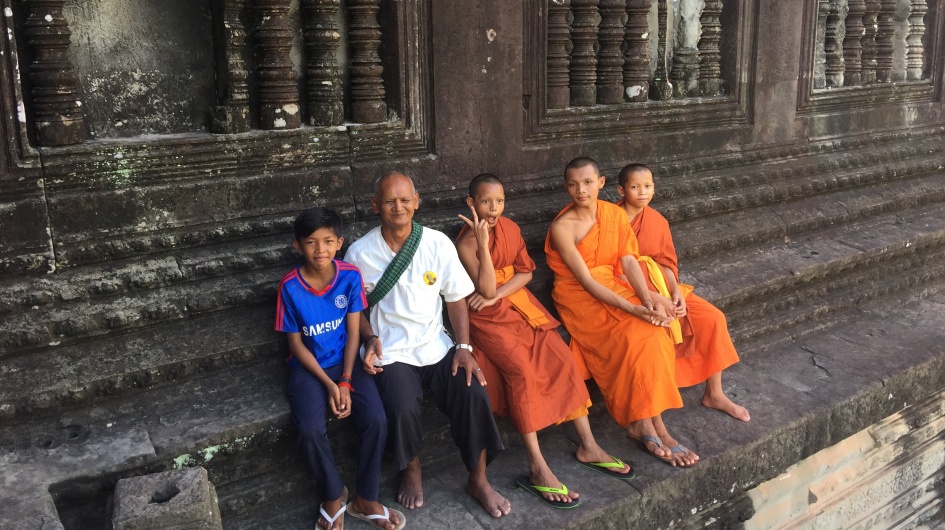 Opportunity to Talk with Monks at Angkor Wat Temple
After lunch, you will visit Ta Prohm Temple, a filming location for the movie Lara Croft: Tomb Raider. The temple includes landscapes such as divine statues, spires, and palaces; due to the intertwined roots of trees and the building, Ta Prohm Temple is almost engulfed by banyan trees. Finally, you will visit Preah Khan Temple, which is famous for its huge labyrinth-like structure. Intricate colored moss covers the complex statues and wall carvings.
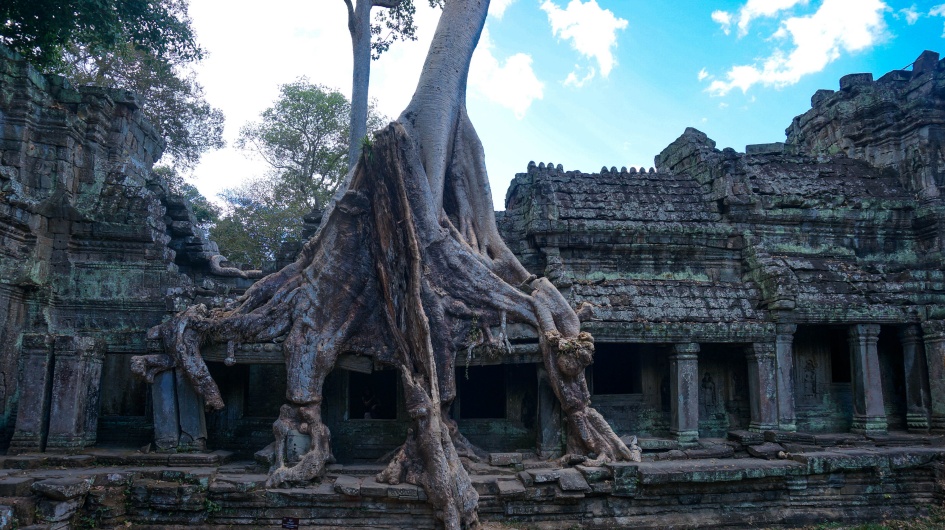 Ta Prohm Temple
Your Journey’s Rewards:
Visit the Temples of Angkor, appreciate the carving art, and at the same time learn about the role of the temples in Cambodian society.
Educational Focus:
What impacts have the architecture of Angkor Wat Temple had?
Takeaway:
The Angkor architectural complex represents the entire scope of Khmer art from the 9th to the 14th century, including some undisputed artistic masterpieces. The Khmer art developed from Angkor Wat Temple has had a profound impact on most parts of Southeast Asia and played a fundamental role in its unique evolution. It also opened up a new artistic perspective for Oriental art and architecture.
Thought Challenge:
The tourism development of Angkor Wat Temple has brought huge economic benefits. How to protect the architecture of Angkor Wat Temple while promoting development?
You will spend three days participating in community service activities in a remote village on the outskirts of Siem Reap, in collaboration with the "Partnering Against Poverty Association" (PAPA). You will work with local craftsmen to renovate and repair a village school. First, you will learn various construction techniques from professional technicians and guides, and then you will truly participate in tasks such as bricklaying, painting, and material handling with your own hands. You will complete this project together with the local professional construction team to provide a better learning environment for local children.
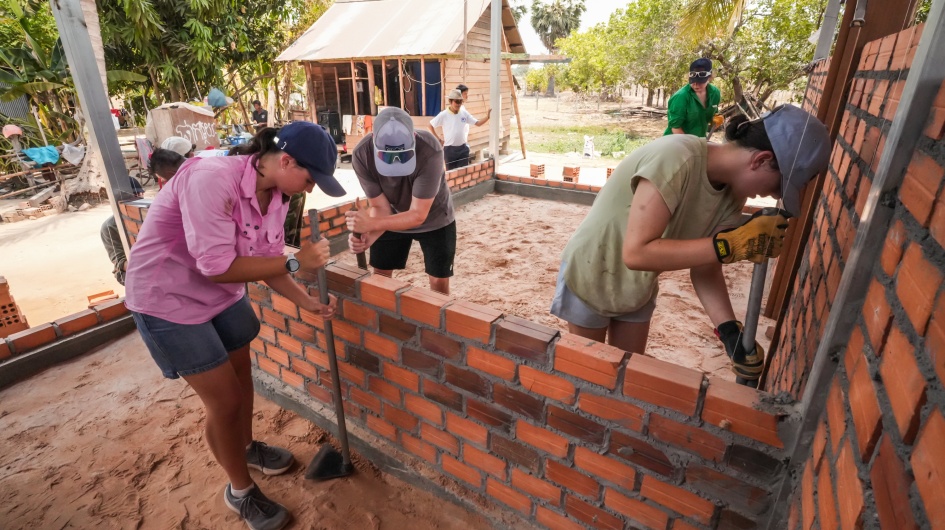 School Construction
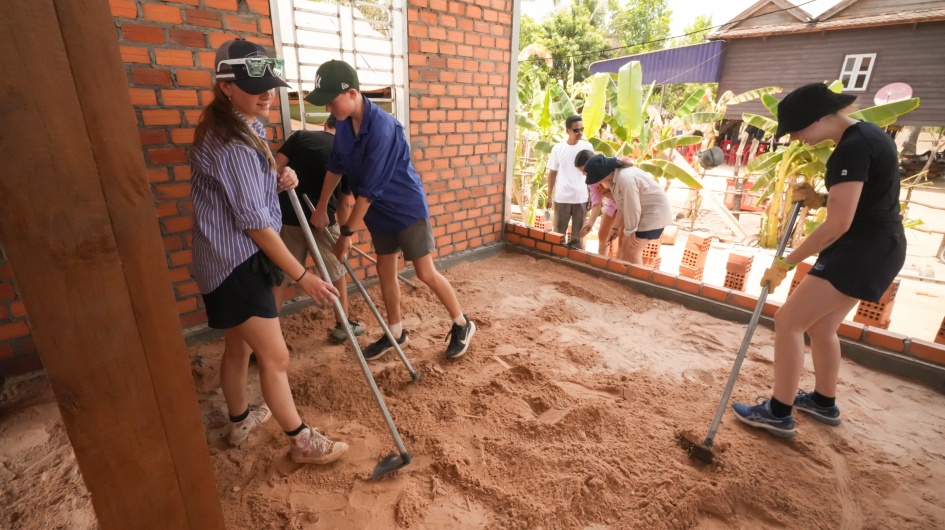 Student Collaboration
During this period, you will also participate in planting various fruit trees and vegetables to help rural residents cultivate sustainable crops that can yield produce throughout the year.
During the activity, you can understand the current daily life and some living customs of the villagers by observing and talking with them. You will also have the opportunity to watch a Phare Circus performance, enjoy the lively atmosphere brought by wonderful drum music and acrobatics, and learn about Khmer legends and folk stories from the performance. After the school renovation and repair work is completed, you will attend a short farewell ceremony to say goodbye to the villagers.
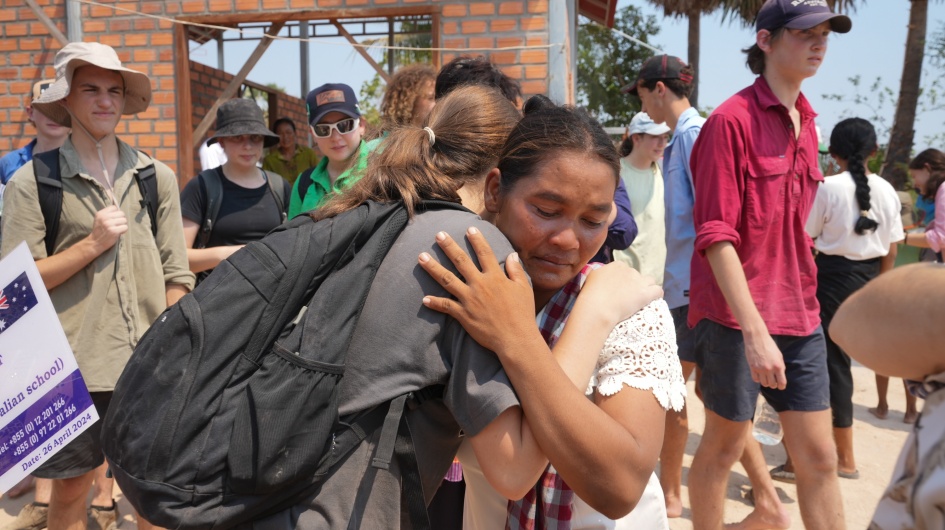 Farewell to Villagers After Community Project Conclusion
Your Journey’s Rewards:
Participate in community service activities and learn various construction techniques. Understand the current daily life and some living customs of the villagers by observing and talking with them.
Educational Focus:
What is the important significance of building schools for local development?
Takeaway:
After experiencing civil war and rule by an extreme regime, Cambodia’s national economy and people’s lives suffered devastating blows, with prominent poverty issues. Developing tourism is the most obvious basic direction for Cambodia to recover its economy, but long-term tourism development cannot fundamentally change the country’s poverty—education can have a profound and long-term impact. Building schools can provide a better environment for local children, thereby contributing to the local sustainable development.
Thought Challenge:
In addition to short-term school repairs, what other aspects of support are needed to promote the long-term development of grassroots education in Cambodia?
Alternative Option 1 – Anlong Veng Khmer Rouge History Tour
On Day 8, you can choose to explore the Anlong Veng District. Once a key stronghold of the Khmer Rouge regime, Anlong Veng District was where Khmer Rouge leaders such as Pol Pot and General Ta Mok were active for a long time. In 1998, the remaining Khmer Rouge forces were completely eliminated here, and the area was developed into a historical and cultural tourist site to commemorate that special historical period.
During the tour, the guide will explain the rise and fall of the Khmer Rouge, detailing how the regime seized power, the atrocities committed during its rule, and its eventual collapse. You will explore the remnants of the site where Pol Pot was tried, his cremation site, and General Ta Mok’s residence. You will also have the opportunity to interact with a former Khmer Rouge affiliate, listen to first-hand accounts of life under the regime, learn about military life and combat methods during the Khmer Rouge era, and ask questions if you wish.
Alternative Option 2 – Mt. Kulen Eco-Tour
A day trip to Mt. Kulen (Cambodia’s sacred mountain) is also an excellent choice. Until the early 1990s, Mt. Kulen was an ideal assembly point for Khmer Rouge troops. Today, it is very popular among locals, who come here for weekend picnics. There are temples, waterways, and roads in the area – you can visit the reclining Buddha, ancient riverbed carvings, and magnificent three-tiered waterfall nearby, or have a picnic. Before visiting the National Park Information Centre to learn about the unique flora and fauna in the park as well as current environmental issues, you will have time to swim.
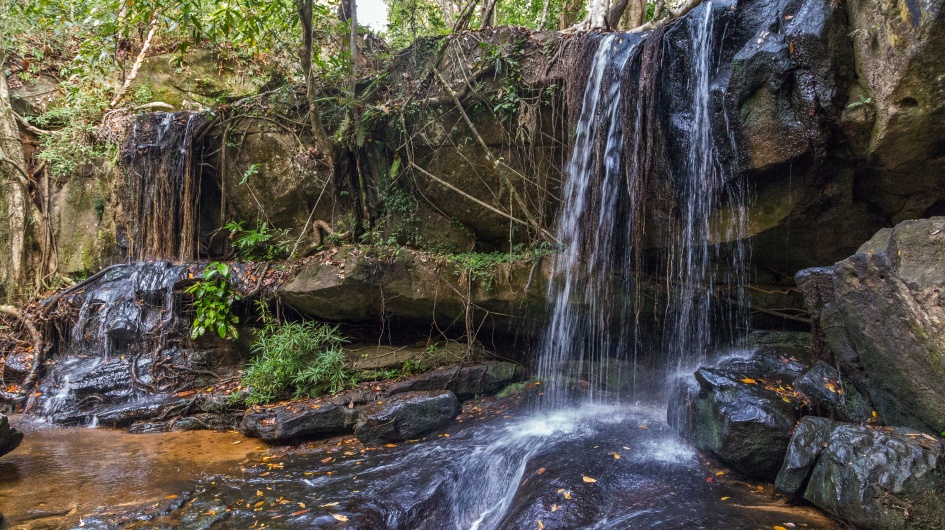 The Natural Scenery of Mt. Kulen
Alternative Option 3 – Tonle Sap Lake and Preah Dak Cultural Village
You can visit Tonle Sap Lake (located near Siem Reap), the largest freshwater lake in Southeast Asia. You can take a private boat tour to explore this ecological wonder, cruising through the villages and mangroves on both banks. You will learn about the lake’s role in Cambodia’s ecosystem, its importance to the livelihoods of local communities, as well as the local sustainable fishing methods and the unique aquatic farming techniques adopted by residents.
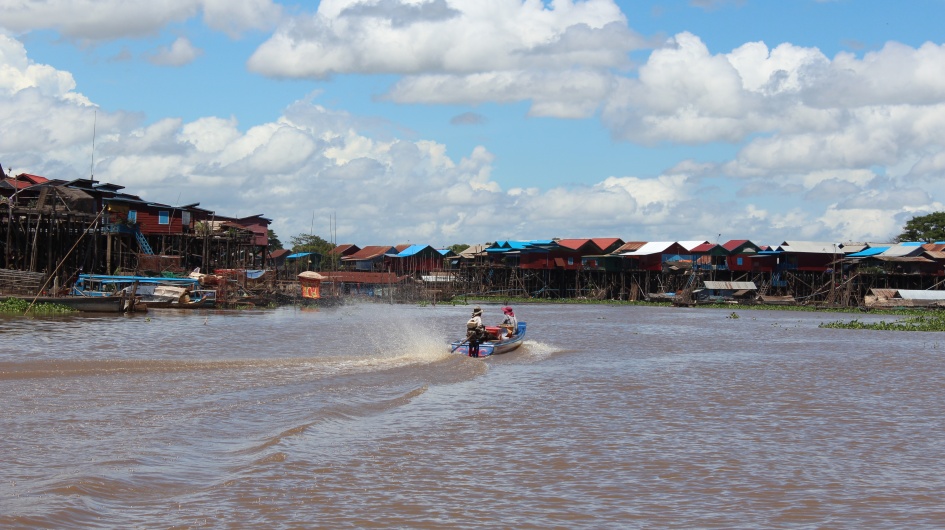 Explore Tonle Sap Lake by Boat Tour
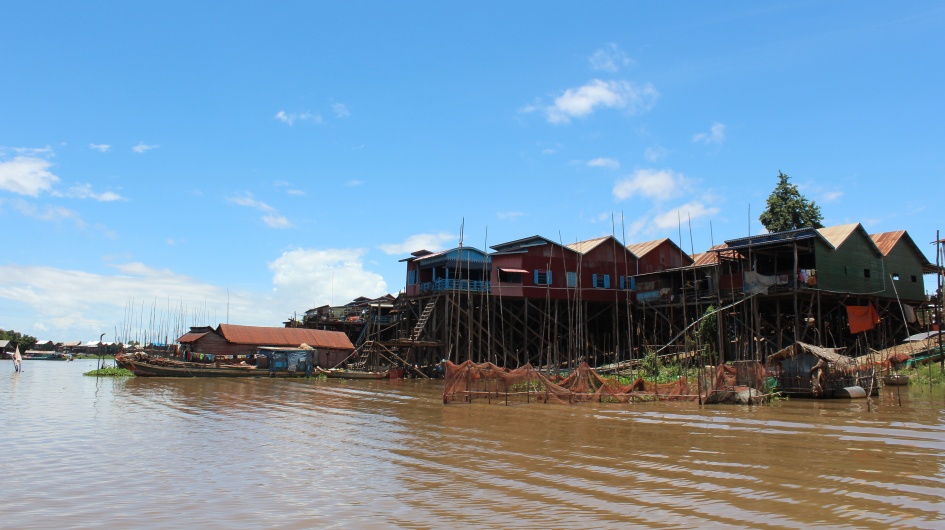 Floating Villages on Both Banks of Tonle Sap Lake
In the afternoon, you will head to a traditional village, where you can try making palm sugar, palm juice, rice noodles, and sticky rice. While enjoying the fun of the activity, you will learn traditional production methods and have an immersive experience of the rural lifestyle in the daily life of the Khmer people.
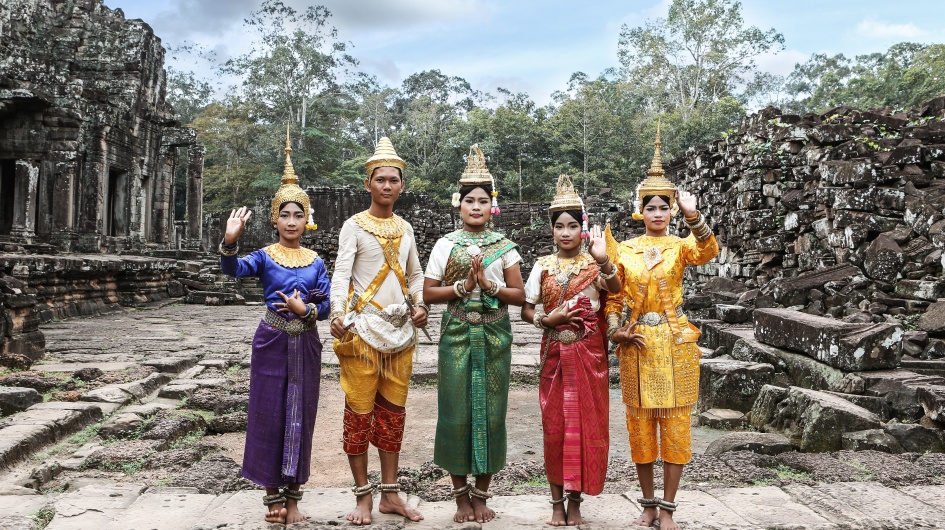 Explore a Traditional Village
Finally, you will proceed to Siem Reap International Airport. After completing the check-in process, you will wave goodbye to the tour leader and local guide, then board your homebound flight.
Your Journey’s Rewards:
The three alternative options focus on history, nature, and ecology respectively – all allowing you to gain a deeper understanding of Cambodia and experience its charm.
Educational Focus:
As a traditional agricultural country, what are the main crops grown in Cambodia?
Takeaway:
Agriculture is the backbone of Cambodia’s economy. Farmers mainly rely on growing crops such as rice, corn, and beans for a living. In some regions, tropical fruits like bananas and mangoes, as well as cash crops like chili peppers and lemongrass, are also cultivated.
Thought Challenge:
What factors affect Cambodia as a traditional agricultural country?
This tour is suitable for: School, Family, Team Building
What’s Included
- All accommodation, transport, activities, entrance costs and other programs as described in the itinerary
- Professional tour leader throughout the trip & additional specialist guides
- Extensive destination-specific risk management and assessment
- School renovation costs in Siem Reap valued at US$2,200
- 24-hour IN-COUNTRY support
- Certificate of Achievement (including community service, activities, and skills developed)
- Tips for tour leaders, local guides & drivers
Wechat & WhatsApp: +86-13471279378